Childhood amnesia, coined by Sigmund Freud in 1910, describes the lack of recall adults have of their first three or four years and our paucity of solid memories until around the age of seven. Research suggests that the memories we form in these early years simply disappear.
To form long-term memories, an array of biological and psychological stars must align, and most children lack the machinery for this alignment. The raw material of memory (the sights, sounds, smells, tastes and tactile sensations of our life experiences) arrive and register across the cerebral cortex, the seat of cognition. For these to become memory, they must undergo bundling in the hippocampus, but some parts of the hippocampus aren’t fully developed until we’re adolescents, making it hard for a child’s brain to complete this process.
Young children have a tenuous grip on chronology. They are years from mastering clocks and calendars, and thus have a hard time nailing an event to a specific time and place. They also don’t have the vocabulary to describe an event, and without that vocabulary, they can’t create the kind of causal narrative that’s found at the root of a solid memory. And they don’t have a greatly elaborated sense of self, which would encourage them to hoard and reconsider chunks of experience as part of a growing life-narrative.
Frail as they are, children’s memories are then susceptible to a process called shredding. In our early years, we create a storm of new neurons in a part of the hippocampus and continue to form them throughout the rest of our lives, although not at nearly the same rate. This process, called neurogenesis, can actually create forgetting by disrupting the circuits for existing memories.
Memories are less vulnerable to shredding and disruptions as the child grows up. Most of the solid memories that we carry into the rest of our lives are formed during what’s called ‘the reminiscence bump’, from ages 15 to 30, when we invest a lot of energy in examining everything to try to figure out who we are. The events, culture and people of that time remain with us and can even overshadow the features of our ageing present. The movies were the best back then, and so was the music, and the fashion, and the political leaders, and the friendships, and the romances. And so on.
If we can’t remember much of anything from our early years, does it matter what actually happened? If a tree fell in the forest of our early development and we didn’t have the brains and cognitive tools to stash the event in memory, did it still help shape who we are?
Yes. Even if we don’t remember early events, they leave an imprint on the way we understand and feel about ourselves, other people, and the greater world, for better or worse. We have elaborate concepts about birds, dogs, lakes and mountains, for example, even if we can’t recall the experiences that created those concepts.
We are not the sum of our memories, or at least, not entirely. We are also the story we construct about ourselves, our personal narrative that interprets and assigns meaning to the things we do remember and the things other people tell us about ourselves.
These narratives guide our behavior and help chart our path into the future. Especially lucky are those of us with redemptive stories, in which we find good fortune even in past adversity.
Our stories are not bald facts etched on stone tablets. They are narratives that move and morph, and that’s the underpinning to much of talk therapy. Here is one uplifting aspect of ageing: our stories of self get better. For whatever reason, we tend to accentuate the positive things more as we age. We have a greater willingness or motivation to see the world in brighter terms. We develop a positivity bias regarding our memories.

_________________________
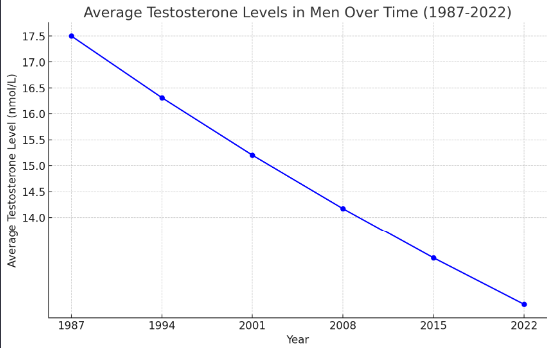
Average testosterone has been declining among men for the past several decades. A recent review of studies involving more than a million men all over the world found that average testosterone levels in blood have dropped by about 20 percent over the past half century. A new, unpublished study put the decrease during that basic time period at closer to 50 percent.
Medical researchers aren’t certain what’s causing the drop. One theory is that the environment is playing a role: endocrine-disrupting “forever chemicals,” such as the phthalates in our plastic kitchen utensils and the PFAS in our nonstick pans are chemicals that can interrupt both the creation and the activity of testosterone in the body.
Men who are very physically active are less likely to have clinically low testosterone. Obesity, a condition that about 14 percent of men around the world have, can suppress the hormone. Fat tissue contains high amounts of an enzyme that converts testosterone into estrogen, and excess fat can overheat the testes. Obesity can’t explain the entire decrease, however. Even among normal-weight men, there is the same decline.
__________________________
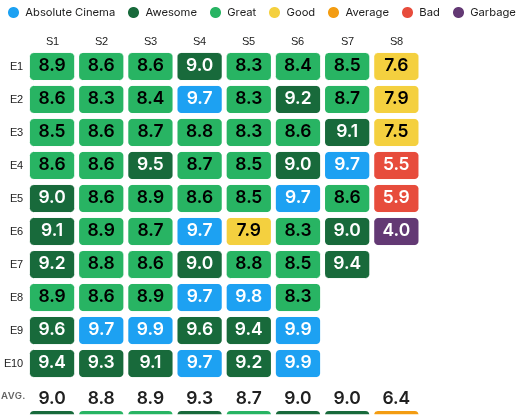
There’s a website called Series Graph that allows you to see the ratings for an entire television series episode by episode. It can show you if a series fell off in later seasons or if it stuck the landing through the finale.
Game of Thrones is a famous example of a show falling apart at the very end after 7.5 incredible seasons:

__________________________
The Blue Zones are places on earth where people supposedly reach exceptionally old ages, often beyond 100. The pitch is this: if we copy the habits of Blue Zones people, we’ll also live to over 100.
The problem: No one ever really checked whether the people in these places are as old as they say they are. When someone did, they found that people in the Blue Zones weren’t living to extremely old ages. Instead, these locations just had terrible record-keeping.
The man who did the research was asked what the real secret to longevity is. “Be born in a rich place that has free health care. That’s what the data suggests, anyway.”
Nobody can act on that. So the Blue Zone health market fills with things you can buy and act on, whether or not they work. What does work? See a doctor. Exercise. Don’t smoke. Don’t drink. Don’t eat too much junk. Have some friends.
It’s free. It’s boring. You can find it anywhere on the map.

___________________________
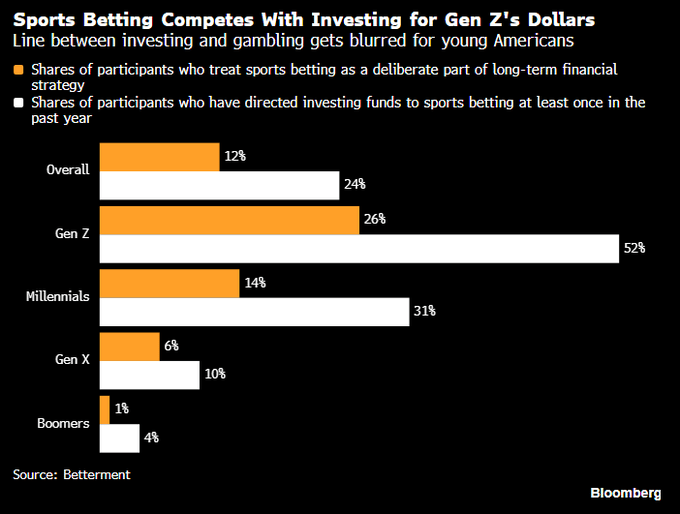
Gen Z is moving money from stocks to sports betting in wealth plans, 52% of them have redirected investment funds to sports betting and a quarter of them treat sports betting as a deliberate part of their long-term financial plan:
___________________________
One of the best reasons to study history is that it’s a constant reminder about how uncomfortable life have been for the majority of human existence.
In 1870, food, rent, and clothing took 91 cents of every dollar made (today it’s under 40 cents). The typical American owned just one and a half shirts. That is an actual historical statistic. To make money to buy this expensive food and the other half of that shirt, the typical man worked sixty hours per week. Women worked more. And the dollars people were paid in could lose their value overnight, making them no more stable than cryptocurrency today.
Financial life was mind bogglingly complex throughout the 1700-1800s. There just wasn’t enough money. To fill the gap, nearly anything counted as cash, sometimes even counterfeits. The values of “real” currency changed regularly. If you could manage to find money, know it was legit, and discern its worth, there was still next to nowhere to safely keep it. Every citizen tracked hundreds of variables. A mistake could cost your life’s savings.
By the Civil War in 1861, there were 10,000 unique notes in circulation. Some were worth more than others. You had to redeem a dollar with the bank that printed it. Many of those banks went under, making the money worthless.
In the late-19th century, three-quarters of men 65 or older were still in the labor force. Half of the people who were able to retire lived with their children or other relatives.
In the 1920s, 60% of the elderly had a net worth of $80k or less (in today’s dollars). Nearly two-thirds of American households lived below the poverty line in 1929, before the Great Depression began.
___________________________
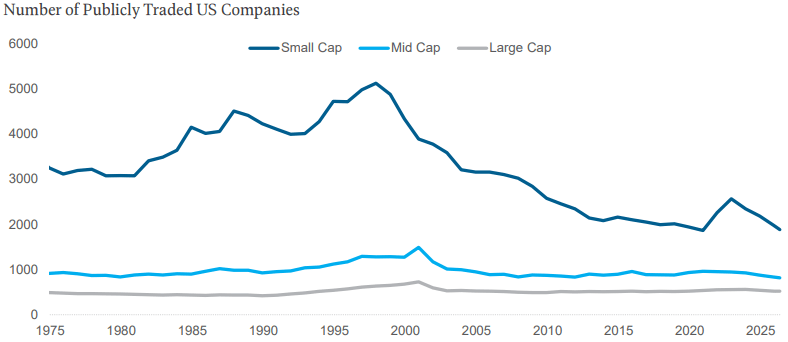
The number of small-cap public companies has declined sharply since the peak in 2000, and the number of private equity–backed private companies has surged to take their place.

___________________________
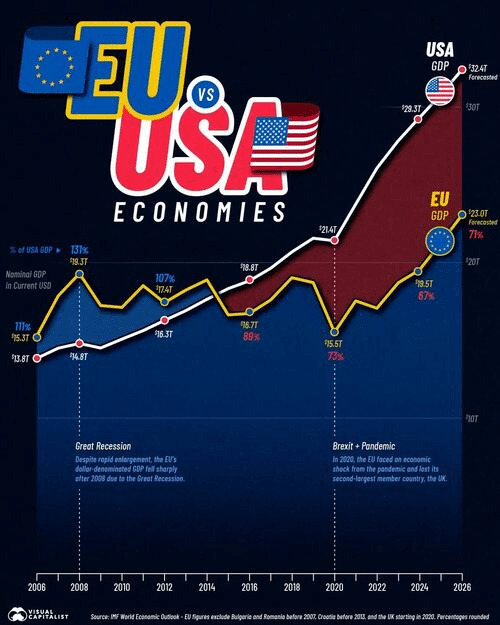
Europe’s GDP was larger than the U.S. until 2015:
________________
_________________________
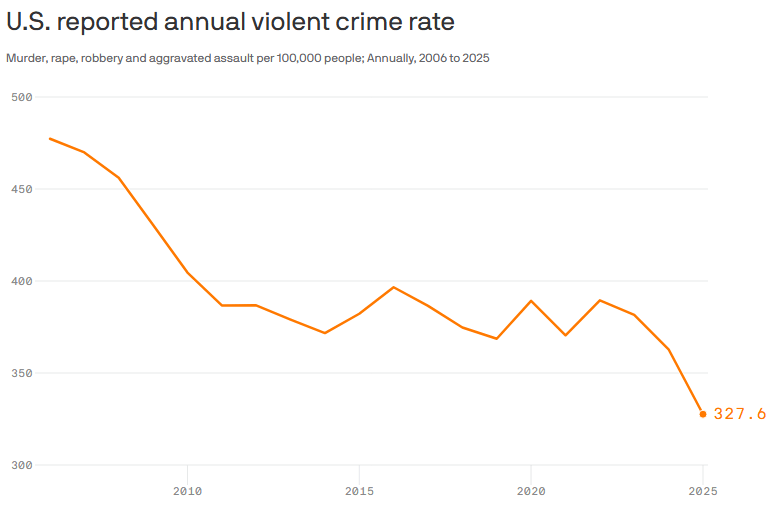
The U.S. violent crime rate plunged 9.7% last year, the largest annual drop since the FBI’s national estimates began in 1936. The decline in crime was unusually broad, touching every population group in the FBI’s violent-crime data, from the largest cities to small cities, suburbs and rural counties.
_________________________________
________________________
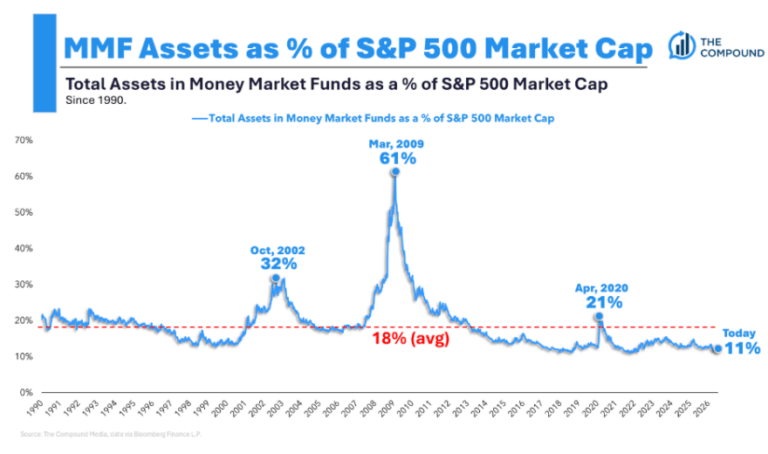
Why hold risk-free cash at 4% interest when stocks always go up 15% or more, right?
_______________________