Looksmaxxing, Calf Injuries & The Passage Of Time

Welcome to the weird and twisted philosophy of looksmaxxing, the online subculture devoted to optimizing male appearance through gym routines, skin care, jawline exercises and surgery. They advocate bonesmashing, or hitting one’s face repeatedly with a hammer to change the face shape. 

Looksmaxxers may not be aware of it, but they are optimizing themselves not for attraction from women, but for respect from men. That is the hidden logic of “looksmaxxing”. Men respect signs of dominance and toughness. A heavy jaw, sharp cheekbones, a hard stare. These features impress other men because they signal strength. So when a young man imagines an attractive male face, he tends to imagine an exaggerated version of those traits. He then sets out to build it.

Women, generally speaking, want something different. They tend to prefer a face that is softer than men assume. When masculine features get too extreme, they stop registering as attractive and begin to appear bizarre or even frightening. The looksmaxxer who has carved himself into a comic book caricature has pushed past the point where most women find him appealing. (Relatedly, some women make a parallel mistake, assuming men prefer extreme thinness when many men actually prefer healthier, curvier female bodies.)

A man who spends hours every day fine-tuning his face and body exudes qualities women tend to dislike. He can come across as vain, high-maintenance and self-absorbed — less like a secure partner than someone perpetually scanning for the next option.

The basic version of looksmaxxing is good for almost everyone: exercise, a decent haircut, clothes that fit, better posture, a reasonable diet. The looksmaxxing protocol the manosphere tells them to adopt gives women the ick.

__________________________________

In 2010-11, there were 18 documented calf injuries across the entire NBA season. Last season, there were 60. This season, 86. Why?

Basketball used to be a two-footed sport. Nowadays, the game is a one-footed sport. Most players are making every move off of one foot. The modern NBA is a pace-and-space machine—100-plus possessions a night, built on rapid ball movement, floor spacing, and the core principle that any player must be able to create offense off the dribble from anywhere. The epicenter of NBA offense has migrated from the low block to the perimeter, where endless drive-and-kick sequences stack on top of one another. 

Today’s game of relentless one-on-one creation; guards, wings, and increasingly centers attacking closeouts; and transition offense requires a different kind of movement. It requires rapid changes of speed and direction. And almost all of it happens off one foot.

Muscle damage isn’t caused by how hard a muscle works, but rather by how far it stretches while it’s working. The muscle almost always has to be activated to really be injured, and it almost always has to be stretched. When both of those things happen at once, that’s when injuries can happen.

The calf is particularly vulnerable to that combination because of our anatomy. The calf muscle has short fibers, and when the ankle rotates and the knee extends at the same time, it puts immense strain on the muscle.

That strain is amplified for taller people. The fibers don’t scale with the body. The bones—the levers—do. So a bigger person, when they rotate their knee joint or their ankle joint 20 degrees, they stretch their muscles relatively more. The same move, performed by a larger body, is more dangerous. Not because the player is weaker, but because the geometry is worse.

____________________________

I recently tuned into an episode of “The Diary of a CEO” podcast. The guest was an Irish comedian by the name of Jimmy Carr. The host asked Jimmy a pointed question: “What is the meaning of life?” Jimmy responded, “I’ll do it in five words.” What were the five words?

“Enjoying the passage of time”

Remember that trip you took with your friends to that warm weather destination? You enjoyed each other’s company and the days were filled with friendship, camaraderie, and wonderful moments of joy and happiness? You were absolutely enjoying the passage of time, and it had nothing to do with money or the state of the stock market and the world. You were living your best life.

All of this is to say, if we constantly worry about the national debt, the dollar, politics, how much money we have, or what someone on the news is saying, we are trapped in a prison of our own design. Now I know this isn’t a black or white thing; there are times when we won’t be enjoying the passage of time. We might be sick, or a family member may be struggling, or something is really impacting us.

Build for the long-term. Be thoughtful and patient. Have a plan. But enjoy the passage of time. Focus less on the things that can make us miserable. This life is all we’ll ever get.

___________________________
Three companies — SpaceX, OpenAI, and Anthropic — are expected to go public in mega-IPOs in the second half of 2026. The posited numbers are simply staggering compared to the largest IPOs in recent history, as the following figure shows.

In inflation-adjusted terms, SpaceX alone would rank as the second-largest IPO in history, just behind Saudi Aramco. All three together would exceed the entire dot-com IPO wave of 1995–2000. They will be at least half the value, inflation-adjusted, of all US IPOs since WWII.

But people aren’t focused on the right things. That much new equity supply hitting in a few months creates a math problem: the money has to come from somewhere. Most of it will come from existing holdings. Passive funds will be forced buyers once these names join the indexes, which will happen much faster than usual, given recent index rule changes. That means mechanical selling pressure on whatever many funds currently own, which is mostly the same large-cap tech stocks everyone else owns.

_______________________________
Taiwan and Korea are close to overtaking China’s stock market in size, largely due to only three stocks:

The gap between the United States (blue) and the rest of the world (green) based on their Price To Earnings ratios remains enormous: which means the U.S. is far more expensive.

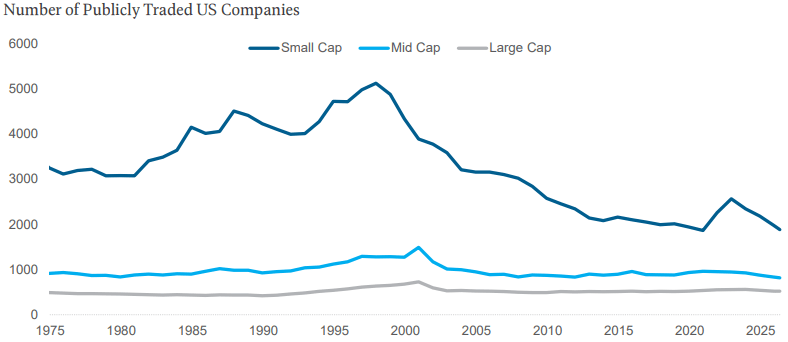
Small cap stocks continue to become less expensive relative to large cap stocks around the world:

Rating Dates, Risk Appetite & A.I. Fear

The Argentine app some women use to rate dates before going out started in Buenos Aires eight months ago as a private project among friends. Today it has 22,000 users, and it works like this: you upload screenshots of the chat of the guy you’re talking to, and an AI analyzes patterns of manipulation, narcissism, passive aggression, love bombing, likely lies, and chances of being ghosted. Then it returns a score.

“Emotional risk: 78/100”
“High probability of infidelity”
“Profile compatible with emotional dependency”
“Language similar to men previously reported”

Premium users can even connect the guy’s Instagram and let the model analyze follows, likes, activity times, and changes in behavior. The creator is 27 years old and studied psychology at the University of Buenos Aires. She says the idea came about after a friend ended up hospitalized due to domestic violence.

The app is called FirstRedFlag and has a waiting list.

__________________________

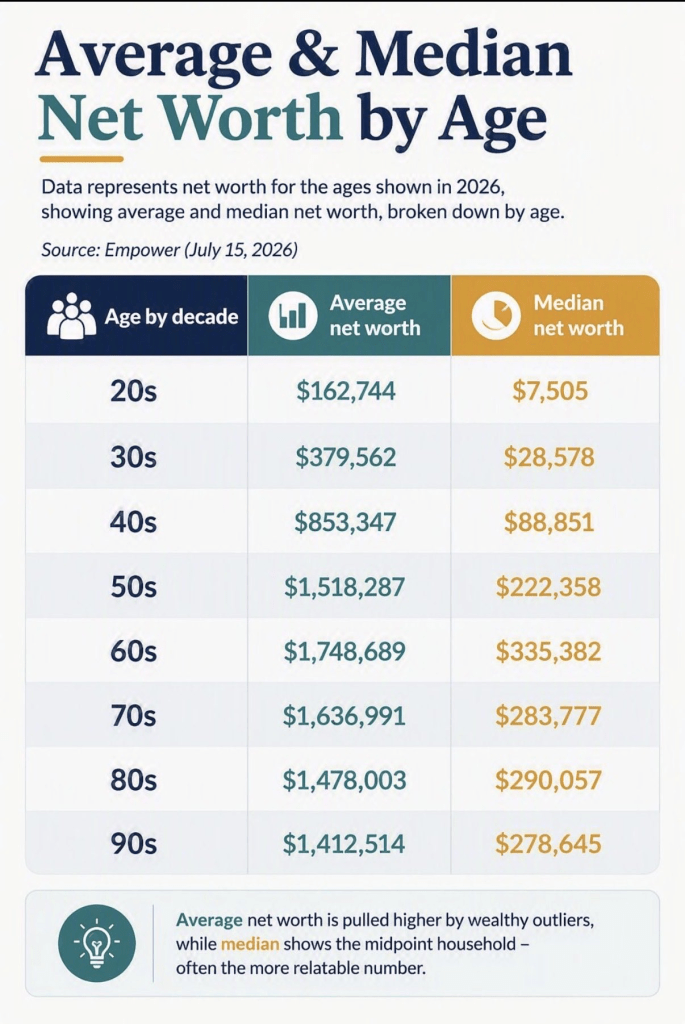
Your appetite for risk should decline in middle age as your liabilities increase (e.g., children, aging parents, etc.). I would apply the same line of thinking to those who have built some wealth. As your net worth increases, preservation becomes more important than chasing increasingly expensive luxuries.

Why is this the case? Because once you’ve won the game, the value of gaining a dollar plummets while the pain of losing a dollar soars. This is the fundamental principle behind prospect theory. Prospect theory states that people react to gains and losses asymmetrically. In other words, the pain of losing $100 is larger than the pleasure of winning $100, at least for most people.

If you’re wealthier, it’s like prospect theory on steroids. If you had a $2M net worth, the pain of losing $1M is significantly larger than the pleasure of gaining an additional $1M. It might even be larger than the pleasure of gaining $4M. While these amounts are arbitrary (and will vary from person to person), they exemplify the impact that wealth can have on risk-taking.

Another reason to reduce risk if you’ve built some wealth is the amount of time it takes to recover from a significant loss. If someone with $1,000 in a brokerage account lost it all, they could likely earn it back relatively quickly. But if someone lost $100,000 in their retirement account, it could take years to save that amount of money.

Unless your income can keep up with your wealth over time, you’ll have to decrease how much risk you take. Why? Because as your portfolio grows it becomes harder to replace future losses with future earnings. If you can save $50,000 a year, you can replace a 20% loss on a $1M portfolio in under 4 years (assuming a 5% return on your money). However, to replace a 20% loss on a $5M portfolio it would take over 14 years.

_____________________________

We’ve experienced a massive decline in reading scores for students over the last decade:

_______________________________

The fear over AI is palpable. So, it’s time for an optimistic take.

Why the AI doom-and-gloom story is missing the bigger picture. A lot of people hear “AI” and immediately think one of two things: it’s just Google search on steroids, or it’s a magic machine coming for everyone’s job. Both miss the bigger picture.

A job is not one single task; it’s a bundle of tasks supported by a massive, fragmented software stack. Email, spreadsheets, presentations, Slack, CRM platforms, and, in finance, a Bloomberg Terminal, FactSet, and market data feeds. For millions of jobs, the cost of software to provide basic tools for these tasks can run to $1,000 a month, and more for complicated roles.

Much of the modern workday is consumed by the friction of this stack: moving data between systems, cleaning spreadsheets, searching for files, and summarizing meetings.

AI is emerging as the new interface for enterprise software. Think about the iPhone. It collapsed cameras, GPS devices, and music players into one simple, powerful device. AI is doing something similar for workplace software, turning 10 clunky programs that don’t talk to each other into a single conversational prompt.

Just as we stopped buying standalone cameras and tape recorders once the smartphone came around, companies will happily pay for an AI layer. It will be far cheaper and eliminate the bloated costs of that fragmented software stack that requires you to perform endless, mundane tasks because these programs do not talk to each other.

The immediate fear is that if AI lets three people do the work of five, companies will fire two people. But that ignores economic history. When the electronic spreadsheet was invented, the cost of calculations plummeted. But accounting jobs didn’t vanish; demand for complex financial modeling exploded. Accounting clerks became financial analysts, a more in-demand role.

Jevons Paradox suggests that making a resource more efficient actually increases total demand for it. By absorbing the drudgery, AI allows the employee to focus on judgment and strategy—making the human element more valuable, not less. In this framework, demand for high-output workers doesn’t shrink; it explodes.

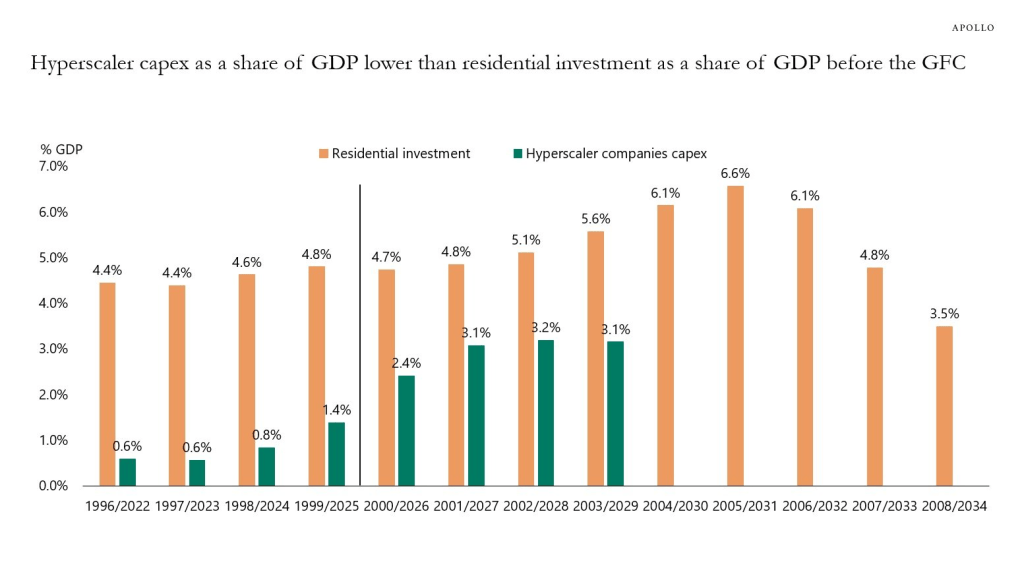
Does this justify the mind-numbing capital expenditure currently pouring into AI infrastructure? If AI fulfills this promise of enterprise-wide productivity, the investment isn’t just justified—it’s a bargain. That said, we are clearly near the peak of a hype cycle, just like the internet was in 1999.

But remember: the dot-com crash did not mean the internet was a bust. It simply meant the hype outpaced the infrastructure. After the wreckage cleared, the optimistic predictions about connectivity and productivity were not only fulfilled—they were exceeded.

The same path can lie ahead for AI. And instead of the fear that AI will replace workers, it’s the joy of replacing soulless busywork, making jobs more fulfilling… and more profitable for employers.

_____________________________

____________________________
It’s remarkable how many independent, secular trends are anti-alcohol right now.

  • GLP-1s
  • post-1970s rise of helicopter parenting
  • reaction to the binge-drinking spike in late 20th century
  • phones killing teenage partying
  • surge in young adult fitness (dancing clubs down, running clubs up)
  • general rise of healthmaxxing culture

______________________________
_________________________________
Price’s Law, Colon Cancer & Nike’s Strategy

In 1963, a physicist named Derek Price was studying scientific publications, trying to understand why some researchers dominated their fields while others published and got zero attention. He found that the square root of the number of people in a domain does 50% of the work. Here’s what that looks like in practice:

  • In a company with 100 employees, 10 people produce half the output
  • In a field with 10,000 scientists, 100 produce half the meaningful research
  • On a team of 25, 5 people carry the entire operation

It wasn’t exclusive to research papers—this pattern showed up everywhere he looked.

  • Of the 30 million businesses in the United States, about 5,500 (the square root) generate half the total economic output.
  • Spotify has about 11 million artists, but 50% of all streams are generated by only 3,300 artists. 
  • In astrophysics, the square root of stars in a galaxy produce half the light.
  • In creative fields like YouTube, very few channels account for the vast majority of both views and ad revenue.

Price’s Law violates our egalitarian instincts. We want to believe everyone contributes equally, that effort equals outcome, that hard work is the great equalizer, but reality is far from it.

You need (1) skill, (2) consistency, (3) opportunity, and (4) luck all compounding in the same direction. Most people have one or two of those ingredients. The square root has all four.

Price’s Law reveals that equality of outcome and equality of opportunity cannot coexist in complex systems. Even if you give everyone the same resources, the same training, the same chance, outcomes will still stratify eventually. Some people will compound their advantages. Most won’t.

What does this mean in practice?

  1. You have dozens of skills, but √n of them drive half your value in the marketplace. The reason why we spend so much time trying to be “well-rounded” is because we’ve been lied to.
  2. If you work 40 hours a week, about 6 of those hours actually matter. The other 34 are maintenance, “busywork,” meetings that could’ve been emails, and a whole lot of goofing around.

The paradox (why we still need to do the other 90%): you can’t know which skills are your multipliers without trying a bunch of skills. You can’t know which relationships matter without meeting a lot of people.

  1. The early game is exploration. You’re planting seeds everywhere, seeing what grows. Price’s Law hasn’t kicked in yet because you don’t have enough data.
  2. The middle game is identification. Patterns are emerging. “Oh, this is what works.” That’s your √n.
  3. The late game is exploitation. You double down on the winners. You cut out the losers. You focus your energy towards the best bets.

Explore the noise until you have signal. Then exploit that.

_______________________________

As of April 2026, Nike stock sat below US$45 – a market capitalisation of US$68 billion, its lowest level in over a decade, and a fall of more than 75% from the US$280 billion the company commanded at its 2021 peak.

How does what was once considered one of the widest consumer brand moats in the world, built over half a century, erode over the course of a few short years?

A good starting point is January 2020, when John Donahoe took over as Nike’s new CEO. The board wanted a digital-first operator, and Donahoe had the résumé – ServiceNow, eBay, and Bain – even if he was one of the few leaders in Nike’s history not to have risen through its operating ranks.

Several major strategic shifts followed, each departing from what had worked for Nike for decades – yet each looked like a logical transformational move to take Nike into the 2020s. The financial pay-offs were immediate: gross margins expanded, SGA came down, and return on ad spend looked sharper quarter by quarter. Wall Street loved it.

Yet each of these moves shared a common mechanism: they improved short-term financial metrics by drawing down assets that had taken decades to build. In effect, Nike was not just transforming its business – it was monetising its moat. We will examine each in turn.

______________________________________

The number of patients in their 30s and 40s with late-stage cancer in their lower digestive tract is surgin. It’s not just that these patients are decades younger than what had been typical for colorectal cancer; the tumors themselves are also more stubborn to treat.

Even though young patients are treated with more aggressive chemo or more surgery, patients’ outcomes are not necessarily better. The disease has become the top cancer killer among people under 50, even as death rates decline in older age groups.

Doctors suspect that the gut’s microbiome is a key actor behind these forms of cancer in particular. Patient advocates say it’s critical that more people, especially young adults with a family history of these cancers, get diagnostic testing.Genetics plays some role in colorectal cancers; as many as a fifth of patients have hereditary markers. But genetics do not explain what drives the vast majority (80%) of cases.

Thirty-plus years ago almost zero patients were in clinics under the age of 50 with colon cancer. Now it is almost half. There are other changes in disease pattern with earlier onset tumors that tend to show up differently; more tumors are found near the rectum, lower in the tract.

Experts suspect several factors may be leading to these more frequent, virulent cancers:

  • Ultra-processed foods
  • Plastics and chemicals that can leach into water and our bodies
  • As a population, we are not as active as we used to be.

All of these factors act on our gut, the composition of our microbiomes, and the bacteria and myriad microorganisms living there

_________________________
This, of course, has consequences. Here are six:

  1. Monetary policy transmission is direct. When the Fed lowers (raises) rates, US households buy (sell) stocks. No other central bank has this much control over consumer sentiment and spending via markets. The wealth effect makes policy both more powerful and harder to control.
  2. Markets and politics. When 60% of households own stocks, markets drive elections. Politicians and central bankers in the US hate crashes almost as much as they hate high gas prices. This holds down volatility and encourages wacky risk-taking.
  3. Passive indexing makes it worse. Most of that 60% own stocks through 401(k)s and IRAs invested in index funds. This means a huge share of American household wealth is concentrated in the same ~500 companies, weighted by market cap. Diversification is an illusion at the aggregate level. Everyone is long NVIDIA, whether they know it (or want it) or not.
  4. Retirement security is market performance. The US shifted from defined benefit to defined contribution pensions over the last 40 years. A sustained bear market is no longer just a financial event — it’s a retirement crisis.
  5. Inequality is amplified. The 60% figure is misleading because the bottom half of that cohort owns virtually no stock. The top 10% hold ~90% of equity wealth.
  6. Contagion from US markets is a virus. Because US households are so deeply exposed, a domestic equity crisis hits consumer spending, which then spreads worldwide through trade. The US market is the world’s risk-off/risk-on switch, and the household exposure ratio is part of why.

Time Perspective, Deficits & Dementia

When the average person graduates from high school, they’ve already used up 93% of the total in-person time they’ll ever spend with their parents. They’re already in the tail end.

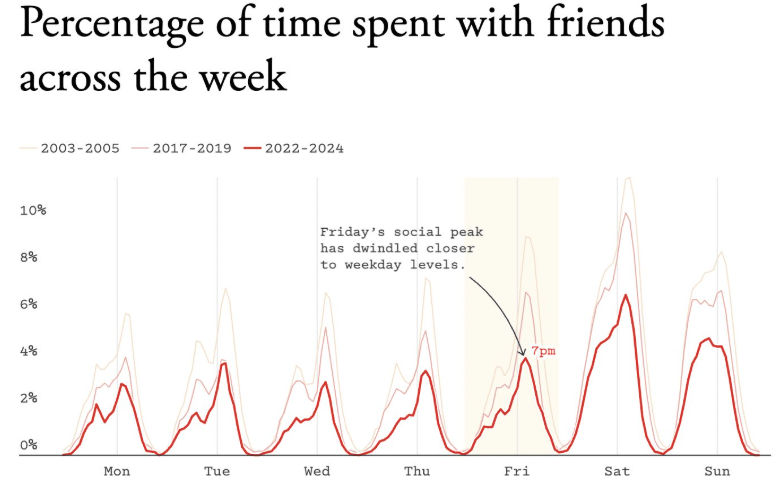
The same often goes for old friends. In high school or college, you hang around the same group of friends about five days a week. In four years, you probably rack up 700 group hangouts. Now, scattered around the country with totally different lives and schedules, you’re probably in the same room at the same time only 10 days each decade. The typical person leaving college is already in the last 7% of the time they’ll ever spend with their friends.

What do you do with this information? There are three main takeaways:

1) Living in the same place as the people you love matters. You probably have 10 times the time left with the people who live in your city as you do with the people who live somewhere else.

2) Priorities matter. Your remaining face time with any person depends largely on where that person falls on your list of life priorities. Make sure this list is set by you—not by unconscious inertia.

3) Quality time matters. If you’re in your last 10% of time with someone you love, keep that fact in the front of your mind when you’re with them and treat that time as what it actually is: precious.

_______________________________
U.S. corporate profits and stock market valuations are at historic highs, but the kind of real, productive investment that’s supposed to create those profits (building factories, equipment, infrastructure, etc.) has been falling for decades. Why have U.S. corporate profits and equity valuations reached historic highs despite a concurrent secular decline in net domestic investment?

In the mid-20th century, profits came from companies investing money to build things, sell more, and earn returns. Today, profits keep climbing even though companies aren’t really investing more in the real economy. So where are the profits coming from?

Federal budget deficits are the source. The government is essentially borrowing money and pumping it into the economy through programs like Social Security and Medicare, and that money flows almost dollar-for-dollar into corporate profits — which then get recycled into the stock market, inflating share prices.

Net Corporate Profits = Net Domestic Investment + Government Deficit − Household Saving − Foreign Saving.

This is just bookkeeping — it has to be true by definition. A government deficit is negative saving. When the government spends more than it takes in through taxes, it stimulates income and profits.

Here’s how it works in plain terms:

  • The Treasury issues bonds and uses the money to send entitlement checks (Social Security, Medicare, etc.) to households
  • Those households (mostly middle and lower-income, who spend nearly everything they get) go out and buy goods and services
  • That spending shows up as revenue at corporations
  • Because the spending didn’t require companies to spend more on production, most of it drops straight to the bottom line as profit

The wealthy people who originally bought the Treasury bonds basically just swapped cash for a Treasury bond — they didn’t lose anything. But the Treasury’s spending stimulates real consumption, which becomes corporate profit.

There’s a nearly one-for-one long-run relationship between fiscal deficits and corporate profits. In other words, every additional dollar of deficit roughly translates into a dollar of corporate profit over time. However, if you just look at quarterly correlations between deficits and profits, you’ll see a negative relationship — that’s because during recessions, profits collapse and deficits spike at the same time. But that’s a short-term cyclical effect that masks the long-term structural relationship.

The “natural experiment” occurred when the U.S. government briefly ran brief budget surpluses in the late 1990’s, withdrawing net spending from the economy. During this period of declining deficits and brief surpluses, corporate profits fell too. But with the recession in 2001, fiscal deficits returned and profits immediately resumed their upward climb.

What Happens Then?

Once corporations have these excess profits, what do they do with them? Here’s where the second half of the financialization story kicks in.

In a healthy economy, companies would reinvest profits into expanding production. But for decades, the returns on real investment haven’t been attractive enough to justify it (due to global competition, especially from China, weak domestic demand, etc.). So instead, firms returned profits to shareholders through dividends and buybacks.

Those distributions go mostly to wealthy households — and wealthy households don’t spend most of that money on goods and services. They reinvest it in financial markets, often through passive index funds. Mandated to remain fully invested, these funds then recycle the inflows to purchase stocks in proportion to their market capitalization indifferent to valuation, thus bidding up prices without any change in fundamentals.

In other words, an index fund doesn’t ask “is this stock cheap or expensive?” — it just buys mechanically. So when more money flows in, prices get pushed up regardless of underlying fundamentals. Research shows that each $1 of inflow increases market value by roughly $5 — meaning passive flows have an outsized impact on valuations.

How Did We Get Here?

1. The collapse of national saving. In the 1950s and 1960s, net domestic investment, funded entirely by national saving, averaged 11% of GDP. But then structural fiscal deficits started to offset private saving, and national saving has now collapsed to nearly zero.

2. The long decline in interest rates. Two big forces pushed rates down: China joining the WTO in 2001 (which created huge trade surpluses that flowed back into U.S. Treasuries) and the post-2008 era of zero interest rate policy and quantitative easing. Cheap borrowing costs let the government run big deficits without “crowding out” private investment.

3. The shift from tangible to intangible investment. Gross domestic investment ebbs and flows with the business cycle, but its longer-term average has held relatively steady, only slipping from about 23% of GDP during the 1950s to 1980s to about 21% in recent decades. Net domestic investment has declined from nearly 11% of GDP in the mid-twentieth century to about 5% in recent years. Over the same period, depreciation rose from roughly 12% of GDP to more than 16%.

The reason: today’s “capital” is software, data, servers, and R&D — which depreciates and goes obsolete much faster than the factories, machines, and infrastructure of 50 years ago. So companies have to spend more just to replace worn-out capital, leaving less for genuine expansion.

4. The financialization of profits. As deficits soared from near zero in the 1960s to 8% of GDP by the 2020s, the profit share grew in parallel, from 6% of GDP to more than 10%. Over this same time, national saving collapsed from 11% of GDP to near zero.

5. Growing inequality as a consequence. Because the profit share of GDP grew, the labor share necessarily shrank. Even as social transfers soared by 10% as a percentage of GDP, the labor share of national income entered a prolonged decline, falling from near 68% in the early 1980s to 62% by the mid 2020s. And because the rising profits accrue mostly to wealthy households, who don’t spend much in the real economy, this further fuels the cycle of recycling profits into financial assets.

There are competing theories for why corporate profits have grown so much — the “superstar firm” hypothesis (industry consolidation gives dominant firms pricing power), globalization (cheap foreign labor crushed wages), and the rise of high-margin tech companies with intangible-heavy business models.

While part of the equation, these factors operate within the larger macroeconomic environment established by fiscal and monetary policy. In other words: those theories explain which companies win, but the deficit story explains why the total pie of corporate profits has grown so much faster than the underlying economy.

What This Means Moving Forward:

The foundation supporting U.S. corporate profits and equity valuations has weakened, leaving the market increasingly fragile. Profits now depend on large-scale fiscal deficits, a sharp departure from the mid-century model when profits were generated by private investment of retained earnings.

Today’s stock valuations rest on continued (and growing) fiscal deficits. If at some point the U.S. is forced — by the bond market, by political will, or by a debt crisis — to reduce deficit spending, the entire mechanism that’s been propping up profits and stock prices could go into reverse.

Reversion to a healthier macroeconomic environment of declining deficit spending and greater net investment may cause sharp declines in both corporate profits and valuation multiples and likely trigger a financial crisis with politically toxic consequences. Ironically, the more palatable option may be to remain on the current path until a financial crisis imposes on us the discipline that we are unwilling to impose on ourselves.

Either path leads to a painful adjustment; it’s just a question of whether it’s by choice or by crisis.

_______________________________
One of most exciting longevity trends right now is the decline in dementia. At a given age—70, 75, 80, etc.—the prevalence of dementia is down compared to what it was decades ago. Today’s 90-year-olds have less than half the risk of dementia that ones in 1984 did.

Memories, Cash Flow & The Happiness Crash

Your hippocampus doesn’t encode days that feel identical. If this Tuesday looks like last Tuesday, your brain files them as a single compressed memory. The second day never gets its own folder.

This is why decades feel like they disappeared. The hippocampus uses novelty as its filter for “worth storing.” Repetitive routines trigger temporal compression. Same commute, same desk, same dinner, same bedtime: the brain deduplicates the whole sequence into one entry. You lived 365 days. You filed 40.

As people move through continuous experience, the hippocampus and medial prefrontal cortex fire in discrete bursts at moments the brain flags as “something changed.” Each burst becomes a retrievable memory later. In stretches with no boundaries, the bursts flatten. Participants with more boundaries in a given period remembered more of it afterward. Segmentation literally builds memory.

Sleep is the second mechanism. During slow-wave sleep, the hippocampus replays the day’s episodes and transfers them to the neocortex for long-term storage. This is when memory actually gets filed. Cut sleep short and encoding efficiency drops. Chronic sleep debt means experiences you had never complete the transfer. The memory existed. It just never made it to disk.

The third mechanism is where dopamine meets attention. Novel stimuli trigger the ventral tegmental area to release dopamine into the hippocampus, which gates what gets encoded. Mind-wandering does the opposite. When your default mode network takes over (phone scrolling, rumination, email during dinner), the hippocampus stops tagging the present. You were at the wedding. Your hippocampus was in your inbox.

The fix comes straight out of the mechanism. New locations, new food, new people, new routes home. The brain needs boundaries to build memories. Go to bed earlier so replay actually runs. Put the phone down when something is happening so the dopamine signal can fire.

The more forgettable the day, the shorter the decade.

__________________________
Traditional valuation metrics like the Shiller CAPE (price-to-earnings) ratio have been screaming “overvalued” for most of this century, but there has been almost no mean reversion since 2008 for U.S. stocks:

Why?

When you swap earnings for free cash flow (sales minus input costs, labor, taxes, and capex — basically what’s actually available to pay owners), the picture changes dramatically. Until recently, the price-to-free-cash-flow ratio bounced around but had no long-term upward drift:

Two structural shifts explain the divergence:

  1. Labor share has declined ~8 percentage points of GDP since 1980. Less of the pie goes to workers, more goes to firm owners. This boosted earnings.
  2. Capex has been relatively weak as a share of firm value. Firms (especially big tech) generated massive earnings without heavy reinvestment, so cash flow grew even faster than earnings.

However, that clean free-cash-flow story is under pressure right now. Some of these companies have gone from huge positive FCF to zero or negative FCF, taking on debt to fund it. Big tech has flipped from cash-generating machines to massive spenders on AI data centers, chips, and energy infrastructure.

The chart below is the same as above, but extends the data adding the last few years:

Bullish case: This is 1-2 years of heavy investment that will produce a new plateau of even higher cash flows, and AI further reduces labor share.

Bearish case: AI isn’t “free money” — even adopter firms (not just the hyperscalers) will need serious capex to implement it, and the payoff is uncertain.

Full podcast discussion on this topic on an episode of Odd Lots this week.

__________________________
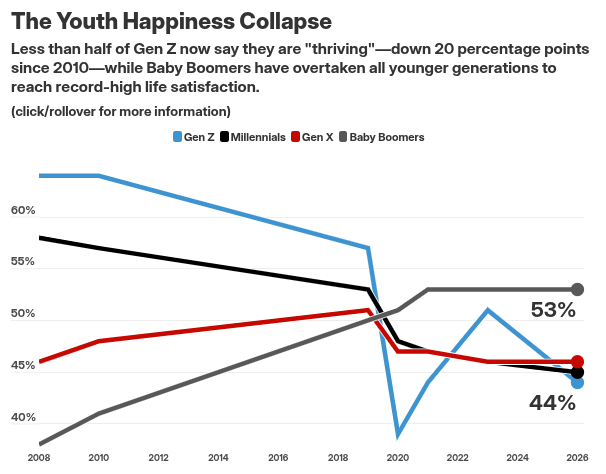
There was a sudden, sharp and historically unprecedented decline in self-reported happiness in the US population. It occurred during 2020, the year of the Covid pandemic, and mainly persists through 2024. 

This happiness crash spread across nearly all typical demographics and geographies. The happiest groups pre-Covid (e.g., whites, high income, well-educated and politically/ideologically right-leaning) tend to show the largest happiness reductions. 

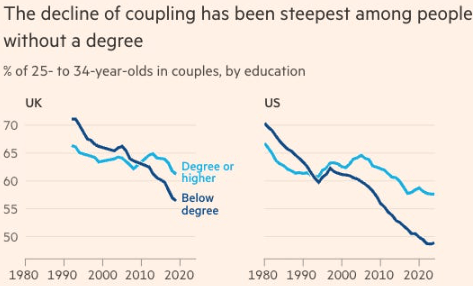
The glaring exception is marital status, which has consistently been an important marker for happiness. The already wide happiness premium for marriage has, if anything, become slightly wider. With both married and unmarried reporting large declines in happiness the country has become segregated: slightly over half-the married adults-remain happy on balance; the unmarried, nearly half, are now distinctly unhappy.

Status, Procrastination & Hair Transplants

Your brain is running status calculations all the time — looking for who is capitulating to whom, who commands attention, who has the nicest stuff, who seems confident, who people want to be around, etc, etc. This is un-installable software in your brain.

Every time you feel a pang of envy scrolling through someone’s engagement photos, every time you adjust how you describe your job depending on who’s asking, every time you feel a flush of pride when someone important remembers your name — that’s the program running. You can intellectually reject status games all you want — your brain is unconsciously still playing them.

The important thing is that status is completely relative. It’s not calculated against some universal benchmark. It’s calculated against whoever else is in the room. A surgeon has high status in a hospital but not necessarily at a skate park. Which is why status is so deeply entangled with money. Money is the most legible, most portable status signal we have. Every financial decision you make is shaped, consciously or not, by where you think you stand relative to the people around you.

There are two fundamentally different kinds of status. The first is the respect and admiration you get from people who actually know you — your friends, your coworkers, your community. Your standing on the local ladder. It’s earned through relationships, rooted in a specific place and a specific group of people. And it’s the kind that actually predicts whether you’re happy. When your local standing goes up, your well-being goes up. When it drops, it drops. The effect is stronger than income, education, or job. Having money only really feels good insofar as it makes the people around you respect you more.

The second is what most people mean when they say “status” — wealth, income, job title, clothes, etc. The stuff people can more readily see (and quantify). It’s much easier to compare your salary to someone else than it is to determine if you’re a better partner/friend/daughter.

This kind of status barely moves the needle when it comes to happiness. People adapt to new income levels almost immediately (hello, hedonic adaptation). You get the raise, you feel good for a month, your reference group shifts, and you need more.

 The pursuit of status has less to do with material comfort than with love — that what we’re really chasing when we chase rank is the assurance that we matter to someone. That we won’t be abandoned. That we’re worthy of attention and care. Which makes the whole status economy feel even crueler, because the version of status our current system sells — the one made of metrics and money and things that scale digitally — is the one least likely to deliver the thing we actually want.

The whole system runs on a kind of collective amnesia about what actually matters. We build the metrics. We optimize for the metrics. We forget why we built the metrics. We assume the metrics are the thing instead of a proxy for the thing. And then we wonder why we feel empty.

________________________________
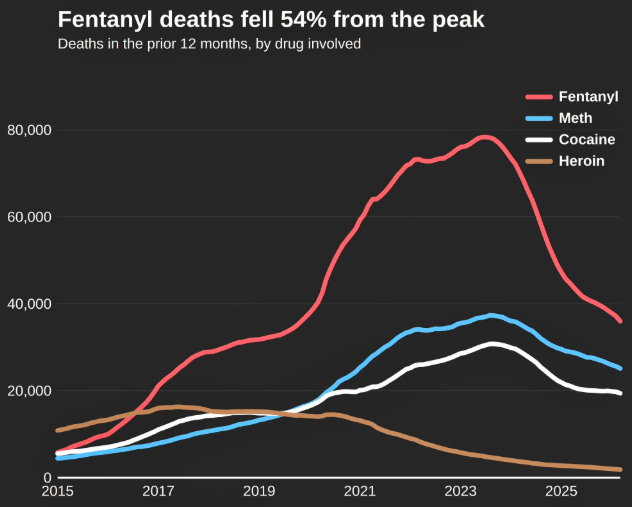
There’s one piece of advice I’m confident applies to basically everyone: you should make sure your psychological center of gravity your real and immediate world – the world of your family and friends and neighborhood, your work and your creative projects, as opposed to the world of presidencies and governments, social forces and global emergencies.

This will make you happier. It will make you more meaningfully productive.

Keeping your center of gravity immediate and local means treating the world of national and international events as a place that you visit – to campaign or persuade, donate or volunteer, to do whatever you feel is demanded of you – and that you then return from, in order to gain perspective, and to spend time doing some of the other things a meaningful life is about.

One very good way to tell that your center of gravity is out of whack is when it feels like you spend a lot of time inside the minds of far-off strangers. To follow the news isn’t merely to follow the activities of Elon Musk, but to feel overly familiar with his twitchy and emotionally reactive inner life as well. This isn’t healthy.

We need a certain psychological distance, some cognitive privacy. There’s some appropriate level of such privacy between me and my wife, for goodness’s sake, so you’d better believe there’s one between me and Musk.

Returning your center of gravity to your immediate world means remembering that “the way you want the world to be” is something you can live, here and now, not just something for which you advocate or argue. Your immediate world isn’t only somewhere you come to recharge, before heading back to the arena. It is the arena.

I’ve found one tried-and-tested mindfulness exercise to be helpful here. Become consciously aware of your feet – of their position in space and their temperature, their contact with your footwear or the ground. Come out of your head for a moment, and especially out of other people’s heads. Here you are. Here. On the ground.

______________________________

A two-minute trick to outsmarting procrastination, from a new book titled How A Little Becomes A Lot:

Choose something you’ve been putting off and commit to doing it for exactly two minutes. Set a timer: When it goes off, you can stop – no guilt, no pushing through. You’re not changing your life overnight – you’re just proving that beginning doesn’t have to be overwhelming.

The limits of our willpower and the importance of structuring our environment to help us accomplish what we want. To change our behavior, we need to change out surroundings. Instead of saying “I’m going to refrain from eating Fig Newtons today,” it’s better to put the Fig Newtons on the top shelf behind a box of rice crackers.

__________________________

The men who can afford it are shelling out up to $20,000 to get hair transplants, which have become harder to detect and ever more precise.

Men with more modest means can find packages that fly them to Turkey and deliver the same procedure for around $3,000 — or they can start with the cheapest option of all, which is going on finasteride. Prescriptions for the drug in the United States tripled between 2017 and 2024, a time when telehealth companies were taking off, just as men started spending hours a day staring at their hairlines on Zoom.

Feeding that anxiety is a mass-marketing campaign teaching men the same brutal self-scrutiny that women have long been trained to perform. A typical male in his 20s or 30s is likely to receive a flood of ads and shout-outs on Instagram, TikTok, YouTube and the livestreaming platform Twitch for hair-growth products that appeal to men their age.

Young men who have come of age in the time of the manosphere are prime audiences for endless reels from influencers — some of them exceptionally buff, some of them funny, some of them with millions of followers, who are trying various treatments in the hope of regaining a full head of hair. The hair-loss influencer Zeph Sanders has over one million TikTok followers tracking his “hair journey.” The ubiquity of this kind of content makes losing one’s hair no longer seem inevitable; going bald can now feel like a choice — a conscious decision.

The advertising and those influencers are conveying the message to young men that they should start taking finasteride young; in their early 20s. The approach fits into the broader “prejuvenation” trend, in which young men and women are using lasers, fillers and products like Botox to fend off signs of aging before they start, rather than doing damage control when degradation is already well underway.

Parents come in asking about finasteride for their teenage sons, looking to make sure they get “all the best they can have in order to succeed in life.” Young men are also coming in on their own for help keeping their hair. There’s no new epidemic of hair loss, but there is an epidemic of men freaking out about it.

_______________________________

Here’s a number that should change how you think about retirement: 12.

That’s how long the average healthy 60-year-old has before their mobility, energy, and independence start to significantly decline. Not before they die… before life gets noticeably harder. You have more time than you have energy. More years than you have vitality. And if you don’t understand that distinction, you’ll waste the good years preparing for the declining ones.

The cruel irony is that most people spend the first decade of retirement living as they did in the last decade of work—carefully. You saved for 40 years. You delayed gratification. You were prudent, responsible, cautious. And that got you here. It built the nest egg. It secured your future. But if you keep living that way, you’ll waste the very years you saved for.

Your 60s are not a rehearsal for your 80s. They’re the main event. And if you don’t spend (not recklessly, but intentionally) during the years when you can still fully enjoy it, you’ll reach 78 with a big bank balance and a long list of regrets.

If you’re reading this in your 60s, you’re in the window. You still have your good years ahead of you. You haven’t missed it. But the window is finite, and it’s closing.

If you’re in your 50s, you have even more time, but you also have a chance to shift how you think about retirement before you get there. To plan not just financially, but experientially. To design a retirement that front-loads the living, not the saving.

Removing Burden, Parent Goals & Happiness

The British-born Zen master Houn Jiyu-Kennett said her teaching style wasn’t to lighten the burden of the student, but to make it so heavy that he or she would put it downI had a full-body reaction the first time I encountered that. To me, the phrase meant this: you can slog through life trying to ‘get on top of things’, trying to reach the point at which you feel like you know what you’re doing, trying to fix your flaws, or make yourself emotionally invulnerable… All of that is an attempt to ‘lighten the burden’, and there are a thousand self-help gurus on standby, promising to aid you in the effort.

But making the burden heavier? That means seeing that as a finite human you’ll never get on top of everything, never fully understand what makes others tick, never immunize yourself from distress. The burden of reaching that goal is an impossibly heavy one. And so you put it down. You let your shoulders drop and your muscles unclench. And then – crucially – you’re free to actually be here, actually do stuff, actually show up. You get to climb life’s mountains without lugging a huge rucksack full of steel ingots on your back the whole way, which is both easier and much more fun.

The spiritual writer Michael Singer points out: reality doesn’t need you to help operate it. It gets along just fine without your worrying.

Who knew? I don’t think of myself as an obscenely self-centered narcissist, yet I have to admit that when I heard those words, I suddenly perceived the subtle sense in which my thoughts and actions – and especially the background muscular tension I instinctively bring to them – were indeed somehow premised on the notion that reality itself would be badly affected were I to relax my guard.

I seem to imagine that my worrying is effective – that there’s something about the very act of fretting about the future that helps keep everything on track. This is, rather obviously, false. All I really need to do is to show up for what’s happening, appreciate the spectacle of it, and go with the flow.

Life is not a problem to be solved. Or else that life is nothing but a never-ending stream of problems to be solved, which in fact amounts to the same thing. Grasping this is both an enormous relief and tremendously energizing – because now you get to pour your finite time and energy into something infinitely more absorbing than trying to keep life under control, which is actually living it.

_____________________________

I had a conversation with a guy a few months ago whose immigrant parents came to America and worked tirelessly in low-wage jobs to make ends meet. Those kids are now adults, and this guy felt a sense of shame that as a college-educated white-collar worker he would not have to suffer the same way his parents did for him. His parents instilled in him the lessons of frugality and grit. Would his own children learn the same from him if they watched their father live a comparatively easy life?

He gave an example: when he was a kid, all books were borrowed from the library. Now his young daughter demands (and gets) to purchase $15 Taylor Swift books that pile up in her room.

My response was that if we talked to his immigrant parents, I would bet they would say: that was the goal. To put it differently: The goal of some parents is to work so hard that their kids and grandkids get to live a life that appears spoiled by the standards of previous generations.

What’s common to miss here is that when one generation’s life becomes comparatively easier than before, their life does not become objectively easy; they just move on to worrying about higher-order problems that were previously deemed not urgent enough to worry about.

I hope my kids and grandkids won’t have to worry about cancer in the ways we do. I hope they have incredible technology that makes their jobs easier than ours. I hope that everyday frictions we deal with today disappear. I hope their energy is so abundant they consider it unlimited.

Is that spoiled? I suppose, but when you frame it like that you might think of a different word – perhaps “lucky,” or, “fortunate.” Or perhaps, “beneficiaries of the accumulated hard work of those who came before them in a way that leaves them able to spend their days solving new problems.” Which is what you and I are today.

__________________
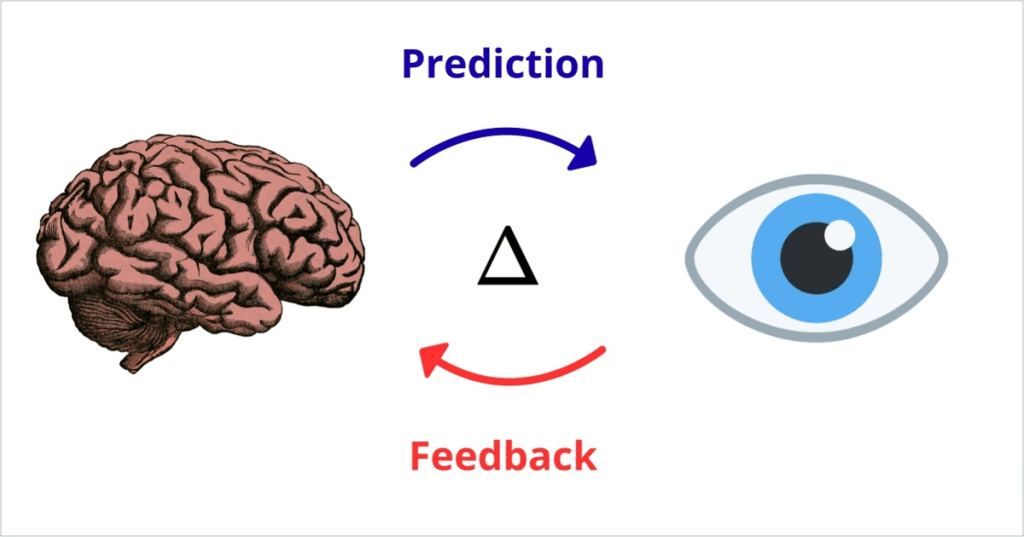
Mark Manson reviewed over 2,600 studies to rank 19 of the most common self-improvement techniques based on their effectiveness. He sorted them into four tiers: (1) legitimately works, (2) works sometimes, (3) probably not helping, and (4) straight up bullshit. Here were the results:

TIER 4: STRAIGHT UP BULLSHIT (AND MAY ACTUALLY HURT YOU):

19. Suppressing Negative Thoughts — The “ironic process” means trying not to think about something makes you think about it more. It can work for very smart people in very short-term, high-pressure moments, but the rebound effect makes things worse over time for everyone.

18. Microdosing Psychedelics — No consistent measurable benefit beyond mood improvement (i.e., you’re just getting a little high). Studies show a decline in cognitive function and executive reasoning, and long-term microdosing may carry adverse health effects from chronic exposure to psychoactive compounds.

17. Intuitive Decision-Making (“Trust Your Gut”) — Your gut doesn’t make better decisions; it just makes you feel better about your decisions. The exception is domain experts with decades of pattern-matching experience, but for most life choices, it’s self-serving and often detached from reality.

16. Catharsis / Venting Anger — Screaming into a pillow or punching a wall doesn’t release anger — it trains you to indulge it. The small effect sizes that exist are negative, meaning it makes you angrier more often.

TIER 3: PROBABLY NOT HELPING

15. Crystal Healing — Pure placebo effect. If you believe it works, you might get a small something, but there’s essentially zero evidence of any mechanism. Mostly it just harms your bank account.

14. Willpower / Ego Depletion — The concept of willpower as a finite tank you drain throughout the day is highly contested and probably not real. Believing you have limited willpower tends to make you underperform, and productivity problems are usually emotional problems in disguise.

13. Power Posing — Any mood boost is extremely transient, and the early hormonal claims (testosterone increases) have been debunked. It’s essentially a tiny placebo triggered by becoming momentarily aware of your posture.

12. Learning Styles (Visual/Auditory/Kinesthetic) — Over 90% of U.S. teachers still believe in this, but research consistently shows no real effect. The benefit people report is simply from having a choice in how they learn, not from matching a “style.”

11. Positive Affirmations — A “win more” strategy: people who already feel good get a small boost, but people with low self-esteem often feel worse because it highlights the gap between the affirmation and their actual beliefs.

10. Morning Routines — Extremely personality-dependent and mostly a placebo driven by a sense of control. Forcing a routine that mismatches your chronotype or becoming rigidly dependent on it can actually backfire.

TIER 2: WORKS SOMETIMES (MAYBE/DEPENDS):

9. Positive Visualization — Works well for physical/athletic performance and when paired with concrete planning. Without a plan, it’s just daydreaming — and pure outcome-based visualization actually decreases motivation.

8. Energy Healing — Surprisingly landed in the top half with a medium effect size (0.53), though only 56% of studies found any effect. The benefit likely comes from human touch, the ritual, and a strong placebo/expectancy effect rather than anything metaphysical.

7. Cold Water Immersion (for Mental Health) — Fairly consistent mood and stress benefits, likely driven by a big dopamine release. However, it’s a “win more” strategy — helpful if you’re already mentally healthy, potentially destabilizing if you’re fragile.

6. Speed Reading — You can realistically go from ~200 to 300–400 words per minute, which is meaningful, but the 1,000 wpm promises are nonsense. The trade-off is reduced retention, and much of reading speed turns out to be genetic.

TIER 1: LEGITIMATELY WORKS

5. Gratitude Interventions — The most consistent finding in the entire list: 98% of 166 studies showed a positive effect. The effect size is small, though, and compared to other positive interventions like acts of kindness, the unique “gratitude mechanism” mostly disappears.

4. Meditation — Consistently effective for stress and anxiety reduction, roughly equivalent to SSRIs for depression in some studies. The deeper benefit is knowing your own mind better, though compared to other active positive interventions, the unique advantage narrows.

3. Eat the Frog (Hardest Task First) — 95% of the benefit comes from the prioritization process itself, not the timing. Figuring out what matters most creates clarity and reduces anxiety, and ending the day on easier tasks boosts self-efficacy.

2. Bibliotherapy (Reading Self-Help Books) — 93% of 188 studies found positive effects, with a decent effect size approaching some therapy modalities. The key is the right book at the right time, and structured recommendations from a therapist boost the hit rate significantly.

1.Behavioral Activation (“Do Something”) — The most robust finding across all 19 techniques. Simply taking action, even small action, generates motivation rather than waiting for motivation to strike. It’s on par with CBT for depression and costs nothing.

Full Discussion Here: Self Help, Solved

_______________________________

From the World Happiness Report (2026 was just released). The country rankings below are based on three-year averages, so the 2023 result captures responses from 2021, 2022 and 2023.

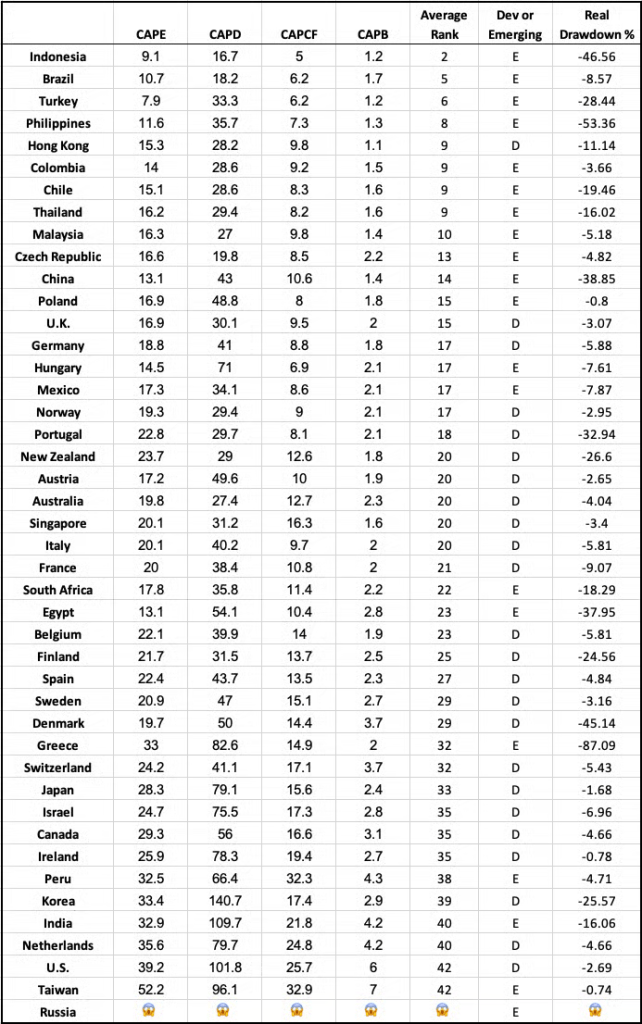
Q2 2026 Global Stock Market Valuations By Country

A higher price to earnings ratio (CAPE) means a country’s stock market is more expensive. A lower number is less expensive.

  • United States Stock Market: 36
  • Average of Foreign Developed Stock Markets: 22
  • Average of Foreign Emerging Stock Markets: 18

The rankings below show the price you are paying for the earnings, dividends, cash flow and book value for the companies within these countries.

*Abbreviations:
CAPE: Cyclically Adjusted Price Earnings – a valuation measure that uses real earnings per share (EPS) over a 10-year period to smooth out fluctuations in corporate profits that occur over different periods of a business cycle.
CAPD: Cyclically Adjusted Price Dividends – a valuation measure that uses dividends over a 10-year period to smooth out fluctuations in corporate profits that occur over different periods of a business cycle.
CAPCF: Cyclically Adjusted Price Cash Flow – a valuation measure that uses cash flow over a 10-year period to smooth out fluctuations in corporate profits that occur over different periods of a business cycle.
CAPB: Cyclically Adjusted Price Book – a valuation measure that uses book value over a 10-year period to smooth out fluctuations in corporate profits that occur over different periods of a business cycle.

Source: The Idea Farm

Brain Hemispheres, Meaning & The Placebo Effect

We are living at a time of profound unhappiness.

But here’s the really weird part: The ones suffering most are not just the down-and-out types—the addicts, the impoverished, the failsons. Those for whom there are obvious things gone wrong in their lives. On the contrary, it is also those who seem to have everything going right for them—in other words, our young and most successful strivers.

I’ve spent my life surrounded by that very group. As a longtime college professor, I have been privileged to teach hundreds of wonderful students—ambitious strivers just starting out on what promised to be terrific careers and lives. I have met countless young people who were so inspired by ideas, so purpose-driven, and so enthusiastic.

But in 2009, I left academia to run a nonprofit in Washington, D.C. And when I returned to campus a decade later, the atmosphere was dark. Larger and larger percentages of students were suffering from depression and anxiety. At some schools, more than half of students were receiving mental health treatment. My office hours were more like counseling sessions than tutoring. Hope and optimism had been replaced by anger and sadness.

Most of the younger generation is online a lot: scrolling social media, watching videos. To simulate a social life, they spend hours listening to podcasts of other people having interesting conversations. You could call it “social pornography.” Most of the time, there’s nothing better to do. They crave a big, meaningful project and immersing themselves in it. But they can’t come up with any ideas for what that project might be . . . so it’s back online.

They don’t fit the traditional résumé of unhappy people. They’re not addicted to drugs, nor struggling financially. In fact, their life looks enviable from the outside. But like so many young people I’ve spoken to over the years, they feel empty.

What these young strivers describe to me is something akin to waiting in an airport terminal for a delayed flight that never leaves. They try to stay occupied to keep themselves from going mad, always in the hope that boarding will finally be called and the flight will take off. And their distraction tactics—which invariably involve technology—keep them from thinking too much but make their sense of emptiness worse.

One of the young strivers I talked to was telling me about his virtual job, dating apps, social media friends, and video gaming. Then, out of the blue, he said something fundamental.

“I feel like I’m living in a simulation.”

Others said the same thing. Life felt unreal: full of false rewards, empty accomplishments, therapeutic talk, and fake experiences, all curated to pass the time as painlessly as possible.

Again and again, people said that life was busy but not meaningful. That experiences and relationships felt meaningless. Or that they didn’t know what they were meant to do in work and life. And it’s worse for the strivers than anyone else: The richer, more technologically advanced the country, the greater the percentage of the population that answers “no” to the question “Do you feel your life has an important purpose or meaning?”

Here’s why: Strivers are great at solving technical problems and answering specific, hard questions. They have been educated and trained to believe that, while the world is incredibly complicated, with enough knowledge and hard work, every problem can be solved.

The truth is, many big, complicated problems can be solved with sheer intellectual horsepower. But meaning is not one of them. “What is the meaning of my life?” is a question that cannot be answered like “How do I build an app for finding concert tickets?” or “How do I create an effective six-month weight-loss program?” Meaning is a question that must be lived, not solved with a Google search or simulated using artificial intelligence. It requires deep contemplation and a commitment to living a real life, full of unsolvable secrets, puzzling riddles, unexplainable bliss, and terrible suffering.

But in all their technical excellence, strivers trivialize their humanness by reducing life’s magnificent inscrutability to a series of complicated but solvable problems. They aren’t just living in a simulation; they are also creating the simulation they are living in.

In his 2009 book, The Master and His Emissary: The Divided Brain and the Making of the Western World, Ian McGilchrist argued our brains have two hemispheres that deal with everything, but they do so in consistently different ways. The right side of the brain is the “master,” which asks big, transcendent questions such as “Why am I alive?” The left side—which he calls the “emissary”—addresses such practical questions as “How do I get food so I can keep being alive?”

In other words, in the right hemisphere we ask the lofty why questions about life. On the left side, we ask, earthbound, what to do now and how to do it.

Hemispheric lateralization explains the acute crisis of meaning today. In our increasingly complicated, technology-dominated, and endlessly distracting world, people are shoved to the left side of their brains. They are stuck in a complicated simulation where there is a lot going on, but which is bereft of mystery and meaning.

Older people remember the before times, when meeting a potential mate for the first time involved a real-life conversation, and a big question of life’s meaning couldn’t be reduced to a Google search. But most young adults today have never known any domain other than Left Brain Land. And this is especially true for the strivers. They know every complicated nook and cranny of that technical dystopia, but the mysterious realm of meaning seems mythical, like the lost kingdom of Atlantis.

Stuck outside the realm of the numinous right hemisphere, life becomes just an endless loop of complicated left-brain routines and habits—a simulation of a life that is deep, mysterious, and authentic. It’s frustrating and empty.

Worse: It’s boring. And humans absolutely despise boredom. 

Why are we so bored? Because life feels repetitive and meaningless, and even a minute here or there with nothing to do feels like an hour. So out comes the phone, every few minutes, all day long, changing our brain chemistry in dangerous ways.

And what side of our brains are we on as we do all this? The mundane left, of course, not the mysterious right. The remedy we’ve created to avoid the boredom of modern life—this app, that video—reinforces our inability to ponder the abstractions necessary to formulate any concept of our lives’ meaning.

This asymmetry explains why we’re bombarded with ingenious solutions to age-old problems but never seem to make progress toward greater happiness. In fact, it’s the reverse: We are losing our sense of life’s meaning faster and faster.

_____________________________

The famous origin story of Think and Grow Rich, by Napoleon Hill, is that Andrew Carnegie commissioned Hill in 1908 to interview 500 successful people over 20 years.

That origin story is fabrication.

In reality, in 1908 Hill was fleeing police in Alabama under a fake name after committing fraud, facing domestic violence accusations, and abandoning his family. The book’s real author was his wife. She took Hill’s rambling, failed manuscripts and refined them into Think and Grow Rich.

The book contains a mix of genuinely good advice:

  • Specific goal-setting with deadlines
  • Persistence and grit
  • The “mastermind” concept of surrounding yourself with sharp people
  • The value of specialized knowledge

It also contains psuedoscienctific nonsense like:

  • “Sex transmutation” or redirecting sexual energy toward business
  • The idea that brains communicate through vibrations
  • A “sixth sense” chapter about receiving messages from infinite intelligence

If Think & Grow Rich is a fabrication from a con man, how has it sold over 100 million copies and helped millions of people since it was published?

The answer lies in the placebo effect.

Most of the advice from self-help gurus works not because it’s scientifically accurate, but because believing in it changes people’s behavior, which then changes their outcomes. Believing they can accomplish something makes them more likely to try it and then more likely to try hard and persist.

Is his book Useful, Not True, Derek Sivers says most things are hard to know for certain, so you might as well believe whatever is most helpful for you and others. The criticism that self-help is pseudoscience misses the point. Due to the placebo effect, even if something is not scientifically true, it can be useful for many people.

____________________________
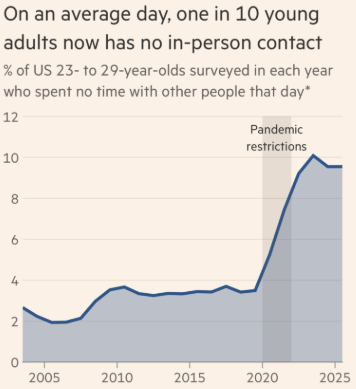
Key findings from chapter 3 of the 2026 World Happiness Report: Social media is harming adolescents at a scale large enough to cause changes at the population level:

Is social media use reasonably safe for children and adolescents? We call this the “product safety question”, and we present seven lines of evidence showing that the answer is no.

The evidence of harm is found in: 1) surveys of young people; 2) surveys of parents, teachers, and clinicians; 3) contents from corporate documents; 4) findings from cross-sectional studies; 5) findings from longitudinal studies; 6) findings from social media reduction experiments; and 7) findings from natural experiments.

We show there is now overwhelming evidence of severe and widespread direct harms (such as sextortion and cyberbullying), and compelling evidence of troubling indirect harms (such as depression and anxiety). Furthermore, we show that the harms and risks to individual users are so diverse and vast in scope that they justify the view that social media is causing harm at a population level.

We further argue that when these lines of evidence are considered alongside the timing, scope, and cross-national trends in adolescent wellbeing and mental health, they can help answer a second question: was the rapid adoption of always-available social media by adolescents in the early 2010s a substantial contributor to the population-level increases in mental illness that emerged by the mid 2010s in many Western nations? We call this the “historical trends question”. We draw on our findings about the vast scale of harm uncovered while answering the product safety question to argue that the answer to the historical trends question is “yes”.

__________________________
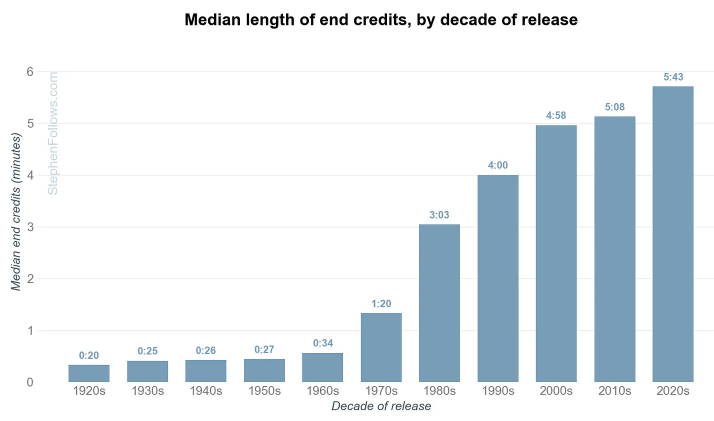
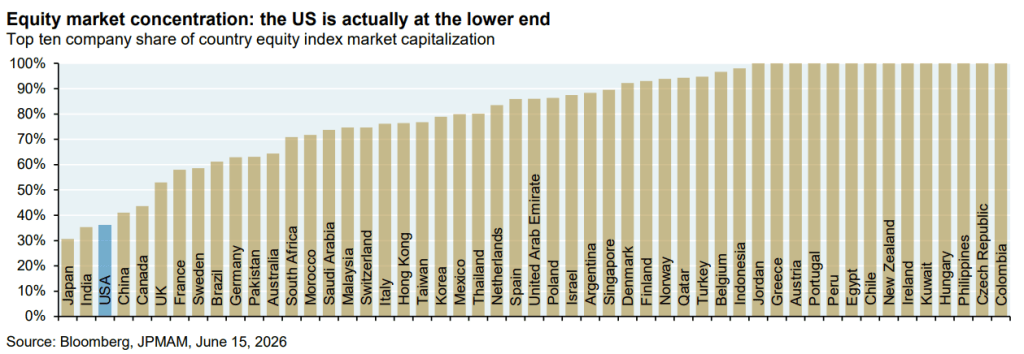
The graph below shows the percentage of each country’s total stock market cap made up by its top 10 largest stocks. While people worry about the concentration of the largest stocks in the U.S., it is a global phenomenon.

__________________________

Is this finally the moment when the jaws begin to close and U.S. value stocks (red line) outperform growth (blue line)?

Private Equity, Mushrooms & Pawn Shops

Life insurance companies manage huge pools of money. When you buy a life insurance policy or annuity, they take your premiums and invest them so they can pay you (or your family) decades later. These are long-term promises, so it really matters that the money is managed safely.

Unlike banks, which are regulated by powerful federal agencies, insurance companies are regulated state by state. Each state has its own rules and a much smaller budget. Some states (like Vermont) offer very lenient rules to attract business. The result is that insurers can shop around for the weakest oversight — and state regulators are simply outgunned compared to the companies they’re supposed to watch.

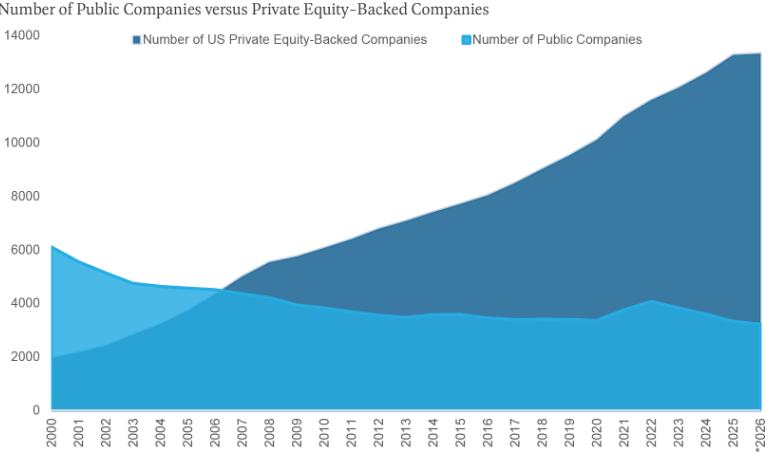
Insurance companies used to be boring and conservative. But in recent years, big private equity (PE) firms have bought up many of them. The PE firm is like a slaughterhouse that now owns the sausage factory. Instead of stuffing the sausage with quality meat (safe, plain bonds), they’re tempted to dump in their own leftover scraps (risky, hard-to-sell private credit deals) — because they control both sides of the transaction.

The PE firm originates risky loans, then has its own insurance company buy those loans. The PE firm collects fees and gets a guaranteed buyer for its products. But if those investments go bad, it’s not the PE firm that loses — it’s the insurance policyholders whose money was backing those investments.

The Hidden Risks:

  • Maturity Mismatch: Insurers are using shorter-term money to fund long-term, hard-to-sell investments. That works until people want their money back all at once.
  • Captive Reinsurance: Insurers are shuffling liabilities to affiliated shell companies (sometimes offshore) that don’t actually have enough real capital behind them. This makes the insurer look healthier on paper than it really is.

The economy and credit markets have been strong. When times are good, risky bets don’t look risky. But cracks are forming — defaults are rising, and some funds have already started blocking investors from withdrawing money.

The nightmare scenario is that if a recession hits, those risky private credit investments start defaulting, investors rush for the exits, and the illiquid assets have to be sold at fire-sale prices. The people left holding the bag would be ordinary insurance policyholders.

________________________

Why daylight saving time is worse for your body than standard time: An animated story explaining how spring and fall time changes affect your body.

_________________________
A new “magic mushroom” drug could treat depression without psychedelic hallucinations: Scientists are exploring a new way to harness the medical promise of psychedelic compounds without the mind-bending side effects.

Researchers created modified versions of psilocin — the active form of psilocybin from “magic mushrooms” — that still target key serotonin pathways linked to depression and other brain disorders but appear to cause far fewer psychedelic-like effects.

_________________________
When pawn shops outperform financials, history shows the broader market environment tends to be messy. They have broken above their all-time high and are making new decade highs relative to financials.