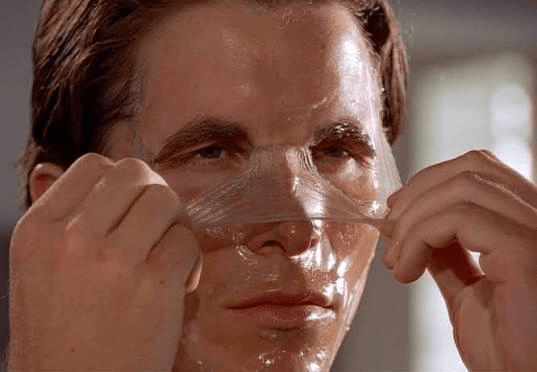
Welcome to the weird and twisted philosophy of looksmaxxing, the online subculture devoted to optimizing male appearance through gym routines, skin care, jawline exercises and surgery. They advocate bonesmashing, or hitting one’s face repeatedly with a hammer to change the face shape.
Looksmaxxers may not be aware of it, but they are optimizing themselves not for attraction from women, but for respect from men. That is the hidden logic of “looksmaxxing”. Men respect signs of dominance and toughness. A heavy jaw, sharp cheekbones, a hard stare. These features impress other men because they signal strength. So when a young man imagines an attractive male face, he tends to imagine an exaggerated version of those traits. He then sets out to build it.
Women, generally speaking, want something different. They tend to prefer a face that is softer than men assume. When masculine features get too extreme, they stop registering as attractive and begin to appear bizarre or even frightening. The looksmaxxer who has carved himself into a comic book caricature has pushed past the point where most women find him appealing. (Relatedly, some women make a parallel mistake, assuming men prefer extreme thinness when many men actually prefer healthier, curvier female bodies.)
A man who spends hours every day fine-tuning his face and body exudes qualities women tend to dislike. He can come across as vain, high-maintenance and self-absorbed — less like a secure partner than someone perpetually scanning for the next option.
The basic version of looksmaxxing is good for almost everyone: exercise, a decent haircut, clothes that fit, better posture, a reasonable diet. The looksmaxxing protocol the manosphere tells them to adopt gives women the ick.
__________________________________
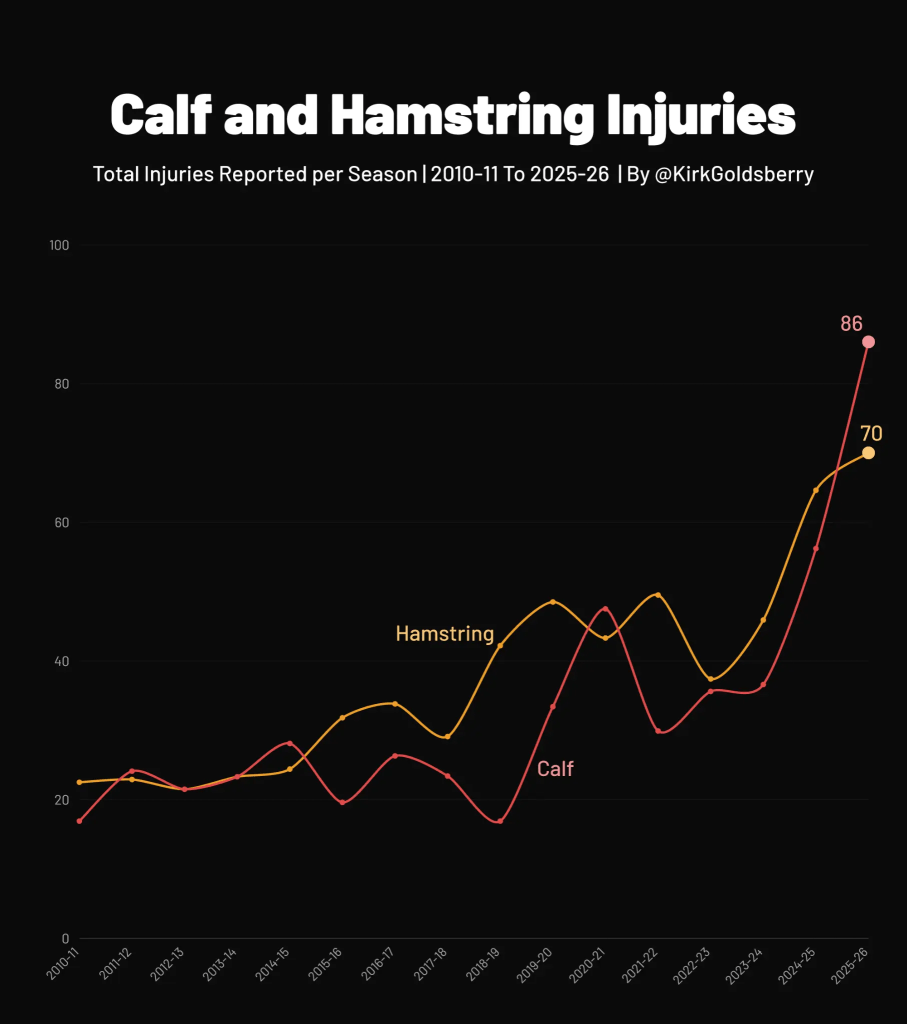
In 2010-11, there were 18 documented calf injuries across the entire NBA season. Last season, there were 60. This season, 86. Why?
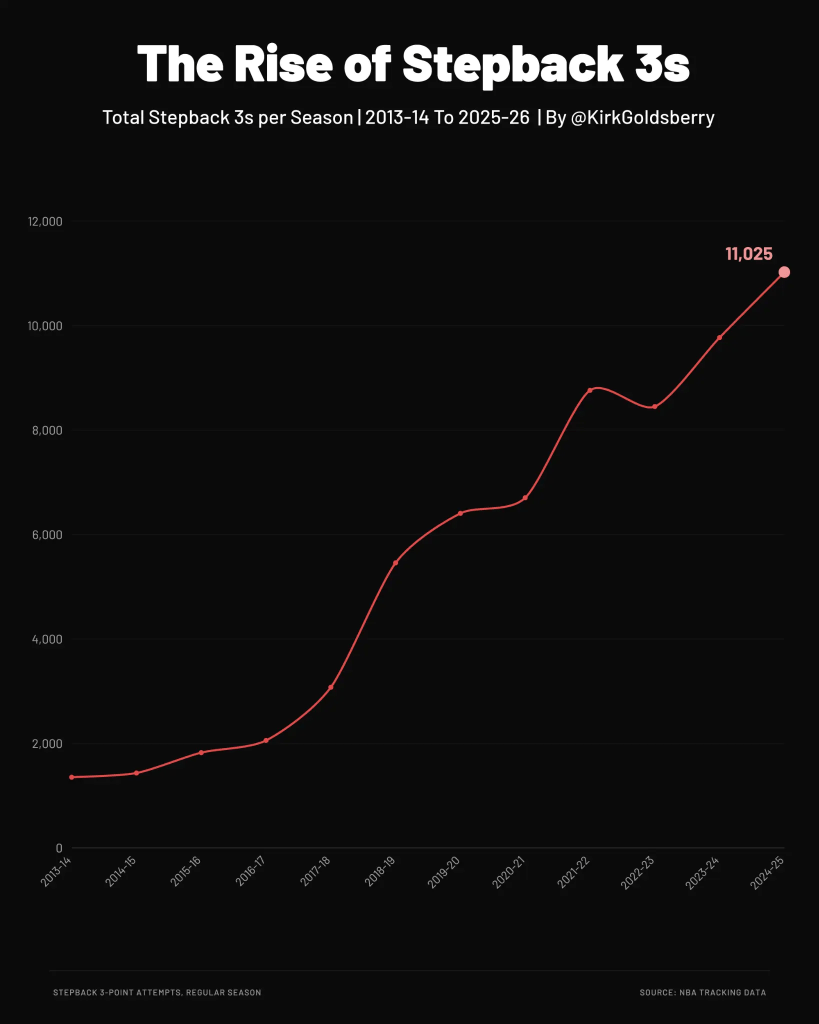
Basketball used to be a two-footed sport. Nowadays, the game is a one-footed sport. Most players are making every move off of one foot. The modern NBA is a pace-and-space machine—100-plus possessions a night, built on rapid ball movement, floor spacing, and the core principle that any player must be able to create offense off the dribble from anywhere. The epicenter of NBA offense has migrated from the low block to the perimeter, where endless drive-and-kick sequences stack on top of one another.
Today’s game of relentless one-on-one creation; guards, wings, and increasingly centers attacking closeouts; and transition offense requires a different kind of movement. It requires rapid changes of speed and direction. And almost all of it happens off one foot.
Muscle damage isn’t caused by how hard a muscle works, but rather by how far it stretches while it’s working. The muscle almost always has to be activated to really be injured, and it almost always has to be stretched. When both of those things happen at once, that’s when injuries can happen.
The calf is particularly vulnerable to that combination because of our anatomy. The calf muscle has short fibers, and when the ankle rotates and the knee extends at the same time, it puts immense strain on the muscle.
That strain is amplified for taller people. The fibers don’t scale with the body. The bones—the levers—do. So a bigger person, when they rotate their knee joint or their ankle joint 20 degrees, they stretch their muscles relatively more. The same move, performed by a larger body, is more dangerous. Not because the player is weaker, but because the geometry is worse.
____________________________
I recently tuned into an episode of “The Diary of a CEO” podcast. The guest was an Irish comedian by the name of Jimmy Carr. The host asked Jimmy a pointed question: “What is the meaning of life?” Jimmy responded, “I’ll do it in five words.” What were the five words?
“Enjoying the passage of time”
Remember that trip you took with your friends to that warm weather destination? You enjoyed each other’s company and the days were filled with friendship, camaraderie, and wonderful moments of joy and happiness? You were absolutely enjoying the passage of time, and it had nothing to do with money or the state of the stock market and the world. You were living your best life.
All of this is to say, if we constantly worry about the national debt, the dollar, politics, how much money we have, or what someone on the news is saying, we are trapped in a prison of our own design. Now I know this isn’t a black or white thing; there are times when we won’t be enjoying the passage of time. We might be sick, or a family member may be struggling, or something is really impacting us.
Build for the long-term. Be thoughtful and patient. Have a plan. But enjoy the passage of time. Focus less on the things that can make us miserable. This life is all we’ll ever get.

___________________________
Three companies — SpaceX, OpenAI, and Anthropic — are expected to go public in mega-IPOs in the second half of 2026. The posited numbers are simply staggering compared to the largest IPOs in recent history, as the following figure shows.
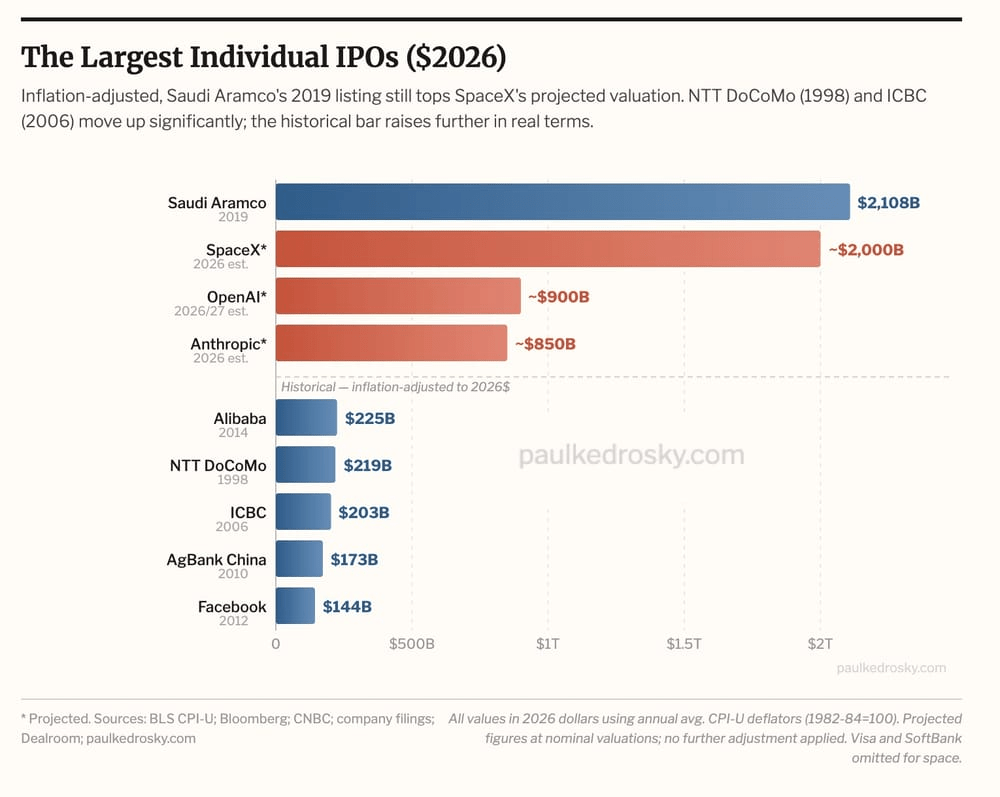
In inflation-adjusted terms, SpaceX alone would rank as the second-largest IPO in history, just behind Saudi Aramco. All three together would exceed the entire dot-com IPO wave of 1995–2000. They will be at least half the value, inflation-adjusted, of all US IPOs since WWII.
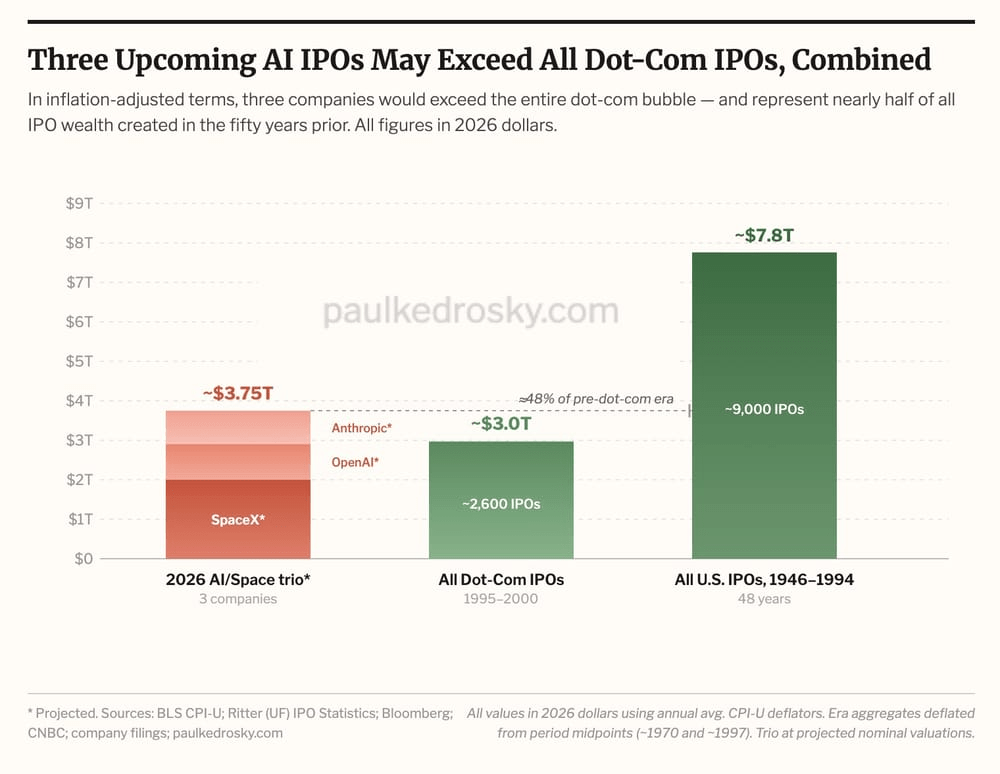
But people aren’t focused on the right things. That much new equity supply hitting in a few months creates a math problem: the money has to come from somewhere. Most of it will come from existing holdings. Passive funds will be forced buyers once these names join the indexes, which will happen much faster than usual, given recent index rule changes. That means mechanical selling pressure on whatever many funds currently own, which is mostly the same large-cap tech stocks everyone else owns.
_______________________________
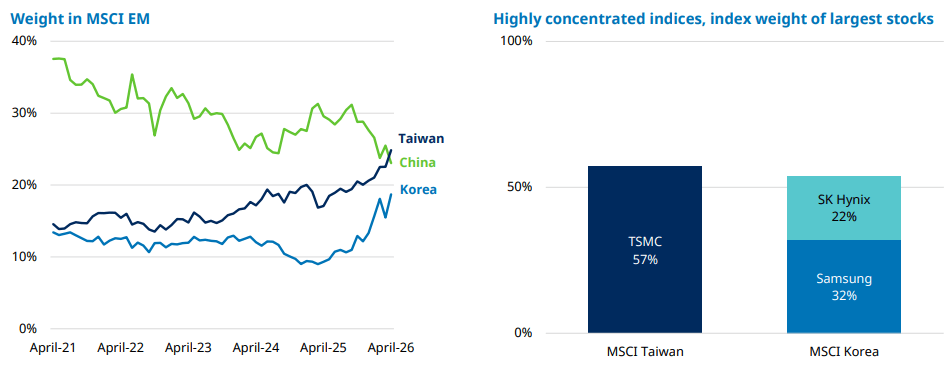
Taiwan and Korea are close to overtaking China’s stock market in size, largely due to only three stocks:
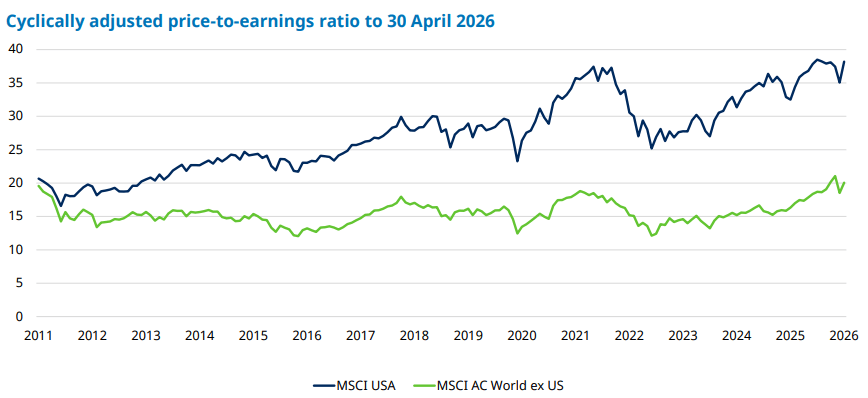
The gap between the United States (blue) and the rest of the world (green) based on their Price To Earnings ratios remains enormous: which means the U.S. is far more expensive.
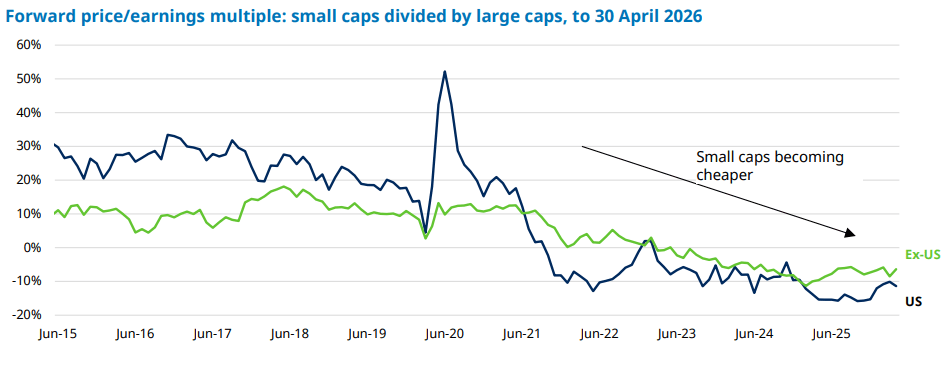
Small cap stocks continue to become less expensive relative to large cap stocks around the world: