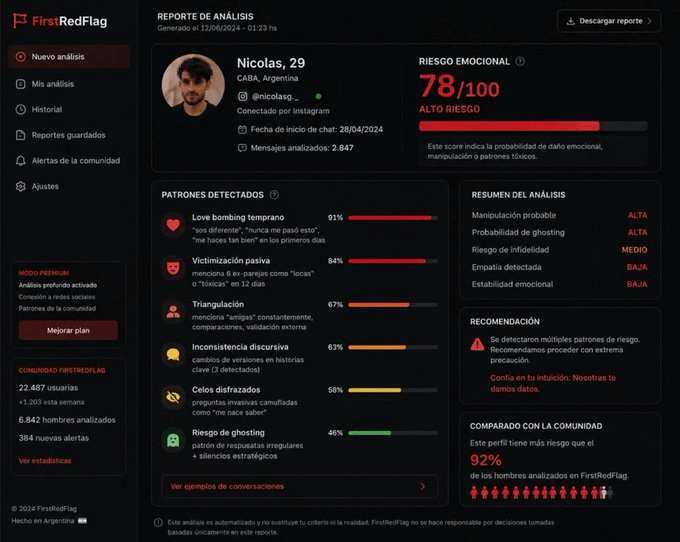
The Argentine app some women use to rate dates before going out started in Buenos Aires eight months ago as a private project among friends. Today it has 22,000 users, and it works like this: you upload screenshots of the chat of the guy you’re talking to, and an AI analyzes patterns of manipulation, narcissism, passive aggression, love bombing, likely lies, and chances of being ghosted. Then it returns a score.
“Emotional risk: 78/100”
“High probability of infidelity”
“Profile compatible with emotional dependency”
“Language similar to men previously reported”
Premium users can even connect the guy’s Instagram and let the model analyze follows, likes, activity times, and changes in behavior. The creator is 27 years old and studied psychology at the University of Buenos Aires. She says the idea came about after a friend ended up hospitalized due to domestic violence.
The app is called FirstRedFlag and has a waiting list.
__________________________
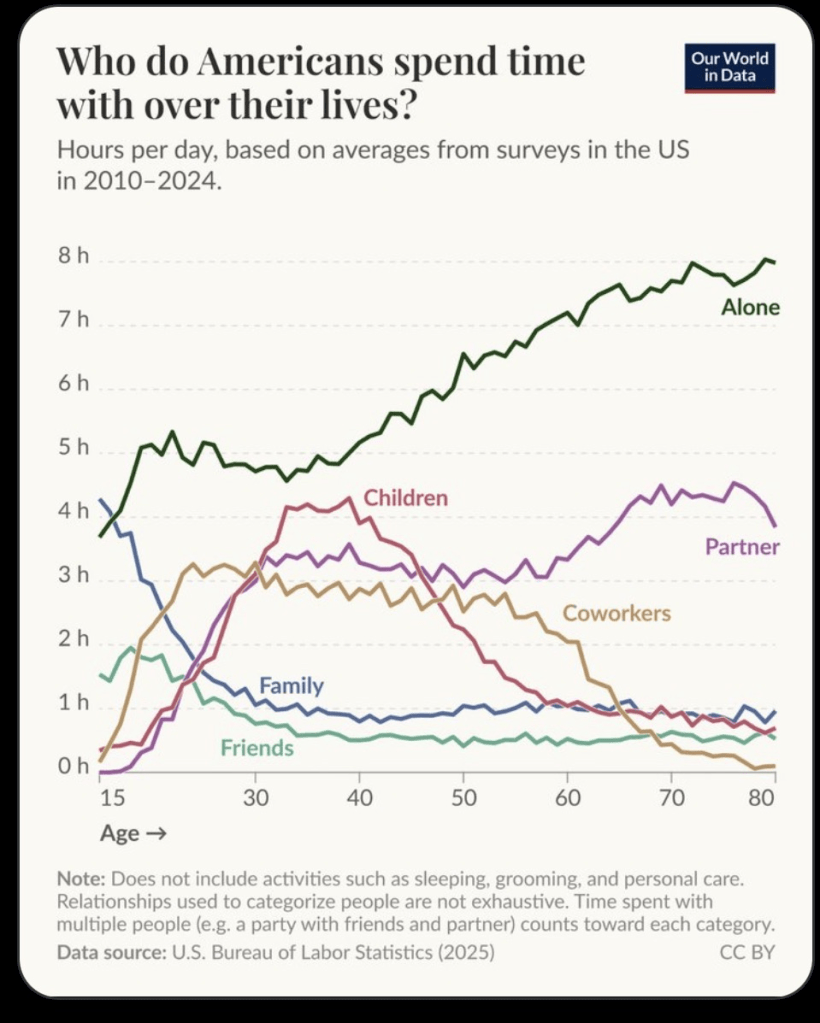
Your appetite for risk should decline in middle age as your liabilities increase (e.g., children, aging parents, etc.). I would apply the same line of thinking to those who have built some wealth. As your net worth increases, preservation becomes more important than chasing increasingly expensive luxuries.
Why is this the case? Because once you’ve won the game, the value of gaining a dollar plummets while the pain of losing a dollar soars. This is the fundamental principle behind prospect theory. Prospect theory states that people react to gains and losses asymmetrically. In other words, the pain of losing $100 is larger than the pleasure of winning $100, at least for most people.
If you’re wealthier, it’s like prospect theory on steroids. If you had a $2M net worth, the pain of losing $1M is significantly larger than the pleasure of gaining an additional $1M. It might even be larger than the pleasure of gaining $4M. While these amounts are arbitrary (and will vary from person to person), they exemplify the impact that wealth can have on risk-taking.
Another reason to reduce risk if you’ve built some wealth is the amount of time it takes to recover from a significant loss. If someone with $1,000 in a brokerage account lost it all, they could likely earn it back relatively quickly. But if someone lost $100,000 in their retirement account, it could take years to save that amount of money.
Unless your income can keep up with your wealth over time, you’ll have to decrease how much risk you take. Why? Because as your portfolio grows it becomes harder to replace future losses with future earnings. If you can save $50,000 a year, you can replace a 20% loss on a $1M portfolio in under 4 years (assuming a 5% return on your money). However, to replace a 20% loss on a $5M portfolio it would take over 14 years.
_____________________________
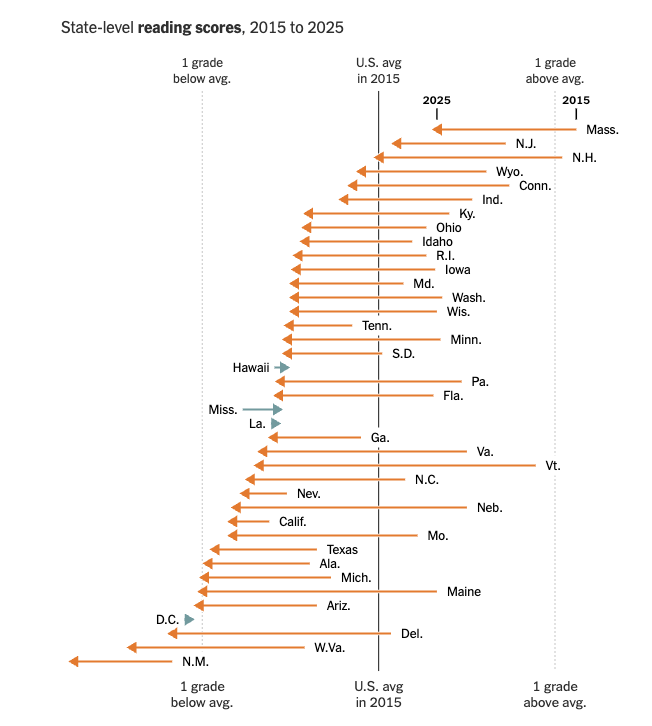
We’ve experienced a massive decline in reading scores for students over the last decade:
_______________________________
The fear over AI is palpable. So, it’s time for an optimistic take.
Why the AI doom-and-gloom story is missing the bigger picture. A lot of people hear “AI” and immediately think one of two things: it’s just Google search on steroids, or it’s a magic machine coming for everyone’s job. Both miss the bigger picture.
A job is not one single task; it’s a bundle of tasks supported by a massive, fragmented software stack. Email, spreadsheets, presentations, Slack, CRM platforms, and, in finance, a Bloomberg Terminal, FactSet, and market data feeds. For millions of jobs, the cost of software to provide basic tools for these tasks can run to $1,000 a month, and more for complicated roles.
Much of the modern workday is consumed by the friction of this stack: moving data between systems, cleaning spreadsheets, searching for files, and summarizing meetings.
AI is emerging as the new interface for enterprise software. Think about the iPhone. It collapsed cameras, GPS devices, and music players into one simple, powerful device. AI is doing something similar for workplace software, turning 10 clunky programs that don’t talk to each other into a single conversational prompt.
Just as we stopped buying standalone cameras and tape recorders once the smartphone came around, companies will happily pay for an AI layer. It will be far cheaper and eliminate the bloated costs of that fragmented software stack that requires you to perform endless, mundane tasks because these programs do not talk to each other.
The immediate fear is that if AI lets three people do the work of five, companies will fire two people. But that ignores economic history. When the electronic spreadsheet was invented, the cost of calculations plummeted. But accounting jobs didn’t vanish; demand for complex financial modeling exploded. Accounting clerks became financial analysts, a more in-demand role.
Jevons Paradox suggests that making a resource more efficient actually increases total demand for it. By absorbing the drudgery, AI allows the employee to focus on judgment and strategy—making the human element more valuable, not less. In this framework, demand for high-output workers doesn’t shrink; it explodes.
Does this justify the mind-numbing capital expenditure currently pouring into AI infrastructure? If AI fulfills this promise of enterprise-wide productivity, the investment isn’t just justified—it’s a bargain. That said, we are clearly near the peak of a hype cycle, just like the internet was in 1999.
But remember: the dot-com crash did not mean the internet was a bust. It simply meant the hype outpaced the infrastructure. After the wreckage cleared, the optimistic predictions about connectivity and productivity were not only fulfilled—they were exceeded.
_____________________________
____________________________
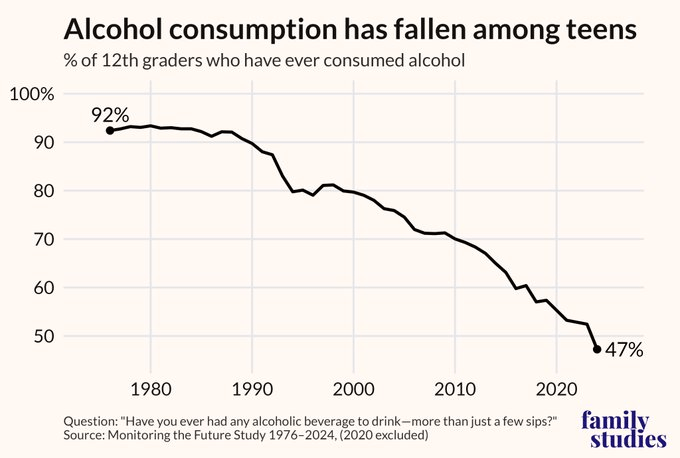
It’s remarkable how many independent, secular trends are anti-alcohol right now.
- GLP-1s
- post-1970s rise of helicopter parenting
- reaction to the binge-drinking spike in late 20th century
- phones killing teenage partying
- surge in young adult fitness (dancing clubs down, running clubs up)
- general rise of healthmaxxing culture
______________________________
_________________________________