Rating Dates, Risk Appetite & A.I. Fear

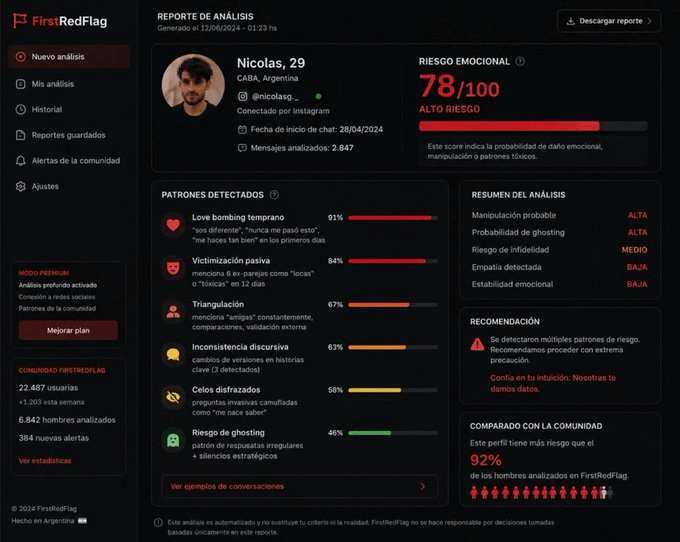
The Argentine app some women use to rate dates before going out started in Buenos Aires eight months ago as a private project among friends. Today it has 22,000 users, and it works like this: you upload screenshots of the chat of the guy you’re talking to, and an AI analyzes patterns of manipulation, narcissism, passive aggression, love bombing, likely lies, and chances of being ghosted. Then it returns a score.

“Emotional risk: 78/100”
“High probability of infidelity”
“Profile compatible with emotional dependency”
“Language similar to men previously reported”

Premium users can even connect the guy’s Instagram and let the model analyze follows, likes, activity times, and changes in behavior. The creator is 27 years old and studied psychology at the University of Buenos Aires. She says the idea came about after a friend ended up hospitalized due to domestic violence.

The app is called FirstRedFlag and has a waiting list.

__________________________

Your appetite for risk should decline in middle age as your liabilities increase (e.g., children, aging parents, etc.). I would apply the same line of thinking to those who have built some wealth. As your net worth increases, preservation becomes more important than chasing increasingly expensive luxuries.

Why is this the case? Because once you’ve won the game, the value of gaining a dollar plummets while the pain of losing a dollar soars. This is the fundamental principle behind prospect theory. Prospect theory states that people react to gains and losses asymmetrically. In other words, the pain of losing $100 is larger than the pleasure of winning $100, at least for most people.

If you’re wealthier, it’s like prospect theory on steroids. If you had a $2M net worth, the pain of losing $1M is significantly larger than the pleasure of gaining an additional $1M. It might even be larger than the pleasure of gaining $4M. While these amounts are arbitrary (and will vary from person to person), they exemplify the impact that wealth can have on risk-taking.

Another reason to reduce risk if you’ve built some wealth is the amount of time it takes to recover from a significant loss. If someone with $1,000 in a brokerage account lost it all, they could likely earn it back relatively quickly. But if someone lost $100,000 in their retirement account, it could take years to save that amount of money.

Unless your income can keep up with your wealth over time, you’ll have to decrease how much risk you take. Why? Because as your portfolio grows it becomes harder to replace future losses with future earnings. If you can save $50,000 a year, you can replace a 20% loss on a $1M portfolio in under 4 years (assuming a 5% return on your money). However, to replace a 20% loss on a $5M portfolio it would take over 14 years.

_____________________________

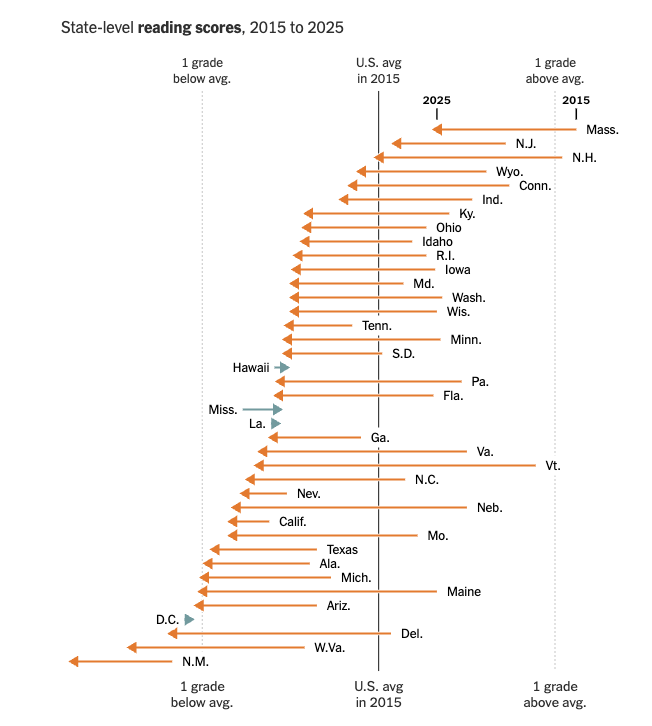
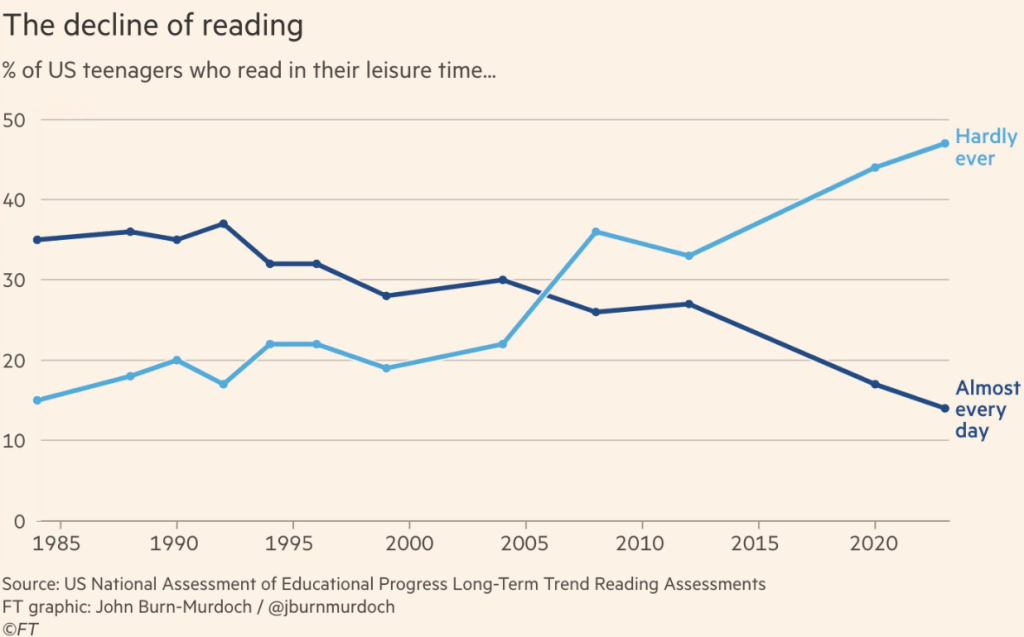
We’ve experienced a massive decline in reading scores for students over the last decade:

_______________________________

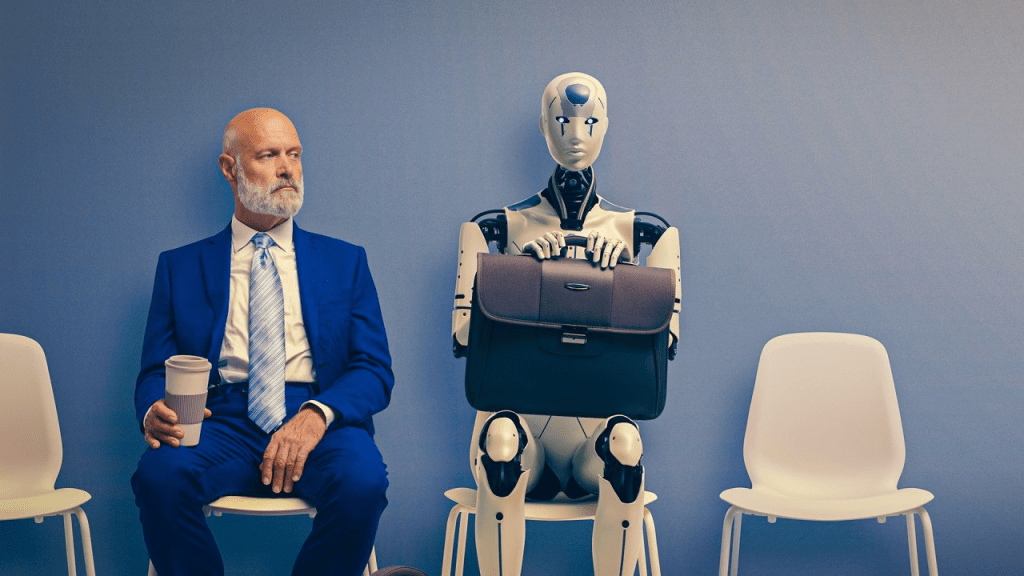
The fear over AI is palpable. So, it’s time for an optimistic take.

Why the AI doom-and-gloom story is missing the bigger picture. A lot of people hear “AI” and immediately think one of two things: it’s just Google search on steroids, or it’s a magic machine coming for everyone’s job. Both miss the bigger picture.

A job is not one single task; it’s a bundle of tasks supported by a massive, fragmented software stack. Email, spreadsheets, presentations, Slack, CRM platforms, and, in finance, a Bloomberg Terminal, FactSet, and market data feeds. For millions of jobs, the cost of software to provide basic tools for these tasks can run to $1,000 a month, and more for complicated roles.

Much of the modern workday is consumed by the friction of this stack: moving data between systems, cleaning spreadsheets, searching for files, and summarizing meetings.

AI is emerging as the new interface for enterprise software. Think about the iPhone. It collapsed cameras, GPS devices, and music players into one simple, powerful device. AI is doing something similar for workplace software, turning 10 clunky programs that don’t talk to each other into a single conversational prompt.

Just as we stopped buying standalone cameras and tape recorders once the smartphone came around, companies will happily pay for an AI layer. It will be far cheaper and eliminate the bloated costs of that fragmented software stack that requires you to perform endless, mundane tasks because these programs do not talk to each other.

The immediate fear is that if AI lets three people do the work of five, companies will fire two people. But that ignores economic history. When the electronic spreadsheet was invented, the cost of calculations plummeted. But accounting jobs didn’t vanish; demand for complex financial modeling exploded. Accounting clerks became financial analysts, a more in-demand role.

Jevons Paradox suggests that making a resource more efficient actually increases total demand for it. By absorbing the drudgery, AI allows the employee to focus on judgment and strategy—making the human element more valuable, not less. In this framework, demand for high-output workers doesn’t shrink; it explodes.

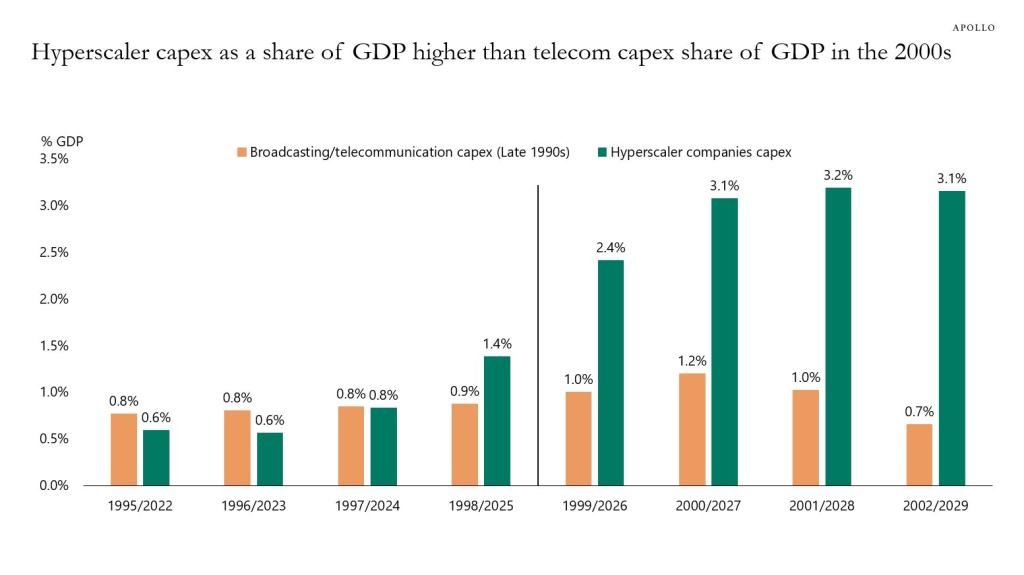
Does this justify the mind-numbing capital expenditure currently pouring into AI infrastructure? If AI fulfills this promise of enterprise-wide productivity, the investment isn’t just justified—it’s a bargain. That said, we are clearly near the peak of a hype cycle, just like the internet was in 1999.

But remember: the dot-com crash did not mean the internet was a bust. It simply meant the hype outpaced the infrastructure. After the wreckage cleared, the optimistic predictions about connectivity and productivity were not only fulfilled—they were exceeded.

The same path can lie ahead for AI. And instead of the fear that AI will replace workers, it’s the joy of replacing soulless busywork, making jobs more fulfilling… and more profitable for employers.

_____________________________

____________________________

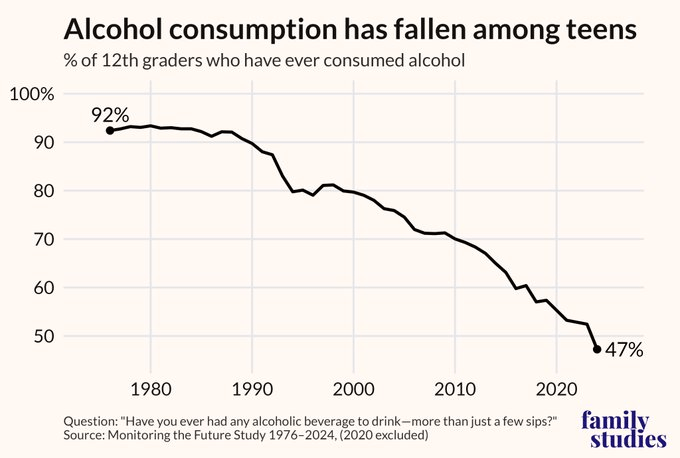
It’s remarkable how many independent, secular trends are anti-alcohol right now.

  • GLP-1s
  • post-1970s rise of helicopter parenting
  • reaction to the binge-drinking spike in late 20th century
  • phones killing teenage partying
  • surge in young adult fitness (dancing clubs down, running clubs up)
  • general rise of healthmaxxing culture

______________________________

_________________________________

Price’s Law, Colon Cancer & Nike’s Strategy

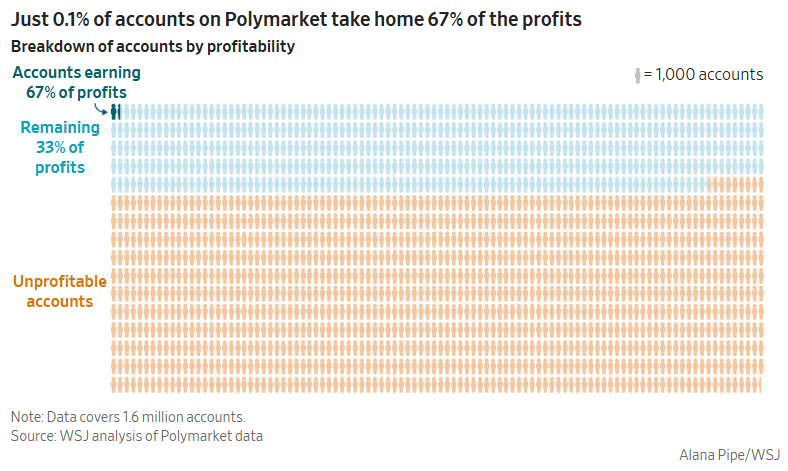
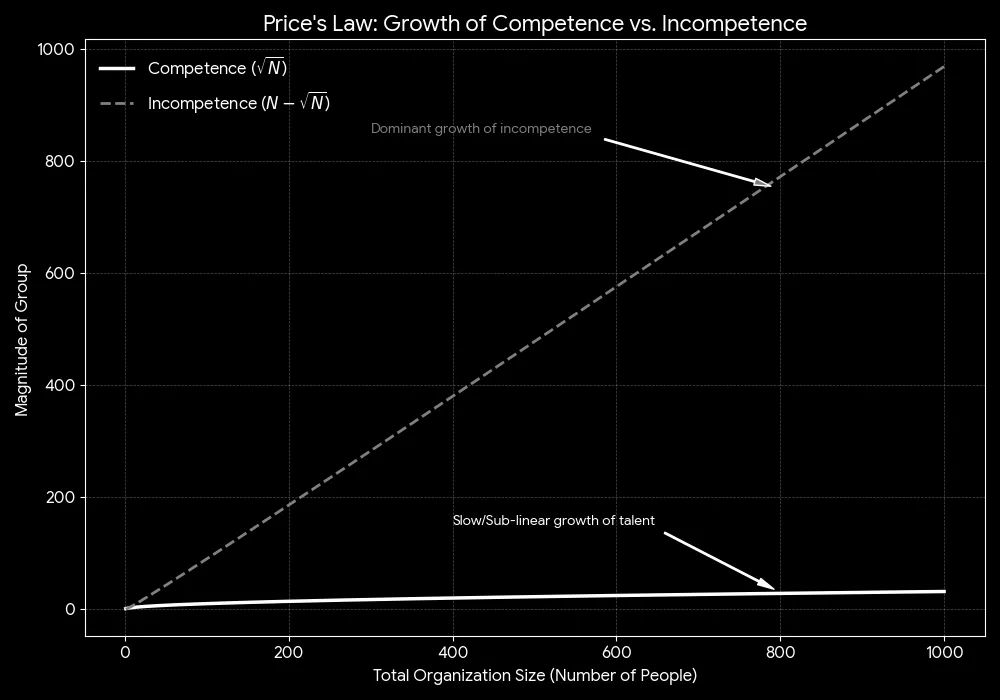
In 1963, a physicist named Derek Price was studying scientific publications, trying to understand why some researchers dominated their fields while others published and got zero attention. He found that the square root of the number of people in a domain does 50% of the work. Here’s what that looks like in practice:

  • In a company with 100 employees, 10 people produce half the output
  • In a field with 10,000 scientists, 100 produce half the meaningful research
  • On a team of 25, 5 people carry the entire operation

It wasn’t exclusive to research papers—this pattern showed up everywhere he looked.

  • Of the 30 million businesses in the United States, about 5,500 (the square root) generate half the total economic output.
  • Spotify has about 11 million artists, but 50% of all streams are generated by only 3,300 artists. 
  • In astrophysics, the square root of stars in a galaxy produce half the light.
  • In creative fields like YouTube, very few channels account for the vast majority of both views and ad revenue.

Price’s Law violates our egalitarian instincts. We want to believe everyone contributes equally, that effort equals outcome, that hard work is the great equalizer, but reality is far from it.

You need (1) skill, (2) consistency, (3) opportunity, and (4) luck all compounding in the same direction. Most people have one or two of those ingredients. The square root has all four.

Price’s Law reveals that equality of outcome and equality of opportunity cannot coexist in complex systems. Even if you give everyone the same resources, the same training, the same chance, outcomes will still stratify eventually. Some people will compound their advantages. Most won’t.

What does this mean in practice?

  1. You have dozens of skills, but √n of them drive half your value in the marketplace. The reason why we spend so much time trying to be “well-rounded” is because we’ve been lied to.
  2. If you work 40 hours a week, about 6 of those hours actually matter. The other 34 are maintenance, “busywork,” meetings that could’ve been emails, and a whole lot of goofing around.

The paradox (why we still need to do the other 90%): you can’t know which skills are your multipliers without trying a bunch of skills. You can’t know which relationships matter without meeting a lot of people.

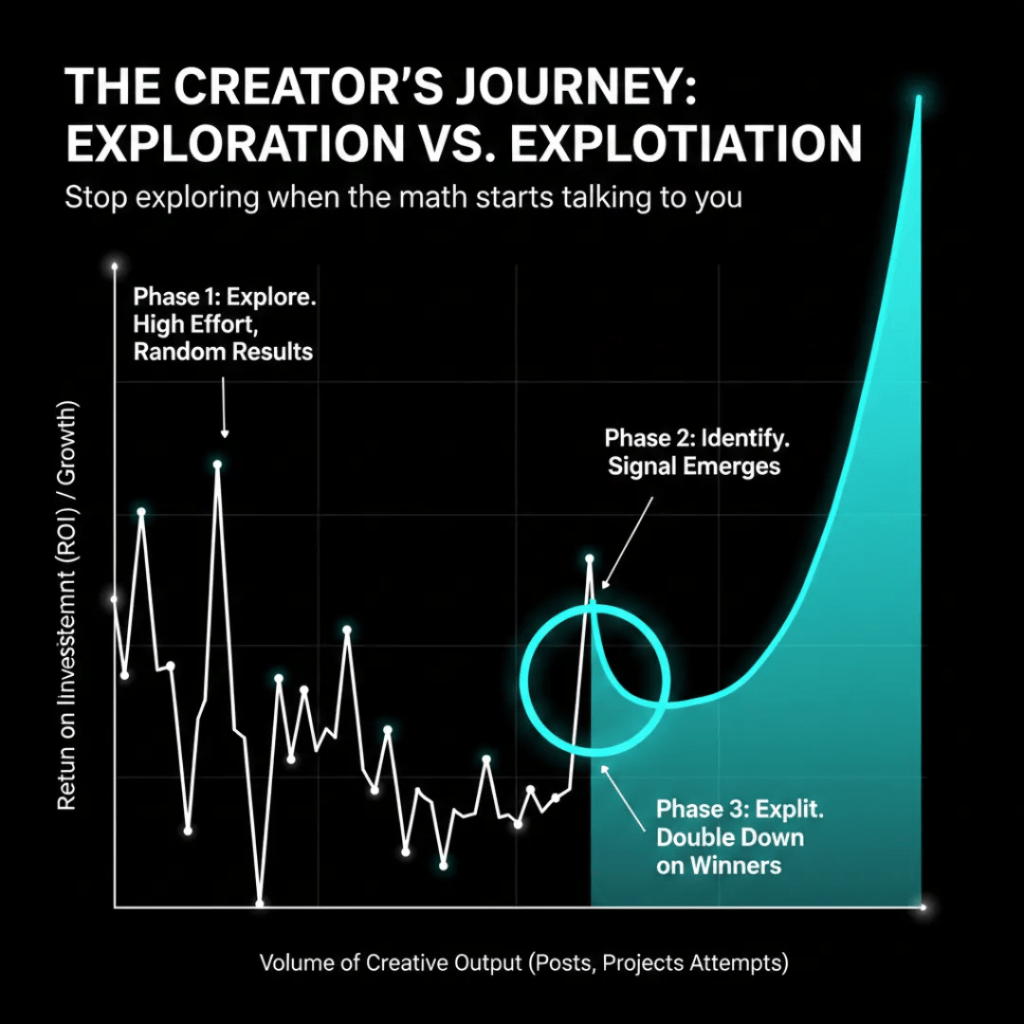
  1. The early game is exploration. You’re planting seeds everywhere, seeing what grows. Price’s Law hasn’t kicked in yet because you don’t have enough data.
  2. The middle game is identification. Patterns are emerging. “Oh, this is what works.” That’s your √n.
  3. The late game is exploitation. You double down on the winners. You cut out the losers. You focus your energy towards the best bets.

Explore the noise until you have signal. Then exploit that.

_______________________________

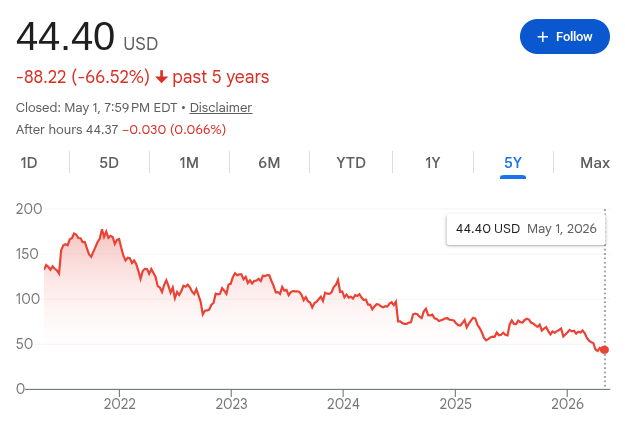
As of April 2026, Nike stock sat below US$45 – a market capitalisation of US$68 billion, its lowest level in over a decade, and a fall of more than 75% from the US$280 billion the company commanded at its 2021 peak.

How does what was once considered one of the widest consumer brand moats in the world, built over half a century, erode over the course of a few short years?

A good starting point is January 2020, when John Donahoe took over as Nike’s new CEO. The board wanted a digital-first operator, and Donahoe had the résumé – ServiceNow, eBay, and Bain – even if he was one of the few leaders in Nike’s history not to have risen through its operating ranks.

Several major strategic shifts followed, each departing from what had worked for Nike for decades – yet each looked like a logical transformational move to take Nike into the 2020s. The financial pay-offs were immediate: gross margins expanded, SGA came down, and return on ad spend looked sharper quarter by quarter. Wall Street loved it.

Yet each of these moves shared a common mechanism: they improved short-term financial metrics by drawing down assets that had taken decades to build. In effect, Nike was not just transforming its business – it was monetising its moat. We will examine each in turn.

______________________________________

The number of patients in their 30s and 40s with late-stage cancer in their lower digestive tract is surgin. It’s not just that these patients are decades younger than what had been typical for colorectal cancer; the tumors themselves are also more stubborn to treat.

Even though young patients are treated with more aggressive chemo or more surgery, patients’ outcomes are not necessarily better. The disease has become the top cancer killer among people under 50, even as death rates decline in older age groups.

Doctors suspect that the gut’s microbiome is a key actor behind these forms of cancer in particular. Patient advocates say it’s critical that more people, especially young adults with a family history of these cancers, get diagnostic testing.Genetics plays some role in colorectal cancers; as many as a fifth of patients have hereditary markers. But genetics do not explain what drives the vast majority (80%) of cases.

Thirty-plus years ago almost zero patients were in clinics under the age of 50 with colon cancer. Now it is almost half. There are other changes in disease pattern with earlier onset tumors that tend to show up differently; more tumors are found near the rectum, lower in the tract.

Experts suspect several factors may be leading to these more frequent, virulent cancers:

  • Ultra-processed foods
  • Plastics and chemicals that can leach into water and our bodies
  • As a population, we are not as active as we used to be.

All of these factors act on our gut, the composition of our microbiomes, and the bacteria and myriad microorganisms living there

_________________________

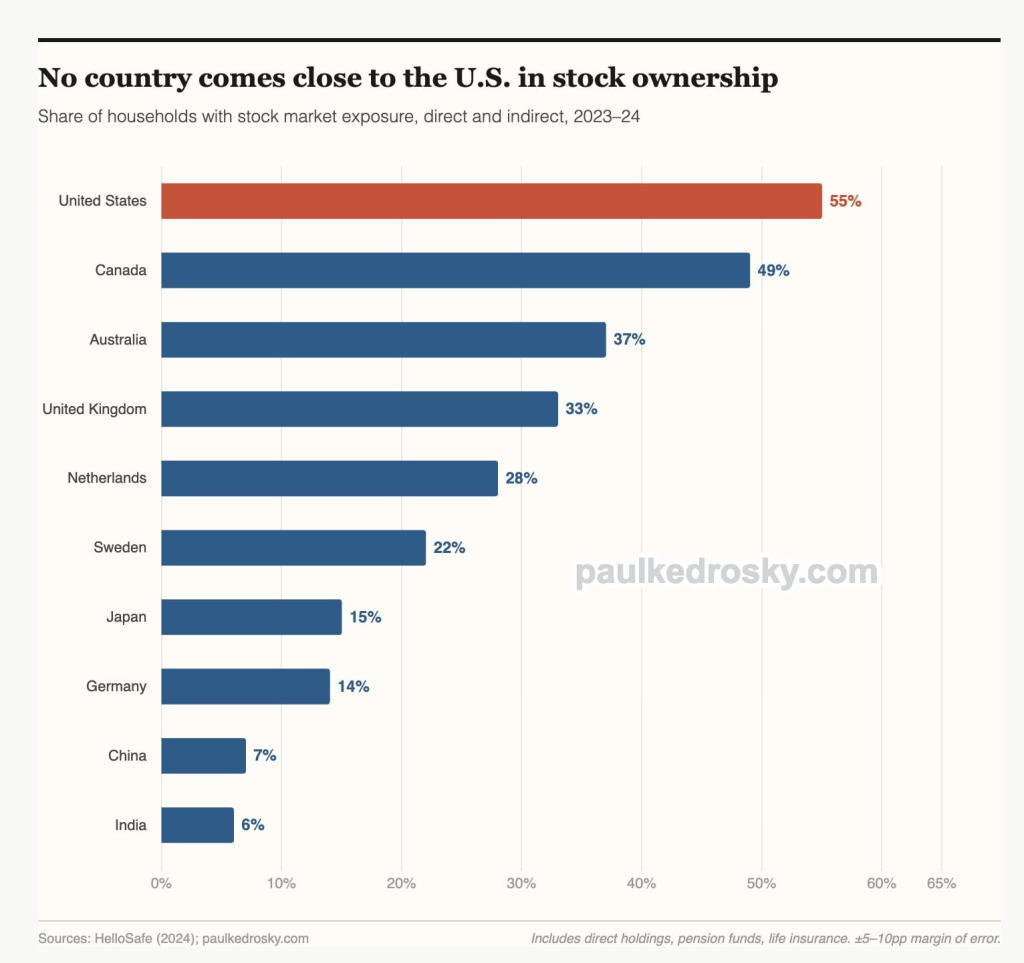
This, of course, has consequences. Here are six:

  1. Monetary policy transmission is direct. When the Fed lowers (raises) rates, US households buy (sell) stocks. No other central bank has this much control over consumer sentiment and spending via markets. The wealth effect makes policy both more powerful and harder to control.
  2. Markets and politics. When 60% of households own stocks, markets drive elections. Politicians and central bankers in the US hate crashes almost as much as they hate high gas prices. This holds down volatility and encourages wacky risk-taking.
  3. Passive indexing makes it worse. Most of that 60% own stocks through 401(k)s and IRAs invested in index funds. This means a huge share of American household wealth is concentrated in the same ~500 companies, weighted by market cap. Diversification is an illusion at the aggregate level. Everyone is long NVIDIA, whether they know it (or want it) or not.
  4. Retirement security is market performance. The US shifted from defined benefit to defined contribution pensions over the last 40 years. A sustained bear market is no longer just a financial event — it’s a retirement crisis.
  5. Inequality is amplified. The 60% figure is misleading because the bottom half of that cohort owns virtually no stock. The top 10% hold ~90% of equity wealth.
  6. Contagion from US markets is a virus. Because US households are so deeply exposed, a domestic equity crisis hits consumer spending, which then spreads worldwide through trade. The US market is the world’s risk-off/risk-on switch, and the household exposure ratio is part of why.

Reality Filtered On Beliefs, ATMs & Environment

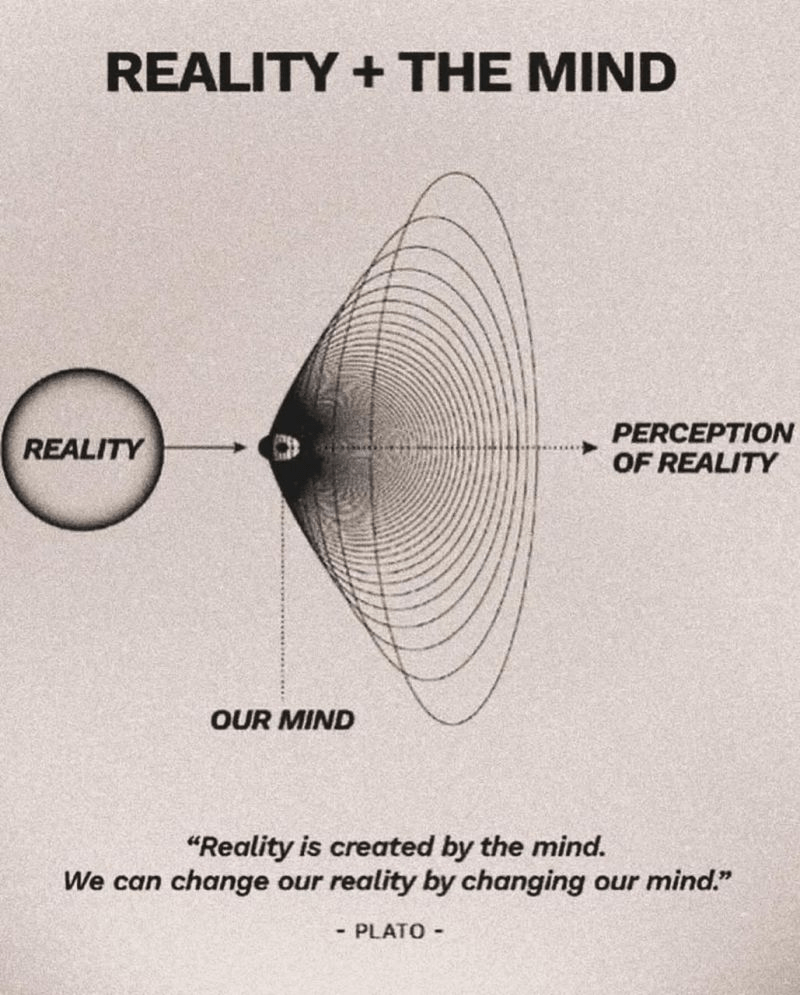
We don’t see reality clearly. We all think we perceive reality as it is. And the truth is, that’s just not the case. The brain can’t see reality as it is; it predicts reality. Right now, your brain is absorbing 11 million bits of information—the light entering your eyes, the sound of my voice, the ambient temperature of the room.

That’s the equivalent of reading War and Peace every second, twice. However, your conscious attention can only process 50 bits. That’s one sentence per second. You are only consciously aware of 0.000045% of reality entering your brain.

How does the brain make sense of all this? It predicts reality. We all live in a simulation inside our own minds. Our reality is filtered based on our beliefs. Study after study shows how people can observe the exact same event and see something completely different.

If you’re on a diet, you see food as larger. If you’re afraid of heights, you see distances as further. Watch a football game: the ref makes a call, and fans of one team see it as absolutely correct, fans of the other team see it as ridiculous. Think about geopolitics: people committed to the belief that one side is right see every event through that lens. We do not see reality clearly. We do not see people clearly. We see others as we believe they are.

_______________________

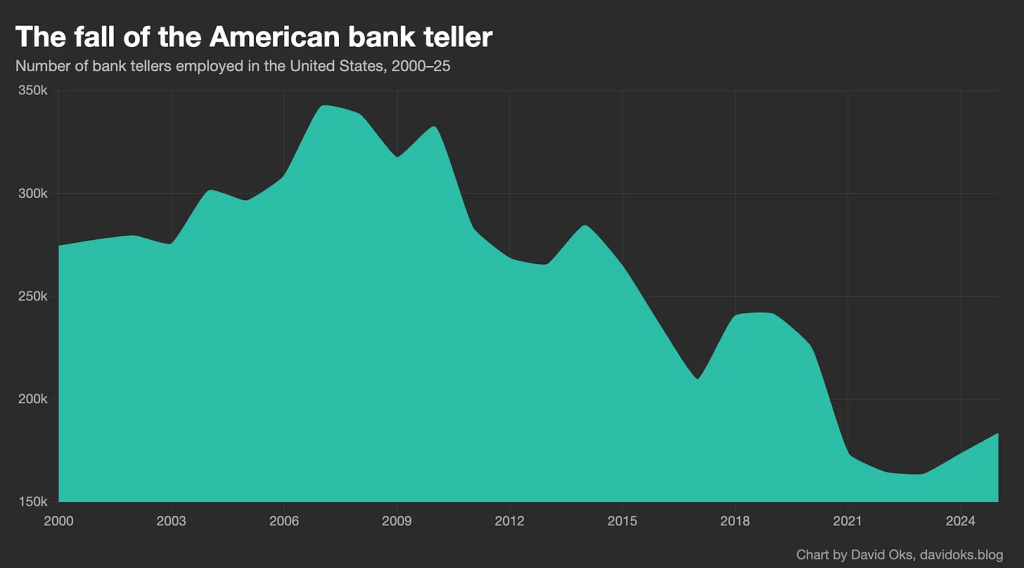
People often cite that the invention of the ATM did not reduce bank teller employment, which actually increased steadily until the late 2000s. But they miss the second half of the story, which is that another technology did – the iPhone.

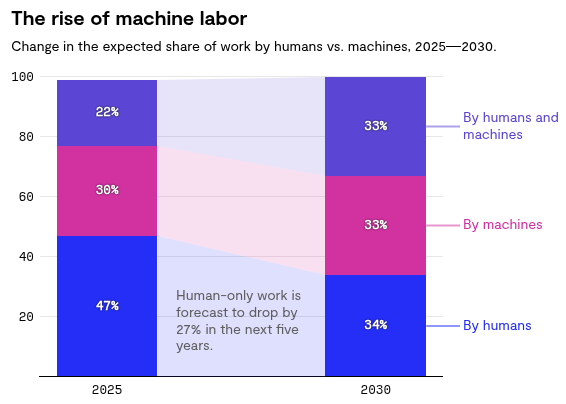
Labor substitution is about comparative advantage, not absolute advantage: the relevant question for labor impacts is not whether AI can do the tasks that humans can do, but rather whether the aggregate output of humans working with AI is inferior to what AI can produce alone. 

Given the vast number of frictions and bottlenecks that exist in any human domain—domains that are, after all, defined around human labor in all its warts and eccentricities, with workflows designed around humans in mind—we should expect to see a serious gap between the incredible power of the technology and its impacts on economic life.

That gap will probably close faster than previous gaps did: AI is not “like” electricity or the steam engine; an AI system is literally a machine that can think and do things itself. But the gap exists, and will exist even as the technology continues to amaze us with what it can now accomplish.

The true force of a technology is felt not with the substitution of tasks, but the invention of new paradigms. When a technology automates some of what a human does within an existing paradigm, even the vast majority of what a human does within it, it’s quite rare for it to actually get rid of the human, because the definition of the paradigm around human-shaped roles creates all sorts of bottlenecks and frictions that demand human involvement.

It’s only when we see the construction of entirely new paradigms that the full power of a technology can be realized. The ATM machine substituted tasks; but the iPhone made them irrelevant.

______________________

Everyone is panicking about the death of reading. This narrative has a seductive simplicity. Screens are destroying civilization. Children can no longer think. We are witnessing the twilight of the literate mind. 

I spend my working life in a university library, watching how people actually engage with information. What I observe doesn’t match this narrative. Not because the problems aren’t real, but because the diagnosis is wrong.

Consider a simple observation. The same person who cannot get through a novel can watch a three-hour video essay on the decline of the Ottoman Empire. The same teenager who supposedly lacks attention span can maintain game focus for hours while parsing a complex narrative across multiple story lines, coordinating with teammates, adapting strategy in real time. That’s not inferior cognition. It’s different cognition. And the difference isn’t the screen. It’s the environment.

Peer-reviewed research demonstrates that social media platforms exploit variable reward schedules, the same psychological mechanisms that make gambling addictive. Users don’t know what they’ll find when they open an app; they might see hundreds of likes or nothing at all. This unpredictability acts as a powerful reinforcement signal (often discussed via dopamine ‘reward prediction error’ mechanisms), keeping people checking habitually. This isn’t because screens are inherently attention-destroying. It’s because the dominant platforms have been deliberately engineered to fragment attention in service of advertising revenue.

We have been here before. Not just once, but repeatedly, in a pattern so consistent it reveals something essential about how cultural elites respond to changes in how knowledge moves through society.

  • Ancient Greece – Socrates worried that writing itself would produce forgetfulness
  • 1533 – Thomas More denounced Protestant texts as deadly poisons threatening to infect readers.
  • 17th–18th Centuries – People considered literacy spread to the general population as corrupting
  • Late 18th/Early 19th Century – Novel-reading was treated as an existential threat
  • Mid-To-Late Victorian Era – Penny Dreadfuls were condemned as morally corrupting
  • 20th Century – Comic books, radio, and television

I used to believe, as I was taught, that literacy was primarily about decoding text. But watching how people actually learn and think has convinced me that literacy is about something deeper: the capacity to construct and navigate environments where understanding becomes possible.

Consider those who flourish with audio books but struggle with printed text. For years, educators told them they had learning disabilities, by which they meant: disabilities that prevented learning through the one true method we recognize. But they don’t have learning disabilities. The instruction has a disability – it can’t accommodate different neurological architectures. Give them the same text as audio, and suddenly the ‘disability’ vanishes.

The pattern I observe repeatedly: people who ‘can’t focus’ on traditional texts can maintain extraordinary concentration when working across modes. 

We haven’t become post-literate. We’ve become post-monomodal. Text hasn’t disappeared; it’s been joined by a symphony of other channels. Your brain now routinely performs feats that would have seemed impossible to your grandparents. You parse information simultaneously across text, image, sound and motion. You navigate conversations that jump between platforms and formats. You synthesize understanding from fragments scattered across a dozen different sources.

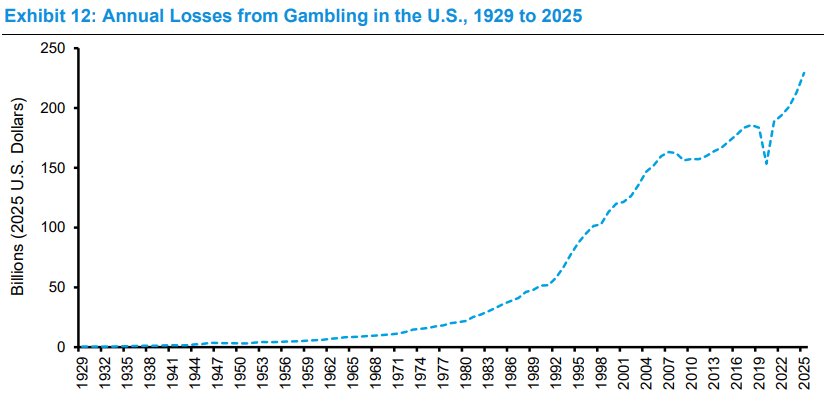
The real problem isn’t mode but habitat. We don’t struggle with video versus books. We struggle with feeds versus focus. One happens in an ecosystem designed for contemplation, the other in a casino designed for endless pull-to-refresh.

_________________________

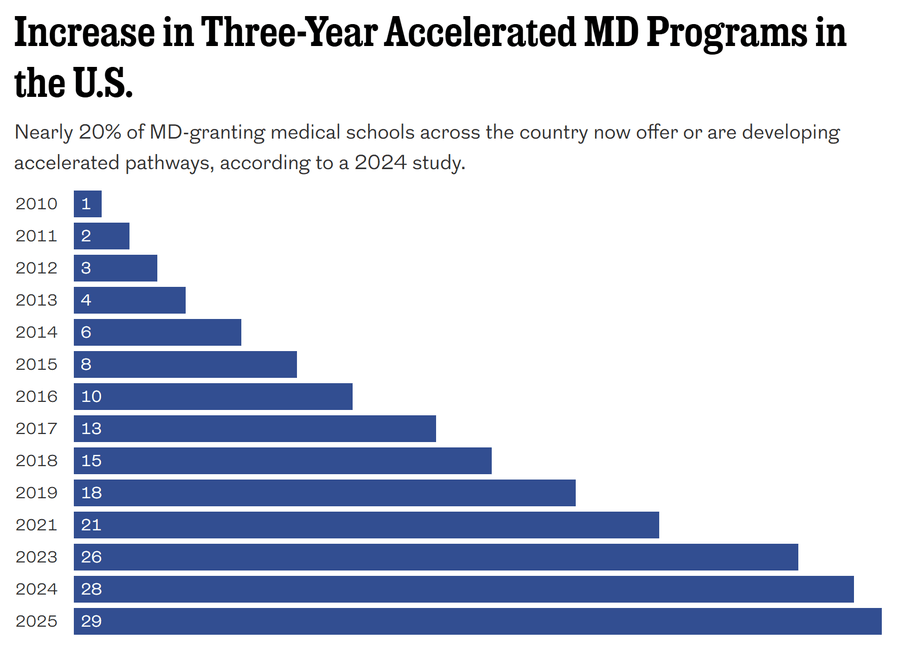
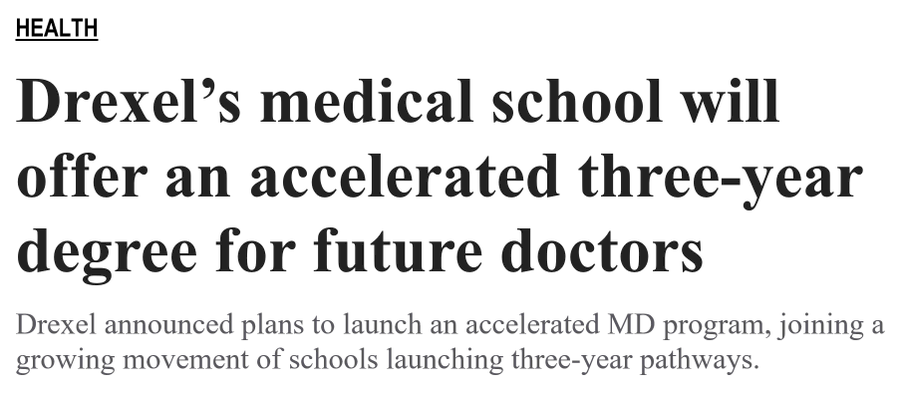
A.I. should allow medical schools to rethink whether 4 years is still necessary. If students can focus more on clinical practice and less on memorizing the Krebs cycle and molecular bio, many programs could eliminate a year, reducing both costs and physician shortages.

Drexel joins roughly 20% of med schools with or are developing 3-year programs for certain specialties, like family and internal medicine and pediatrics. The accelerated path can make these historically hard-to-staff specialties more appealing to students.

Aliveness, Discretionary Time & Strike Zones

There is an anxious, stomach-clenching feeling that the world is changing very fast, and that you’ll need to struggle very hard to keep up. The furious scramble to a place of psychological safety, to avoid being condemned to disaster and cast into the void………….

You don’t, actually, have to live like that. It won’t make you happier. It probably won’t even aid your career.

It’s worth briefly noting that of course there’s a mundane sense in which keeping up with changing times is a good idea. If you work in a job you’d like to retain, it’s wise to keep your skills fresh. If you see ways that a software tool might genuinely enhance what you do, you’d be foolish to refuse on principle to experiment with it. But that’s not the existential desperation I’m talking about here – that feeling of needing to claw your way to safety, so as not to tumble backwards into the abyss. Instead, you’re just making the sober judgment that, because a certain outcome matters to you, it makes sense to do certain things to try to obtain it.

The stomach-clench of anxiety isn’t anything like that. Rather, it emerges from the feeling that reality poses a fundamental threat to your security, so that hypervigilance and constant effort will be required to forestall annihilation. It implies that it’ll be very difficult indeed to make it to safety (with the corollary that if you fail, it’ll be because you didn’t try hard enough).

But this is one of those cases where the agony arises, in a sense, not from getting things out of proportion, but from not taking them far enough. Because for finite humans, it’s not “very difficult” to reach a place of safety from the onrush of events. It’s impossible. The moment of invulnerability never arrives. Even if you were to find a way to feel like a winner, technology-wise, by 2027, there’d be 2028 to worry about. Even if you felt completely secure in your career, there’d be your health, and the health of those you love, to worry about. And even if you and your family were the healthiest people alive, you might get hit by a bus tomorrow. Uncertainty is our basic state of existence, not something to be got through to the certainty beyond.

The reason “you’re not ready for what’s coming next”, in other words, is that we’re never ready for what’s coming next. 

I’m not suggesting that when you grasp this insight you’ll immediately cease worrying about the future and be free of anxiety forever. (That hasn’t been my experience.) But it can free you up sufficiently to notice a different way of approaching life: not by anxiously bracing against impending doom, but by taking a deep breath and settling down a bit into the basic uncertainty of it all. And then, in that tremulous and vulnerable state, to navigate from one day to the next by choosing, from the paths available to you, whatever seems to lead in the direction of more aliveness.

There’s no reason this can’t involve immersing yourself in all manner of digital tools. But you’ll be relegating them to their proper role as tools, useful in some contexts and too limited to be useful in others, as opposed to gods you must appease, regardless of the cost to your experience of life.

___________________________

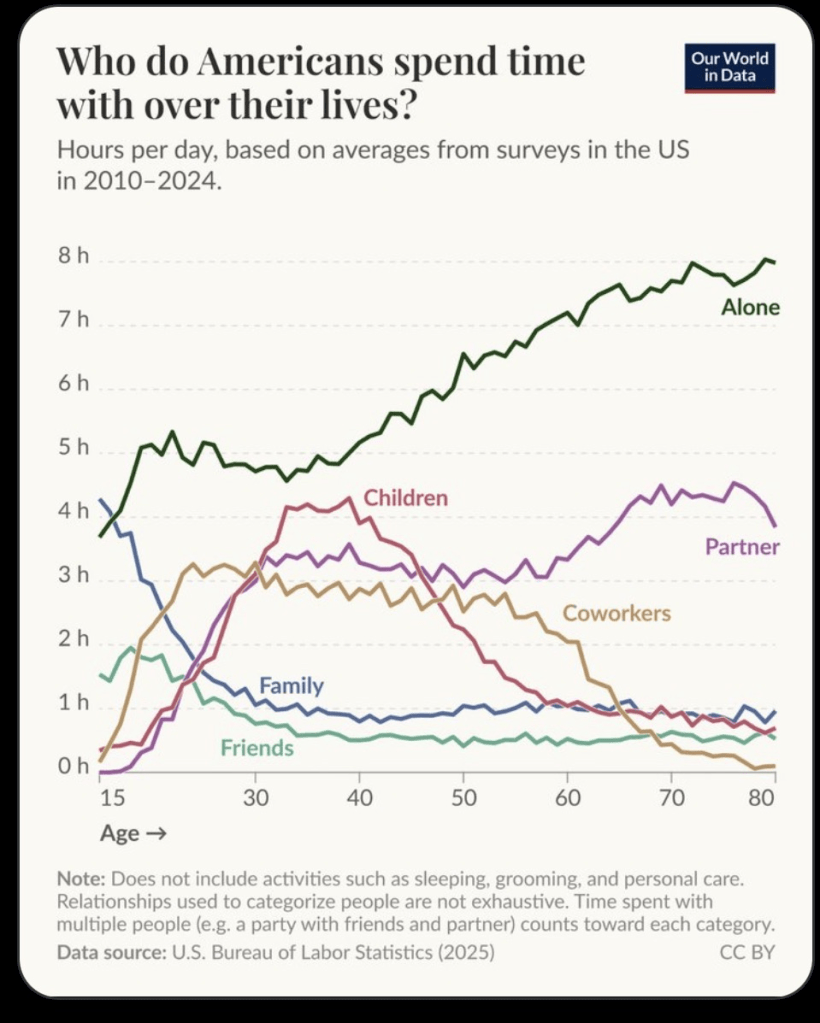
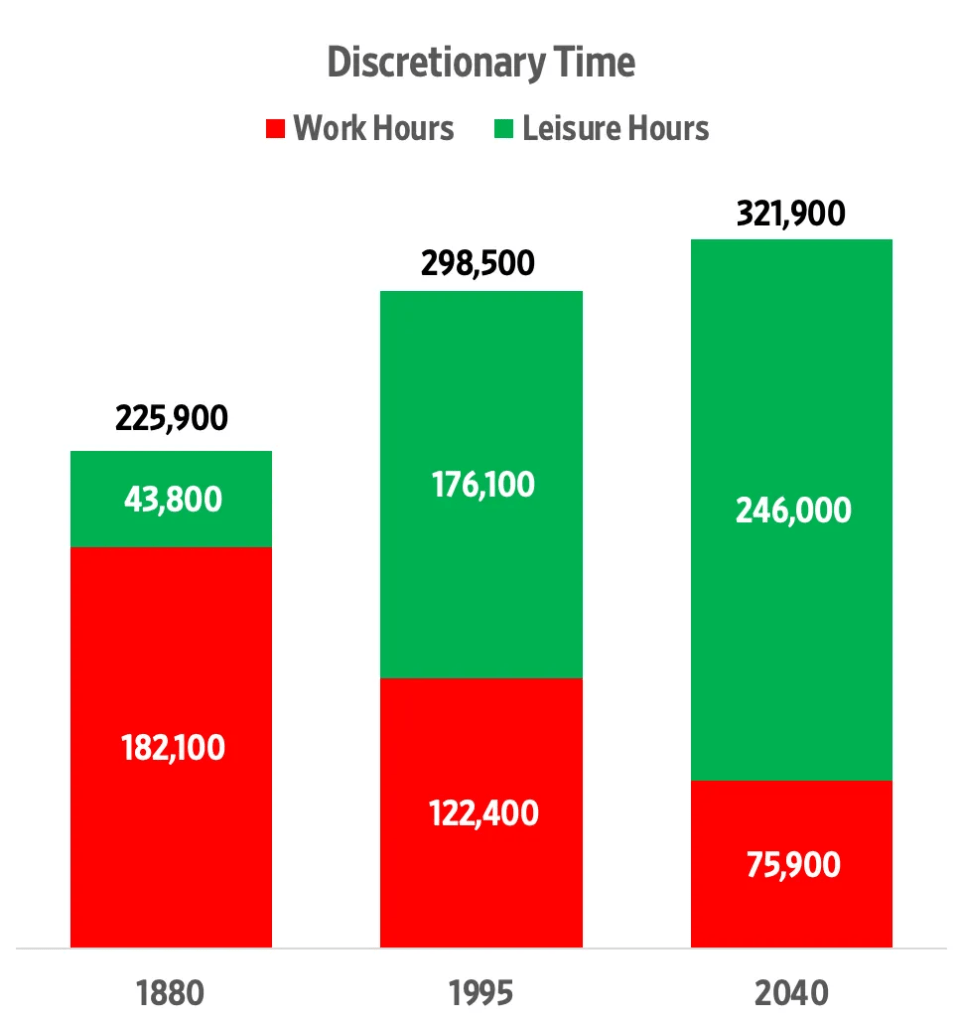
“Discretionary Hours” refers to time beyond sleep, meals, and hygiene. They are available for work, leisure, and other activities. “Work Hours” includes paid work, travel time to and from work, and household chores. The balance between work and leisure has shifted over time, particularly in the 20th century, due to factors like technological advancements and increased productivity

____________________________

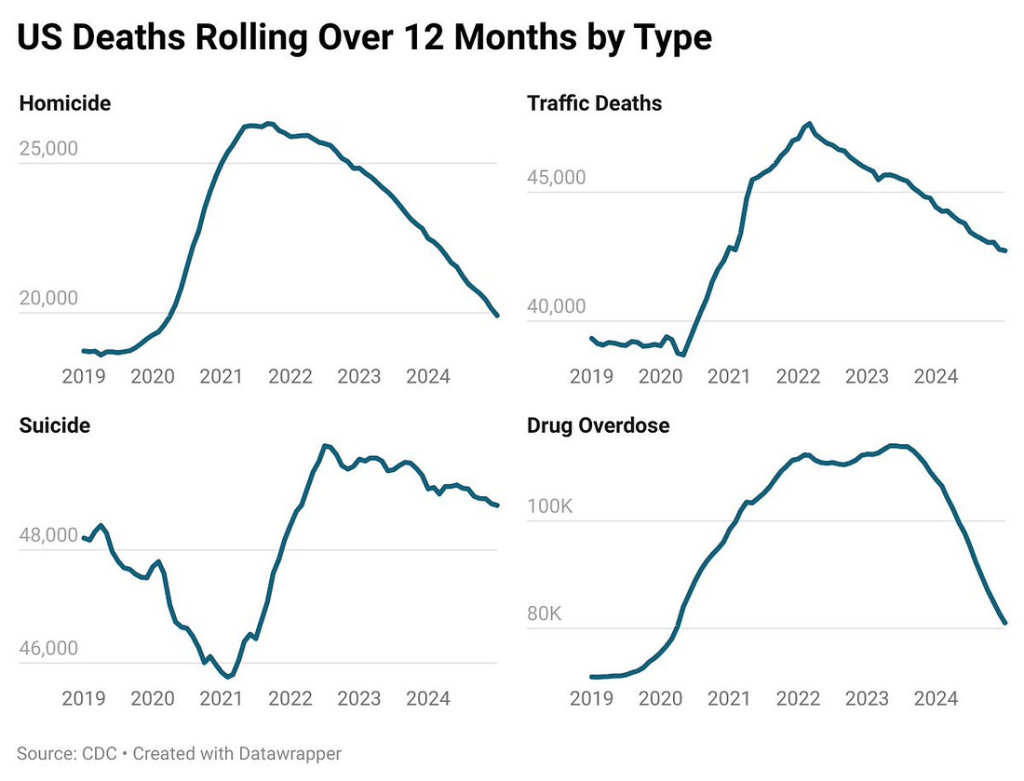
A bit of positive news. In the past 12 months, we’ve seen:

  • the largest decline in US murder rate ever recorded
  • huge declines in traffic fatalities and drug overdoses
  • a surprising (and largely unreported) decline in teen anxiety and despair, coinciding with ongoing declines in suicide
  • continued advances in GLP-1 medicines that seem to reduce obesity, inflammation, cardiovascular disease, and other illnesses that are currently under study

__________________________

Baseball umpires have improved dramatically. The heat maps below show the evolution of the MLB strike zone from 2007 to 2025. The zone has changed dramatically, going from vibes to nearly matching the rule book definition perfectly.

________________________________

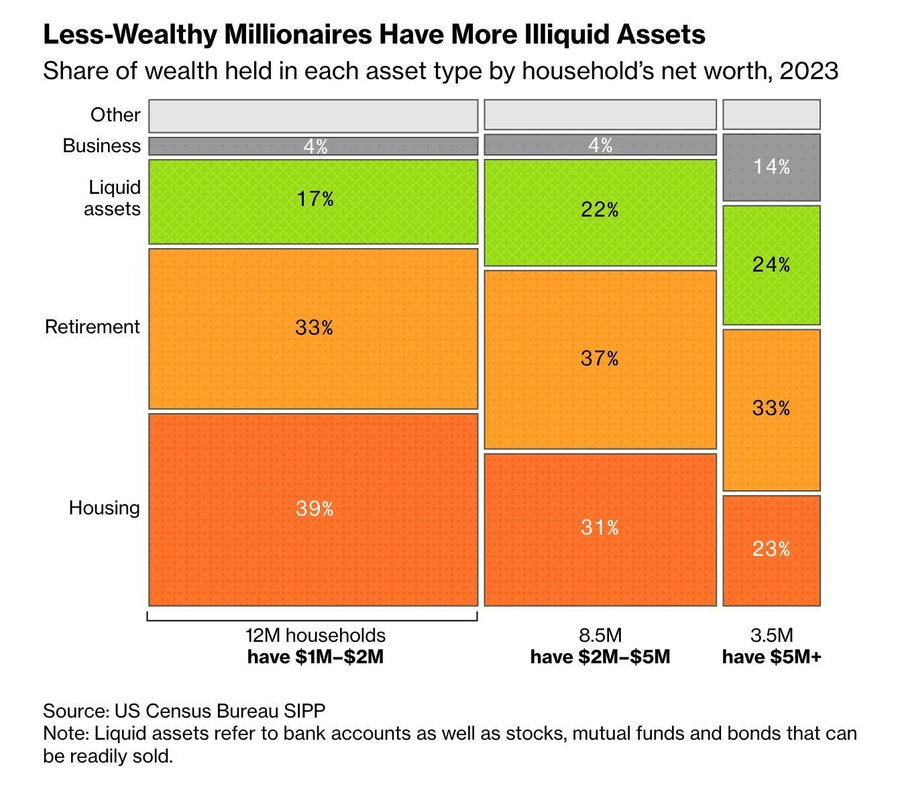
The truth about millionaires in America:

-Half have less than $2 million in net worth (and less than $340,000 in liquid assets)
-Most are NOT business owners
-Almost all are house/401k rich but cash poor

________________________________

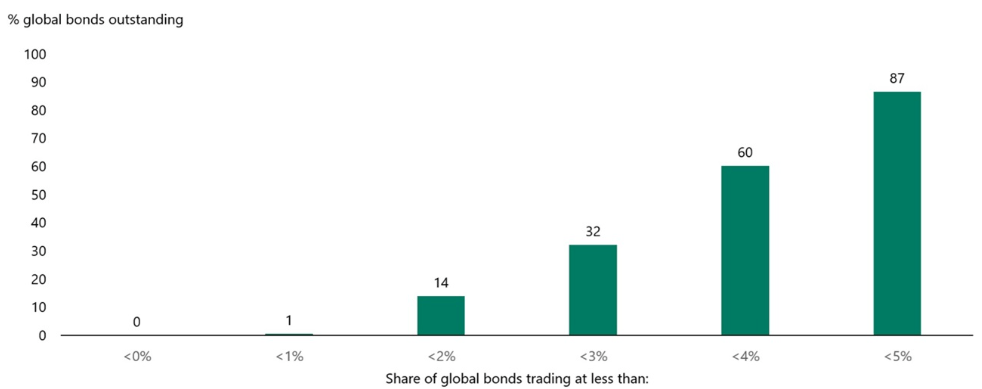
About 90% of all outstanding bonds in the world yield lower than 5%:

________________________________

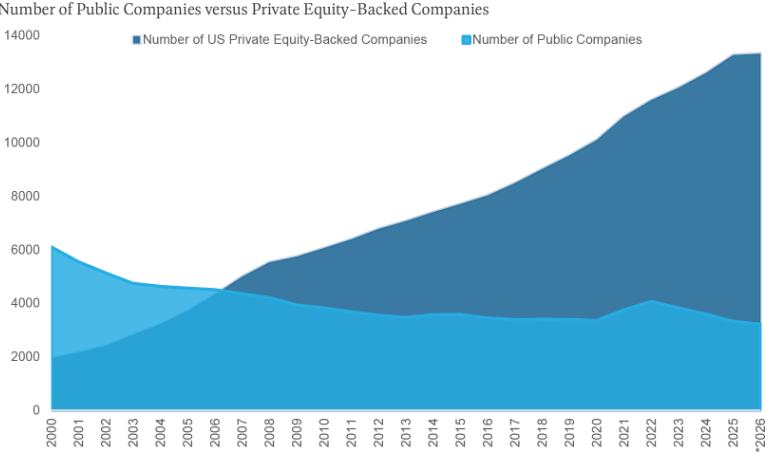
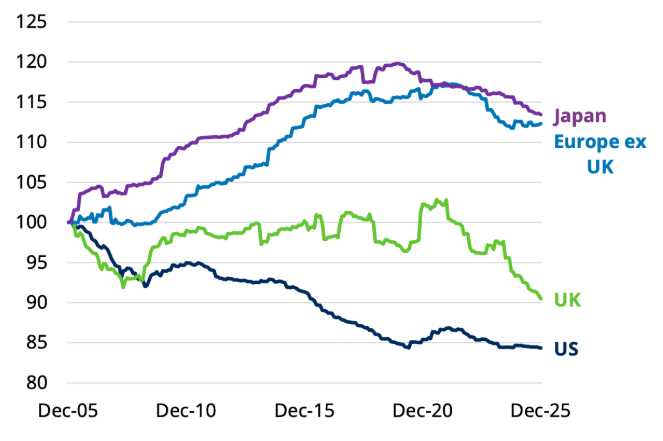
The falling number of public companies/stocks available to buy is a global phenomenon:

________________________________

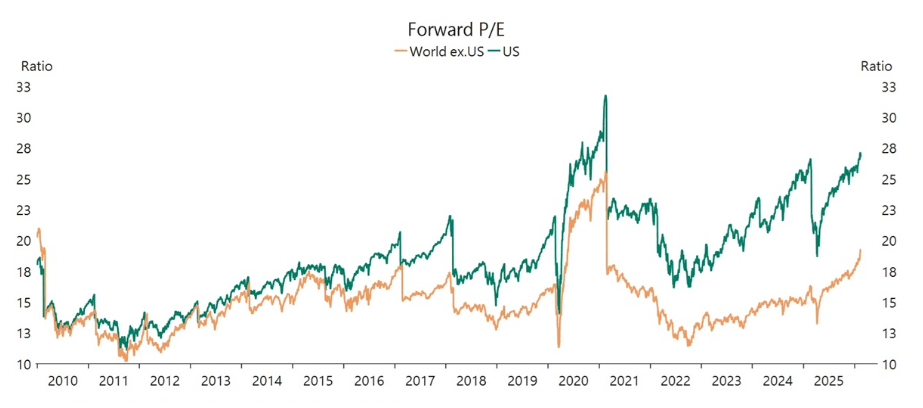
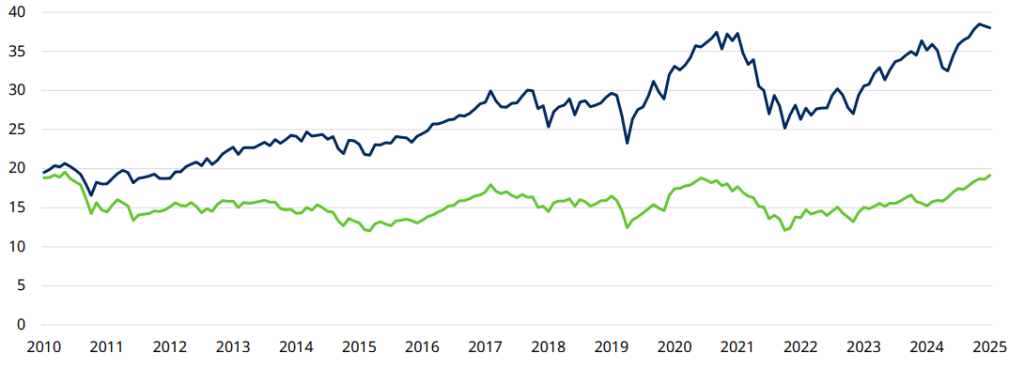
After the Global Financial Crisis (GFC), the P/E ratio for US stocks was similar to that of the rest of the world, but the surge in tech valuations has now pushed the US P/E ratio 40% higher:

_______________________________

What software companies are in more danger vs. more safe from the relentless A.I. disruption:

🔴 High danger — “Search layer” companies: Companies whose main value is making publicly available data easier to search through a fancy interface. This includes financial data terminals built on licensed exchange data, legal research platforms built on public court records, and patent search tools. Many have already lost 40–60% of their value.

🟡 Medium danger — “Mixed portfolio” companies: Companies that have some proprietary assets but also rely on repackaging public information. The key question is: what percentage of their revenue comes from things AI can’t replace? (Think S&P Global — their credit ratings are safe, but their data analytics tools are exposed.)

🟢 Safer companies have one or more of these shields:

  • They own data nobody else can get — Bloomberg’s real-time trading desk data, S&P’s credit ratings, Dun & Bradstreet’s business credit files. AI actually makes this more valuable since every AI agent needs it.
  • They’re protected by regulations — Epic (hospital software) is shielded by HIPAA rules and FDA certifications. AI doesn’t change those requirements.
  • They’re embedded in money flows — If your software processes payments or settles trades (like Stripe), AI sits on top of you, not instead of you.
  • They have network effects — Bloomberg’s chat system works because everyone on Wall Street is on it. AI doesn’t change that.

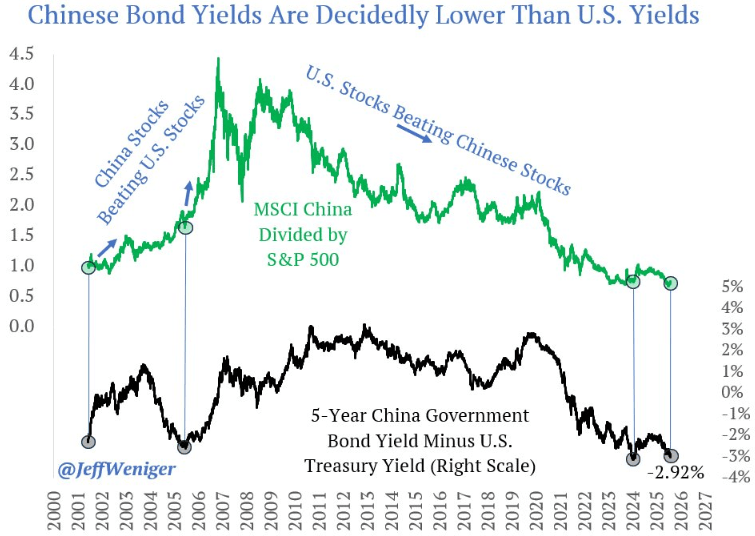
China, Value, & Something Big That’s Happening

For years, AI had been improving steadily. Big jumps here and there, but each big jump was spaced out enough that you could absorb them as they came. Then, on February 5th, two major AI labs released new models on the same day: GPT-5.3 Codex from OpenAI, and Opus 4.6 from Anthropic (the makers of Claude, one of the main competitors to ChatGPT).

These new AI models aren’t incremental improvements. This is a different thing entirely. And here’s why this matters to you, even if you don’t work in tech.

The AI labs made a deliberate choice. They focused on making AI great at writing code first… because building AI requires a lot of code. If AI can write that code, it can help build the next version of itself. A smarter version, which writes better code, which builds an even smarter version. Making AI great at coding was the strategy that unlocks everything else. That’s why they did it first.

And now they’re moving on to everything else.

The experience that tech workers have had over the past year, of watching AI go from “helpful tool” to “does my job better than I do”, is the experience everyone else is about to have. Law, finance, medicine, accounting, consulting, writing, design, analysis, customer service. 

AI is now intelligent enough to meaningfully contribute to its own improvement. It’s now building itself. Dario Amodei, the CEO of Anthropic, says AI is now writing “much of the code” at his company, and that the feedback loop between current AI and next-generation AI is “gathering steam month by month.” He says we may be “only 1–2 years away from a point where the current generation of AI autonomously builds the next.”

Each generation helps build the next, which is smarter, which builds the next faster, which is smarter still. 

This is different from every previous wave of automation. AI isn’t replacing one specific skill. It’s a general substitute for cognitive work. It gets better at everything simultaneously. When factories automated, a displaced worker could retrain as an office worker. When the internet disrupted retail, workers moved into logistics or services. But AI doesn’t leave a convenient gap to move into. Whatever you retrain for, it’s improving at that too.

Nothing that can be done on a computer is safe in the medium term. If your job happens on a screen (if the core of what you do is reading, writing, analyzing, deciding, communicating through a keyboard) then AI is coming for significant parts of it. The timeline isn’t “someday.” It’s already started.

Eventually, robots will handle physical work too.

___________________________

In 2007, John Arnold became the youngest American billionaire, and he now focuses on philanthropy. He recently visited China and posted some of his thoughts:

  • The speed to add manufacturing capacity is stunning. Permitting takes weeks. A factory making sophisticated equipment is built in 12 months. An auto plant took 16 months from groundbreaking to first production. Slack in labor market makes it easy to staff and flex employment.
  • The US and China have significantly decoupled since early 2020. The # of flights between the two countries is down roughly 70%. Two long-term residents I spoke with said the # of American expats is down 50-75% from the peak. The # of Americans studying in China is down ≈90%.
  • Universities and government research labs are at least as tightly woven into the startup ecosystem as in the US, and in many cases more so. Their mission and incentive structures explicitly include commercialization, not just research.
  • China awards 1.3 million engineering undergraduate degrees each year vs 130,000 in the US.
  • Intense competition leads to widespread overcapacity and low profitability across many industries. Once an industry is deemed strategic, provincial governments deploy subsidies and other supports as they compete to turn local firms into hubs and capture the associated jobs.
  • I don’t know if Chinese manufacturers will ever make money but I came away not wanting to invest in any manufacturing business in the rest of the world.
  • You see American fast food everywhere. There are 12k KFCs (vs 4k in the US), 6k McDonalds, 7k Starbucks, 4k Pizza Huts.
  • Tier 2-4 cities are very quiet. Few cars on the road. Don’t see many people. Factory workers live in dorms on campus. Other workers are in gated compounds that are self-contained neighborhoods. Food delivery and e-commerce have replaced dining out and shopping.
  • China is one of only handful of countries with highly educated workforce, robust access to capital, and strong entrepreneurial culture. Only the US and China meet those conditions and have scale.
  • As industries become more complex, scale matters more than ever. Large countries can fund frontier R&D, support dense talent markets, amortize infrastructure, and create robust supply chains. Few countries can be cost competitive in high value-add manufacturing.
  • While the supply chain on transmission and grid infrastructure is backed up in the US, there is spare capacity in China.
  • A security check including bag x-ray is required to enter subway stations, at least in major cities. It’s interesting that most Western countries that are more dangerous do not do this, presumably for speed and cost.
  • There were fewer cranes than I expected, presumably reflecting the collapse of China’s real estate market.
  • Lower density cities still had most housing in high-rise residential buildings, usually built in complexes of 10-50 identical buildings. I guess it’s the most practical way to house people in a city growing quickly but the aesthetic damage is real.
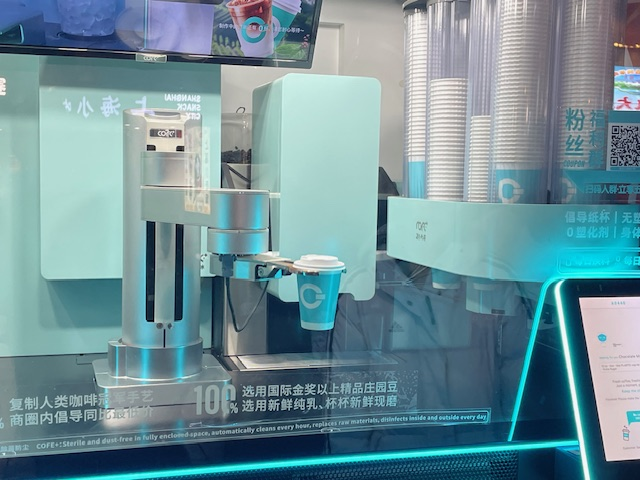
  • Robotic coffee shops are taking off in China first even though wages are much higher in the US.

_____________________________

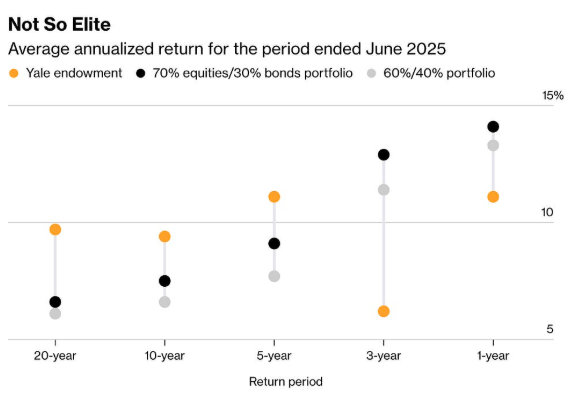
The Yale model, investing in private companies, worked in the ’80s and ’90s for one simple reason — there wasn’t a tidal wave of capital chasing deals. Buyouts were done at reasonable entry prices.

Today, small and mid-size businesses are being acquired at sky-high valuations, often with little margin for error. High entry prices make outsized returns harder to achieve (even with leverage, even with financial engineering).

____________________________

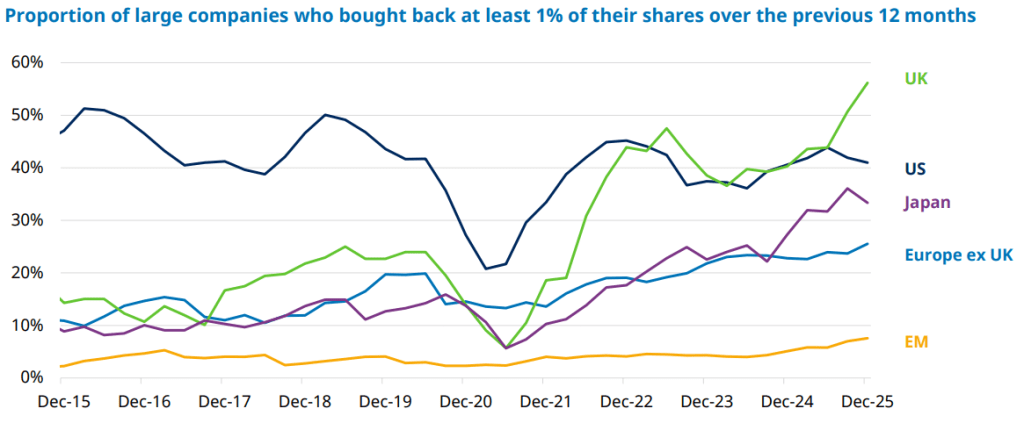
Europe and Emerging Market countries have not embraced stock buybacks, yet.

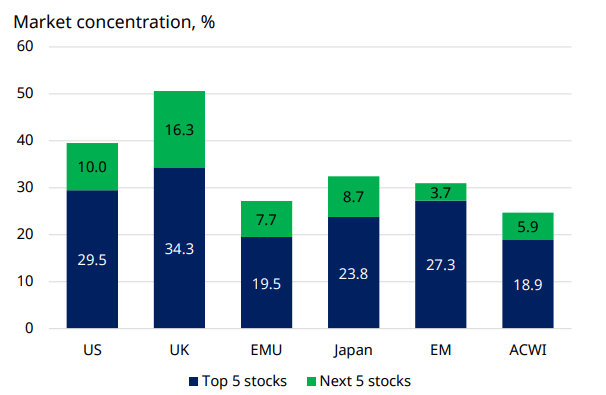
Market concentration for the largest stocks is everywhere in the world, not just the United States:

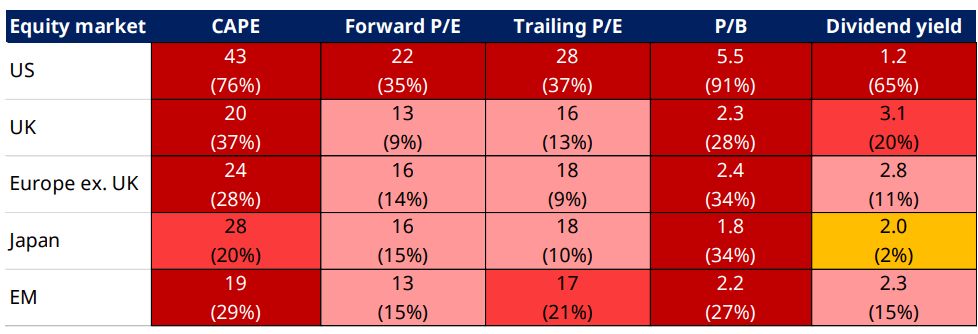
U.S. valuations are still well above the rest of the world, even as the rest of the world outperformed the U.S. in 2025:

The CAPE ratio of the U.S. vs. the rest of the world:

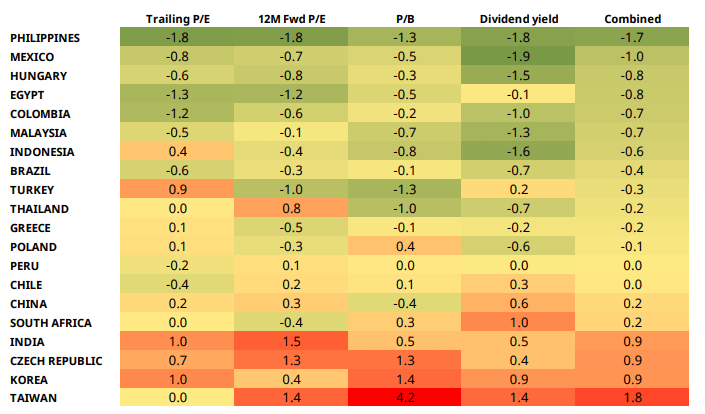
Most emerging market countries are still extremely cheap, but some have moved into the more expensive red zone:

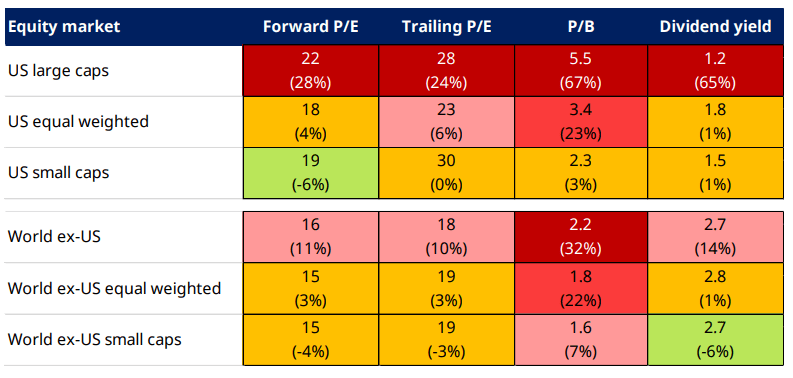
Within the United States, it’s the large cap stocks that are extremely expensive:

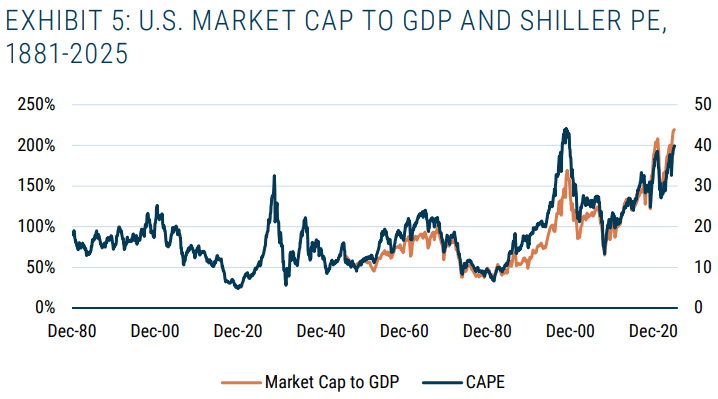
Another valuation metric in historical comparison:

FOMO, Silence, LLMs & Things Learned

A few of my favorites from an excellent best things learned in 2025 list:

  • All things being equal, the liquid inside a glass bottle contains more microplastics than the liquid inside a plastic bottle—up to 50X more! This is because plastic-coated metal caps found on glass bottles shed more particles than plastic caps found on plastic bottles.
  • If you have a son, the chances of your next child being a boy are not 50%, they are actually 57%.
  • Noise-canceling headphones are causing hearing problems in young people, not because they’re listening with the volume too high, but because blocking ambient noise prevents the brain from learning to filter and process everyday background sound in the real world.
  • In team sports, women are 13.69 times more likely to be attacked by a fellow teammate than men.
  • Until very recently, networks didn’t save live television footage because storage costs were too high. The only reason we have access to footage that aired between 1979 and 2012 is because a woman from Philadelphia recorded it and saved it on over 40,000 VHS tapes.
  • The screens of all laptops in Apple stores are set at an angle of exactly 76 degrees, which is just awkward enough to invite people to tilt them back a bit more, thereby taking the first step toward interacting with the product. 
  • No NFL game has ever ended with a score of 36–23. Across the approximately 17,000 games that have been played in NFL history, this score should have happened 2.68 times by now.
  • Women are more likely to believe ghosts are real; men are more likely to believe aliens are real.
  • Coal-burning plants release 100 times as much radiation as nuclear plants per megawatt of power produced. 
  • In 2024, the word “delve” appeared in journal abstracts 28X more frequently than in 2022 because ChatGPT likes the word delve.
  • The average West Virginian eats more than one hot dog per day.
  • In Mexico, extending the school day by 3.5 hours led to a 12.6% increase in divorce rates. The extra time made it more likely for women to participate in the labor market, thus increasing their economic independence.
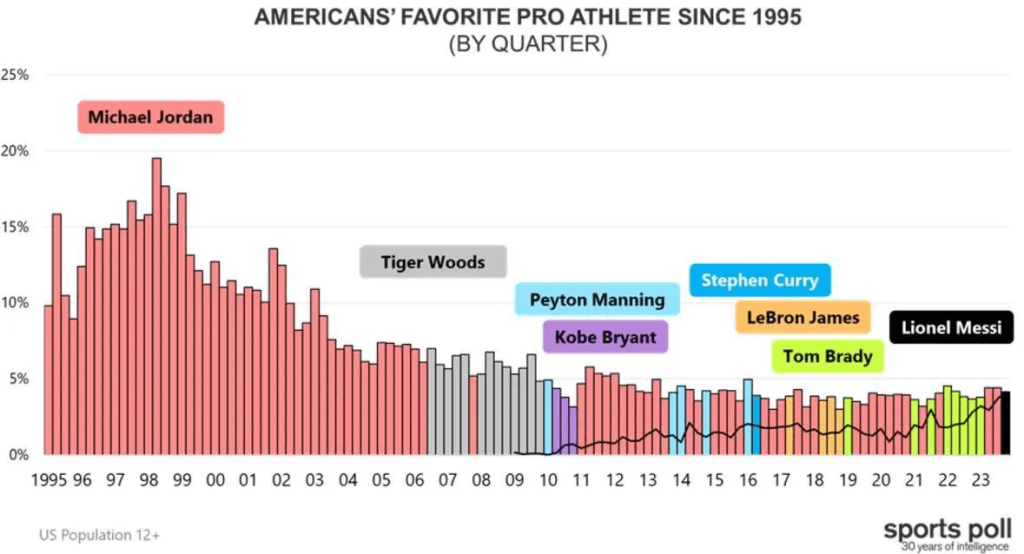
  • Before 2000, it was common for 10% of Americans to have the same favorite athlete. The 10% threshold was last crossed in 2003, and since 2014, no more than 5% of Americans have had the same favorite athlete. This trend reflects a broader shift away from monocultural sports consumption, where everyone watches the same sports on a few channels, and a shift toward the fragmentation of sports media, where audiences are split across digital platforms and niche interests, preventing any single athlete from dominating the national consciousness.

_____________________________

I conducted dozens of bot challenges based on real things people do with AI, including writing breakup texts and work emails, decoding legal contracts and scientific research, answering tricky research questions, and editing photos and making “art.” Human experts including best-selling authors, reference librarians, a renowned scientist and even a Pulitzer Prize-winning photographer judged the results:

  • For writing and editing – use Claude
  • For research and quick answers – use Google’s AI Mode 
  • For working with documents – use Claude
  • For images – use Google’s Gemini

If I could change one thing about today’s AI tools, I’d make them better at asking follow-up questions that could completely change the answer.

When I asked the chair of the department of medicine at the University of California to judge ChatGPT’s responses to real medical questions he said the difference between a bot with access to infinite knowledge and a good human doctor is that the doctor knows how to answer a question with more questions. That’s how you actually solve someone’s problem.

He suggested an AI strategy I now use regularly: Front-load your queries to a chatbot with as many details as you can think of, knowing that the AI might not stop to ask for some of them before trying to answer. Instead of “summarize this lease,” try “summarize this lease for a renter in D.C., flagging clauses about fees, renewal and early termination.”

___________________________

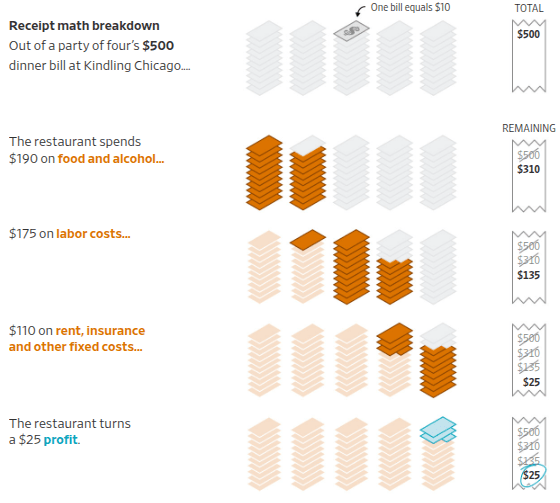
The bill on a steak dinner for four can easily climb to $500. But after accounting for the restaurant’s costs—from the steak to rent—profits from the meal amount to around $25.

___________________________

_____________________________

Warren Buffett always had lunch at the Stage Deli on Seventh Avenue. A friend pointed out there were many good eateries in New York — why not try someplace new? Buffett replied, “If I like the Stage, why eat somewhere else?” The fear of missing out — responsible for a high percentage of foolish speculations — was unknown to him. This character quirk flowed from a subtle insight: People get in trouble far more often from doing and changing too much rather than doing too little.

____________________________

__________________________

Podcasts have devastated my relationship to music, but that is not to say I’ve embraced silence. Whereas I used to listen to music all the time, now I fill every available moment with the sound of people talking.

My change in listening habits comes from a compulsion that many people in my life share: to make every minute of the day as “productive” as possible. By that blinkered calculus, an informative podcast will always trump music. But listening incessantly to podcasts has actually narrowed my interests and shown me just how limiting too much information can be.

I’ve found that trying to make every listening minute count inevitably becomes counterproductive. The internal pressure to optimize free time and always multitask is ultimately exhausting, not enlightening.

___________________________

There were incredible 2025 medicine breakthroughs in:

  1. Metabolic Medicine
  2. Infectious Diseases
  3. Transplant Medicine Firsts
  4. Gene Therapies
  5. Neurological Diseases
  6. Cell Therapies
  7. Cancer Vaccines and Treatments

The Zodiac’s Cipher, China’s Strength & Social Media

There’s a new theory from an amateur code-breaker, Alex Barber, that links two of America’s most infamous unsolved cases: the 1947 mutilation murder of Elizabeth Short (known as the Black Dahlia) and the late-1960s killings by the Zodiac Killer.

Baber, a 50-year-old self-taught investigator from West Virginia with autism and no formal education beyond high school, claims both crimes were committed by the same person: Marvin Margolis (who later used the alias Marvin Merrill until his death in 1993). Baber says he cracked the Zodiac’s unsolved 13-symbol cipher (Z13) using AI-assisted methods, revealing the name “Marvin Merrill.” He connects this to the Black Dahlia case through circumstantial links, including:

  • Margolis’s brief living arrangement with Short shortly before her murder.
  • His Navy medical training explaining the surgical precision in her dismemberment.
  • A 1992 sketch by Margolis titled “Elizabeth” depicting a mutilated woman with the word “ZODIAC” hidden in the shading.
  • The possible murder site near a Compton motel called the Zodiac Motel, which Baber suggests inspired the killer’s later moniker.

Retired LAPD detectives (Rick Jackson and Mitzi Roberts) and former NSA codebreakers (Ed Giorgio and Patrick Henry) praise Baber’s work as compelling and “overwhelming” circumstantial evidence, with low probability of coincidence.

_________________________

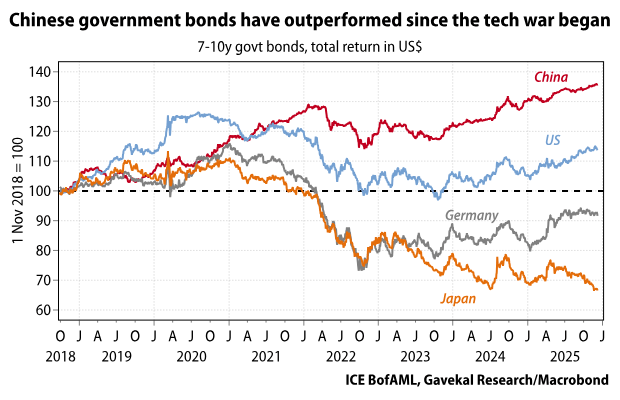
The 2018 US semiconductor embargo against China changed the world. The age of cooperation and globalization was over.

With the 2018 embargo, the US essentially punched China on the nose. At the time, China had little choice but to take the punch. Take the punch and prepare its own economy for a future in which it would be less vulnerable to further US embargoes.

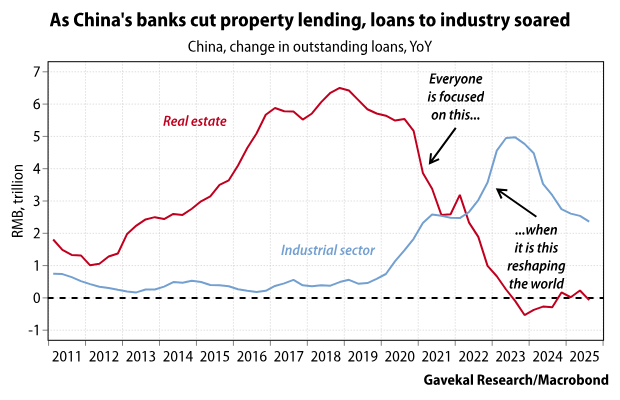
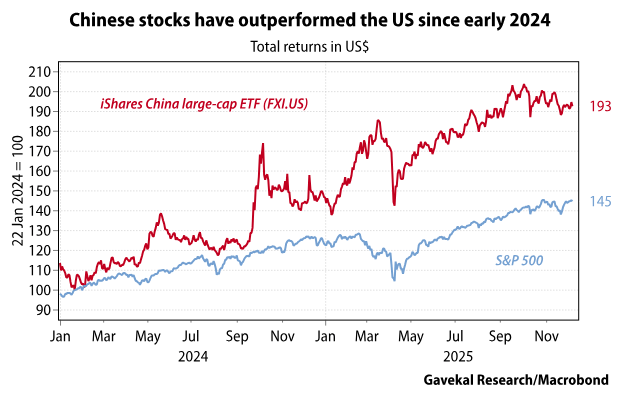
For seven long years China went on a diet, and went to the CrossFit gym. And as all of China’s savings were captured—through tighter capital controls, the suspension of IPOs, and the concentration of bank lending—and redirected towards China’s industrial supply chains, returns for investors were dreadful.

When Donald Trump came back to power in 2025, China, which had spent the past seven years getting toned, showed up and essentially said: “Gloves off. If you want a fight, let’s go. You tariff me, then I will tariff you. You embargo me, then I will embargo you.

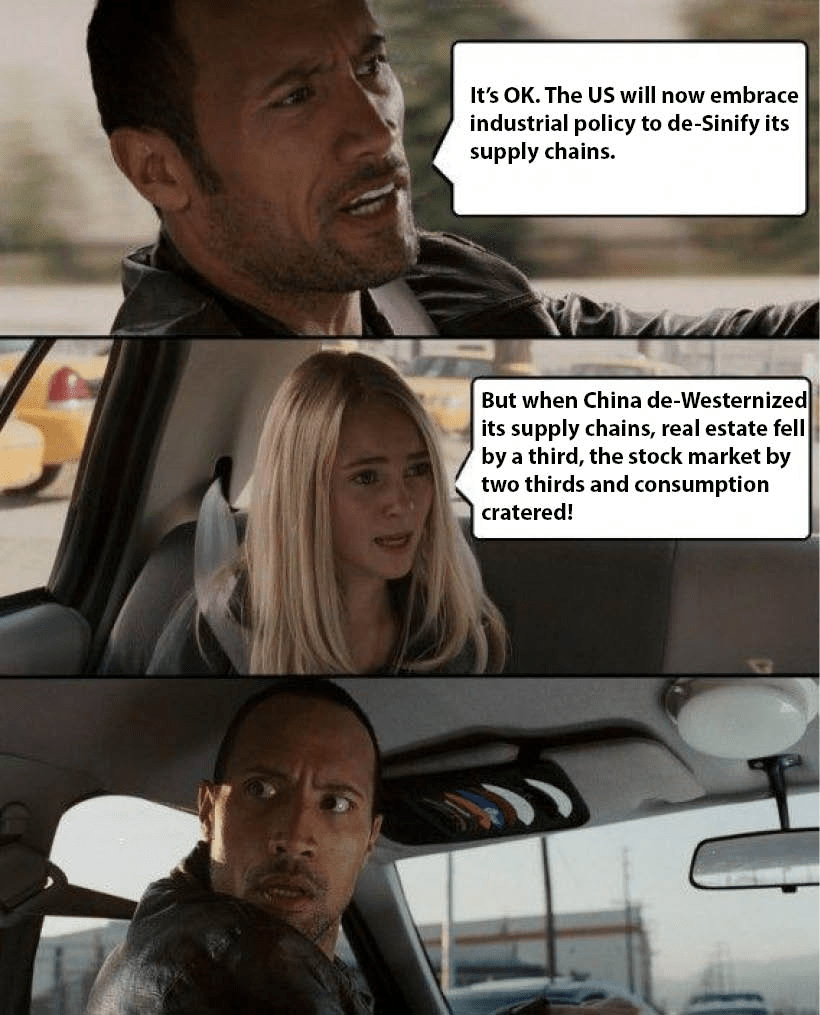
China’s response was to de-Westernize its supply chain, at great cost to its investor base, to economic growth, to domestic consumption and even to its birth rate.

Meanwhile, over the same period, the US did absolutely nothing to de-Sinify its own supply chain. While China hit the gym, the US partied. And partied hard: US budget deficits expanded, but pretty much just funded expansions in social benefits—social security, Medicare and Medicaid. Between 2018 and 2025, US government debt increased from $21 trillion to $38 trillion. However, none of the US $17 trillion in debt went into building new Hoover dams, new Tennessee Valley Authorities, new interstate highways or new railroads.

China’s push to de-Westernize its supply chains came at great cost to the Chinese economy and Chinese society. Would US policymakers countenance such judicial repression?

______________________________________

Readers used to outnumber non-readers 2 to 1. Now non-readers outnumber readers 3 to 1.

____________________________

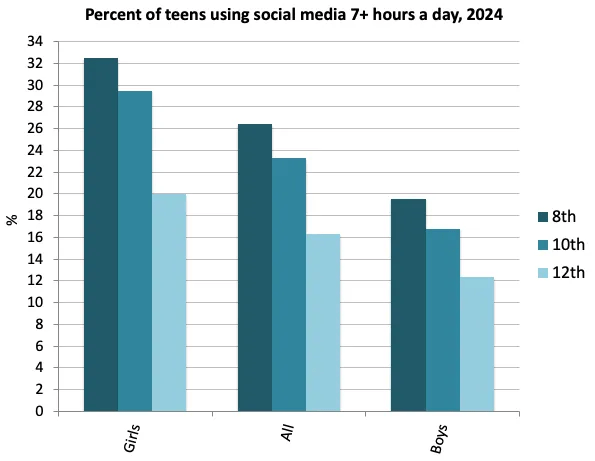
One third of 8th grade girls spend 7+ hours per day on social media. Meaning: that’s pretty much all they do.
________________________________

The frustrating truth is that we don’t really know for sure what the digital empire of short-form video is doing to our minds. But a systematic review of 71 studies with 98,000 participants published in 2025 reached an alarming finding. Across the dozens of studies, heavy short-form video users showed moderate deficits in attention, inhibitory control, and memory.

Several studies in the meta-analysis reported structural and functional differences in the prefrontal cortex and reward circuits among high-frequency users, while others found cognitive flexibility reductions and altered dopaminergic reward responses. None of this proves causation. But taken together, they suggest a plausible mechanism: a daily diet of hyper-rewarding, rapid-fire stimuli may gradually reshape attention and regulatory systems in ways that weaken our attentional control.

________________________________

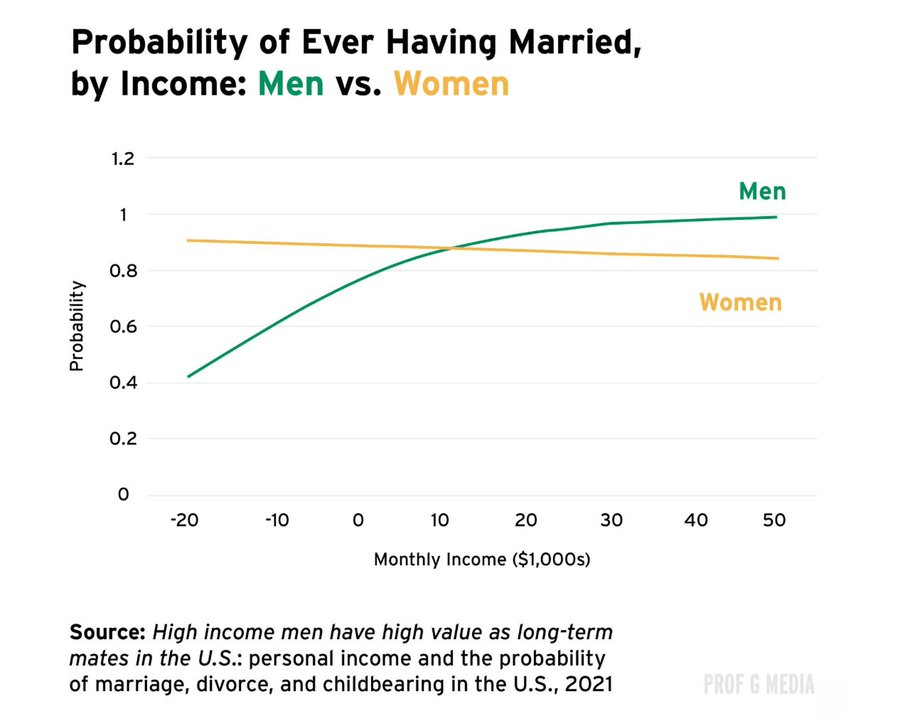
The probability of men getting married increases with their income.

________________________________

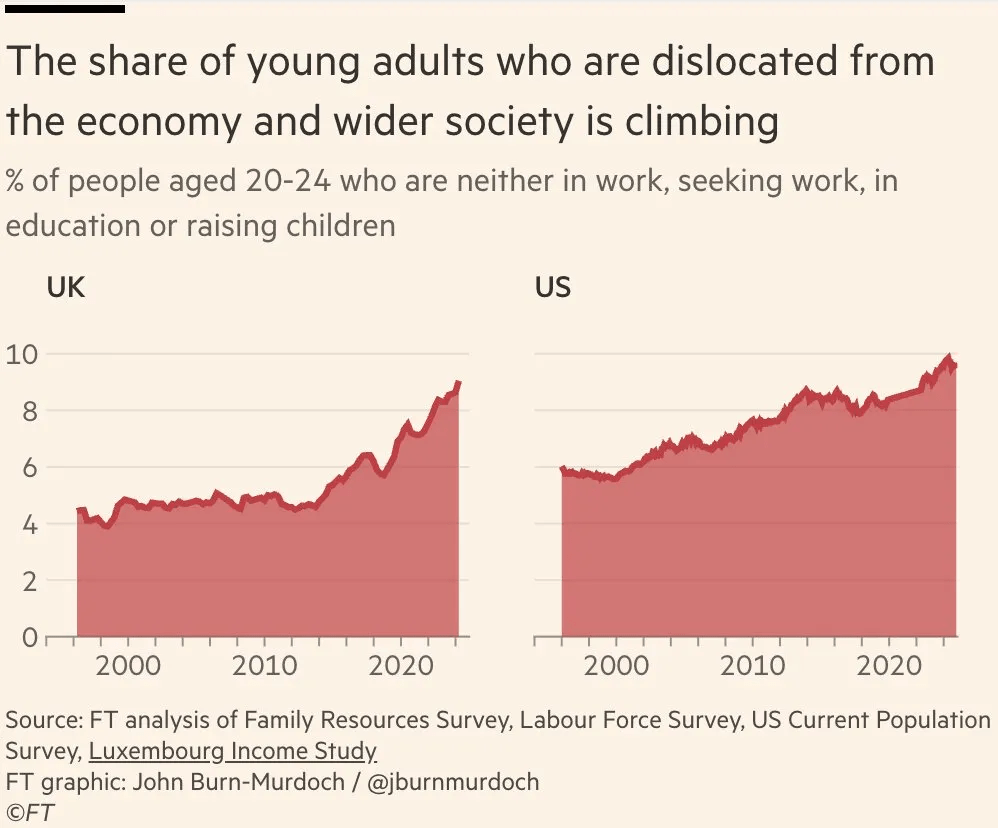
The share of people between 20 and 24 who are not in a job, or seeking work, or in school, or raising a child has nearly doubled in the last quarter-century in both the UK and the U.S.

________________________________

A list of small things you can do, that compound positively over time, from Kevin Dahlstrom (founder of Bolt.health) who just turned 55 and said he feels much healthier now than he did 10+ years ago:

  • Walk 15+ miles a week, even if you do other exercise.
  • Eat real food. Not too much.
  • Stop drinking alcohol, even in moderation.
  • Explore minimalism (it’s not what you think it is).
  • Get 8 hours of quality sleep each night.
  • Invest in experiences, not things.
  • Stay lean. Men in particular are obsessed with muscle mass these days, but bulk doesn’t age well. The goal is to be strong but lean. The fittest guys in their 50s and beyond aren’t meatheads, they’re lean guys who are serious about a sport.
  • Stop drinking sodas and sugary energy drinks.
  • Show up on time, every time. Poor time management limits success more than most people realize.
  • Find a hobby and pursue mastery. You can’t have a happy life without a passionate pursuit that isn’t your vocation. Your work—even if you enjoy it—isn’t enough.
  • Try psychedelics. It’s one of those things everyone should do at least once, and it might be the breakthrough you’ve been looking for.
  • Be a lifelong learner. Your brain is just like a muscle—if you don’t feed and flex it regularly, it will atrophy.
  • Find your purpose. People with a strong sense of purpose are happier and live longer. Lack of purpose sucks energy and magnifies depression.
  • Only take advice from people who embody the traits you want to have. Talk is cheap—emulate those who have done it.
  • The goal is not to retire and do nothing, it’s to build a great day-to-day life that you don’t need to escape. A life of leisure is a slow death.
  • Have fun! Do frivolous and silly things that make you smile.
  • Accumulate assets—things that grow in value over time. It’s the #1 habit of rich people, and it can be done in tiny chunks. It becomes addictive (in a good way).
  • Make your own decisions. We live in an era where most of what society tells us is wrong. Don’t be afraid to break from societal norms.
  • Go all in on family. Get married, stay married, have kids. Burn the boats. In the end, family is all that matters.
  • Be ruthless with your time. Money comes and goes. Time only goes. Audit your calendar ruthlessly—cut the trivial, double down on the meaningful, and spend your hours like your life depends on it.

_____________________________

________________________________

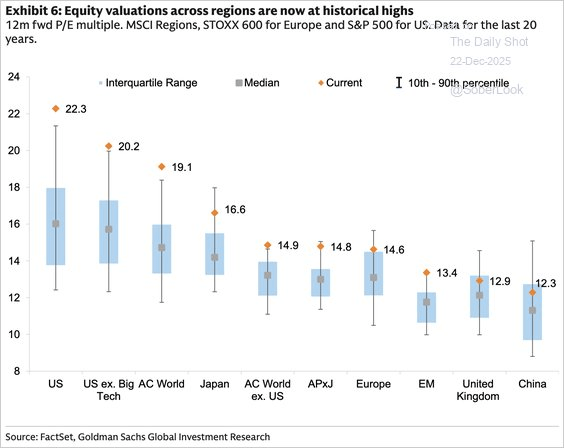
Stocks are still the most expensive in the United States, by far, but the rest of the world also became more expensive this year after an enormous rise in global stock prices almost everywhere.

The Private Bubble, NFL Scoring & Spam Texts

A few highlights from one of the best articles I’ve read this year discussing the private equity/credit bubble:

The golden age of Private Equity – at least from the standpoint of investor returns (FUM and thus fees to sponsors were significantly lower) – was during 1980-2000, and at a slight stretch, to around the time of the Great Financial Crisis in 2008. During this era, PE delivered legitimately good returns – in some cases outstandingly so. What enabled it was that it was still a niche industry where there was a limited amount of capital chasing deals, while the backdrop was conductive.
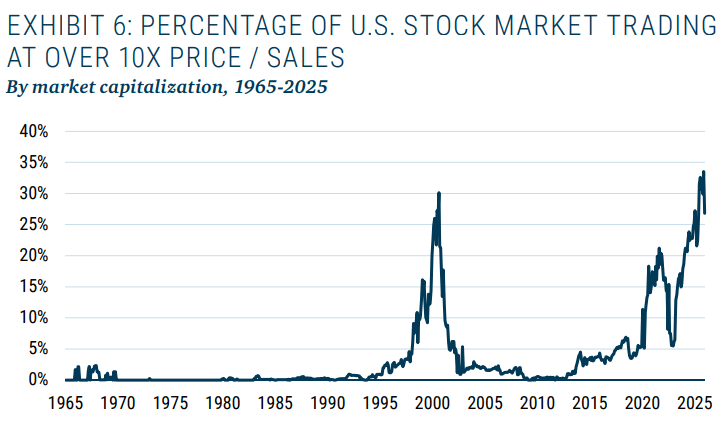
In contrast to the 1980-2000s, private equity funds from the 2010s began paying a premium to public market valuations for (typically) small, subscale and illiquid businesses. The problem was that the same thing that always happens when too much money floods into an area happened – bidding competition heated up, target prices rose, and the opportunity that previously existed rapidly disappeared (though the vehicles’ high fee structures of course remained firmly intact). Not surprisingly, since the 2010s, and perhaps as far back as 2006, outcomes have dramatically changed, and PE has delivered generally disappointing returns and underperformed listed equities, and the magnitude of that underperformance has significantly worsened since 2022.

Warren Buffett has scrutinized PEs return calculations and found them to be “well, they’re not calculated in a manner that I would regard as honest.” All kinds of tricks can be and are used to inflate apparent relative returns. PE will often lock up commitments from investors years in advance, and only “call” the funds much later after a deal is done. The IRR calculations only include the period during which the funds are working, but investors need to keep cash in reserve as it can be called at any time, meaningfully diluting effective returns to investors.

The much bigger elephant in the room – the PE industry is currently “marking to model” and is sitting on a vast number of assets it is unable to sell – even in a bull market – because the marks are unrealistic. This will be meaningfully inflating claimed trailing returns, which remain mostly unrealized.

If you look at who private equity companies hire, it is typically ex investment bankers. These guys are deal makers and spreadsheet jockeys, not operational people, and there is no reason to believe they have any unique insights on the intricacies of running small, niche businesses, where specialized skills and decades of domain experience generally count for a lot more than general smarts.

Not to mention that as the industry has mushroomed in size, the average quality of the average hire has meaningfully degraded. Investment bankers also generally lack investment acumen. They are deal makers – a different skill set entirely.

Going even a step further – it’s probable that private equity ownership not only fails to deliver operational improvements, but very likely on net makes the operational performance of companies worse, particularly in the long term. The most obvious means by which this occurs is by saddling investees with significant levels of debt, as well as implementing wholesale asset stripping (such selling and leasing back real estate) and cutting operational costs and capital expenditures to the bone. They frequently don’t just cut the fat, but the muscle as well.

If you are apt to under invest and run the business for maximum cash extraction in the near term, jacking up prices, lowering service quality, squeezing employees, alienating customers and opening the door to competitor inroads – it may improve near term cash generation, but it often comes at the cost of long-term value degradation.

PE has now taken over a large portion of Las Vegas, for instance, and visitors routinely complain of high prices, poor customer service, and the removal of perks such as free drinks that previously endeared visitors to the strip. Visitation has been waning, and people complain Vegas has lost its charm, and has become overpriced and soulless, a victim of “corporate greed.” 

This is far from the only example. Employees and customers of PE backed hospitals and dental practices often complain of declining service standards, high prices, and a significant increase in unnecessary treatments unethically prescribed to boost near term utilization/billing.

The fair value of the combined $5 trillion of assets held in the US Private Equity/Credit industry is probably worth only about 60% of that in reality – a $2 trillion hole. When that hole is exposed, it will change economic behavior, and likely to a noticeable degree.

Private Equity/Credit: The Bubble & Its Implications

________________________________

Great article from Nate Silver this week on reasons why there is more scoring in the NFL:

(1) The number of 55+ yard field goals has increased by 3x since just 2022:

(2) Between longer field goals and the dynamic kickoff, the field has basically been shortened by 10-15 yards.

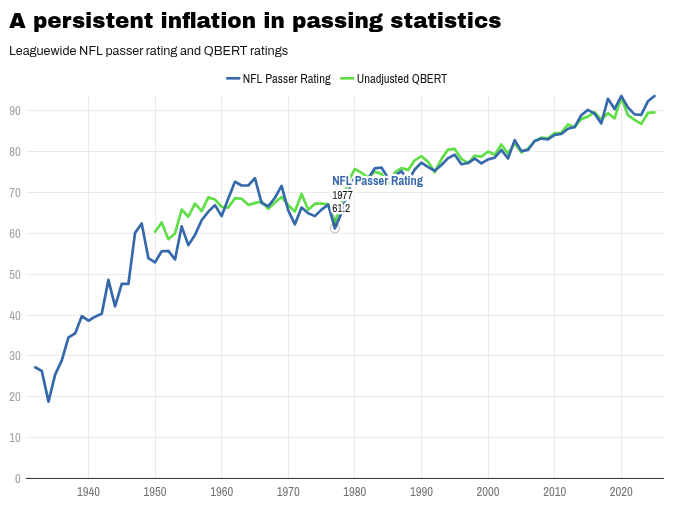
(3) Quarterback passer ratings are tied for their highest-ever at 93.6:

(4) For the first time in NFL history, quarterbacks as a collective are gaining enough rushing yards to outweigh the yards they lose from sacks:

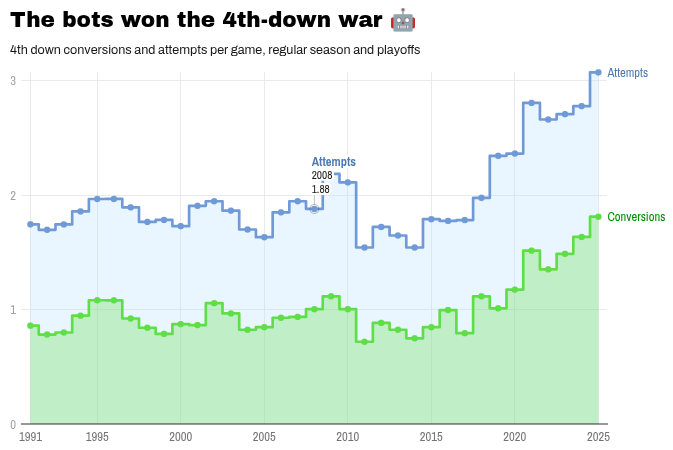
(5) Analytics have teams successfully attempting and completing fourth down conversions:

(6) Rushing plays on 4th-and-short are being attempted (and succeeding) at extremely high rates. The tush push effect:

_______________________

If you’ve ever received a spammy text falsely alerting you to an unpaid toll or failed delivery, it might have come from a so-called Phishing-as-a-Service network that Google is now trying to take down. In just 20 days, Google alleges, Lighthouse was used to spin up 200,000 fraudulent websites to attract over a million potential victims. It estimates that somewhere between 12.7 million and 115 million credit cards in the US were compromised by the scam.

In this alleged scheme, the text would link to a spoofed USPS page asking a user to enter their personal and payment details. The page tracks users’ keystrokes, according to the complaint, so the information is compromised even if the user has second thoughts before submitting. 

__________________________

When Will We Make God? The key driver of the AI Bubble:

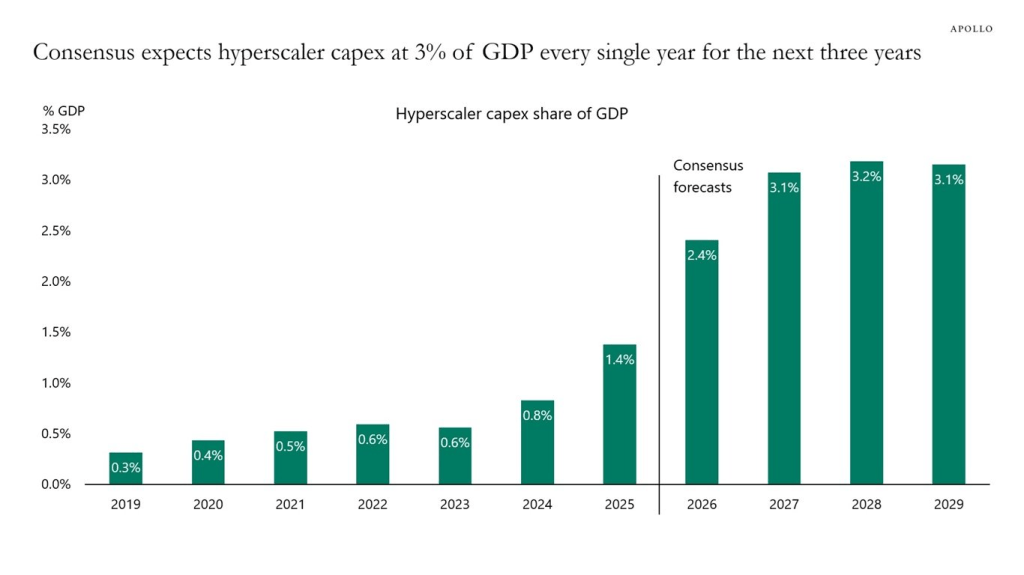
Hyperscalers (Microsoft, Amazon, Google, Oracle, IBM) believe they might build God within the next few years. That’s one of the main reasons they’re spending billions on AI, soon trillions. They think it will take us just a handful of years to get to AGI—Artificial General Intelligence, the moment when an AI can do nearly all virtual human tasks better than nearly any human. 

They think it’s a straight shot from there to super-intelligence—an AI that is so much more intelligent than humans that we can’t even fathom how it thinks. A God. The arguments to claim we’re about to make gods are:

  • AI expertise is growing inexorably. Threshold after threshold, discipline after discipline, it masters it, and then beats humans at it.
  • We’re now tackling the PhD level.
  • In the current trajectory, we should reach AI Researcher levels soon.
  • Once we do, we can automate AI research and turbo-boost it.
  • If we do that, super-intelligence should be around the corner.

Offshoring Automation & Meaningful Ordinary Things

Inside a multistory office building in Manila’s financial district, around 60 young men and women monitored and controlled artificial intelligence robots restocking convenience store shelves in distant Japan. Occasionally, when a bot dropped a can, someone would don a virtual-reality headset and use joysticks to help recover it. 

The AI robots are designed by Tokyo-based startup Telexistence, and run on Nvidia and Microsoft platforms. Since 2022, the company has deployed the machines in the back rooms of over 300 FamilyMart and Lawson stores in Tokyo. It is also planning to use them soon in 7-Elevens.

The bots are remotely monitored 24/7 in Manila by the employees of Astro Robotics, a robot-workforce startup. Japan faces a worker shortage as its population ages, and the country has been cautious about expanding immigration. Telexistence’s bots offer a workaround, allowing physical labor to be offshored. This lowers costs for companies and increases their scale of operations, he said. 

It’s hard to find workers to do stacking in Japan. If you get one who’s willing to do it, it’s going to be very expensive. The minimum wage is quite expensive. It’s easy to get young, tech-savvy Filipinos to operate the robots. Each tele-operator, called a “pilot,” monitors around 50 robots at a time.

The bots are usually autonomous, but occasionally — about 4% of the time — they mess up. Perhaps they drop a bottle, which rolls away. Getting the AI bot to recover it by mimicking the human grip perfectly — the friction, the feel of metal in the hand — is one of the more challenging problems in robotics. That’s when a pilot steps in. 

Astro Robotics’ tele-operators are benefiting from an AI- and automation-related boom in IT-service work and tech jobs in the Philippines, even as layoffs hit similar workers in richer countries. Filipino tech workers maneuver industrial robots, drive autonomous vehicles, collaborate with AI on various tasks, or help build “AI agents,” which are computer programs that enable autonomous action. 

________________________

Diane has been a death doula for two decades now, meaning she is a companion for people at the end of life. She has sat beside people with no time left to waste and nothing left to prove, continually learning from the profound insights they leave behind. An insight she has gleaned:

What does it really mean to live like you are dying? Go skydiving? Ride a bull? Those may sound fun, but insights from people who are actually dying are often simpler and much deeper.

One client told me, “I just want to sit in my own kitchen one more time, with the people I love and a bowl of warm, fresh pasta with parmesan cheese melting on top.” That was his dream. Not a trip to Bali. Not bungee jumping. Just warm pasta, family, and home.

I used to expect that people would reminisce about big events like weddings, awards, or epic vacations. But over and over, what they actually longed for were the simplest pleasures.

My client Bernice had lived an extravagant life. Her walls were covered with perfectly posed photographs of big events from her life. But in her final months, she said, “I wish I had different pictures on the wall—messy ones. Pajama parties with friends, Sunday night movies with my kids, and neighborhood barbeques.” Those were the memories that stirred her soul.

We spend so much of life chasing big moments, but the dying often remind me that it’s not the grand gestures that matter most in the end. It’s the small, ordinary things. A meaningful life is built in everyday moments. Not in the highlight reel, but in the quiet, ordinary spaces in-between.

The dying know something we seem to have forgotten: Life is happening right now. In the warm pasta. During the neighborhood barbecue. In the sound of your favorite voice calling your name. Big events are wonderful, but in the end, the ordinary is everything.

____________________________________

The decline of local news has all kinds of implications. One that doesn’t get much attention is that the wider the news becomes, the more likely it is to be pessimistic. Two things make that so:

  • Bad news gets more attention than good news because pessimism is seductive and feels more urgent than optimism.
  • The odds of a bad news story—a fraud, a corruption, a disaster—occurring in your local town at any given moment is low. When you expand your attention nationally, the odds increase. When they expand globally, the odds of something terrible happening in any given moment are 100 percent.

______________________________________

The top 10 stocks in the S&P 500 account for 40% of the index’s market cap. Since ChatGPT launched in November 2022, AI-related stocks have registered 75% of S&P 500 returns, 80% of earnings growth, and 90% of capital spending growth. Meanwhile, AI investments accounted for nearly 92% of the U.S. GDP growth this year. Without those AI investments growth would be flat. America is now one big bet on AI, and this concentration creates fragility.

Valuations for the Mag 10 — the original group of seven leading tech stocks, plus AMD, Broadcom, and Palantir — are high, but not yet at historic peaks. The 24-month forward P/E ratio of the Mag 10 is 35x. In 2000, at the height of the dot-com bubble, the top 10 stocks traded at 52x forward earnings. Implicit in these valuations, however, is an assumption that AI will help these companies cut costs, or grow revenues by $1 trillion in the next two years. I believe we’re either going to see a massive destruction in valuations, infecting all U.S. stocks and global markets. Or we’re going to see a massive destruction in employment across industries with the highest concentrations of white-collar workers. Both scenarios are ugly.

_____________________________

Cellphone bans in schools have become a popular policy in recent years in the United States, yet very little is known about their effects on student outcomes. In this study, we try to fill this gap by examining the causal effects of bans using detailed student-level data from Florida and a quasi-experimental research strategy relying upon differences in pre-ban cellphone use by students. Several important findings emerge.

  • The enforcement of cellphone bans in schools led to a significant increase in student suspensions in the short-term, but disciplinary actions began to dissipate after the first year, potentially suggesting a new steady state after an initial adjustment period.
  • We find significant improvements in student test scores in the second year of the ban after that initial adjustment period.
  • The findings suggest that cellphone bans in schools significantly reduce student unexcused absences, an effect that may explain a large fraction of the test score gains.

Contentment, Luck, Knowledge & Experience

When we dream about being happier in the future, we’re imagining being content with what we have. Maybe we picture a new house or a luxurious lifestyle. But what we’re really imagining is being satisfied with those things. We’re not just picturing wealth, you’re picturing contentment. But often, when reality doesn’t live up to expectations, it’s because the moment we get something new, we immediately start wanting whatever comes next.

The more you desire something you don’t have, the more you’re just focusing on the fact that you’re not happy right now. The person who has everything but wants even more feels poorer than the person who has little but wants nothing else.

______________________

In economics, there is something called the law of diminishing marginal utility. Simply put, it states that for any commodity, you will derive lower levels of utility (or pleasure) with each additional unit you consume. For example, if you’re hungry and you buy a burger, that first one will be amazing. But if you buy another burger, then that one will be less pleasurable than the first. And by the 5th burger, you’ll hate yourself and won’t buy that burger again for the next month (at least).

When it comes to overcoming obstacles, however, I feel that there’s an inverse of this: a law of increasing marginal utility. With each obstacle you overcome, the utility comes in the form of a lesson you can import into the next obstacle you face. And once you overcome that one, the utility gained has a compounding effect that takes all the prior lessons into account as well.

This has the interesting effect of allowing calmness to be more of a baseline state as you’re introduced to various obstacles over time, one of the benefits of getting older.

___________________________

A group of researchers piggybacked on the Global Flourishing Survey, which asked more than 200,000 people in 22 countries over five years to rate how they feel about several aspects of life. One item was the question: “In general. How often do you feel you are at peace with your thoughts and feelings?”

The older people get, the more they feel inner peace. The pattern that emerges is the one that people who no longer compete with other people (whether it is for a job, a salary increase, a spouse, etc.) simply are happier.

_____________________________

Knowledge of the world (through screens and images) vs. experiencing the world in-person:

“It feels as if the whole world has been transformed into images of the world, and has thus been drawn into the human realm, which now encompasses everything. There is no place, no thing, no person or phenomenon that I cannot obtain as image or information. One might think this adds substance to the world, since one knows more about it, not less, but the opposite is true: it empties the world, it becomes thinner. That’s because knowledge of the world and experience of the world are two fundamentally different things. While knowledge has no particular time or place and can be transmitted, experience is tied to a specific time and place and can never be repeated. For the same reason, it also can’t be predicted. Exactly those two dimensions – the unrepeatable and the unpredictable – are what technology abolishes. The feeling is one of loss of the world.”

Apart from anything else, another good reason to get outside, and soon.

________________________

________________________________

We are told to view winning, in sport and in life as: “success must be earned by an effort of willpower, preferably in a triumph over adversity.”

Natural talent conflicts with the consoling fantasy that we live in a meritocracy where hard work always pays off in the end. But it doesn’t. We simply never hear about the thousands of would-be athletes (or business people, or musicians, or inventors) who put in their 10,000 hours but lack the talent to make significant progress.

If people believe, as more and more of them are encouraged to, that their advancement comes 100% from their own merits . . . they can be insufferably smug. Recognizing luck as a factor in success is inherently civilizing.

It can be difficult to accept that we are all, to some degree, victims and beneficiaries of circumstance, but we are. We are misled by histories of great men and women in which it’s implied that each planned his or her ascent meticulously, homing in on success like a soldier finding a flag in an army training exercise.

The origins of success are usually much more subtle and complex. Successful people, by being open to opportunity and exposing themselves to chance, take new directions that prove more fruitful than anyone could have predicted. We change in many ways as we grow. A missed opportunity represents the failure to evolve into a different, better person.

Believing in luck does not imply fatalism, as many people mistakenly believe. But it does demand openness—and humility. What about effort, skill and planning? All necessary, of course—but never sufficient.

________________________

AI may produce faster and more extensive searches and may find correlations that human efforts could not identify in a lifetime, but that’s all still existing information. In short, AI has no creative capacity. It cannot “think” of anything new, unlike humans who create new formulas and works of art routinely. AI is not “intelligent” or creative. It’s just fast.

In a recent experiment, a supercomputer and a group of first grade children were given a ruler, a teapot and a stove and asked to draw a circle. The computer “knew” that the ruler was a draftsman’s tool not unlike a compass and promptly tried to draw a circle with a ruler. It failed. The children glanced at the teapot, saw that the bottom was round and used it to trace perfect circles.

AI will never be superintelligent, expenditures have hit the wall of diminishing returns, AI offers no creativity at all (just fast searches), and children can outperform the fastest machines when the task calls for intuition. Is the frenzy about to hit the wall?

There are some encouraging solutions that may allow AI to add value beyond robotics and fast processing. One of these is the use of small language models (SLMs) instead of LLMs.

Unlike LLMs, which troll the entire internet or large subsets, SLMs contain far less data and are curated by subject matter experts to be tailored to specific tasks. One difference between SLMs and LLMs is the number of parameters that the model is trained on. SLMs can run faster on far less energy. They can also be scaled more easily for smart phones and other applications like self-driving cars and household appliances.

SLMs also have fewer “hallucinations” than LLMs and run on less expensive chips, which may have negative implications for monster chip makers like NVIDIA. SLMs running on smaller cloud systems may make the massive server farms now being constructed, either redundant or obsolete.