Your brain is running status calculations all the time — looking for who is capitulating to whom, who commands attention, who has the nicest stuff, who seems confident, who people want to be around, etc, etc. This is un-installable software in your brain.
Every time you feel a pang of envy scrolling through someone’s engagement photos, every time you adjust how you describe your job depending on who’s asking, every time you feel a flush of pride when someone important remembers your name — that’s the program running. You can intellectually reject status games all you want — your brain is unconsciously still playing them.
The important thing is that status is completely relative. It’s not calculated against some universal benchmark. It’s calculated against whoever else is in the room. A surgeon has high status in a hospital but not necessarily at a skate park. Which is why status is so deeply entangled with money. Money is the most legible, most portable status signal we have. Every financial decision you make is shaped, consciously or not, by where you think you stand relative to the people around you.
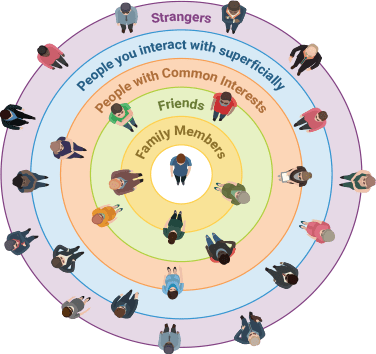
There are two fundamentally different kinds of status. The first is the respect and admiration you get from people who actually know you — your friends, your coworkers, your community. Your standing on the local ladder. It’s earned through relationships, rooted in a specific place and a specific group of people. And it’s the kind that actually predicts whether you’re happy. When your local standing goes up, your well-being goes up. When it drops, it drops. The effect is stronger than income, education, or job. Having money only really feels good insofar as it makes the people around you respect you more.
The second is what most people mean when they say “status” — wealth, income, job title, clothes, etc. The stuff people can more readily see (and quantify). It’s much easier to compare your salary to someone else than it is to determine if you’re a better partner/friend/daughter.
This kind of status barely moves the needle when it comes to happiness. People adapt to new income levels almost immediately (hello, hedonic adaptation). You get the raise, you feel good for a month, your reference group shifts, and you need more.
The pursuit of status has less to do with material comfort than with love — that what we’re really chasing when we chase rank is the assurance that we matter to someone. That we won’t be abandoned. That we’re worthy of attention and care. Which makes the whole status economy feel even crueler, because the version of status our current system sells — the one made of metrics and money and things that scale digitally — is the one least likely to deliver the thing we actually want.
The whole system runs on a kind of collective amnesia about what actually matters. We build the metrics. We optimize for the metrics. We forget why we built the metrics. We assume the metrics are the thing instead of a proxy for the thing. And then we wonder why we feel empty.
________________________________
There’s one piece of advice I’m confident applies to basically everyone: you should make sure your psychological center of gravity your real and immediate world – the world of your family and friends and neighborhood, your work and your creative projects, as opposed to the world of presidencies and governments, social forces and global emergencies.
This will make you happier. It will make you more meaningfully productive.
Keeping your center of gravity immediate and local means treating the world of national and international events as a place that you visit – to campaign or persuade, donate or volunteer, to do whatever you feel is demanded of you – and that you then return from, in order to gain perspective, and to spend time doing some of the other things a meaningful life is about.
One very good way to tell that your center of gravity is out of whack is when it feels like you spend a lot of time inside the minds of far-off strangers. To follow the news isn’t merely to follow the activities of Elon Musk, but to feel overly familiar with his twitchy and emotionally reactive inner life as well. This isn’t healthy.
We need a certain psychological distance, some cognitive privacy. There’s some appropriate level of such privacy between me and my wife, for goodness’s sake, so you’d better believe there’s one between me and Musk.
Returning your center of gravity to your immediate world means remembering that “the way you want the world to be” is something you can live, here and now, not just something for which you advocate or argue. Your immediate world isn’t only somewhere you come to recharge, before heading back to the arena. It is the arena.
I’ve found one tried-and-tested mindfulness exercise to be helpful here. Become consciously aware of your feet – of their position in space and their temperature, their contact with your footwear or the ground. Come out of your head for a moment, and especially out of other people’s heads. Here you are. Here. On the ground.

______________________________
A two-minute trick to outsmarting procrastination, from a new book titled How A Little Becomes A Lot:
Choose something you’ve been putting off and commit to doing it for exactly two minutes. Set a timer: When it goes off, you can stop – no guilt, no pushing through. You’re not changing your life overnight – you’re just proving that beginning doesn’t have to be overwhelming.
The limits of our willpower and the importance of structuring our environment to help us accomplish what we want. To change our behavior, we need to change out surroundings. Instead of saying “I’m going to refrain from eating Fig Newtons today,” it’s better to put the Fig Newtons on the top shelf behind a box of rice crackers.
__________________________
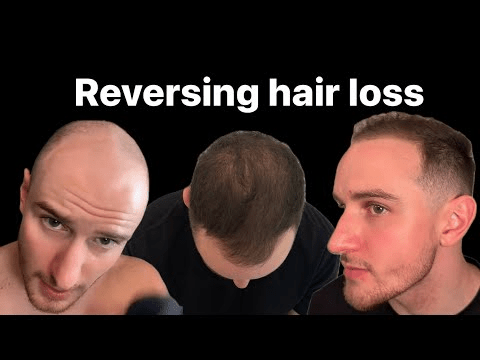
The men who can afford it are shelling out up to $20,000 to get hair transplants, which have become harder to detect and ever more precise.
Men with more modest means can find packages that fly them to Turkey and deliver the same procedure for around $3,000 — or they can start with the cheapest option of all, which is going on finasteride. Prescriptions for the drug in the United States tripled between 2017 and 2024, a time when telehealth companies were taking off, just as men started spending hours a day staring at their hairlines on Zoom.
Feeding that anxiety is a mass-marketing campaign teaching men the same brutal self-scrutiny that women have long been trained to perform. A typical male in his 20s or 30s is likely to receive a flood of ads and shout-outs on Instagram, TikTok, YouTube and the livestreaming platform Twitch for hair-growth products that appeal to men their age.
Young men who have come of age in the time of the manosphere are prime audiences for endless reels from influencers — some of them exceptionally buff, some of them funny, some of them with millions of followers, who are trying various treatments in the hope of regaining a full head of hair. The hair-loss influencer Zeph Sanders has over one million TikTok followers tracking his “hair journey.” The ubiquity of this kind of content makes losing one’s hair no longer seem inevitable; going bald can now feel like a choice — a conscious decision.
The advertising and those influencers are conveying the message to young men that they should start taking finasteride young; in their early 20s. The approach fits into the broader “prejuvenation” trend, in which young men and women are using lasers, fillers and products like Botox to fend off signs of aging before they start, rather than doing damage control when degradation is already well underway.
Parents come in asking about finasteride for their teenage sons, looking to make sure they get “all the best they can have in order to succeed in life.” Young men are also coming in on their own for help keeping their hair. There’s no new epidemic of hair loss, but there is an epidemic of men freaking out about it.
_______________________________
Here’s a number that should change how you think about retirement: 12.
That’s how long the average healthy 60-year-old has before their mobility, energy, and independence start to significantly decline. Not before they die… before life gets noticeably harder. You have more time than you have energy. More years than you have vitality. And if you don’t understand that distinction, you’ll waste the good years preparing for the declining ones.
The cruel irony is that most people spend the first decade of retirement living as they did in the last decade of work—carefully. You saved for 40 years. You delayed gratification. You were prudent, responsible, cautious. And that got you here. It built the nest egg. It secured your future. But if you keep living that way, you’ll waste the very years you saved for.
Your 60s are not a rehearsal for your 80s. They’re the main event. And if you don’t spend (not recklessly, but intentionally) during the years when you can still fully enjoy it, you’ll reach 78 with a big bank balance and a long list of regrets.
If you’re reading this in your 60s, you’re in the window. You still have your good years ahead of you. You haven’t missed it. But the window is finite, and it’s closing.
If you’re in your 50s, you have even more time, but you also have a chance to shift how you think about retirement before you get there. To plan not just financially, but experientially. To design a retirement that front-loads the living, not the saving.