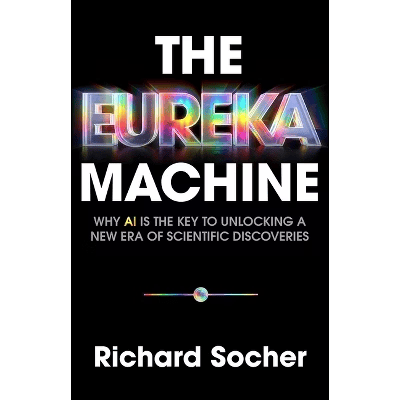
Richard Socher is a computer scientist focusing on artificial intelligence research. He is the co-founderof You.com, an AI search infrastructure company, and co-founder and CEO of Recursive, a company pursuing recursive self-improvement.
He wrote a book called The Eureka Machine, released two weeks ago, that explains why the most meaningful application of AI won’t be chatbots or productivity tools. It will be the automation of scientific discovery itself: a Eureka machine that combines all human knowledge, simulates billions of experiments, and generates the breakthroughs that end disease, extend human life, and solve the hardest material problems facing our civilization.
Consider biology. By predicting the next amino acid, the basic building block of proteins, a model can eventually learn the language of biology. At Salesforce, Richard built a project called ProGen, in which he trained a large language model on 280 million protein sequences across 19,000 different protein families. Then he asked it to create new kinds of proteins. It generated millions of artificial sequences, including ones in the lysozyme family; enzymes that break down bacterial cell walls. 73 percent folded correctly and showed the antibacterial properties he were hoping for.
Today, 23 million researchers publish in more than 54,000 journals. No human can see all the pieces at once. AI removes that bottleneck because it can actually digest all of the different literature and spot the connections.
James Evans and his colleagues at the University of Chicago used AI to map nearly 20 million biomedical papers and the nine million researchers who wrote them. The system models not just what science knows, but where scientists are looking, and then inverts the map to analyze the cold, unexplored regions where the next connection might be waiting. Evans calls these alien hypotheses. AI can now combine and recombine all existing knowledge.
The Eureka machine will be the culmination of several converging streams of AI development. It may be the last organic invention we need before it will solve almost any material or scientific problem for us. This Eureka machine rests on four pillars:
- A living map of all human knowledge: what large language models already approximate, having been trained on the internet, millions of books, and vast scientific literature.
- A unified model of physical reality: all the scientific measurements humanity has ever collected, from satellites, space probes, microscopes, and sensors, infused into the machine so it can perceive far beyond what human senses allow.
- High-fidelity digital twins: simulations precise enough to run billions and billions of “what if” experiments that would otherwise be too dangerous, too costly, or physically impossible to repeat at that scale. Anything that can be simulated, AI can systematically explore.
- Fully autonomous physical laboratories: robotic facilities with AI vision, capable of pipetting, running experiments in biology, chemistry, and physics, and connecting simulated predictions to verified real-world results.
On top of these four pillars, millions of AI agents will coordinate like a scientific community. They will critique each other’s ideas, producing an evolutionary process that yields ever-better results.
_____________________________
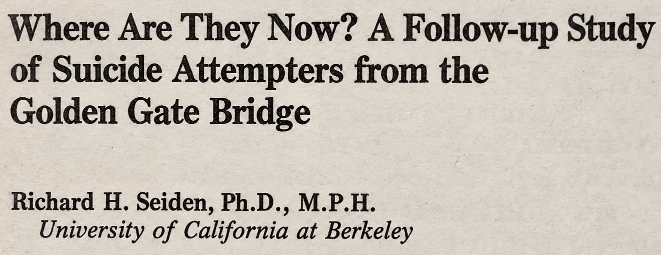
A study published in 1978 identified 515 people who had been restrained from jumping off the Golden Gate Bridge between 1937 and 1971, and followed what happened to them.
The rather stunning finding is that 452 were still alive years later at the end of the follow-up period. Thirty-one had died of natural causes, and seven from other causes like accidents. Only 25 had died by suicide.
The profound point here is that if the moment of peak desperation is interrupted, most people go on living. This might seem deeply counter-intuitive. If someone really wants to end their life, won’t they just do it the next day, or the next week, or at the next bridge over? Apparently not.
The worst of it feels permanent, but usually isn’t. You don’t have to solve anything in that moment, or figure out what it all means. You just have to get to the other side of it.

_____________________________
_________________________
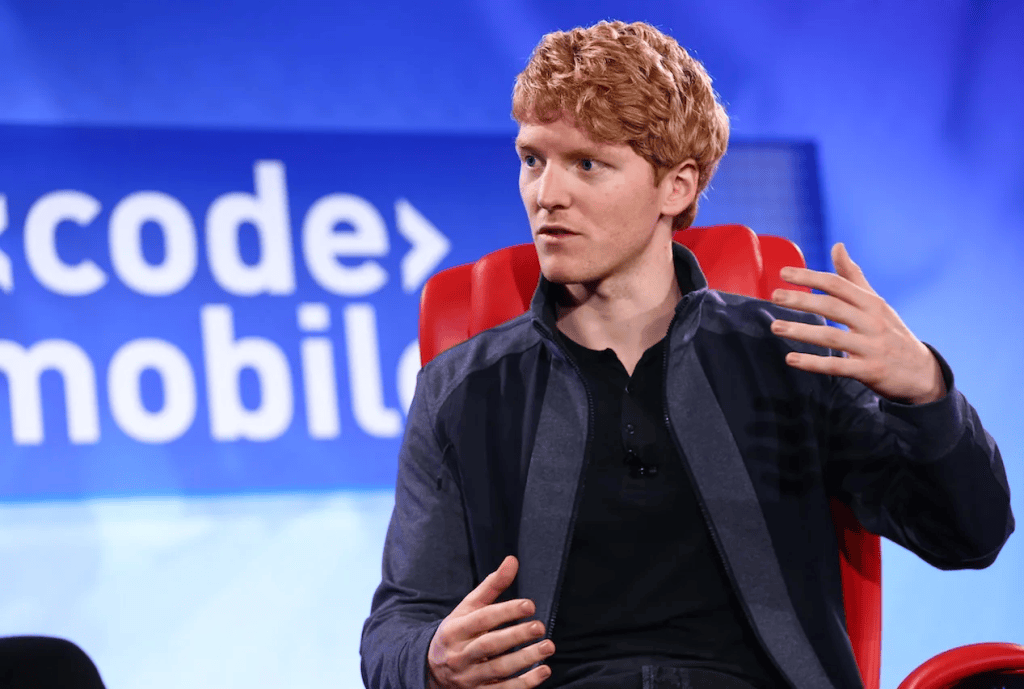
An assortment of things Patrick Collison (the co-founder of Stripe) has been thinking about if everyone has an AI agent:
- Tricks that rely on inattention stop working. Coupons, forgotten subscriptions, hidden fees — these all depend on some customers not noticing. If your agent hunts for every coupon and cancels every unused subscription, companies lose that income. Right now, forgetful customers effectively subsidize attentive ones; that cross-subsidy would shrink. He’s not sure who ends up winning or losing once you add it all up.
- Quality starts to matter more than marketing. Today, a better product can lose to a worse one simply because the worse one has better distribution or brand recognition. But imagine every customer effectively did 10 hours of research before buying. Suddenly, making a better product becomes a more reliable way to win. He thinks this is a good thing.
- Data about product quality becomes valuable. If agents are doing the research, they’ll want reviews, specs, reliability stats, and so on. Most people can’t process that data today; agents can and will want lots of it.
- An open question: will everyone buy the same thing, or more different things? If agents are all rational, maybe they converge on one “best” product and winners get bigger. Or, since agents can understand your specific tastes, maybe people end up buying a wider variety of things than they do now.
- Ads and search rankings get disrupted. Much of the internet makes money by steering your attention — you click the first result. Companies pay for placement and game the algorithms. Agents don’t have short attention spans, so this whole business model may shift, possibly a lot.
- The catch: All of this assumes the agents actually work for you, not for the companies, which is likely how it will shake out, but it’s not guaranteed.
____________________________
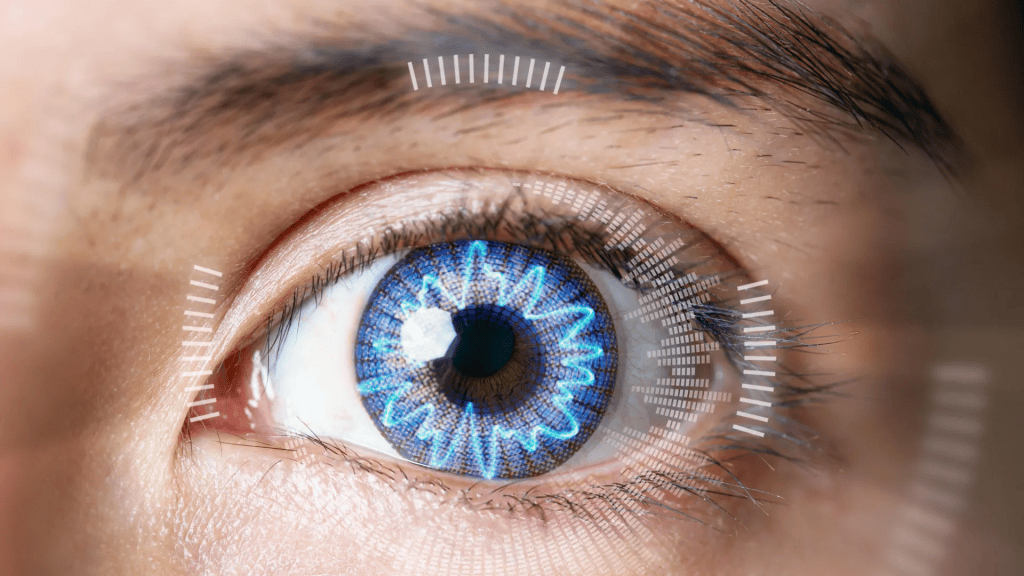
Scientists are developing a possible alternative to LASIK eye surgery that reshapes the cornea without cutting it or using a laser. The technique uses a small electric potential and a specially shaped platinum lens to temporarily soften the cornea, allowing it to be molded in about a minute.
_____________________________
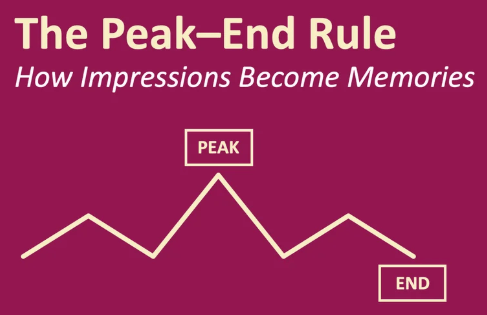
When we look back at events, we don’t average out everything that happened. Instead, we judge events by two moments:
- Its peak, or its most intense moment.
- Its end, or its final moments.
Our memory doesn’t work like a balance sheet. Instead of summing up and averaging our moment-to-moment feelings over time, our minds take snapshots as proxies.
_____________________________
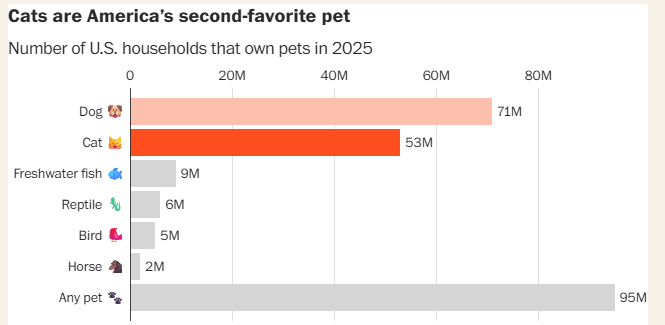
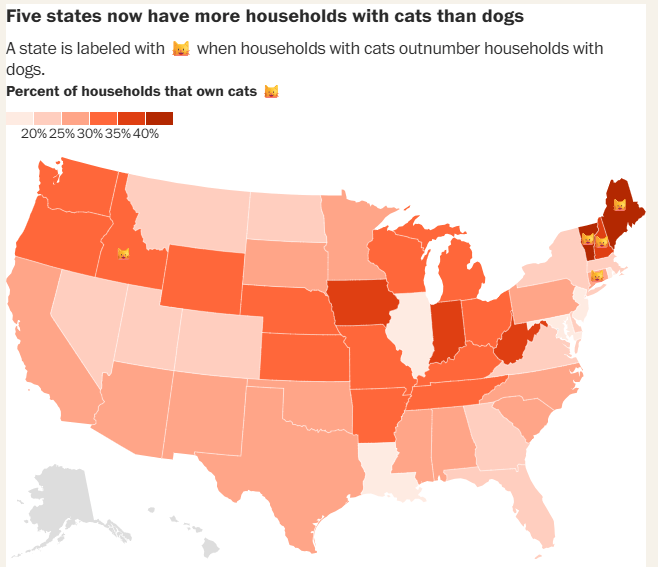
The number of American households with dogs has dropped 5 percent since 2019, while cat ownership has held relatively steady. Dogs still dominate, but that is changing quickly.