Losing It on Live TV. Lorne Michaels reportedly dislikes when “Saturday Night Live” cast members break character. But over 50 seasons, it’s become one of the show’s signature moves — one that usually delights the audience.

__________________________________
A common narrative is that less people are getting married, and the number of births is declining because more college educated women are choosing their jobs over starting a family. In reality, the graph below shows it’s the opposite. The married rates for college educated women have held steady, while the number of non-college educated married women has plummeted.
The reason: Men without degrees have seen their economic prospects decline over the past few decades. These financial troubles have led to lower marriage rates for men — and for women without four-year degrees (even as these women have seen their incomes rise). In other words: a “good” man has become harder to find, at least for women with less than a four-year degree. So, they’re getting married less.

_________________________________
Scammers are seen as faceless, evil people who make Aussie lives a living hell. We decided to track down a scammer, and this is how and why he does it. He worked alongside hundreds of others aiming to steal money in a ‘pig butchering’ romance scam in a sophisticated operation designed to part unsuspecting victims from their cash. This type of scam devastates thousands of Aussies a year.
Seen below, scammers will queue up “the model” to speak to the victims on video calls.

_________________________________
The Endowment Effect is sneaky. It whispers, “Hold on. This is yours. It’s special.” But the truth is, nothing is special just because you own it. A bad stock doesn’t become good because it’s in your portfolio. A house isn’t worth more because you have memories in it. How do we fight the Endowment Effect?
- Ask: If I didn’t own this, would I buy it today? If the answer is no, it might be time to let go.
- Detach from the purchase price. The stock doesn’t know what price you bought it at.
- Think like an outsider. What advice would you give a friend in your position?
- Set clear exit rules. Have a plan for when to exit an investment before you even enter.
- Seek a devil’s advocate. Have someone play devil’s advocate to convince you out of your decision to hold.
________________________________________
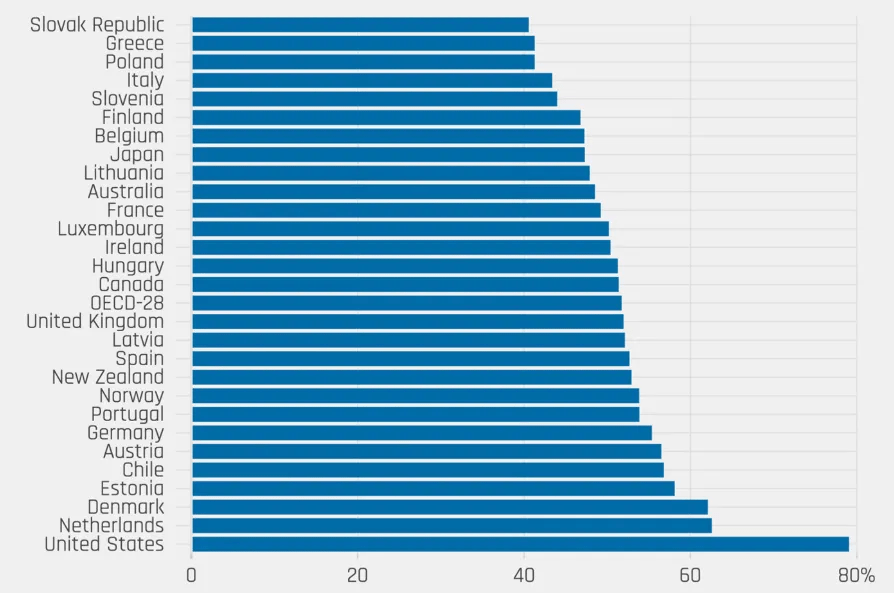
The graph below shows wealth concentration/inequality among top the 10% in the OECD member countries. The United States is unlike anywhere else in the world:
__________________________
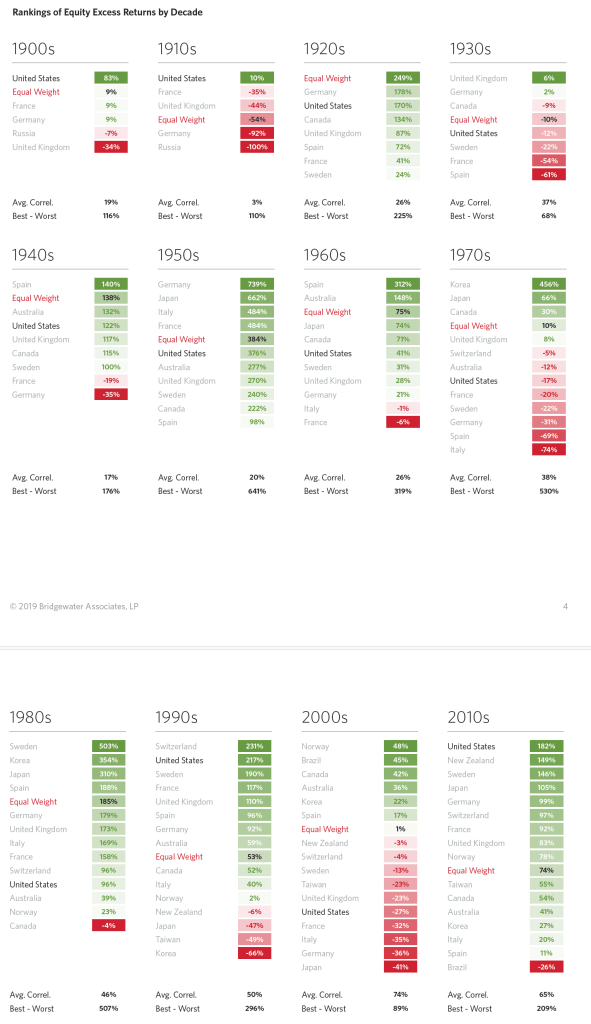
How many decades since 1900 has the United States stock market outperformed the rest of the world? Only 3:
- 1900’s
- 1910’s
- 2010’s
___________________________
America dominates the rest of the world in venture capital (VC) investments:

_____________________________
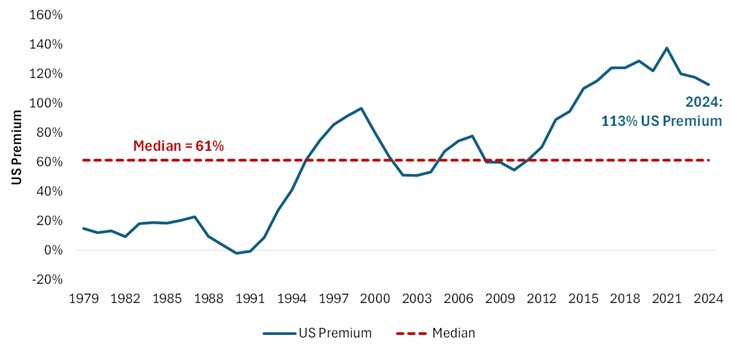
Perhaps the single greatest divergence in equity markets has been the continued outperformance of US versus international equities—and thus the widening of the valuation gap between the US and the rest of the world. To try and determine why, we regressed value against the other common risk factors for the top 1,000 stocks globally. By far the most significant difference, explaining about half the valuation gap, is the domicile of listing. US-listed stocks are substantially more expensive than internationally listed stocks for no reason other than the place of listing.
Were a larger percentage of the valuation gap explained by fundamentals; we’d expect such a gap to persist. But given that the valuation gap is primarily explained simply by the location of listing, we think there’s a strong reason to expect a convergence—and therefore to favor international over US-listed stocks, despite their terrible relative performance over the past decade.
Figure 1: Premium of US vs. International Equity Valuations (5-Year Average, P/B)