Stress, Attractiveness & Stocks

Minimum Levels Of Stress, a phenomenal new article by one of my favorite authors; Morgan Housel.

A day after the September 11th terrorist attacks, every member of Congress stood on the steps of the U.S. Capitol and sang God Bless America. Could you imagine that happening today? It’s easy to say no, given how nasty politics has become. But if America faced an existential crisis like 9/11 again, I think you’d see the same kind of unity return. There’s a long history of enemies putting their differences aside when facing a big, devastating threat. People get serious when shit gets real. If that sounds like wishful thinking to you, let me propose a reason why: Part of the reason today’s world is so petty and angry is because life is currently pretty good for a lot of people.

There are no domestic wars. Unemployment is low. Household wealth is at an all-time high. Innovation is astounding.

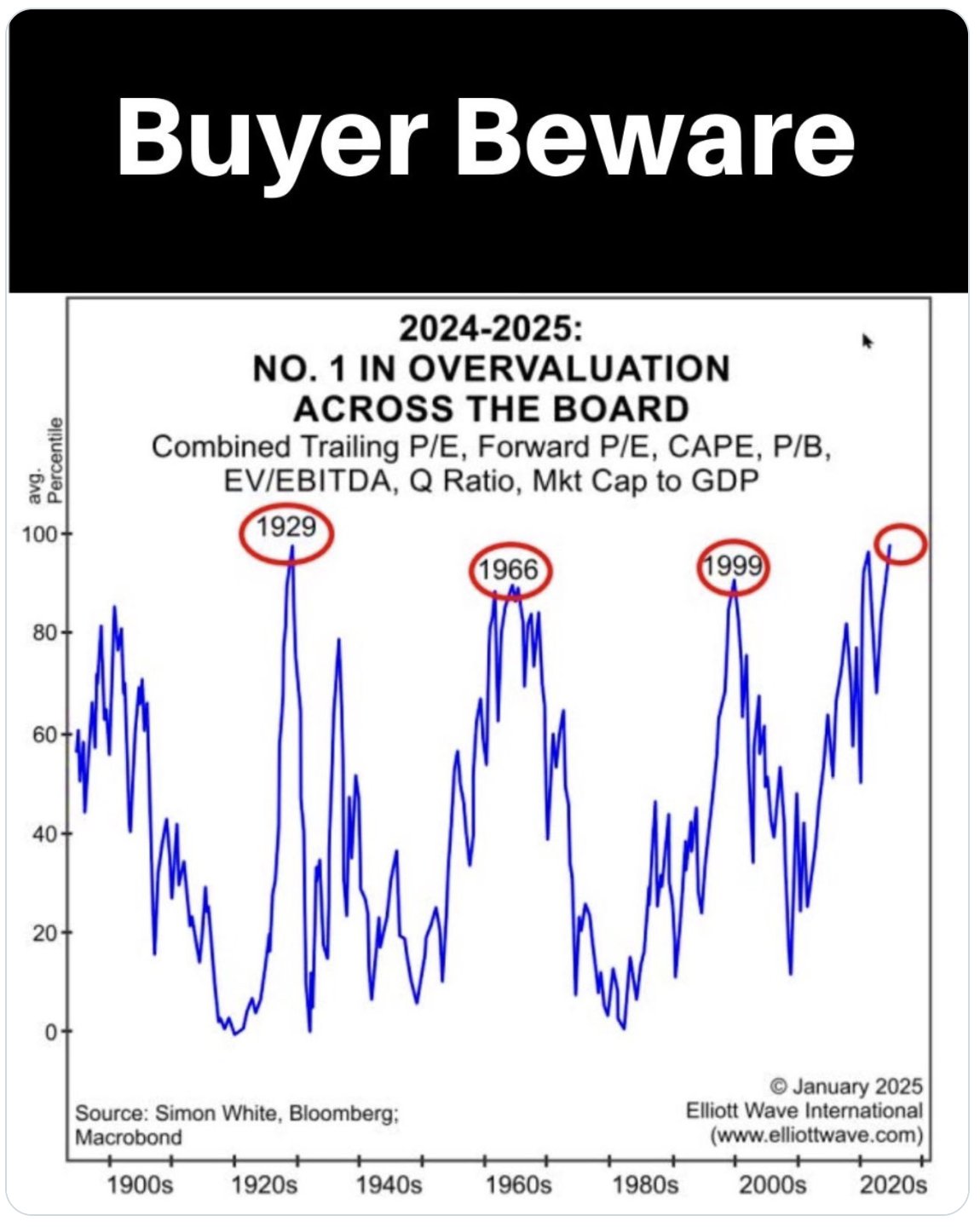
As the world improves, our threshold for complaining drops. In the absence of big problems, people shift their worries to smaller ones. In the absence of small problems, they focus on petty or even imaginary ones. Most people – and definitely society as a whole – seem to have a minimum level of stress. They will never be fully at ease because after solving every problem the gaze of their anxiety shifts to the next problem, no matter how trivial it is relative to previous ones. Free from stressing about where their next meal will come from, worry shifts to, say, a politician being rude. Relieved of the trauma of war, stress shifts to whether someone’s language is offensive, or whether the stock market is overvalued.

______________________________

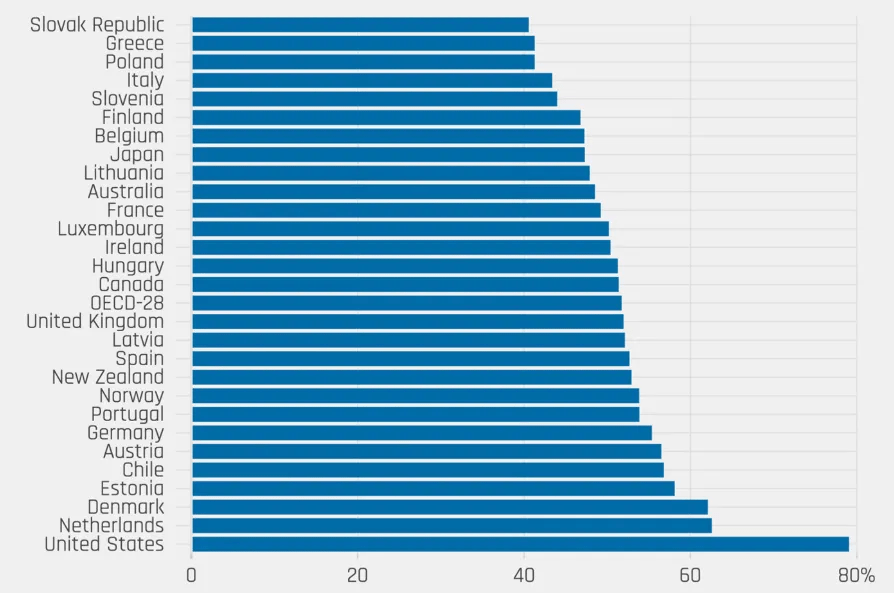
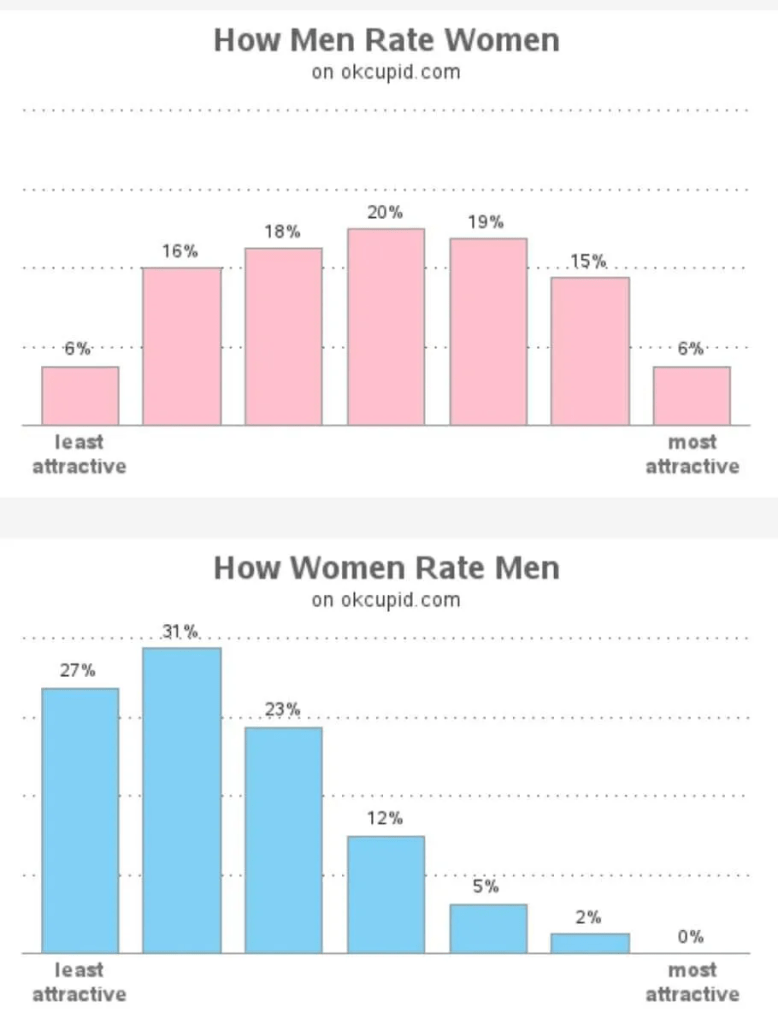
The graphics below show that in general, men rate women more highly than women rate men.

A summary and thoughts on the data from the author:

  • The typical woman is disgusted by the typical man
  • The typical woman is moderately disgusted by the median man
  • The typical woman is strongly disgusted by the bottom quarter of men
  • Men should stop taking rejection so personally. When the typical women rejects you, the problem isn’t so much that she finds you unappealing. The problem is that the typical woman finds almost all men unappealing.
  • Men should try harder to be less disgusting. 
  • Women should try harder to be less disgusted. Most women eventually accept a guy who isn’t visibly attractive. Much of the reason is that superficially unappealing guys win them over with charm, humor, and devotion.
  • It’s not hard to use evolutionary psychology to explain why the typical man disgusts the typical woman: Since women’s maximum reproductive capacity is strictly limited, they’re evolved to be hypergamous, with a strong preference for mating with the best of the best.

__________________________________

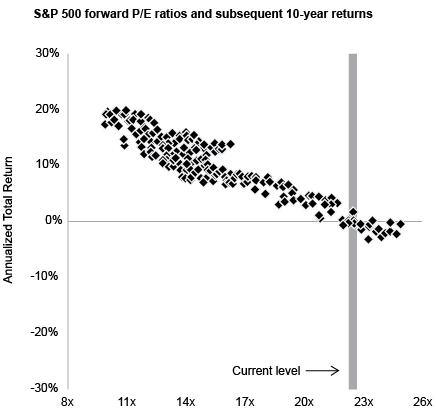
Numerous studies show a strong relationship between stock market valuation and long-term subsequent returns. Since 1979, global stock market indices have been valued on average at a Shiller-CAPE of 20 and a price-to-book ratio (PB) of 1.9. Investors who invested at attractive valuations in recent decades were able to achieve above-average returns over the following 10-15 years. Those who bought at high valuations, on the other hand, were generally disappointed in the long term.

Here’s a look at where countries stand today. The lower left are the least expensive countries/stock markets and the upper right are the most expensive. You can see that India is off the charts expensive while the United States is in another solar system based on how overvalued it is.

What long-term stock market returns can investors expect in the 20 most important stock markets based on valuation?

  • Based on CAPE and PB, Latin America and Asia currently show the lowest valuations, particularly in Brazil, Korea and China. These equity markets are currently trading at a CAPE of 9-12 and a PB of 0.9-1.4.
  • Historically, comparably attractive valuations have been followed by above-average returns of 9-11% (in real terms) over the next 10-15 years.
  • In general, the emerging markets (with the exception of India) are currently valued much more attractively than the developed markets. Historically, comparable valuations in the emerging markets have been followed by annual returns of 7.7%, while the developed markets are expected to achieve rather low returns of 2.5%.
  • The low return expectations of the developed equity markets are caused by the extremely high US valuation: with a CAPE of 35.4 and a P/B ratio of 5.1, the US market is trading at around twice the level of recent decades. In the last 140 years, such high valuations have been followed by long-term returns of only 0.1% p.a.
  • Among the developed markets, Germany, Italy, Japan, Singapore, Spain, Norway and the UK still appear attractive. Investors here can expect annual returns of 7-8% in the long term here.

_______________________________________

Anti-Social, Bubbles & Walking

Derek Thompson wrote a great article this week called The Anti-Social Century: Americans are now spending more time alone than ever. It’s changing our personalities, our politics, and even our relationship to reality. He also released a podcast episode discussing the article.

  • Men who watch television now spend 7 hours in front of the TV for every 1 hour they spend hanging out with somebody outside their home.
  • The typical female pet owner spends more time actively engaged with her pet than she spends in face-to-face contact with friends of her own species.
  • From the late 1970s to the late 1990s, the frequency of hosting friends for parties, games, dinners, and so on declined by 45%, then it got worse. Between the early 2000s and the latest data, the average amount of time that Americans spent hosting or attending social events declined another 32%.
  • A 5-percentage-point increase in alone time is associated with about the same decline in life satisfaction as was a 10% lower household income.
  • From 1965 to 1995, the typical adult gained 6 weekly hours in leisure time. They funneled almost all of it into one activity: watching TV.
  • In 1970, just 6 percent of sixth graders had a TV set in their bedroom; in 1999, that proportion had grown to 77 percent.
  • The share of boys and girls who say they meet up with friends almost daily outside school hours has declined by nearly 50 percent since the early 1990s.
  • Today’s adults spend an additional 99 minutes inside their homes on any given day, compared with 2003.
  • The share of U.S. adults having dinner or drinks with friends outside the home on any given night has declined by more than 30% in the past 20 years.
  • Restaurants used to be the ultimate “social” business. But today, just one-quarter of restaurant traffic is “on-premises”—that is, sitting, ordering, talking with people at a table. With the rise and rise of delivery 74% of all restaurant traffic now comes from “off premises” customers—takeout and delivery. And solo dining has increased by 29% in just the past two years. The top reason given? The need for more “me time.”

_____________________________

Gen Z spends an average of 109 days per year looking at a screen. Eighty percent of our waking hours are spent consuming information, up from 40% in 1980.

_____________________________
Do You Even Maxx Bro? Chewing-gum workouts for sharper jawlines. Specialty products for feathered bangs. So. Much. Cologne. Exploring the extreme self-care trends shaping a generation of young men.

In the past, I might have tuned out a very online trend like looksmaxxing, but I regret to inform you that we can’t skip this one. Because looksmaxxing might be the key to understanding Gen Z and Gen Alpha behavior, knowing where they’re headed, and, frankly, answering a larger question you’ve definitely thought about: Are young men okay?

Someone unexpected has emerged as an unlikely Gen Alpha role model: American Psycho’s Patrick Bateman, the yoked killer from the 1991 Bret Easton Ellis novel, memorably played by Christian Bale (and his cheekbones) in the film. In forums on Reddit , looksmaxxers have coalesced around Bateman, whose well-moisturized face has become an extremely popular profile pic for self-described “sigmas,” a Gen Alpha term for independent men who prioritize power, class, and self-control, known to attract beautiful women aroused by their bank accounts.

As Bateman says in the film: “You can always be thinner…look better.” For many, that starts with “mewing,” a non-medical technique that involves pressing your tongue to the roof of your mouth to reshape your jawline. Men now receive ads for Jawliner gum, part of a new category of fitness chewing gums, which is 10 times harder to chew than a standard piece and is designed to tone the masseter muscles in their face. Terms like brotox have made their way into professional conversations, and more men have been seeking jawline-enhancing procedures.

____________________________

Great newsletter from Howard Markets this month discussing bubbles and valuations in the market using historical examples from his decades of experience in the financial industry (started in 1969). Some highlights:

  • In bubbles, investors treat the leading companies—and pay for their stocks—as though the firms are sure to remain leaders for decades. Some do and some don’t, but change seems to be more the rule than persistence.

My early brush with a genuine bubble caused me to formulate some guiding principles that carried me through the next 50-odd years:

  • It’s not what you buy, it’s what you pay that counts.
  • Good investing doesn’t come from buying good things, but from buying things well.
  • There’s no asset so good that it can’t become overpriced and thus dangerous, and there are few assets so bad that they can’t get cheap enough to be a bargain.

________________________________

Studies continue to show that any type of movement (even just taking a simple walk) can be extremely beneficial for mental health.

  • Researchers analyzed 33 studies examining the movements of nearly 100,000 adults using smartphones, pedometers and other fitness trackers. Those who clocked more daily steps were less likely to report depressive symptoms or be diagnosed with the condition than those who walked less.
  • Participants ranged in age from 18 to 91 years old and lived in 13 different countries. Those who logged at least 5,000 or more daily steps were less likely to experience depressive symptoms, with the greatest effect coming for those who logged more than 7,500 steps a day — they were 42% less likely to suffer depressive symptoms.
  • A subset of studies included in the meta-analysis found that for every 1,000 daily step increase, adults reduced their risk of developing depression by 9%.
  • The message is very consistent: more is better, and some is better than none.

______________________________

An in-depth report from Reuters on the origins of OnlyFans and how it turned into one of the most profitable businesses in the world.

  • Created in 2016, OnlyFans has paid out over $20 billion to its creators, who now number 4.1 million. The company takes a 20% cut of creators’ revenue.
  • In 2023 alone, content creators generated $6.6 billion on the platform that has over 300 million users
  • Its dividend payout of $472 million to the owner was more than Ralph Lauren earned from the fashion company he founded, and Nike co-founder Phil Knight earned from the sportswear giant – combined.

_______________________________

While no one is ever going to feel bad for someone that co-founded a company and sold it for $975 million, Vinay Hiremath wrote a blog post this week titled: “I Am Rich & Have No Idea What To Do With Myself.” After selling the company he found himself lost, depressed and breaking up with what sounds like an amazing girlfriend that loved him. He just booked a ticket to Hawaii to do some soul searching (again, no one is going to feel bad for him), and is asking himself:

  • Why couldn’t I just leave Loom and say “I don’t know what I want to do next”?
  • Why do I feel the need to only be on a journey if it’s grand?
  • What is wrong with being insignificant?

It’s an introspective look into someone’s open, honest mind providing another example that money solves a lot of problems, but it can’t solve all of them. Most of the time people seem to end up less happy at the destination than they were along the journey to get there.

_________________________________

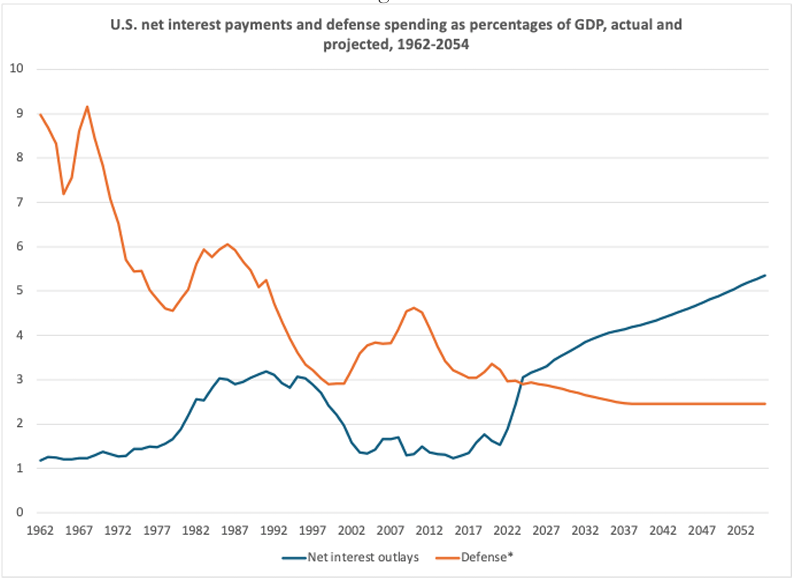
Fiscal Dominance, Premortems & Waking Up Early

Lyn Alden just released an absolute masterpiece of a newsletter on Fiscal Dominance and the impact it will continue to have on the economy and financial markets moving forward. She walks through:

  • What fiscal dominance is and how we got here
  • Why government spending is now more important than bank/private sector lending
  • Why central bank tools become ineffective at combating inflation in this new environment
  • Why DOGE will fail to reach its goals on cutting government spending
  • Why the stock market, not labor markets, have become the dominant driver of tax revenues
  • What to own/invest in to navigate the through the years ahead

___________________________

A phenomenal Q&A with Russell Napier, market strategist and historian, discussing how the global economy and financial markets will look in the months and years ahead.

___________________________

Forget about making a New Year’s resolution. Have you tried imagining your deathbed? It’s called a Premortem. It’s a habit that began for Ron as a response to the death of his parents in the 1990s. His mother was at peace with herself when she died, he says. But his father was “racked with regret and remorse” about decisions he made and the opportunities he missed. What he took away from their experiences was the last lesson that his parents would teach him—and the most profound of them all. Don’t wait until the end to decide if you are proud of your life. Do it before it’s too late. Do it while you can still do something about it. To him, there is nothing macabre or even remotely depressing about ruminating on death. In fact, he finds it to be oddly inspiring. 

______________________________

There’s one particular, very achievable commitment in mind that will help you become happier and improve your health and effectiveness: This year, start getting up early.

  • Our brain exhibits greater functional connectivity in the mornings. This, we might assume, facilitates better performance of complex tasks.
  • It tends to enable the achievement of other popular goals. The goal-directed brain regions—such as the hippocampus and orbitofrontal cortex—work better at this time than later in the day.
  • One habit that is easier to adopt first thing in the morning is exercise. Clear data exist to show that when people intend to exercise early in the day, they are significantly less likely to experience “intention failure” than if they plan to exercise later.
  • People who get up early enjoy a more positive mood throughout the day compared with those who rise late.

______________________________

All the major Wall Street brokerage and bank strategists failed to anticipate how well the market would do in 2024. Only part of the problem is that they are bad at predictions; the bigger issue is that they do it all. It’s kinda like Phrenology, the pseudoscience feeling bumps on people’s skull to predict their personality traits. It’s not that there are better or worse phrenologists, but rather, why was anyone doing phrenology? Think about how variable the future is. Random events can and will completely derail the best laid plans we may make. Even the most well-ordered, thoughtful forecasts turn to mush when randomness strikes. And randomness is served up daily.

____________________________________

It’s a big world out there. The U.S. makes up a little less than half of the global market cap. By avoiding international stock markets, you cut out half of the investment opportunities. Why limit yourself?

The chart below breaks down the annual performance of developed international stock markets. Each country’s performance seems to bounce around at random year after year, but over the long term those returns smooth out. While it’s difficult to pick the best performing country every year, a diversified global portfolio offers the benefits of international stock market performance which in turn lowers risk.

________________________________

Zooming out to all asset classes, U.S. stocks crushed everything in 2024, as they have for the last 15 years:

Time, Mastery & Threes

Some thoughts on time. Times we grew up envisioning as the far future aren’t so far away anymore. Even if lifespans stayed as they are now, many of today’s college students will live to see the 22nd century. Many of today’s babies will still be in the peak of their careers in the year 2100. And 2040, 2060, and 2100 are now closer to us than 2010, 1990, and 1950.

Likewise, much of what still feels like recent history is beginning to look a lot like ancient history. NSYNC’s “Tearing Up My Heart” came out closer to the moon landing than to today. E.T. hit theaters closer to the 1930s than to today. And Billy Joel’s “She’s Got a Way” was released nearer to World War I than the present moment.

If Back to the Future were released today, Marty would be heading back to the ridiculously retro year 1995. His teenage parents would be doing hilariously old things like talking on big cell phones and hanging out in AOL chat rooms. And of course, no existential time crisis would be complete without The Wonder Years. The show aired from 1988-1993 and took place in the years 1968-1973. If the show debuted today, it would be set in 2005-2010 and cover nostalgic old things like Obama’s election, Instagram like counts, and Taylor Swift concerts.

___________________________________

How to change our perception of time. Say the average lifespan is 80 years old. Then consider that time feels like it moves faster as we age. At age 40, the average person may be 50% through their biological life but they may have experienced 75% of what the brain will ever experience.

When you are looking back at the end of a childhood summer, it seems to have lasted for such a long time because everything was new. But when you’re looking back at the end of an adult summer, it seems to have disappeared rapidly because you haven’t written much down in your memory. So here is the take-home lesson. We have to seek novelty because this is what lays down new memories in the brain.

____________________________________

Jerry Seinfeld gave a great interview talking about what still drives him now that he has so much money. He talked about the importance of having a good skill, and he referenced an Esquire article from the late 1980’s that became the foundation for how he thinks about achieving mastery. It focused on things like plateaus combined with brief spurts of progress, the importance of having a child’s mindset and muscle memory.

____________________________________

The argument for more NBA threes has always been the same: it’s math. The simple fact is that teams need only shoot 33 percent on 3-pointers to break even (in terms of points per shot attempt) against 50 percent on 2-pointers. But nothing stays static for long in professional sports. As the league’s brain trusts encouraged more and more threes, the efficiency of each shot type changed — and while 3-pointers have averaged a relatively steady level of points per field goal attempt for nearly two decades now, the 2-pointer has rapidly become more efficient, to the point that it has caught up to (if not surpassed) the efficiency of a 3-pointer:

This is even more the case when we consider that it’s much easier to get fouled attempting a 2-pointer than a 3-pointer.

____________________________________

52 Things Learned In 2024, including:

  • Indian Americans own about half of all motels in the United States. Of them, 70% have the last name Patel.
  • People know whether or not they want to buy a house in just 27 minutes, but it takes 88 minutes to decide on a couch.
  • About 25% of the decline of casual sex among young men since 2007 can be explained by video games.
  • It takes twice as long to cook a chicken today compared to 100 years ago because twenty-first century chickens get less exercise.
  • American baby names trends shifted from family names a century ago to popular names a generation ago to popular endings today. A generation of people named Jason has given way to babies with -son endings: Mason, Jackson, Grayson, and Carson. Today, 48% of the top 500 baby names share only ten endings.

________________________________________

  • The U.S. stock market is now worth $64 trillion and rising by the hour.
  • The market cap has doubled in less than 5 years, and it added $10 trillion alone in 2024.
  • China, Hong and all of Europe’s stocks combined are now worth less than 50% of U.S stocks.
  • The U.S. Magnificent 7 alone are worth more than every single company in all of Europe.

Zooming out to look at how we got here:

Dividends and share buybacks (total shareholder yield) in Europe and Japan are far more attractive than the U.S. A major reason for this is because you are paying an extraordinarily high price in U.S. stocks (vs. the rest of the world) for the yield you receive in return:

The largest contributors to the S&P 500’s (profit) margin expansion have come from taxes and interest rates declining. Let’s hope the U.S. government continues to have unlimited borrowing power at low interest rates to continue that trend forward:

___________________________________

Cliff Asness, the billionaire founder of AQR Capital, wrote this week what he thinks a “normal” money manager’s letter to clients will look like 10 years from now. He reviews, bonds, private credit, private debt, liquid alts, crypto and other sectors, but I thought his sections on U.S. and international stocks was interesting:

U.S. Equities (letter to clients on January 2, 2035):

First, it turns out that investing in U.S. equities at a CAPE in the high 30s yet again turned out to be a disappointing exercise, Today the CAPE is down to around 20 (still above long-term average). The valuation adjustment from the high 30s to 20 means that despite continued strong earnings growth, U.S. equities only beat cash by a couple of percent per annum over the whole decade, well less than we expected.

International Equities (letter to clients on January 2, 2035):

Of course, after being left for dead by so many U.S. investors, the global stock market did better with non-U.S. stocks actually turning in historically healthy real returns (like 5-6% per annum over cash). It turned out that, just as we thought, the U.S. really did have the best companies (most profitable, most innovative, fastest growing) and this indeed continued in this last decade. But it also turned out that paying an epic multiple for the U.S. compared to the rest of the world mattered somewhat more than we thought, and international diversification, as we knew it would one day, did eventually work.   It turns out there was indeed a price at which European stocks made sense. That was news to us.  Luckily, we removed non-U.S. stocks from our benchmark back at the beginning of ’25 so this differential did not affect our benchmark-relative performance this last already painful decade, only our, well, you know, actual performance.

Lessons, Contentment & Individual Sports

10 great lessons learned in 2024 including: walk more, meet in person, things take longer than you realize, and we overweight risk but underweight exponential outcomes (the value of asymmetric bets).

________________________________

When travel is used as a vehicle to break the monotony of life, then don’t be surprised when that sense of monotony finds itself to whatever newfound place you’re visiting. A curious mindset doesn’t ignite just because your surroundings have changed. Travel is no cure for the mind because there is no cure for it to begin with. There is no external vehicle that will take you to prolonged contentment. What truly brings contentment is internal: gratitude for what’s in front of you, openness to all the stories around you, and unwavering curiosity toward the people you see every day.

__________________________________

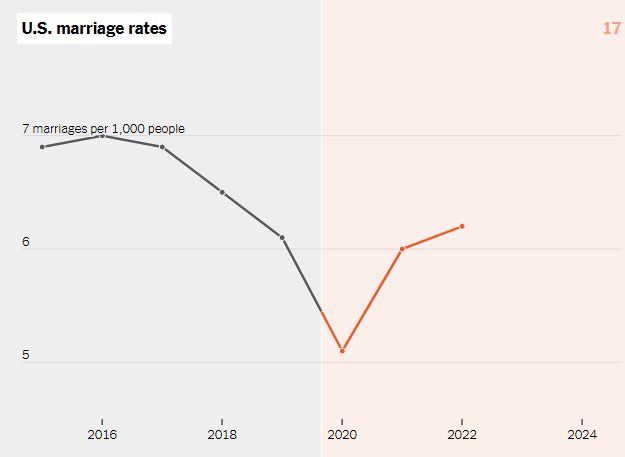
The Federal Reserve put together a comprehensive 51-page report on marriage trends in the United States. One of the charts that stood out to me was how much the things men and women look for in a partner changed over the last 60 years. Race has collapsed in importance, while income has risen dramatically for both.

In individual sports the best players might have coaches, trainers, agents, and others supporting them, but in matches or tournaments it’s one player versus another, or one player versus the world. The player gets the credit for the win, and the player gets the blame for the loss. It’s why individual sports are agonizing even for the best in the world. Stock picking is an individual sport. You have no place to hide. The outcome is focused on you. It makes the wins intoxicating. Losing is excruciating. When stocks go down, we stop looking in the mirror and start blaming everything and everyone else.

____________________________________

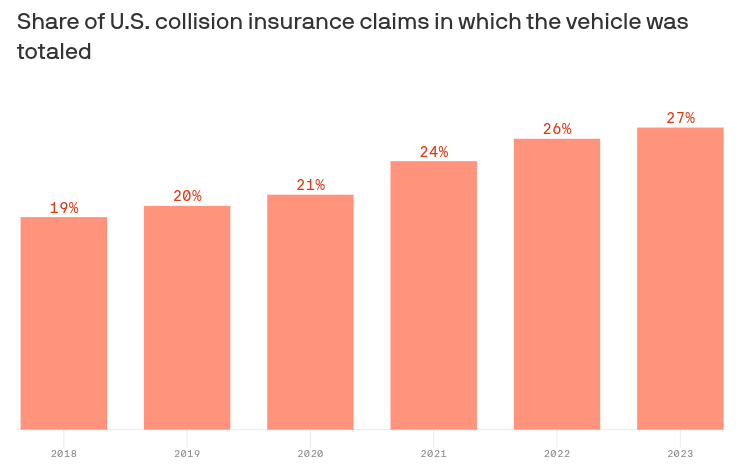
Odometer fraud is shooting up: According to the latest data from CARFAX — 2.14 million cars may have had odometer rollbacks in 2024 — up 82,000 from last year and 18% since 2021. The reasons? Technology has made rolling back an odometer easier than ever — and is often done to dodge lease mileage fees or artificially inflate a car’s value. It takes seconds to do and costs the next buyer an average of $4,000 in lost value. Bottom line — if a “low-mileage” car deal seems too good to be true — it just might be.

_____________________________________

Until the 1950s, investors expected to earn more income from their stocks than bonds. The general idea was that stocks are riskier and thus need higher yields to attract investors. When dividend yields and bond yields converged it was a signal to sell stocks. Stock prices would then fall until dividend yields earned a premium over bonds again. It was a pretty good market signal too. The yields on stocks and bonds flipped for a month or two right before the Great Depression and many of the biggest bear markets of the late 19th century and early 20th century. But then a weird thing happened in the late-1950s…it stopped working. Bonds yields surpassed divided yields and didn’t look back for a very long time. In fact, they remained above stock market yields for 50 years until bond yields finally got low enough during the Great Financial Crisis.

The ratio of emerging market stock performance relative to the United States is now at an all-time low:

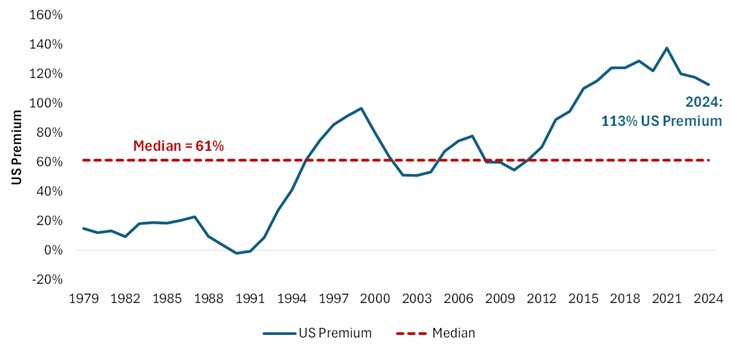
Foreign investors have piled into U.S. stocks like never before. Foreign investors now allocate a record 59% of their assets to US equities. The share of US stocks in foreign financial holdings is now ~7 percentage points higher than it was at the 2000 Dot-Com Bubble peak.

Human Behavior, Woj & Global Stocks

Once you internalize a simple truth: that all behavior makes sense with sufficient information, the world looks a lot less crazy (although infinitely more complex). The problem is we rarely have access to the full set of variables driving someone’s decisions. Understanding this is not just an intellectual exercise. It’s a model for navigating the social, financial, and professional realms with insight to make sense of the world and get better outcomes from our teams and users, even have better relationships. In social contexts every interaction is imbued with subtext. Many assume others operate under the same rules they do, but each person carries a unique script shaped by their experiences and values. Instead of asking, ‘why are they acting like this’ we can try, ‘what might I not know about their world?

_________________________

Stocks don’t know that you own them. The market is never out to get you. When you personalize the market’s moves, you fall into the trap of trying to be right rather than trying to make money. Constantly worrying about outcomes that are completely out of your control, especially in the short term, is asking for trouble from Mr. Market. It’s bad enough that investors get dinged in their pocketbooks when they take losses. Don’t compound the issue by letting your ego make things far worse. You have to invest in the markets as they are, not as you wish them to be. 

__________________________

Poker has a cheating problem. Several recent schemes were uncovered involving poker players at casinos allegedly using miniature cameras, concealed in personal electronics, to spot cards. Should players everywhere be concerned?

____________________________

An interactive map that shows when the sun would rise and fall in your area if daylight savings was removed.

____________________________

Adrian Wojnarowski on retirement and what’s important in life:

____________________________

Daily or near-daily use of marijuana increased from less than 1 million Americans in 1992 to about 18 million in 2022—surpassing daily or near daily drinkers for the first time ever:

____________________________

The monthly inflows into U.S. stocks in November were the highest since the peak of the tech bubble in 2000.

12-month forward P/E ratios relative to the last 20 years. The U.S. is off the chart expensive, even when including Wall Street analysis aggressive “forward” (estimates) of earnings over the coming year.

No matter how you measure it, foreign stocks trade at half the valuation of US stocks:

It’s not just multiple expansion that created the outperformance. The U.S. also experienced much stronger earnings vs. the rest of the world over the last 15 years (the denominator in the P/E ratio):

The percentage of respondents that expect U.S. stocks to rise over the next 12 months. New record-shattering levels of bullish excitement:

The market cap (price investors are paying to own the U.S. stock market) is rising much faster than the profits relative to the rest of the world:

Social Media, Departing Planes & Cognitive Shifts

Jonathan Haidt wrote one of the most important books of the year, The Anxious Generation, about how toxic and destructive social media is on children’s lives. His other major focus of the book is how much it helps young kids to have the ability to play freely without adult supervision.

He wrote an article this week about how terrible social media is for all of society, not just children: Why The Past 10 Years Of American Life Have Been Uniquely Stupid.

__________________________________

Some interesting facts from 2024:

  • Almost 20% of S&P 500 CEOs spent part of their careers at either GE or Procter & Gamble.
  • The Shanghai Stock Exchange composite rose 105% in one day in 1992.
  • In 2023, millionaires accounted for 1.5% of the adult population analyzed, and the U.S. had 38% of all millionaires.
  • 1 million people now owe more than $200,000 in federal student loans.
  • Roughly 50% college graduates have jobs that don’t use their degrees.
  • Around 45% of America’s politicians are over the age of 60. That is a higher proportion than any other country in the OECD, where the average is 19%.
  • While only 4% of the world’s population, the U.S. often accounts for half or more of worldwide revenue for a new pharmaceutical drug.
  • If you shuffle a deck of cards, most likely that combination has never been shuffled by anyone, in history, ever.

_________________________________

Cal Newport tried to summarize all the major ideas he focuses on in his books and newsletters in one location, with ideas like:

  • Treat cognitive context shifts as “productivity poison.” The more you switch your attention from one target (say, a report you’re writing) to another (say, an inbox check), the more exhausted and dumber you become. Focus is like a superpower in most knowledge work jobs. Train this ability. Protect deep work on your calendar.
  • Your phone should be used as a tool, not a constant companion. To accomplish this: (1) keep your phone plugged into the same spot when at home (instead of having it with you); and (2) remove all apps from your phone where someone makes more money the more you use it. Most people don’t need to use social media. If you really need to use it — e.g., for professional purposes — use it on a web browser on your laptop, and spend at most an hour a week logged in, as that’s enough for 99% of legitimate uses. There are better ways to be entertained, find news, and connect with people. Kids under the age of 16 shouldn’t have unrestricted access to the internet. Their brains aren’t ready for it.
  • In building a meaningful and fulfilling life, it’s usually better to work backwards from a broad vision of your ideal lifestyle than it is to work forward toward a singular grand goal (e.g., a “dream job” or radical location change) that you hope will make everything better.
  • Generative AI won’t really change our daily lives in a massive way until it leaves the chatbot format and becomes more integrated into specific tools. The biggest technology story everyone is ignoring is the end of screens. Within the next decade, AR glasses will replace essentially every screen currently in our lives — phones, laptops, tablets, computer monitors, and televisions. 

_____________________________

Jason Steffen, an astrophysicist and associate professor at the University of Nevada, Las Vegas, has studied the most efficient way to board a plane. That method involves boarding passengers in alternating rows. In one version, you begin with the traveler sitting in the window seat of the last row of the plane. The next person boards two rows away, and so on, switching between each side of the plane, and working from the window to the aisle seat.

The fastest way to deplane, Steffen says, is to employ this boarding method in reverse. Under the current row-by-row method, an entire plane full of people might end up waiting for one person who struggles to take down or manage luggage. The alternating row method would allow more travelers to step into the aisle and take their bags.

____________________________

Have we reached peak PreCheck? With more than 40 million people enrolled in the government’s Trusted Traveler program, passengers are wondering whether the expedited security program has become too popular – and too slow.

____________________________

For most drugs, expiration dates are about three years after the day they’re produced, however, many drugs retain much of their potency for a lot longer than three years. There’s an obvious disincentive for manufacturers. Proving that certain products have much longer shelf lives than we assume would mean less frequent re-upping, which would decrease sales.

________________________________

Confirmation bias is a deeply human tendency to favor evidence that supports what we already believe while ignoring or downplaying evidence that contradicts it, even when the consequences are expected to be terrible. In simple words, it’s like wearing special glasses that only let us see what we want to see. When we believe something, our brain naturally looks for information that proves we’re right and ignores anything that suggests we might be wrong. There are numerous ways this negatively impacts us with investing.

________________________________________

Since their introduction as an asset class in 1988, emerging market equities have outperformed developed markets:

_____________________________________

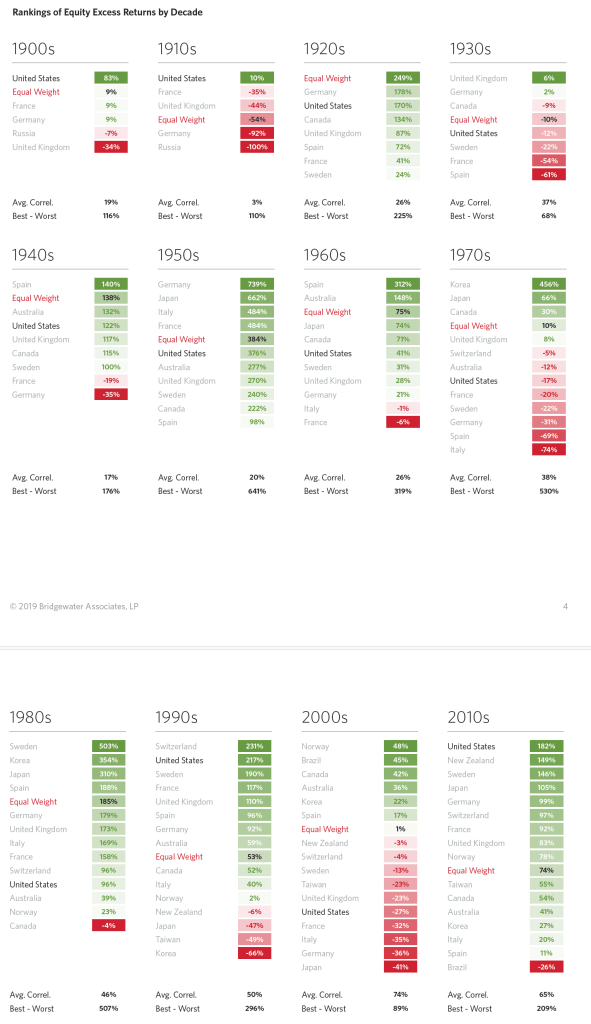
The anti-foreign-stock drumbeat has grown louder with each additional year that international markets underperform U.S. shares. Indeed, even though foreign stocks beat U.S. shares in the 1970s, 1980s and 2000s, there are folks today who argue there’s no reason to own foreign shares. Before you throw in the towel, ask yourself six questions:

  • 1. If U.S. stocks had lousy returns for 15 years, would you abandon them?
  • 2. If U.S. multinationals are a good substitute for investing abroad, why don’t they perform like large-cap foreign stocks? 
  • 3. Yes, foreign companies offer fewer legal protections and greater business risk. But isn’t this already reflected in share prices? 
  • 4. If foreign stocks are riskier, shouldn’t they offer higher returns?
  • 5. If you’re an indexer happy to hold U.S. stocks according to their market value, shouldn’t you also be willing to allocate among countries on the same basis?
  • 6. What if you’re wrong?

_______________________________________

U.S. stocks (the S&P 500) have taken out the 2021 bubble high in the CAPE price to earnings ratio. U.S. stocks are now more expensive than any moment in history, outside a brief period around the 2000 tech bubble peak:

______________________________________

The S&P 500 has now crossed above the 2021 AND 2000 tech bubble peak for the price to book ratio:

______________________________________

The price to earnings ratio for companies outside the U.S. relative to the S&P 500 (U.S. companies) continues to diverge dramatically (chart on the left below showing how undervalued foreign stocks are relative to U.S. stocks). In addition, the income you receive (dividends) for holding foreign stocks continues to increase relative to U.S. companies (the chart on the right):

_______________________________________

The market cap of U.S. stocks is now over 200% of GDP, making U.S. stocks the most expensive in history relative to the size of the economy:

_______________________________________

Investment Losses, Teen Depression & Influencer News

Through a friend, he heard about a firm called Yield Wealth and the “guaranteed” 15.25% return it was offering to investors on some products. In March, Whitacre withdrew his entire 401(k) from Fidelity—$763,094.21—and rolled it over into an individual retirement account with Yield, which was affiliated with a firm called Next Level Holdings. Now Whitacre, like hundreds of other investors who altogether put at least $50 million into these products, wonders if he’ll ever see his money again. Many of these people may be in desperate tax trouble.

_______________________________

The share of U.S. 12–17-year-olds having experienced depression in the past year has risen from 7.9 percent in 2006 to 18.1 percent in 2023. The share of teens who had reported a major depressive episode was particularly high among Multiracial (24.4 percent) respondents in 2023, followed by white adolescents (19.6), Asian (13.7 percent) and Black teens (13.3 percent).

________________________________

37% of people ages 18 to 29 (and 21% of all adults) get their news from influencers.

  • Americans aged 18 to 34 watch less than five hours of live and timeshifted TV per week.
  • 50 percent of 18 to 24-year-olds in the U.S. say that they don’t watch any traditional TV!
  • At the other end of the scale, those aged 65 and older watch more than 40 hours on average.

________________________________________

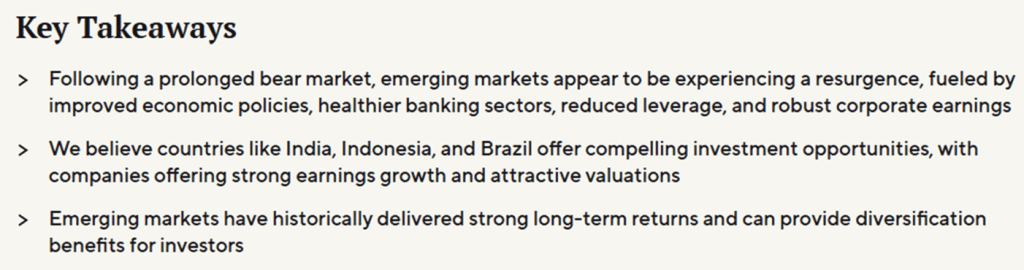
The last time emerging markets were doing this badly the term “emerging markets” hadn’t been coined yet. That spells opportunity, and the greatest spoils might go to those investors who are the boldest and also willing to look past that poorly defined category. Emerging markets outperformed developed market stocks in the century’s first decade as commodity prices boomed and the tech and housing bubbles dented the U.S. market. Today, though, they are much cheaper as a multiple of earnings.

__________________________________________

International stocks have performed so poorly that Bank of America analysts think the time is right to buy Chinese and European stocks. They reason that bad sentiment is bound to reverse after getting so extreme. The price performance of U.S. stocks relative to international stocks hit a 75-year high, the bank found. So far there hasn’t been much of a reversal. 

__________________________________________

US stocks have been outperforming international stocks for 16 years running, and by a huge margin. The result: we’re now more than 3 standard deviations above the mean in terms of historical US outperformance.

_________________________________________

What has performed better than U.S. stocks and bonds this century? Surprisingly, gold has.

A.I. vs. Doctors, Losing Money & European Stocks

A study found that A.I. chatbots defeated doctors at diagnosing illnesses, even the test group of doctors that were using a chatbot for assistance. ChatGPT-4, from the company OpenAI, scored an average of 90 percent when diagnosing a medical condition from a case report and explaining its reasoning. Doctors randomly assigned to use the chatbot got an average score of 76 percent. Those randomly assigned not to use it had an average score of 74 percent. The study showed more than just the chatbot’s superior performance. It unveiled doctors’ sometimes unwavering belief in a diagnosis they made, even when a chatbot potentially suggests a better one.

___________________________

The only thing worse than not making life-changing money is losing the life-changing money that you just made. Why is it so hard to hold on to the money we made? Because hitting a home run on an investment is euphoric. And beyond the dopamine rush, it strokes your ego, making you feel smart. Those good feelings cloud your judgement. Financial returns are a seductive feedback mechanism. When something you invest in goes up by a lot, you feel like a genius, and you want to experience that rush again. And because your last bet was correct, you grow more confident, so you decide to double down on another trade.

_____________________________

AI-generated influencers based on stolen images of real-life adult content creators are flooding social media. It is now trivially easy to make these accounts and monetize them using an assortment of off-the-shelf AI tools and apps. What was once a niche problem on the platform has industrialized in scale, and it shows what social media may become in the near future: a space where AI-generated content eclipses that of humans.

_____________________________

$500,000 Pay, Predictable Hours: How Dermatology Became the ‘It’ Job in Medicine. Americans’ newfound obsession with skin care has medical students flocking to this specialty. Medical residency applications for dermatology slots are up 50% over the past five years, with women flooding the zone. Dermatologists earn a median $541,000 a year. Pediatricians, by contrast, earn a median $258,000 annually. Given the infrequency of skin emergencies, far fewer dermatologists are on call at night and on weekends.

______________________________

The new administration is talking about cutting the number of federal government employees. Federal employment was around 4.3% of total employment in 1960 and is now down to only 1.9%.

Most government employees are local (police officers, fire department, etc), followed by state employees. Approximately half of the state and local employees work in education (teachers!)

Just some numbers and graphs to keep in mind during the discussion of federal employment cuts.

_________________________________

Should investors just give up on stocks outside America? Suppose you had invested in an index of American shares at a trough in 2009 and held on to it until today. Your portfolio would now be getting on for triple the size it would have been if you had instead picked a basket of stocks listed on the old continent (see chart below). Just about whenever American share prices crashed, European ones fell about as far or further; when American prices rocketed, European ones trailed them.

Investors greeted Donald Trump’s re-election by sending American share prices to record highs. European stocks have dropped by 4% since the morning of the result, and by 5% since a peak in September. They are not alone—stocks in much of Asia fell alongside them. 

Firms listed in America now constitute nearly two-thirds of the value of MSCI’s broadest index of global stocks. American companies are valued eye-poppingly higher, relative to earnings, than non-American ones. The difference is often justified by their fatter profit margins, better management and stronger growth. Fair enough. However, another way of looking at the valuation gap is that, in order to get from earnings to share prices, the market scales them up by radically different multiples based on whether they are made inside or outside America. This is peculiar, and much harder to justify, suggesting that valuations may have fallen out of whack and may eventually be subject to a correction. With American shares more expensive than at almost any other time in history, that would hardly stretch belief.

  • The Stoxx Europe 600 index has underperformed the S&P 500 by 21% this year, the most on record.
  • This comes as European stocks have returned only 3% year-to-date much below the 24% gain of US stocks.
  • The Stoxx Europe 600 index is now on track for its 8th year of underperformance out of the last 10.
  • Over the last decade, European equities have increased by just 50% much less than the S&P 500 return of 187%. As a consequence, the US stock market is now 4 TIMES larger than Europe.

________________________________________