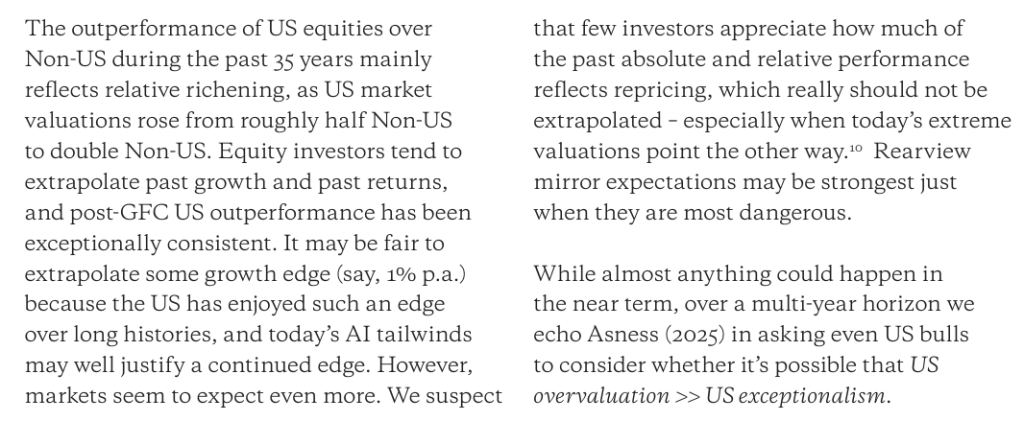
A higher price to earnings ratio means a country’s stock market is more expensive. A lower number is less expensive. It’s the price you are paying for the earnings of the companies.
United States Stock Market: 36
Average of Foreign Developed Stock Markets: 20
Average of Foreign Emerging Stock Markets: 17
*Abbreviations:
CAPE: Cyclically Adjusted Price Earnings – a valuation measure that uses real earnings per share (EPS) over a 10-year period to smooth out fluctuations in corporate profits that occur over different periods of a business cycle.
CAPD: Cyclically Adjusted Price Dividends – a valuation measure that uses dividends over a 10-year period to smooth out fluctuations in corporate profits that occur over different periods of a business cycle.
CAPCF: Cyclically Adjusted Price Cash Flow – a valuation measure that uses cash flow over a 10-year period to smooth out fluctuations in corporate profits that occur over different periods of a business cycle.
CAPB: Cyclically Adjusted Price Book – a valuation measure that uses book value over a 10-year period to smooth out fluctuations in corporate profits that occur over different periods of a business cycle.
Here’s a surprising truth it took me ages to grasp: by far the best way to spend more of your life doing meaningful, rewarding and difference-making things is to really feel the deep sense in which youdon’t need to do any of that stuff at all.
At public events, people sometimes ask what advice I’d give my fourteen, sixteen or eighteen-year-old self – which is a ticklish question, partly since I’m sure my teenage self would have scoffed at being lectured at by the late-forties version. And he might have been right to do so; I think you probably have to just go through a certain amount of experience, in order to learn about life, instead of having wisdom dispensed by your elders.
Still, the honest answer is that I’d say something like this: “You do realise you don’t absolutely have to do any of this, right – the good grades, the praiseworthy accomplishments, ‘fulfilling your potential’ and all the rest? It’s all great, and it matters, but do you understand that it doesn’t matter matter? That the sky won’t fall in if you chill out a bit, and that people who don’t always ‘do their best’ or ‘fulfill their potential’ are allowed to enjoy life, too?”
The spiritual teacher Michael Singer says somewhere that the basic stance most of us take toward the world is that we try to use life to make ourselves feel OK. And this is certainly true of the type psychologists label ‘insecure overachievers’, who often accomplish plenty of impressive things, but who do so, deep down, because we don’t believe we’d have earned the right to feel good about ourselves, or to relax into life, if we didn’t.
It’s a soul-crushing way to live, not least because it turns each success into a new source of oppression, since now that’s the minimum standard you feel obliged to meet next time. A hugely successful author once told me he knew something was amiss when the experience of reaching the upper echelons of the bestseller list, previously a cause of excited disbelief, instead brought only relief that he hadn’t failed to replicate his prior achievement.
Most productivity advice, I think, caters to people mired in this mindset. It promises ways to help you take so much action, so efficiently, that you might one day get to feel good about yourself at last. Which isn’t going to work – because the real problem isn’t that you haven’t yet done enough things, or got good enough at doing them. The real problem is the fact that for whatever combination of reasons in your childhood, culture or genes, your sense of self-worth and psychological safety got tethered to your productivity or accomplishments in the first place.
But there exists another, very different sort of productive action: the kind you take not because you feel you have to, in order to feel OK, but precisely because you understand that you don’t have to – because you already feel basically OK about yourself, so now of course you want to take action, because action is how you express your enjoyment in being alive, being good at a few things, and being able to use your talents to make some kind of difference in the world, alongside other people.
One of the most important consequences of all this, for me, has been the realisation that when you begin to outgrow action-from-insecurity, you don’t have to give up on being ambitious. On the contrary: you get to be much more effectively and enjoyably ambitious, if that’s the way you’re inclined.
I’ve long been allergic to the notion, prevalent in self-help circles, that if you truly managed to liberate yourself from your issues, you’d ideally spend your days just sort of passively floating around, smiling at everyone, maybe attending the occasional yoga retreat, but not much more. “The more I heal, the less ambitious I become” is a phrase I’ve encountered multiple times online in recent months. And yes, sure, if your ambition was only ever a function of anxiety, becoming less ambitious would be an excellent development. Then again, the desire to create remarkable outcomes in your creative work, relationships or community – or even just in your bank balance – might just be an authentic part of who you are, once the clouds of insecurity begin to clear.
So you don’t need to choose between peace of mind and the thrill of pursuing ambitious goals. You just need to understand those goals less as vehicles to get you to a future place of sanity and good feeling, and more as things that unfold from an existing place of sanity and good feeling. (Besides, I’ve got to believe that ambition pursued in this spirit is far likelier to make a positive difference in the world.)
Obviously, if you’re deeply stuck on insecure-overachiever mode, merely reading about the alternative in a newsletter isn’t going to solve everything. Nor do I mean to suggest that every task becomes an undiluted joy when you re-frame action in this way – or that there aren’t plenty of things you “need to do” for reasons other than feeling OK about yourself, such as keeping food on the table.
But it can be strikingly liberating just to begin, however gingerly, to experiment with the idea that, actually, you could just do the minimum. You really could. You could not try to impress, or be extraordinary, or do your best, or fulfill your potential (whatever that even means). And you would still be fully entitled to a relaxed and enjoyable life.
I went into my conversations with college career executives expecting to hear about AI replacing work. What I heard instead is that AI is transforming everything around work. The transition from college to the workforce is fully drenched in artificial intelligence. AI is automating homework, obliterating the meaning of much testing, disrupting the labor-market signal of college achievement and grades, distorting the job hunt by normalizing 500+ annual applications per person, turning first-round interviews into creepy surveillance experiences or straight-up conversations with robots, and, oh, after all that, maybe kinda beginning to saw off the bottom of the corporate ladder by automating some entry-level jobs during a period of economic uncertainty. This really is a hard time to be a young person.
___________________________
Even if Trump’s tactics improbably succeed in changing Jerome Powell’s mind, they would change only one vote out of 12 on the Federal Open Market Committee. The FOMC’s decision at its June 18 meeting to leave the Fed funds rate unchanged was unanimous. Furthermore, seven of the 19 officials who are eligible for the 12 voting positions predicted there will be no rate cuts for the remainder of 2025, up from four in March.
The Federal Reserve did a study that looked into the financial habits of Canadians whose neighbors won the lottery. The neighbors of people who struck it rich were more likely to increase their spending, take on more debt, put more money into speculative investments, and eventually file for bankruptcy. And the larger the winnings, the more likely that others in that neighborhood would go bankrupt.
It’s in our flawed nature to compare ourselves to others, particularly people we see and interact with every day. Money insecurity leads us to compete and not appreciate what we have. Also true, though, is that the research shows one thing for certain: The Joneses aren’t very happy.
An examination of 259 different independent samples found that materialism was “associated with significantly lower well-being” and was a poor way of meeting psychological needs. The researchers’ findings suggest that this association holds across different demographics, participants, and cultural factors. Another meta-analysis of 92 studies found that those pursuing goals of growth, community, giving, and health experienced significantly higher levels of well-being than those pursuing the Jones-y goals of wealth, fame, or beauty.
You’ll never be content trying to keep up with the Joneses because there is an endless supply of them to keep up with. There are always people spending more money, taking nicer trips, buying bigger houses and making more money than you are.
There was another classic psychological study that compared lottery winners with people who were paralyzed in an accident. Surprisingly, the lottery winners weren’t significantly happier than the average person and actually reported less enjoyment from everyday experiences. The big win seemed to raise their expectations, which made small daily pleasures feel less satisfying.
In contrast, many accident victims rated themselves as moderately happy, despite their life-altering injuries. While thinking about their past lives sometimes made them feel worse, they still found deep meaning and enjoyment in ordinary things because they appreciated them more. After major life changes, people adjust their expectations. Lottery winners adjusted upward and felt less satisfied. Accident victims adjusted downward and found more value in the little things.
Nothing was the same after June 28, 1914. The assassination of Archduke Franz Ferdinand triggered a chain of events that led to WWI and closed the NYSE for months. One month to the day of the assassination, Austria-Hungary declared war. Three days later, Henry Noble, president of the NYSE, closed the exchange. Other regional U.S. exchanges in Chicago, Baltimore, San Francisco, Philadelphia, and other cities followed suit. Most major exchanges around the world closed too.
Noble knew that wars demanded funds. Foreign investors could make a run on the exchange, selling securities to raise cash. The cash could then be converted into gold and shipped back to Europe. That put the U.S., being on the gold standard, in a tricky spot. Depleting the U.S. gold reserves would put faith in the dollar and adherence to the gold standard at risk.
June 28, 1914 – Archduke Ferdinand assassinated. Dow closes the next day at 57.9.
July 28, 1914 – Austria-Hungary declares war on Serbia – World War 1 begins: Dow closed 55.3.
July 30, 1914 – Dow closes 51.7.
July 31, 1914 – NYSE & regional U.S. exchanges close the markets
December 12, 1914 – NYSE reopens stock market with trading limitations.
December 14, 1914 – Dow closes 56.8.
December 14, 1915 – Dow closes 98.3.
When the stock market reopened December 12, 1914, investors had four and a half months to reassess the business environment in war time. And business was good. Over the next 12 months, the Dow soared 73% (Dec. 14, 1914, to Dec. 14, 1915, not including dividends). The U.S. became the main food and war supplier for the Allies war effort. Companies like U.S. Steel and DuPont saw profits explode 5x and 10x respectively, in a year. Dividend payments did the same. WWI is the perfect example of why geopolitical events are hard to predict. The market reacts in unexpected ways during scary confusing times.
______________________________
Reciprocity is a deeply human thing, and it applies directly to the nature of interest. If you show someone that you’re interested in them, they will reciprocate that curiosity by revealing what makes them so interesting. Believing that someone is boring is a failure of recognizing jthat fact. Boredom is almost always the result of a lack of curiosity, or the inability to see anything or anyone through the lens of a question. In a way, boredom is arrogance. It’s the acceptance of the belief that nothing is worth your interest because you already know what you need to about yourself, others, and the world. A curious mind is a humble one, as a prerequisite for curiosity is the acceptance that there is more to life than what you think you already know.
____________________________
We are a story-driven species. From cave walls to balance sheets, we look for narratives that explain the world and our place in it. And nowhere is this tendency more dangerous than when we only learn from the winners. When we allow survival alone to imply superiority. When the fact that someone or something made it through becomes enough proof that they knew what they were doing.
This is the essence of survivorship bias, and in the world of investing, it distorts almost everything. Consider the stock market, which is full of visible winners. We often hear stories of stocks that went 20x, fund managers who outperformed for a decade, companies that pivoted into success, and investors who became celebrities.
What about the others? The ones who didn’t make it? They’re barely mentioned, rarely studied, and almost never remembered. And so, the narrative we inherit is hopelessly incomplete.
Then there’s the most seductive arena of all: success stories. Business books, biographies, and podcast interviews are all proudly built on the same question: “How did you do it?”But that question, when asked only of survivors, creates a dangerous narrative. It turns randomness into wisdom and luck into method.
A founder who succeeded against all odds is praised for her vision, her grit, and her intuition. But what about the 100 others who had the same qualities and failed? What about the timing, the macro conditions, the investor interest, the random tailwinds that no one could have planned? None of that gets included in the final story. And so we start to think: this is how success works. This is the roadmap. Just do what she did.
These days I’m pretty good at avoiding the trap that’s been called “onedayism” – the tendency to live as if the really important part of life won’t truly begin until you’ve reached some far-off milestone, like finding a long-term partner, or achieving financial security, or until you’ve fixed your problem with procrastination, or once world events don’t seem so apocalyptic. (You have to find meaning, accomplishment and joy in the midst of all that, not solely once it’s all been “sorted out”.)
Yet as I’ve relaxed my grip on that sort of unconscious postponement, I’ve found it’s still easy to make the same error, just on a much shorter timescale: to proceed through the day as if my generally sane and interesting and enjoyable life can resume just as soon as I’ve got this task out of the way, cleared this batch of email, or made it through to this evening. But of course you can miss your whole life in this manner, ceaselessly focused on a point a few hours in the future, no less surely than with the longer-timescale version.
The answer definitely isn’t to beat yourself up for not yet having perfectly mastered the art of being present. (That, you might notice, is just another version of the same mistake.) But you can remind yourself to unclench a bit, to soften, to fall back into what’s really going on, here and now, and to see there’s no reason why you can’t find this very experience juicy and alive. I like how the entrepreneur Shane Melaugh puts it: “Your life plays out over your entire lifetime.” Which always includes now.
Humility: Given how little of the world we’ve experienced, in most situations we are likely wrong, especially in knowing how other people think and make decisions.
Self-Discipline: Everyone knows the famous marshmallow test, where kids who could delay eating one marshmallow in exchange for two later on ended up better off in life. But the most important part of the test is often overlooked. The kids exercising patience often didn’t do it through sheer will. Most kids will take the first marshmallow if they sit there and stare at it. The patient ones delayed gratification by distracting themselves. They hid under a desk. Or sang a song. Or played with their shoes. Delayed gratification isn’t about surrounding yourself with temptations and hoping to say no to them. No one is good at that. The smart way to handle long-term thinking is enjoying what you’re doing day to day enough that the terminal rewards don’t constantly cross your mind.
Influence: A good storyteller with a decent idea will always have more influence than someone with a great idea who hopes the facts will speak for themselves. People often wonder why so many unthoughtful people end up in government. The answer is easy: Politicians do not win elections to make policies; they make policies to win elections. What’s most persuasive to voters isn’t whether an idea is right, but whether it narrates a story that confirms what they see and believe in the world. It’s hard to overstate this: The main use of facts is their ability to give stories credibility. But the stories are always what persuade.
Balance: Someone with B+ intelligence in several fields likely has a better grasp of how the world works than someone with A+ intelligence in one field. The best thing to do is to quickly learn and accept that your field is no more important or influential to other people’s decisions than dozens of other fields, which pushes you to spend your time connecting the dots between your expertise and other disciplines. Being an expert in economics would help you understand the world if the world were governed purely by economics. But it’s not. It’s governed by economics, psychology, sociology, biology, physics, politics, physiology, ecology, and on and on.
____________________________
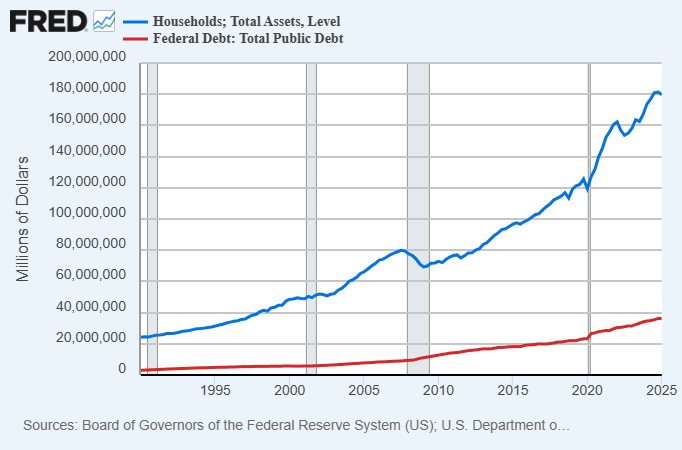
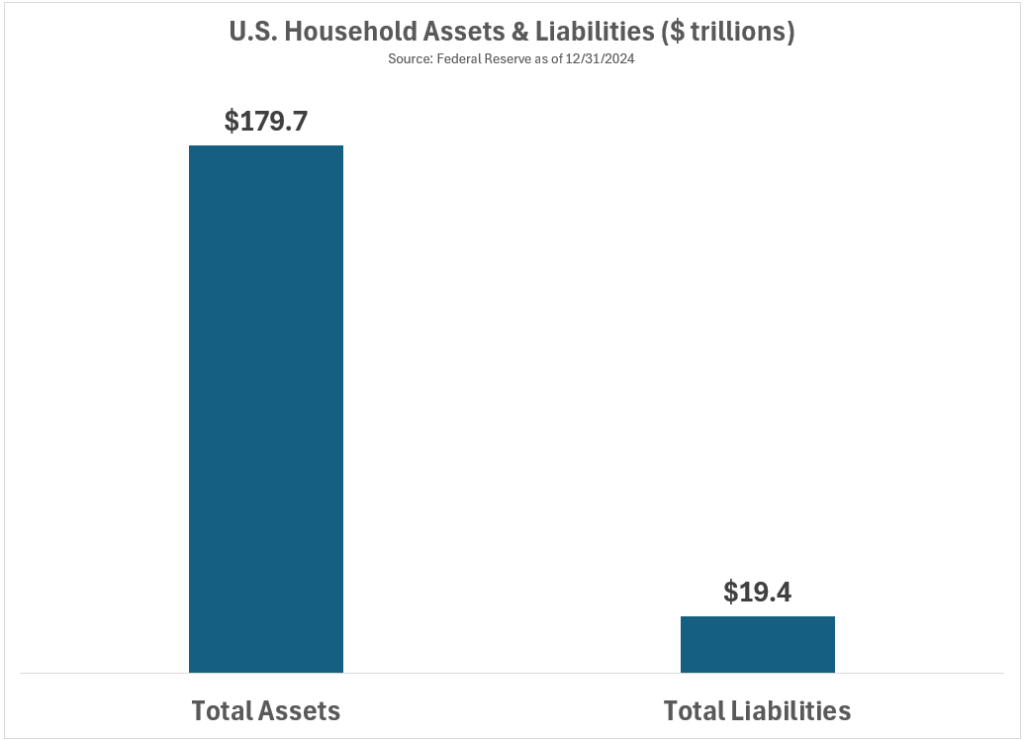
The federal government has a bit over $36 trillion in debt. To put that in context, US households collectively have $180 trillion in assets, or $160 trillion in net worth after liabilities (mostly mortgages) are subtracted.
The US monetary base is about $6 trillion. There is over $120 trillion worth of dollar-denominated loans and bonds outstanding in total (public and private, domestic and international, excluding derivatives). In the foreign sector alone, there is about $18 trillion worth of dollar-denominated debt. What this means is that there is an incredibly large amount of inflexible demand for dollars domestically and throughout the world. Everyone who owes dollars, needs dollars.
When a country like Turkey or Argentina hyper-inflates or nearly-so, it’s in a context where practically nobody outside of their country needs their lira or pesos. There’s no entrenched demand for their currency. And so, if their currency becomes undesirable for any reason (usually due to rapid money supply growth), it’s very easy to just repudiate it and send its value to Hades.
Countless specific entities around the world contractually owe countless other specific entities around the world a certain number of dollars by a certain date in time, and thus need to constantly try to get their hands on dollars. The fact that they collectively owe more dollars than there are base dollars in existence is important. That’s why the monetary base can double, triple, or more, and not be outright hyper-inflationary. It’s still a small increase relative to how much contractual demand there is for dollars. When outstanding debt greatly exceeds the number of base units, it takes a ton of printing of base units to render that base unit worthless.
Clicking “unsubscribe” in emails can lead to malicious websites testing if your email is active.
Criminals can build a files on users who click unsubscribe links, hoping to eventually extort money through scams.
Use list-unsubscribe headers, mark emails as spam or use disposable email addresses for online sign-ups.
____________________________
Cannabis use among seniors surged 46% in the last two years; 7% of adults 65 and older now report recent use.This rise isn’t just in numbers but also in diversity older users today are more likely to be women, college-educated, and higher-income. Researchers suggest legalization and growing social acceptance are contributing factors, especially in states with medical marijuana laws. The trend is especially notable among those with chronic illnesses, raising both opportunities and concerns for medical professionals trying to balance symptom relief with the complexities of aging.
_____________________________
College Baseball Has a Power Problem: Players Keep Hitting the Ball Too Hard: In the big leagues, only superstars like Aaron Judge can routinely crush the ball at speeds in excess of 115 mph. In college baseball these days, everybody’s doing it.
College baseball is seeing unprecedented exit velocities, rivaling and sometimes exceeding those in Major League Baseball.
College players are 42% more likely to hit balls at 115 mph or harder than MLB players.
The reasons for the surge in exit velocity aren’t entirely clear, but it’s creating safety concerns for pitchers, infielders or with fans sitting in the stands
___________________________
Nerds is on track to hit more than $900 million in sales this year, a more than 1,700% increase from the $50 million in sales in 2018. The unprecedented surge is directly attributed to the widely popular Nerds Gummy Clusters, which represented the first meaningful innovation for the once-sleepy brand in years. Nerds Gummy Clusters are now the top sugar confection on the market, overtaking skittles.
_____________________________
Older people will remember the time when there was – for a while – a discussion about how the US stock market had significantly higher returns overnight when the market was closed vs. the actual trading day. Those were the innocent days of an era long gone, aka 2018, when we were all naïve and enthralled by a bull market that couldn’t be derailed by anything. The graph below shows the “overnight effect” through January 2018:
This effect was so promising that it even led to the launch of an ETF in June 2022 that focused on this trade. A product that was so successful that it was liquidated in August 2023.
A new study shows that the effect disappeared after the pandemic. What makes the study interesting, though, is that they seem to find why the effect existed in the US (and not other countries) in the first place: Hype.
The number of paying Tinder users has dwindled to just 9.1 million in its most recent quarter — down 18% from a peak of 11.1 million in late 2022. While Tinder remains Match Group’s biggest brand, Hinge, another dating app under the Match umbrella, saw paying users grow 19% year over year in Q1 2025.
A boy once asked Charlie Munger, “What advice do you have for someone like me to succeed in life?” Munger replied: “Don’t do cocaine. Don’t race trains to the track. And avoid all AIDS situations.” It’s often hard to know what will bring joy but easy to spot what will bring misery. When trying to get ahead it can be helpful to flip things around, focusing on how to not fall back. Here are a few pieces of very bad advice:
Allow your expectations to grow faster than your income
Envy others’ success without having a full picture of their lives.
Mimic the strategy of people who want something different than you do.
Automatically associate wealth with wisdom.
Assume a new dopamine hit is a good indication of long-term joy.
Assume people care where you went to school after age 25.
Assume that what people can communicate is 100% of what they know or believe.
But real learning doesn’t usually follow that path. Instead, we often hit long plateaus, followed by sudden breakthroughs.
If we’re expecting constant progress, those plateaus can feel like failure. But they’re not failure. They’re part of the process.
This is where a lot of people give up. When you’ve been practicing, trying, doing the work, and it feels like nothing’s happening, it’s tempting to walk away.
But you may be much closer to a breakthrough than you think. Sometimes, just around the corner, something clicks—and you’re suddenly at the next level.
It’s not always a flat line before a breakthrough. Sometimes you make slow, steady gains. Sometimes it feels like you’re backsliding. Sometimes it gets messier before it gets clearer. But underneath the surface, your brain is making connections. Your understanding is deepening. The dots are starting to line up. Eventually, that invisible progress becomes visible.
__________________________
There is a reason why people find the financial markets endlessly fascinating. They haven’t been solved. The complexity of markets is dizzying, and in complex situations even the iron laws of physics can produce surprising, unstable results (think of airplane turbulence). More important still, finance is ultimately driven by people, not particles, and they do not always respond to similar stimuli in similar ways. They look at what happened last time, try to do better, anticipate what other traders will do and seek to outfox them. The absence of fundamental laws in markets is frustrating, disorientating—and what makes them so interesting.
There is certainly plenty to learn about the markets. But there is a case for learning as much as you can about finance and the markets and then easing back. There’s this weird dynamic in personal finance where you have to go deep at first. You need to learn enough to protect yourself. To build a plan. To avoid getting fleeced. But once that plan is in place, ideally you should be able to step back.
One of the main reasons people make behavioral mistakes when investing: the power of stories.Humans interpret the world through stories, and financial markets are narrative generating machines. When we make poor investment decisions, they are inevitably deeply intwined with a story we are using to interpret a complex and chaotic environment. It is easy to look at historic financial market events with equanimity because we know how these stories unfolded; it is an entirely different proposition when we are in the midst of an event – because we don’t know how the story will end. So, we make up our own ending and invest accordingly.
__________________________
Modern neuroscience distinguishes between two mental states: one of striving, where a surge of dopamine keeps us laser-focused on external goals like winning, perfection or achievement – and another of serene presence, where we hover in the moment, simply being. In this latter state, our neural chemistry shifts; endogenous opioids and endocannabinoids fill the brain, bringing feelings of deep satisfaction, fulfillment and joy in the now.
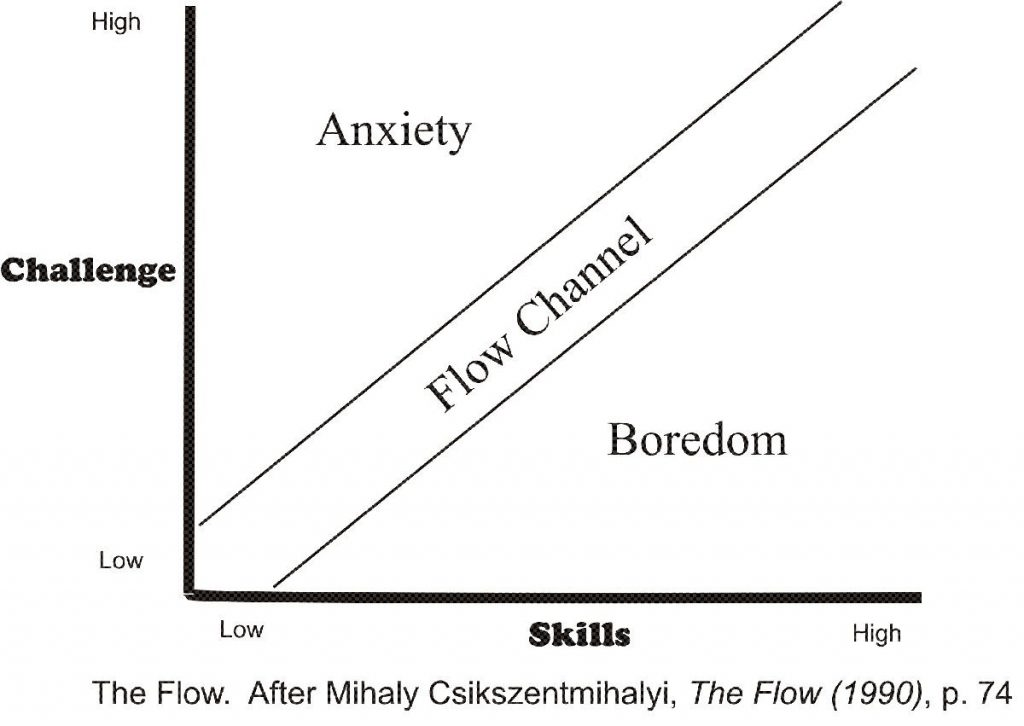
Motivation psychologists distinguish these two states as extrinsic and intrinsic motivation for what we’re doing. The former takes hard work and discipline to keep us going. The latter propels us forward, as by magic: flow.
Repetition: the repeated movements of our craft – the physical routines we practice over and over – follow us everywhere. Whether we call it practice or technique, these repeated actions shape our brains in powerful ways, often without us even realizing it.
They form unique connections in the brain – linking movement, memory and emotion. These connections stretch across the parts of the brain that control movement, wrap around the areas responsible for memory, and reach deep into the emotional core of the brain – the limbic system. That includes the insula, a region that helps manage both our physical health and our inner sense of self.
‘Muscle memory’ doesn’t live in our hands or legs.The real control centre is in the brain. This is where movement begins, guided by systems that plan and initiate what we do. From there, messages travel through long chains of nerve cells – from the brain down the spine and out to the rest of the body. Millions of tiny electrical signals, known as action potentials, move back and forth, telling our muscles, organs and even the tips of our fingers what to do next.
The idea is to ‘program’ the right moves in our brain so they become so automatic we can use them to, yes, feel, and to find flow. The prefrontal cortex part of our brain matures last in our individual development, with restructuring continuing well into our 20s. These parts of the brain are very ‘plastic’, meaning that they are easily shaped by experience and learning. So they are also key to the development of technique in our craft – be that in science, the arts or other fields – because they are suited to rule-based learning.
Neuroplasticity is our brain’s capacity to learn; to forge new connections between neural systems, as we practice something with our body. Professional singers and actors do daily vocal exercises, dancers do daily barre exercises – the same moves over and again – and musicians are known for their never-ending scales practice that drives neighbors up the wall. What may seem a strange, repetitive, even boring activity that artists, scientists and other creatives engage in daily is in fact doing magic to their brains.
Repeating something consciously – in this context meaning exercising those prefrontal systems of the brain – is quite effortful, and it needs a lot of energy and attentional resources. Therefore, our brain starts to forge connections that let the movements we’re practicing pass from explicit, effortful memory systems into implicit, almost automatic memory systems.
This works a bit like learning a new language. First, we learn the words, the basic grammar, and we make many mistakes. It is effortful and we have to think before uttering any sentence at all. But as we repeat the words, practice verbal tenses and vocabulary over and over, our brain realizes the repetition and transports the skill of that new language from explicit to implicit memory systems.
That’s why the advice to ‘just let go’, ‘be in the present’ and ‘feel it’ are unhelpful to find flow. When flow happens to you, it may well feel magical, it might feel like you’re ‘letting go’. You feel a strange fusion of your movements and your awareness, and you’re somehow entirely entrapped in the present. It’s still early days to say exactly how this works, but it has to do with those low-level, implicit memory systems that encode movements that we internalize with technique practice. Then, the prefrontal systems deactivate while we let the implicit motor memory systems do their job. That’s when you use that skill to express and find flow.
But this is a neural process that happens outside of your conscious awareness, you can’t do this at will. Repetitive movement practices have a wonderful side-effect if used well: they remove uncertainty from our brain. Uncertainty is part of all our lives to a larger or lesser extent; and it is among the chief killers of our calm. Being in flow makes us escape from the unpredictability of life.
Life is unpredictable, and our senses can’t always find something recognizable to cling to. When our ability to predict is weakened and our brain is put on alert, this mind-absorbing state can make us feel miserable. We can regain our footing by controlling our surroundings or other people, but if flow is what we seek, we’ll fail. What we need instead are routines in our day to create habits of well-being in our mind, because our brain will, during those periods of routine, know exactly what’s going to happen next.
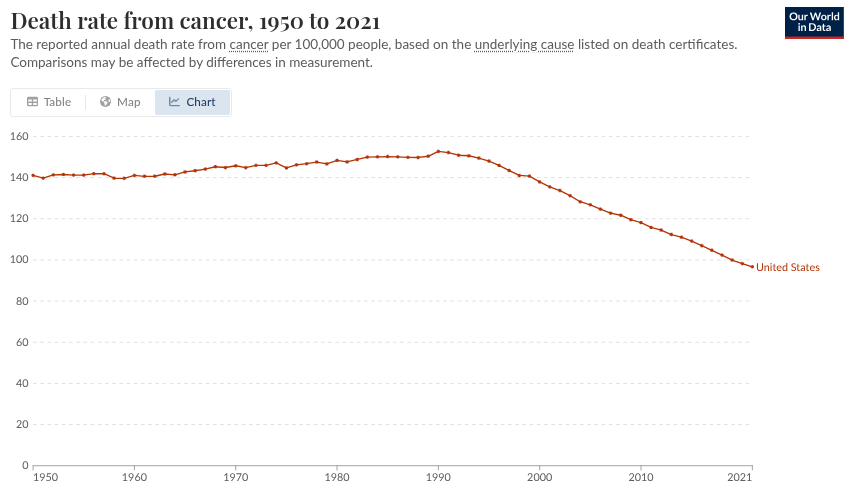
While anti-smoking policy has been the single biggest lifesaver, other interventions have helped reduce people’s cancer risk. One of the biggest successes is the HPV vaccine. Cervical cancer deaths in US women under 25 fell about 62 percent, a decline researchers attribute largely to the HPV vaccine.
The next revolution is better and earlier screening. It’s generally true that the earlier cancer is caught, the better the chances of survival.
Most exciting of all are frontier developments in treating cancer. From drugs like lenalidomide and bortezomib in the 2000s, which helped double median myeloma survival, to the spread of monoclonal antibodies, real breakthroughs in treatments have meaningfully extended people’s lives — not just by months, but years. Perhaps the most promising development is CAR-T therapy, a form of immunotherapy. Rather than attempting to kill the cancer directly, immunotherapies turn a patient’s own T-cells into guided missiles.
__________________________
There is so much we don’t know about the deep ocean, but what we do know is astonishing. The ocean’s deepest point extends approximately 36,000 feet below the surface. Beyond 600 feet, light no longer penetrates, making photosynthesis impossible, yet 98% of marine life resides on or near the sea floor. Life at these depths depends almost entirely on “marine snow”—organic matter drifting down from the ocean’s upper layers.
When a whale dies, its massive body sinks to the seabed and sets off an extraordinary chain of events. A single whale fall can blanket an area of 50 square meters, roughly 538 square feet, on the ocean floor. In that single moment, it delivers a bounty of food equivalent to what small particles would provide over 200 to 2,000 years. It’s an enormous input of organic matter that sticks around for centuries.
________________________
The math and odds are against you to be able to make enough money to survive as a professional tennis player. Employing a bottom-up analysis of the top 100 junior players from 2008, research examines their career trajectories, rankings, and financial outcomes. The findings reveal that you need to be ranked in the top 150 in the world in order to break-even financially. It’s even tougher for females because male players tend to sustain longer careers, potentially due to higher earnings in the ATP circuit outside Grand Slam events.
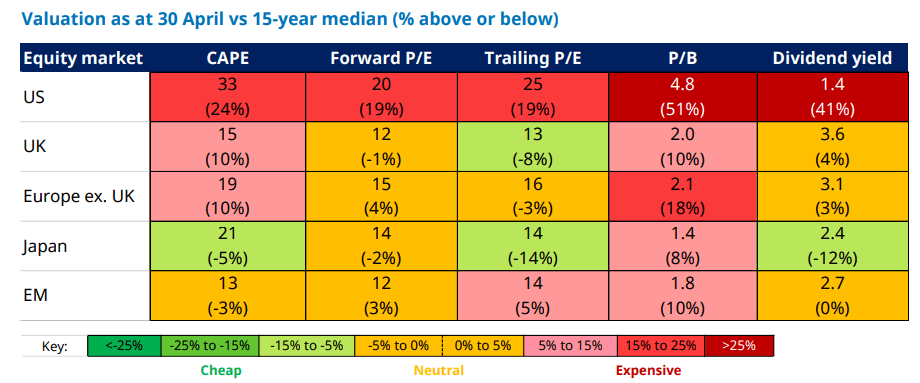
The U.S. as a whole remains much more expensive than all foreign markets:
The gap in price to earnings from the U.S. vs. the rest of the world has narrowed slightly in 2025 but remains enormous:
_______________________________
Only a third of five-to-10-year-old kids frequently read for fun, compared to over half in 2012. This could be in part because their parents are less likely to read to them before they turn five: 41% of parents of all ages reported doing so, a steep drop from the 64% in 2012.
_______________________
Barry Ritholtz and Paul Krugman interview: On Art as an investment: If you go back to the old masters in the 15, 1600s and buy one of their paintings for $100 and it sells centuries later for tens of millions, it’s about a 3% return rate. It’s just the magic of compounding over centuries that are just outside our comprehension.
_____________________
__________________________
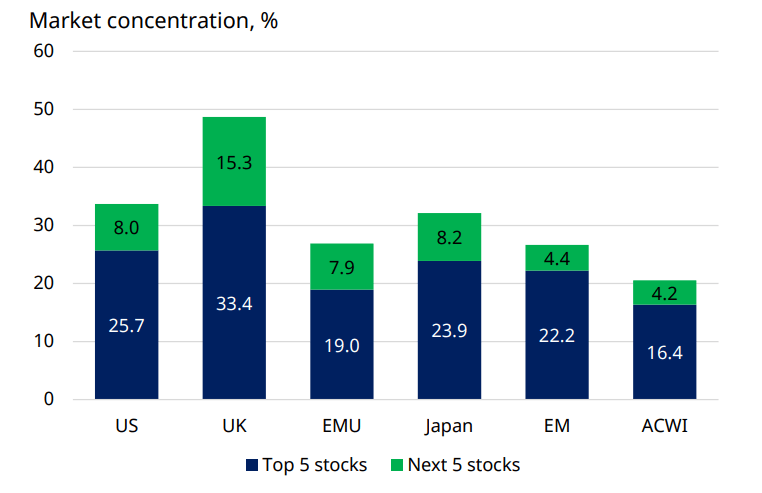
The largest stocks dominate market caps in most countries, not just the U.S. (with the Mag 7):
Imagine reading a story titled “The Relentless Pursuit of Booze.” You would likely expect a depressing story about a person in a downward alcoholic spiral. Now imagine instead reading a story titled “The Relentless Pursuit of Success.” That would be an inspiring story, wouldn’t it? Maybe—but maybe not. It might well be the story of someone whose never-ending quest for more and more success leaves them perpetually unsatisfied and incapable of happiness.
Though it isn’t a conventional medical addiction, for many people success has addictive properties. To a certain extent, I mean that literally—praise stimulates the neurotransmitter dopamine, which is implicated in all addictive behaviors. success also resembles addiction in its effect on human relationships. People sacrifice their links with others for their true love, success. They travel for business on anniversaries; they miss Little League games and recitals while working long hours. Some forgo marriage for their careers.
People willingly sacrifice their own well-being through overwork to keep getting hits of success. I know a thing or two about this: As I once found myself confessing to a close friend, “I would prefer to be special than happy.” He asked why. “Anyone can do the things it takes to be happy; going on vacation with family, relaxing with friends … but not everyone can accomplish great things.” My friend scoffed at this, but I started asking other people in my circles and found that I wasn’t unusual. Many of them had made the success addict’s choice of specialness over happiness. They (and sometimes I) would put off ordinary delights of relaxation and time with loved ones until after this project, or that promotion, when finally, it would be time to rest. But, of course, that day never seemed to arrive.
We are not only gregarious animals, liking to be in sight of our fellows, but we have an innate propensity to get ourselves noticed, and noticed favorably, by our kind. And success makes us attractive to others (that is, until we ruin our marriages).
Unfortunately, success is Sisyphean (to mix my Greek myths). The goal can’t be satisfied; most people never feel “successful enough.” The high only lasts a day or two, and then it’s on to the next goal. Psychologists call this the hedonic treadmill, in which satisfaction wears off almost immediately and we must run on to the next reward to avoid the feeling of falling behind. This is why so many studies show that successful people are almost invariably jealous of people who are more successful.
They should get off the treadmill. But quitting isn’t easy for addicts. For people hooked on substances, withdrawal can be an agonizing experience, both physically and psychologically. Anxiety and depression are very common after one quits alcoholic drinking. Success addicts giving up their habit experience a kind of withdrawal as well. Research finds that depression and anxiety are common among elite athletes after their careers end.
American culture valorizes overwork, which makes it easy to slip into a mindset that can breed success addiction. What can you do to retrain yourself to chase happiness instead of success, no matter where you are in your life’s journey?
Admit that as successful as you are, were, or hope to be in your life and work, you are not going to find true happiness on the hedonic treadmill of your professional life. You’ll find it in things that are deeply ordinary: enjoying a walk or a conversation with a loved one, instead of working that extra hour. This is extremely difficult for many people. It feels almost like an admission of defeat for those who have spent their lives worshipping hard work and striving to outperform others. Social comparison is a big part of how people measure worldly success, but the research is clear that it strips us of life satisfaction.
Start showing up and being present for relationships you’ve compromised in the pursuit of success.
Find the right metrics of success. If you only measure yourself by the worldly rewards of money, power, and prestige, you’ll spend your life running on the hedonic treadmill and comparing yourself to others. Better metrics include faith, family, and friendship. I also include work—but not work for the sake of outward achievement. Rather, it should be work that serves others and gives you a sense of personal meaning.
I stopped buying active investments (individual stocks, etc.) a few years ago. I’ve gone through different justifications for why too. Originally, I stopped buying active investments because of the performance argument. If 85% of active stock managers can’t beat the market over 10 years, what makes you think you can? It’s also too hard to know if you’re actually good. Because there is so much luck involved (especially over shorter time periods), you are better off not wasting your time trying to figure it out.
But there’s an even better argument: I don’t make active investments now because you can’t put a price on mental freedom. What I’ve realized about myself (and many others I’ve spoken to) is that when you buy an active investment like an individual stock, that investment consumes a lot of your attention.
1. 1960-2000: Robert Putnam sees associations and club membership plummeting, writes “Bowling Alone”
2. 2000 – 2020s: Face to face socializing falls another 25%, as coupling rates plunge
3. Now this…
_____________________________
Forbes surveyed more than 217,000 employees working at companies within the U.S. that employ more than 1,000 people. The organizations were stratified so that companies with 1,000 to 5,000 employees were deemed midsize, while companies with more than 5,000 employees were considered large employers.
Survey respondents (who remained anonymous so they could answer freely) were asked if they would recommend their employer to others and to rate it based on a range of criteria, including salary, work environment, training programs and opportunities to advance. Participants were also asked if they would recommend their previous employers (within the past two years) and the employers they knew through their industry experience or through friends or family who worked there.
Barry: You’ve covered human behavior and human nature, what led you to say, I wanna write a new book about the art of spending money?
Morgan: I didn’t call this book The Science of Spending Money because I don’t think that exists. Science implies that there is like a, a one size fits all rule for, for you and I, and that’s not the case. I call it the artist spending money because art is subjective. It is often contradictory. It is different from person to person, and that’s really what spending is. So much good ink has been spilled on how to invest, how to grow your career, how to earn more money, but very little on spending money.
Barry: There’s been a lot of academic research: Does money make you happier?
Morgan: What a lot of the research shows is that if you are already a happy person, money can make you happier. But if you are a depressed person – or a miserable person, whatever it might be – that it will not, and it’s easy to just kind of contextualize this into a real person’s life of if you are in a bad marriage and you hate your career and you have a two hour commute and just go on down the list, you’re an alcoholic, you’re obese. If you take that person and you give them more money, will they be happier? The answer is no, of course not, because all of those other aspects of their life are gonna override whatever money can do for them.
But if you also take somebody who’s in a great marriage loves their career, they’re happy, they’re healthy, they sleep eight hours, they have a good set of friends – and you give that person more money, there’s a good chance that they’re gonna use that money to just leverage what they’re already doing. To spend more time with the friends who they already love, to spend more time getting healthier and eating good food.
Barry: One of the interesting things in the academic literature that I recall seeing a few years ago was when they draw these charts of money potentially making people happier, Divorce is a giant red flag. People in the middle of a divorce or people who have recently been divorced, that’s a really challenging road to haul, isn’t it?
Morgan: I think what it comes down to is that having more money is so quantifiable that we use it as a crutch for all of our problems. For example, if I said I would have a better life if I was a 10% better dad. What does that even mean? What does a 10% better Dad mean? There’s no way to quantify it, but if I said I would have a better life if my salary went up by 10%, you can easily quantify that, wrap your head around it. So we chase that and we assume that that’s gonna be the solution to all of our ills. Becoming a better dad might make me a happier, better person, but since it’s impossible to quantify, I just ignore it and pretended that it doesn’t exist.
Barry: You alluded to impressing others. How should people avoid spending money for status and symbolism as opposed to bringing themselves satisfaction and happiness?
Morgan: It is so easy to overestimate how much other people are looking at your stuff, your house, your cars……they’re not paying any attention. They’re busy worrying about themselves and thinking about themselves. And so when you frame it like that – it’s not to say don’t use your money to gain attention – it’s use it to gain attention from the very small core group of people who you want to love you. There’s a great quote from Warren Buffett where he says, “The definition of success in life is when the people who you want to love you do love you.”
Barry: The person driving down the street in the loud Lamborghini or the person around the corner from you with a giant house? You are only seeing one half of the balance sheet. You’re only seeing their assets. Did they pay cash for that or did they go deep into debt in order to buy a house or a car to show off for the neighbors? Talk about that a little bit.
Morgan: Wealth is what you don’t see. Wealth is the cars that you didn’t purchase and the giant house that you didn’t buy. That’s what wealth is. It is money that you didn’t spend that you can now save for either for future consumption or for independence today. I can see your car, I can see your house, I can see your watch and your clothes. I cannot see your bank account or your brokerage statement. So the most important part of wealth – literally in my view, the definition of wealth is invisible to everybody.
Think about physical fitness. You can see somebody’s physique, it’s right there. And so you know who to admire and who to chase. “Oh, that, that person’s in great shape. I should ask them what they do. I should ask them their diet and try to mimic what they do.” But if you see somebody with a mansion or a Ferrari or whatever it is, you don’t know they got that by success. That may be the picture of a leverage. It’s possible they haven’t slept in two weeks because they’re wondering how they’re gonna make their next Ferrari lease payment. And so we have a fake view of who we’re chasing and what we should do, because wealth that we’re chasing is invisible.
During the month following Lehman Brothers’ September 2008 implosion, then Federal Reserve Chairman Ben Bernanke testified to the House Committee on the Budget on Monday, October 20, 2008. He reminded members that the Federal Reserve’s charter was to maintain high employment and low inflation. The Fed, he also reminded, was not authorized to manage the stability of the financial system or keep credit markets flowing; it was not the FOMC’s charge to address any of the myriad issues that had endangered the financial system’s functioning.
A fiery speech from someone (maybe Rand Paul?) led to a vote against Bernanke’s funding and authority request. He would not be getting the tools necessary to unfreeze credit and keep the banking system operating.
Sayeth Mr. Market: “Hold My Beer.”
The sell-off began immediately after the vote; over the next five trading days, from recent highs, the S&P 500 fell 13.9%, the Nasdaq was right behind it at 13.5%, and the Russell 2000 crashed 18%. MOSTLY IN ONE WEEK. Congress reconvened and passed both the necessary authority and the dollars that the Fed chairman had requested. By November 4th, all of the losses had been made up and then some.
Don’t fix the credit markets, and put corporate revenue and payrolls at risk? FAFO.
______________________________
Behind a paycheck, the largest source of income for the 1% highest earners in the U.S. isn’t being a partner at an investment bank or launching a one-in-a-million tech startup. It is owning a medium-size regional business. Many of them are distinctly boring and extremely lucrative, like auto dealerships, beverage distributors, grocery stores, dental practices and law firms.
The analysis of anonymized tax data from 2000 through 2022 suggests the importance of such business ownership to the U.S. economy has grown. The share of income that ownership generates has increased to 34.9% in 2022 from 30.3% in 2014 for the top 1% earners. It has increased even more at the topmost levels. The top 0.1% highest-earners saw 43.1% of their income come from such business ownership in 2022, compared with 37.3% in 2014. (The minimum income threshold in 2022 to qualify for the top 0.1% of earners was $2.3 million).
The growth of this growth can be attributed in large part to tax cuts in recent decades for such business owners and low interest rates that have boosted company valuations. The number of such business owners worth $10 million or more, adjusted for inflation, has more than doubled since 2001, to 1.6 million as of 2022. The growth has been in S-corporations and partnerships, where the profits and losses of the business flow through to the owners or partners; the business itself doesn’t pay taxes. The typical medium-size business they studied has annual sales of $20 million and 100 employees.
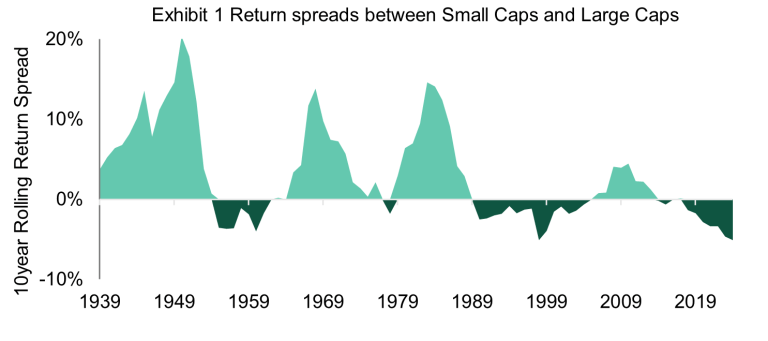
Small-cap underperformance has historical precedent — but cycles turn. We’re in the 12th year of a small-cap lagging cycle, longer than average. Historical data suggests a reversal is near.
Higher interest rates are reigniting migration. With rates expected to stay elevated, small-cap stocks are more likely to graduate to large caps — boosting overall performance potential.
Valuation and quality favor small caps. Compared to the weakest segment of large caps, small-cap stocks offer stronger return on assets and more attractive price-to-book ratios, contradicting the view that only low-quality names remain in the space.
_____________________________
The MSCI ACWI index includes large and mid-sized companies from 23 developed countries (like the U.S., UK, Japan) and 24 emerging markets (like China, India, Brazil). It covers about 85% of the available stocks around the world. The number of stocks in the MSCI ACWI that do business globally has risen to 80% (which is why the global stock market did not respond well to the recent tariff announcements).
Happiness, it turns out, is more Rorschach than road map. Is it found in the ultraluxe wellness center or the austere monastery? Does it come from getting what you want or wanting less?
By the early 20th century, utility maximization — happiness writ small — emerged as a linchpin of economic analysis. Public happiness, in turn, became a matter of optimizing the sum of individual welfare. The mathematics could be complex, but the premise was simple: Getting what you want in life — that’s happiness, bro.
The notion of happiness as choice-making swiftly migrated from economic models into the marrow of the broader culture. What was once a lifelong project shrank into a sequence of transactions. As the midcentury economy boomed, it didn’t just build wealth; it reconstructed desire. The good life, formerly the province of philosophers, was now a mainstay of the marketers: happiness packaged as the perfect lawn, the gleaming automobile, the immaculate kitchen with its humming refrigerator. We became, almost without noticing, what we bought.
And if you still felt empty? That’s where the therapy culture of the 1970s and 1980s came in — not as a remedy for consumerism but as an extension of it. The older vocabulary of life-defining commitments and meaning-making projects continued to wither while a new lexicon took hold: self-acceptance, self-esteem, self-love.
By the 1990s, happiness had acquired a personal brand. Oprah Winfrey presided over a daytime academy of self-care, empowerment and curated aspiration. Then came the next wave: the life-hacking, self-quantifying, habit-stacking era of optimization gurus like Tim Ferriss, whose first book, published in 2007, was “The 4-Hour Workweek” — “a toolkit,” in his words, “for maximizing per-hour output.”
Excitement is the more practical synonym for happiness, and it is precisely what you should strive to chase,” Ferriss wrote. “It is the cure-all.” Amid the excitement, the happiness concept kept getting miniaturized. With the rise of the algorithms, decision-making became a series of bite-size transactions. If you liked this, you’ll like that. Every swipe, click and purchase was an act of preference revelation, the digital cookie crumbs of personal identity.
In today’s social media ecosystem, happiness even threatens to become a ring-lighted aesthetic: matcha lattes, artisanal candles, sage-smudging, captioned reminders to just breathe. Once again, happiness is work — but now the work of packaging moods and moments for validation, with a tiny dopamine hit for each “like.”
“So long as you’re happy,” parents tell their kids. In reality, they want to see their children engaged in something worthwhile, contributing to something beyond their own fleeting satisfactions.
If you’ll indulge the philosophers’ habit of conjuring characters to illustrate their abstractions, imagine a young person — let’s call her Julia — who left community college after a semester and has bounced between gigs ever since: dog-walking, cafe shifts, warehouse nights. Her life is messy, but she has learned how to show up for people. When her neighbor’s mother gets sick, Julia brings groceries. When her cousin gets out of rehab, she’s the one who texts every day. She doesn’t have a wellness routine or a five-year plan. But people trust her. She holds lives together in small, invisible ways.
Or imagine a middle-aged man named Daniel, a product manager with a smart fridge and an Optimal Morning Routine. For years, he has chased happiness through upgrades — to his apps, his appliances, himself. But lately, the returns feel thin. When his niece’s soccer team needs a coach, he volunteers, awkwardly at first, then with growing investment. Daniel has started showing up at town meetings, fighting to save the field from developers. Now his calendar includes something he cares deeply about that doesn’t come with a progress bar.
Daniel still wears a Whoop band. Julia hasn’t found her “calling.” But they’re living into a broader idea of happiness — less about what they have, more about what they give, who they’re with, what they’re part of.
Is it possible that happiness stayed big, and it’s only our way of talking about it that got small? Surely the old understanding, in which the pursuit of happiness is inseparable from shared commitments, hasn’t gone anywhere. On some level, we still know the difference between feeling good and flourishing, between the hedonic and the eudaemonic, between the algorithm’s next suggestion and the difficult and uncertain path toward a meaningful existence. Yes, we often speak as if feelings are all that count, but maybe that’s because the language of the “good life” has been hollowed out.
____________________________
Inversion is a mental model that flips the script on traditional problem-solving. Rather than look at a problem in a linear, forward, logical manner, you think about it in reverse. Well, there is one complex, foundational problem that is truly universal: How do you live a good life? Using inversion to address it: Here are some ways to live a miserable life…
Allow idleness to dominate your life – Stress and anxiety feed on idleness. They take hold while you sit and scroll on your phone, while you overthink your situation, while you compare yourself to others, while you try to create the perfect plan. When you take action, you starve them of the oxygen they need to survive.
Allow optimal to get in the way of beneficial – Ambitious people have a bad tendency to think like this: “I don’t have an hour to work out, so I just won’t go. I don’t have two hours for deep work, so I’ll do email instead. I don’t have 30 minutes to call my mom, so I won’t call at all.” When you allow optimal to get in the way of beneficial, you ignore the most powerful principle in life: Anything above zero compounds. A little bit is always better than nothing. Tiny wins stack over long periods of time. Small things become big things.
Obsess over speed – Life is about direction, not speed. It’s much better to climb slowly up the right mountain than to climb fast up the wrong one.
____________________________
More police officers kill themselves every year than are killed by suspects. At least 184 public-safety officers die by suicide each year, while an average of about 57 officers are killed by suspects. Law-enforcement officers are 54 percent more likely to die by suicide than the average American worker.
A survey of 1,000 managers across America revealed the reasons that 8 in 10 managers said newly hired college graduates did not work out during their first year on the job:
78%: Excessive use of cell phones – the top pet peeve of managers
61%: Entitled or easily offended
57%: Unprepared for the workplace
54%: Lack of a work ethic
47%: Poor communication skills
27%: Lack of technical skills
Other concerns managers had about the graduates included lateness, failure to turn in assignments on time, unprofessional behavior, and inappropriate dress and language.
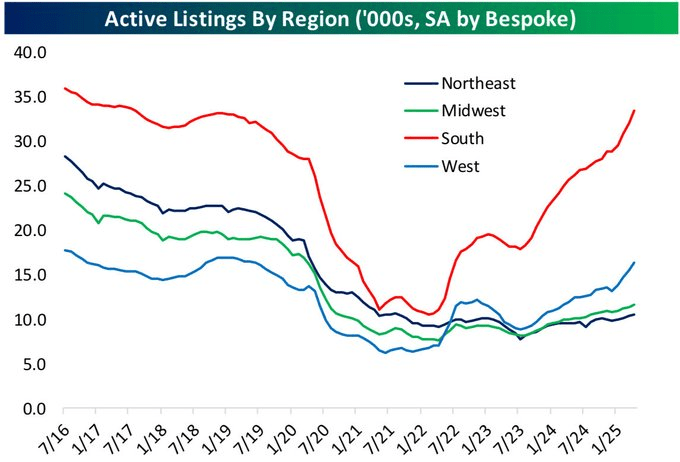
Where the number of homes for sale is growing. Fast.
___________________________
The Russell 1000 is a stock market index that represents the 1,000 largest companies in the U.S. by market value (also called market capitalization). The graph below shows the number of stocks within that 1,000 that fall by a certain percentage over a 1, 3 and 5-year time frame. While over time most major indices like The Russell 1000 go up, the odds are very high that any individual stock is going to fall by a lot.
___________________________
Lead characters were far more likely to die in the 1960s and 1970s than they are today. Across the 1970s, almost one in three protagonists died by the end of the film. That rate has steadily declined since. The drop has been particularly sharp since 2010. In the last five years, the share of lead characters who die has averaged just 17%. This is one of the lowest rates in almost a century of film history.
The average age of the global population is up from 26.5 years in 1980 to 33.6 years in 2025. Meanwhile, the average growth rate of the global population has also halved, from 1.8% in 1980 to 0.9% in 2025. The growth rate is expected to hit zero by 2084, and the world’s population is expected to begin declining by 2085, with the average age rising to 42. At the end of the 21st century, the average age is projected to be 43 years.
“College is just how well I can use ChatGPT at this point.”
“I think we are years — or months, probably — away from a world where nobody thinks using AI for homework is considered cheating.”
“It isn’t as if cheating is new. But now, as one student put it, ‘the ceiling has been blown off.’ Who could resist a tool that makes every assignment easier with seemingly no consequences?”
“Massive numbers of students are going to emerge from university with degrees, and into the workforce, who are essentially illiterate.”
“The humanities, and writing in particular, are quickly becoming an anachronistic art elective like basket-weaving.”
“Many teachers now seem to be in a state of despair.”
“Every time I talk to a colleague about this, the same thing comes up: retirement. When can I retire? When can I get out of this? That’s what we’re all thinking now.”
Employers are increasingly recruiting high-schoolers in skilled trades due to worker shortages as baby boomers retire.
High schools are revitalizing shop classes and teaming up with businesses that offer students opportunities for part-time work and academic credit.
Welding students are getting job offers paying $50,000 and above, with no college debt.
More businesses are teaming up with high schools to enable students to work part-time, earning money as well as academic credit.
Employers say that as the skilled trades become more tech-infused, they anticipate doing even more recruitment at an early age, because they need workers who are comfortable programming and running computer diagnostics.
_____________________________
“The hardest thing to teach a student—and the hardest thing to believe consistently—is that there is nothing ‘out there’ to go and get. There is no part, no career, no opportunity for which you should be searching and scrounging and coveting. All of the preparation is within, and you keep yourself mentally and physically fit; you remain generous with yourself and others; you stay deeply in study about your craft. Whatever is yours will then arrive.”— Marian Seldes
320 days of paid parental leave, split equally between mothers and fathers
Freedom of the press, trust in institutions, and a culture of low corruption
Prioritization of community engagement, including frequently dining in groups, participating in civic life, and trusting the government to mostly take care of its people.
And a national character trait they call sisu—roughly translating to grit, resilience, or quiet inner strength
But it also has two others that are less widely discussed:
There are 3.3 million saunas in Finland—roughly one for every 1.67 people. Finns drop by the sauna after work to relax, catch up with friends, or just sit in silence and sweat out the stress of modern life. There are even rules to encourage peaceful conversations – like no discussions about politics.
Finland also scores high on the “lost wallet test.” This is a study from 2019 in which Stanford researchers dropped almost 19000 wallets in 355 cities/40 countries, to get a measure for whether people are generally honest. Scandinavia scored at the top of the lost wallet test: the Finns, for example, returned 90% of the wallets. And that’s not even the number that’s important. The report suggests that a strong predictor of the happiness of a country is whether the majority of people believe others would return their wallet. Finns trust their fellow Finns to do the right thing.
What can we learn from them to be happier?
Find people to break bread with
Go outside.
Aim for “satisfied,” not euphoric.
Cultivate a belief that most people are basically kind and trustworthy.
________________________________
Humans still haven’t seen 99.999% of the deep sea floor. Bizarre creatures like vampire squid and blobfish make their home in the dark, cold, depths of the deep sea, but most of this watery realm remains a complete mystery. Maps created with tools like sonar can show the shape of the seafloor, but it’s much harder to send cameras down beyond 200 meters, or more than 656 feet, where sunlight begins to fade rapidly and the waters turn cold and dark. This is the region of the ocean that’s considered “deep.”
______________________________
The 18 Degrees That Turned Aaron Judge Into the Next Babe Ruth. On May 5 of last season, Judge was mired in one of the worst slumps of his career. So when he stepped to the plate for the first time, he decided to try something different. Up to that point, Judge had always used an open batting stance, which angled his left foot toward the third baseman. Against Detroit Tigers ace Tarik Skubal that afternoon, Judge moved the placement of his front leg ever so slightly back toward the pitcher. He promptly blasted a home run into the right-center field bleachers, followed by a booming double a few innings later. The change to Judge’s setup was almost imperceptible at first, but it had an unimaginable impact: In the year since, he has put together one of the greatest stretches of hitting that baseball has ever seen.
Many people assume that the trade deficit works like this: Americans send slips of paper to the rest of the world, and the rest of the world sends us real good and services. That sounds like a pretty sweet deal for Americans, right? The problem is that this common description misses the next step. What does the rest of the world do with that paper (or more realistically, electronic digits) that they receive?
The answer is that they buy American assets, including stocks, bonds, private equity, and real estate. Stocks and bonds represent the bulk of what they buy. As a result, over time foreigners own a larger and larger share of US stocks in particular. So, in practice we are not selling worthless papers for real goods and services. We are selling stakes in our valuable appreciating capital assets to buy depreciating goods and services.
That asset accumulation by the wealthier parts of the foreign sector is what gives them a lot of ammo to hurt US markets when they run into dollar shortages. They’ve got a big stockpile of assets that they can sell to get dollars, and they own increasing shares of our companies’ dividend payments and voting rights.
_____________________________________
Labor conditions for recent college graduates have “deteriorated noticeably” in the past few months, and the unemployment rate now stands at an unusually high 5.8 percent. Even newly minted M.B.A.s from elite programs are struggling to find work. Law-school applications are surging—an ominous echo of when young people used graduate school to bunker down during the great financial crisis. What’s going on? I see three plausible explanations, and each might be a little bit true:
The labor market for young people never fully recovered from the coronavirus pandemic—or even, arguably, from the Great Recession.
College doesn’t confer the same labor advantages that it did 15 years ago.
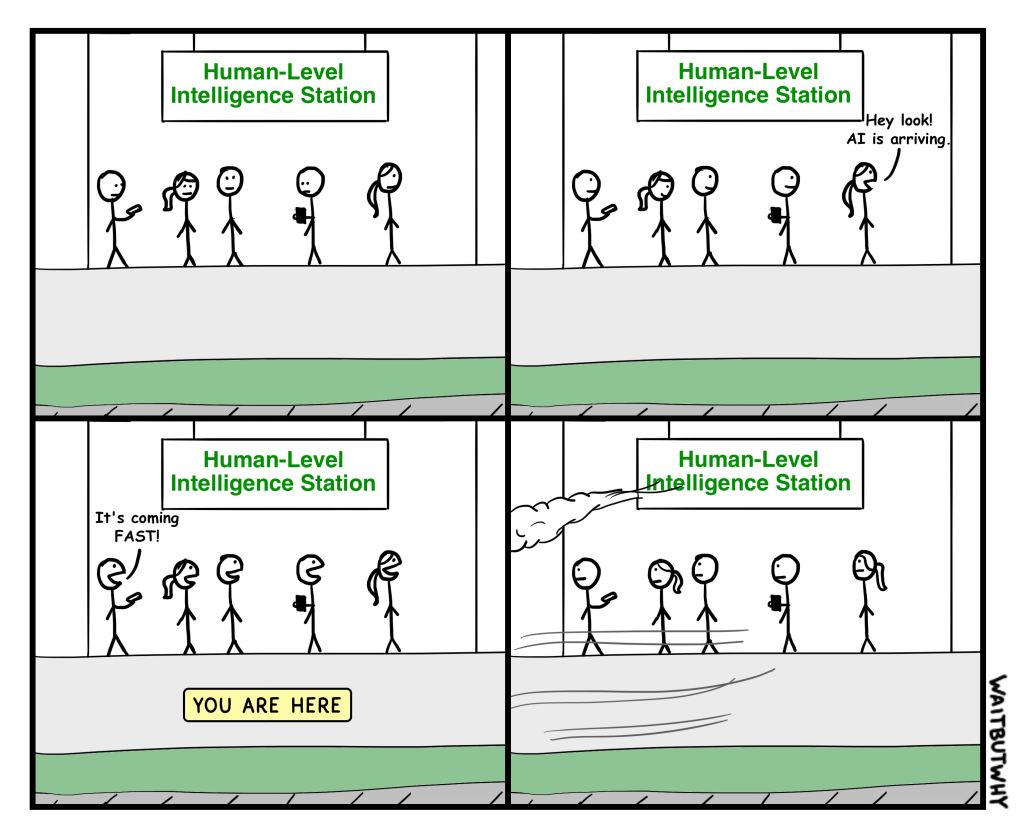
There are early signs that artificial intelligence is starting to transform the economy.
When you think from first principles about what generative AI can do, and what jobs it can replace, it’s the kind of things that young college grads have done” in white-collar firms. They read and synthesize information and data. They produce reports and presentations.
The first World Happiness Report, summarizing the state of its research, drew a distinction between two concepts: “affective happiness” and “evaluative happiness.” Affective happiness captures emotions, immediate responses to events, whether we are experiencing joy or sadness at one moment or another. Evaluative happiness is a more contemplative or systemic matter, mapping a person’s overall appraisal of life and whether they are satisfied with theirs. Affective happiness is the realm of laughter, fun, picnics, parties, sex. Evaluative happiness is tied to good health, sufficient income, social cohesion, safety.
A crude synonym for evaluative happiness — and so much of this research flounders on the crudeness of synonyms! — would be “contentment.” That is what the Cantril Ladder measures, and it should surprise no one that the Nordic countries, with their long life expectancies, highly redistributive tax regimens, functional governance, low corruption and shared norms land at the top of the charts. The type of happiness that tourists go to Finland to find isn’t even the sort of happiness the country is accused of possessing.
A second area of confusion is that the two concepts of happiness, affective and evaluative, can operate independent of each other. A woman in the midst of extruding a baby might suffer from labor pains (low affective happiness) but feel profoundly satisfied or purposeful (high evaluative happiness). The “happiest country in the world” label seems to imprint on the American mind as a never-ending carousel of delights, but in Finland’s February chill, the reality is more modest.
At home in Brooklyn, the library is papered with reminders to “Please keep your voice down.” In contradistinction, the signs at Oodi said, “Please let others work in peace!” The two commands are almost — but meaningfully not — synonymous. The Brooklyn version is a plea for self-control. The Finnish version is a request to acknowledge the existence of other people. You see the difference.
A friend called and I rambled about my sorrow at watching the Finnish children rove and play, and told her about how mothers of all ages gathered spontaneously in the library to chat or rest or idly massage their feet. I explained that one of these mothers had placed her baby, a child of no more than 9 months, in a highchair at a library cafe table and handed him a vegetable purée to consider, then left for 20 minutes to fetch books. When the mother returned she told me, “every few years there’s a crisis where a baby is stolen but then it is returned or found 15 minutes later. Nothing severe.”
All government buildings in Finland have a sauna on-site. Nationwide, there is more than one sauna for every two Finns. In Finland, sauna is not a means to an end. It will not make a person richer or more attractive or more focused. The point is not to sweat out “toxins,” though that may occur — I’m not a scientist. The point seems to be the act itself: sitting in nude serenity among family, friends and strangers, safe in the bone-deep sense of trust that such an idyll both requires and reinforces.
____________________________________
The internet has caused a Cambrian explosion of creative expression by allowing artists to execute and distribute their visions with unprecedented ease. More than 500 scripted TV shows get made every year; streaming services reportedly add about 100,000 songs every day. We have podcasts that cater to every niche passion and video games of novelistic sophistication. Technology companies like to say that they’ve democratized the arts, enabling exciting collisions of ideas from unlikely talents. Yet no one seems very happy about the results.
The problem is particularly acute in music. In 2024, new releases accounted for a little more than a quarter of the albums consumed in the U.S.; every year, a greater and greater percentage of the albums streamed online is “catalog music,” meaning it is at least 18 months old. Hoping to remonetize the classics, record labels and private-equity firms have spent billions of dollars to acquire artists’ publishing rights.
Who do I envy that is actually less happy than I am?
How much have things outside of my control contributed to things I take credit for?
Which of my strongest beliefs are formed on second-hand information vs. first-hand experience?
If I could not compare myself to anyone else, how would I define a good life?
Which future memory am I creating right now, and will I be proud to own it?
What kind of lifestyle would I live if no one other than my immediate family could see it?
How much of what I do is internal benchmark (makes me happy) vs. external benchmark (I think it changes what other people think of me)?
____________________________________
The Global Flourishing Study, based on a survey undertaken by a consortium of institutions including my Harvard colleagues at the Human Flourishing Program. This survey also uses self-reporting, but it collects much more comprehensive data on well-being, in about half a dozen distinct dimensions and in 22 countries, from more than 200,000 individuals whom it follows over five years.
What does it show? A decline in the happiness of young people, and although young people’s emotional and psychological distress is more pronounced in wealthy, industrialized nations such as the United States, it is occurring across the world.
Scholars have long noted that happiness tends to follow a U-shape across the lifespan: Self-reported happiness declines gradually in young and middle adulthood, then turns upward later in life, starting around age 50.
But that has changed. The flourishing scores don’t fall from early adulthood, because they now start low; they stay low until they start to rise at the expected age later in life.
This week, U.S. GDP data for the first quarter of 2025 (January through March) was released. The data showed that the U.S. economy shrank at an annualized rate of 0.3%, but almost every economics journalist and columnist reported that this decline was due to a surge of imports, as American companies rushed to stock up on foreign-made goods ahead of Trump’s tariffs. This is incorrect.
GDP is a measurement of everything produced within a country’s borders. Imports are produced outside a country’s borders. So imports don’t add to or subtract from GDP. Imports simply aren’t counted in GDP at all.
Suppose an American buys a TV made in China for $1000. Remember that GDP can be calculated as the sum of consumption, investment, government purchases, and net exports:
GDP = Consumption + Investment + Government Purchases + Net Exports
When the American buys the $1000 TV from China, U.S. consumption goes up by $1000. And U.S. net exports go down by $1000, since “net exports” means exports minus imports. The increase in consumption exactly cancels out the fall in net exports. So the total contribution of the imported TV to U.S. GDP is zero.
Let’s take another example, which is more like what actually happened in Q1. Suppose an American company, Best Buy, decides to buy a Chinese TV and put it in a warehouse, because it knows that tariffs are coming soon. That purchase counts as inventory investment. So investment goes up by $1000. And just like in the previous example, net exports go down by $1000. The two cancel out, and the total contribution of the imported TV to U.S. GDP is zero.
































 Tuna Thoughts