Dropped Calls, Polymarket & Passwords

That Dropped Call With Customer Service? It Was on Purpose. Endless wait times and excessive procedural fuss—it’s all part of a tactic called “sludge.”

In the 2008 best seller Nudge, the legal scholar Cass R. Sunstein and the economist Richard H. Thaler marshaled behavioral-science research to show how small tweaks could help us make better choices. An updated version of the book includes a section on what they called “sludge”—tortuous administrative demands, endless wait times, and excessive procedural fuss that impede us in our lives.

Sludge is often intentional,” said a professional that works in the customer service call center industry. “Of course. The goal is to put as much friction between you and whatever the expensive thing is. So the frontline person is given as limited information and authority as possible. And it’s punitive if they connect you to someone who could actually help.”

Helpfulness aside, I mentioned that I frequently felt like I was talking with someone alarmingly indifferent to my plight.

“That’s called good training,” Tenumah said. “What you’re hearing is a human successfully smoothed into a corporate algorithm, conditioned to prioritize policy over people. If you leave humans in their natural state, they start to care about people and listen to nuance, and are less likely to follow the policy.”

For some people, that humanity gets trained out of them. For others, the threat of punishment suppresses it. To keep bosses happy, Tenumah explained, agents develop tricks. If your average handle time is creeping up, hanging up on someone can bring it back down. If you’ve escalated too many times that day, you might “accidentally” transfer a caller back into the queue. Choices higher up the chain also add helpful friction, Tenumah said: Not hiring enough agents leads to longer wait times, which in turn weeds out a percentage of callers. Choosing cheaper telecom carriers leads to poor connection with offshore contact centers; many of the calls disconnect on their own.

“No one says, ‘Let’s do bad service,’” Tenumah told me. “Instead they talk about things like credit percentages”—the number of refunds, rebates, or payouts extended to customers. “My boss would say, ‘We spent a million dollars in credits last month. That needs to come down to 750.’ That number becomes an edict, makes its way down to the agents answering the phones. You just start thinking about what levers you have.”

“Does anyone tell them to pull those levers?” I asked.

“The brilliance of the system is that they don’t have to say it out loud,” Tenumah said. “It’s built into the incentive structure.”

That structure, he said, can be traced to a shift in how companies operate. There was a time when the happiness of existing customers was a sacred metric. CEOs saw the long arc of loyalty as essential to a company’s success. That arc has snapped. Everyone still claims to value customer service, but as the average CEO tenure has shortened, executives have become more focused on delivering quick returns to shareholders and investors. This means prioritizing growth over the satisfaction of customers already on board.

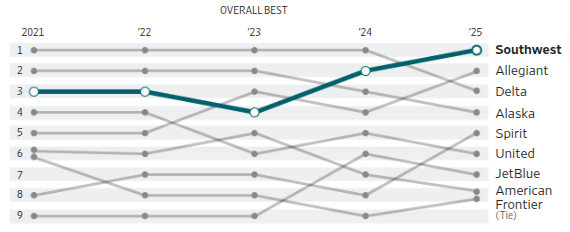
Customers are part of the problem too, Tenumah added. “We’ve gotten collectively worse at punishing companies we do business with,” he said. He pointed to a deeply unpopular airline whose most dissatisfied customers return only slightly less often than their most satisfied customers. “We as customers have gotten lazy. I joke that all the people who hate shopping at Walmart are usually complaining from inside Walmart.”

In other words, he said, companies feel emboldened to treat us however they want. “It’s like an abusive relationship. All it takes is a 20 percent–off coupon and you’ll come back.” Supervisors don’t tell customer service workers to deceive or thwart customers. But having them get frustrated and give up is the best way to meet numbers.

Sometimes they intentionally drop a call or feign technical trouble: “‘I’m sorry, the call … I can’t … I’m having a hard time hearing y—.’ It’s sad. Sometimes they drag out the call enough that customers get agitated, or say things that get them agitated, and they hang up.”

Even if an agent wanted to treat callers more humanely, much of the friction was structural, a longtime contact-center worker named Amayea Maat told me. For one, the different corners of a business were seldom connected, which forced callers to re-explain their problem over and over: more incentive to give up.

“And often they make the IVR”—interactive voice response, the automated phone systems we curse at—“really difficult to get through, so you get frustrated and go online.” Employees described working with one government agency that programmed its IVR to simply hang up on people who’d been on hold for a certain amount of time.

________________________

On June 12th, an anonymous trader opened a new account on Polymarket, an anonymous internet betting site that uses cryptocurrency to obscure the source of money. The new trader was interested in betting on one topic: whether the Israeli military would strike Iran within the next 24 hours, by Friday, June 13th.

As the 13th approached, most people thought it was unlikely, but this new account seemed convinced that airstrikes were imminent. The trades started during a one-hour period around 12pm; $1,728 of bets in the first one, then another $311, $280, $560. Then, between 10pm and midnight, with time running out, they accelerated their betting, showing their confidence by ramping up the bets, putting about $20,000 in total at risk.

Three and a half hours later, Israel struck Iran in a surprise attack—and the Polymarket trader cashed out. They had made a total of $134,000 in profits. After taking their winnings, they closed the account, never trading again. This was probably a case of geopolitical insider trading. Someone who knew that the strike was imminent decided to use that knowledge to make a lot of money anonymously through online betting markets.

This is pretty dystopian: individuals, state actors, even terrorist groups can decide to bet on their own behavior, even their own uses of violence. There’s nothing stopping someone who’s a high-profile political actor—or the people around them—from betting on an outcome, then making comments or posting something on, say, Truth Social or X, that inevitably affects public perceptions about a likely course of action. They can drive the price up or down at will, knowing full well that they can ultimately decide whether the value of a “share” goes to $0.00 or to $1.00. And then, they can anonymously cash out, with nobody the wiser. It’s the Wild West of insider trading.

____________________________

Nearly half of U.S. grandchildren (47%) live within 10 miles of a grandparent. Of those, significant numbers live even closer: 21% live between 1 and 5 miles, and 13% live within a walkable distance of 1 mile.

______________________________

The blue horizontal bars in the picture below are parallel to each other:

_______________________________

Ranked: The World’s Most Common Passwords. The data comes from NordPass, which analyzed the most frequently used passwords based on a 2.5 terabyte database of credentials exposed by data breaches. All of the passwords below would take a hacker less than 1 second to crack.

According to NordPass, your password should be at least 20 characters long and include uppercase and lowercase letters, numbers, and special symbols. They suggest that you never reuse passwords. If one account were to be compromised, other accounts that share the same password could also be at risk.

_______________________________

American household leverage is the lowest in 50 years. The leverage ratio is liabilities (mortgage, auto, credit, student loans) divided by the price of assets they own (stocks, bonds, real estate,).

Stock price gains help the top 10% wealthiest families disproportionately, but the biggest improvement in the leverage ratio above for most American families comes from home prices:

Productivity, Jobs, Rates & Zyn Pouches

Here’s a surprising truth it took me ages to grasp: by far the best way to spend more of your life doing meaningful, rewarding and difference-making things is to really feel the deep sense in which you don’t need to do any of that stuff at all.

At public events, people sometimes ask what advice I’d give my fourteen, sixteen or eighteen-year-old self – which is a ticklish question, partly since I’m sure my teenage self would have scoffed at being lectured at by the late-forties version. And he might have been right to do so; I think you probably have to just go through a certain amount of experience, in order to learn about life, instead of having wisdom dispensed by your elders.

Still, the honest answer is that I’d say something like this: “You do realise you don’t absolutely have to do any of this, right – the good grades, the praiseworthy accomplishments, ‘fulfilling your potential’ and all the rest? It’s all great, and it matters, but do you understand that it doesn’t matter matter? That the sky won’t fall in if you chill out a bit, and that people who don’t always ‘do their best’ or ‘fulfill their potential’ are allowed to enjoy life, too?”

The spiritual teacher Michael Singer says somewhere that the basic stance most of us take toward the world is that we try to use life to make ourselves feel OK. And this is certainly true of the type psychologists label ‘insecure overachievers’, who often accomplish plenty of impressive things, but who do so, deep down, because we don’t believe we’d have earned the right to feel good about ourselves, or to relax into life, if we didn’t.

It’s a soul-crushing way to live, not least because it turns each success into a new source of oppression, since now that’s the minimum standard you feel obliged to meet next time. A hugely successful author once told me he knew something was amiss when the experience of reaching the upper echelons of the bestseller list, previously a cause of excited disbelief, instead brought only relief that he hadn’t failed to replicate his prior achievement.

Most productivity advice, I think, caters to people mired in this mindset. It promises ways to help you take so much action, so efficiently, that you might one day get to feel good about yourself at last. Which isn’t going to work – because the real problem isn’t that you haven’t yet done enough things, or got good enough at doing them. The real problem is the fact that for whatever combination of reasons in your childhood, culture or genes, your sense of self-worth and psychological safety got tethered to your productivity or accomplishments in the first place.

But there exists another, very different sort of productive action: the kind you take not because you feel you have to, in order to feel OK, but precisely because you understand that you don’t have to – because you already feel basically OK about yourself, so now of course you want to take action, because action is how you express your enjoyment in being alive, being good at a few things, and being able to use your talents to make some kind of difference in the world, alongside other people.

One of the most important consequences of all this, for me, has been the realisation that when you begin to outgrow action-from-insecurity, you don’t have to give up on being ambitious. On the contrary: you get to be much more effectively and enjoyably ambitious, if that’s the way you’re inclined.

I’ve long been allergic to the notion, prevalent in self-help circles, that if you truly managed to liberate yourself from your issues, you’d ideally spend your days just sort of passively floating around, smiling at everyone, maybe attending the occasional yoga retreat, but not much more. “The more I heal, the less ambitious I become” is a phrase I’ve encountered multiple times online in recent months. And yes, sure, if your ambition was only ever a function of anxiety, becoming less ambitious would be an excellent development. Then again, the desire to create remarkable outcomes in your creative work, relationships or community – or even just in your bank balance – might just be an authentic part of who you are, once the clouds of insecurity begin to clear.

So you don’t need to choose between peace of mind and the thrill of pursuing ambitious goals. You just need to understand those goals less as vehicles to get you to a future place of sanity and good feeling, and more as things that unfold from an existing place of sanity and good feeling. (Besides, I’ve got to believe that ambition pursued in this spirit is far likelier to make a positive difference in the world.)

Obviously, if you’re deeply stuck on insecure-overachiever mode, merely reading about the alternative in a newsletter isn’t going to solve everything. Nor do I mean to suggest that every task becomes an undiluted joy when you re-frame action in this way – or that there aren’t plenty of things you “need to do” for reasons other than feeling OK about yourself, such as keeping food on the table.

But it can be strikingly liberating just to begin, however gingerly, to experiment with the idea that, actually, you could just do the minimum. You really could. You could not try to impress, or be extraordinary, or do your best, or fulfill your potential (whatever that even means). And you would still be fully entitled to a relaxed and enjoyable life.

And then you might begin to feel, in that newly peaceful state of mind, the stirrings of a different kind of action: one that’s no less energetic or productive or effective; far more alive; and much, much easier to enjoy.

___________________________

I went into my conversations with college career executives expecting to hear about AI replacing work. What I heard instead is that AI is transforming everything around work. The transition from college to the workforce is fully drenched in artificial intelligence. AI is automating homework, obliterating the meaning of much testing, disrupting the labor-market signal of college achievement and grades, distorting the job hunt by normalizing 500+ annual applications per person, turning first-round interviews into creepy surveillance experiences or straight-up conversations with robots, and, oh, after all that, maybe kinda beginning to saw off the bottom of the corporate ladder by automating some entry-level jobs during a period of economic uncertainty. This really is a hard time to be a young person.

___________________________

Even if Trump’s tactics improbably succeed in changing Jerome Powell’s mind, they would change only one vote out of 12 on the Federal Open Market Committee. The FOMC’s decision at its June 18 meeting to leave the Fed funds rate unchanged was unanimous. Furthermore, seven of the 19 officials who are eligible for the 12 voting positions predicted there will be no rate cuts for the remainder of 2025, up from four in March.

Surely, you might say, the FOMC would never go against its chair if he altered his position on rates? If that were to happen it would not be unprecedented. In June 1978, Miller was in the minority as the full FOMC voted to raise rates.

________________________

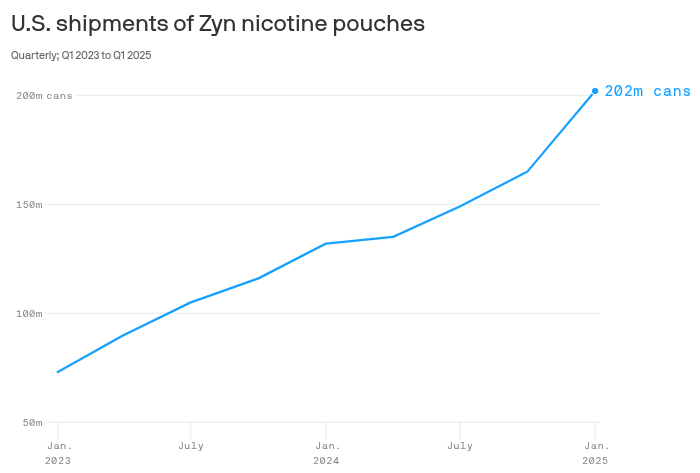
U.S. shipments of Zyn pouches rose 177% from the first quarter of 2023 to the first quarter of 2025.

Being Present, Unsubscribing & Gummy Clusters

These days I’m pretty good at avoiding the trap that’s been called “onedayism” – the tendency to live as if the really important part of life won’t truly begin until you’ve reached some far-off milestone, like finding a long-term partner, or achieving financial security, or until you’ve fixed your problem with procrastination, or once world events don’t seem so apocalyptic. (You have to find meaning, accomplishment and joy in the midst of all that, not solely once it’s all been “sorted out”.)

Yet as I’ve relaxed my grip on that sort of unconscious postponement, I’ve found it’s still easy to make the same error, just on a much shorter timescale: to proceed through the day as if my generally sane and interesting and enjoyable life can resume just as soon as I’ve got this task out of the way, cleared this batch of email, or made it through to this evening. But of course you can miss your whole life in this manner, ceaselessly focused on a point a few hours in the future, no less surely than with the longer-timescale version.

The answer definitely isn’t to beat yourself up for not yet having perfectly mastered the art of being present. (That, you might notice, is just another version of the same mistake.) But you can remind yourself to unclench a bit, to soften, to fall back into what’s really going on, here and now, and to see there’s no reason why you can’t find this very experience juicy and alive. I like how the entrepreneur Shane Melaugh puts it: “Your life plays out over your entire lifetime.” Which always includes now.

None of this is about attaining some kind of pristine, static, passive state of Presence In The Moment, as it sometimes gets presented in spiritual circles. You still get to pursue goals and ambitions and exciting future states; you can still look forward to the end of the day. It’s just that you get to experience all that as something that’s unfolding now, in a present moment that gets to count just as much as any moment that might coming in future.

__________________________

Different Kinds Of Smart:

Humility: Given how little of the world we’ve experienced, in most situations we are likely wrong, especially in knowing how other people think and make decisions.

Self-Discipline: Everyone knows the famous marshmallow test, where kids who could delay eating one marshmallow in exchange for two later on ended up better off in life. But the most important part of the test is often overlooked. The kids exercising patience often didn’t do it through sheer will. Most kids will take the first marshmallow if they sit there and stare at it. The patient ones delayed gratification by distracting themselves. They hid under a desk. Or sang a song. Or played with their shoes. Delayed gratification isn’t about surrounding yourself with temptations and hoping to say no to them. No one is good at that. The smart way to handle long-term thinking is enjoying what you’re doing day to day enough that the terminal rewards don’t constantly cross your mind.

Influence: A good storyteller with a decent idea will always have more influence than someone with a great idea who hopes the facts will speak for themselves. People often wonder why so many unthoughtful people end up in government. The answer is easy: Politicians do not win elections to make policies; they make policies to win elections. What’s most persuasive to voters isn’t whether an idea is right, but whether it narrates a story that confirms what they see and believe in the world. It’s hard to overstate this: The main use of facts is their ability to give stories credibility. But the stories are always what persuade.

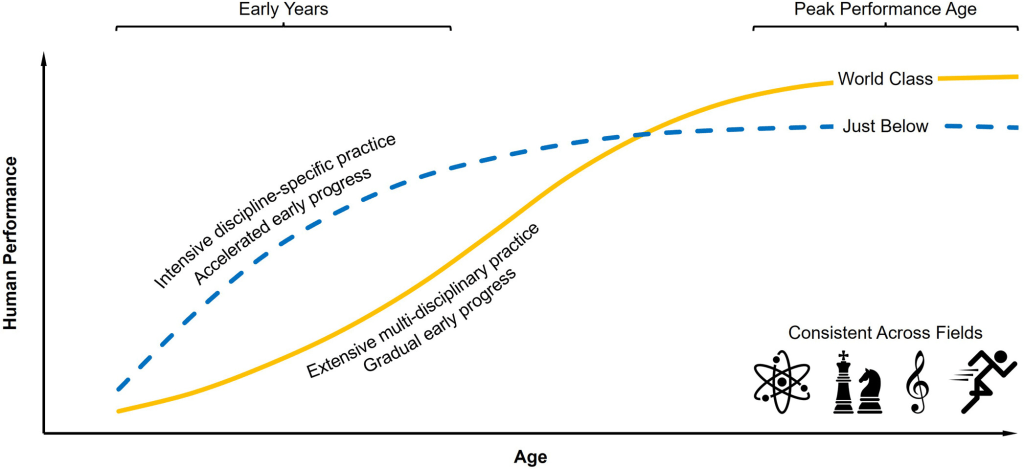
Balance: Someone with B+ intelligence in several fields likely has a better grasp of how the world works than someone with A+ intelligence in one field. The best thing to do is to quickly learn and accept that your field is no more important or influential to other people’s decisions than dozens of other fields, which pushes you to spend your time connecting the dots between your expertise and other disciplines. Being an expert in economics would help you understand the world if the world were governed purely by economics. But it’s not. It’s governed by economics, psychology, sociology, biology, physics, politics, physiology, ecology, and on and on.

____________________________

The federal government has a bit over $36 trillion in debt. To put that in context, US households collectively have $180 trillion in assets, or $160 trillion in net worth after liabilities (mostly mortgages) are subtracted.

The US monetary base is about $6 trillion. There is over $120 trillion worth of dollar-denominated loans and bonds outstanding in total (public and private, domestic and international, excluding derivatives). In the foreign sector alone, there is about $18 trillion worth of dollar-denominated debt. What this means is that there is an incredibly large amount of inflexible demand for dollars domestically and throughout the world. Everyone who owes dollars, needs dollars.

When a country like Turkey or Argentina hyper-inflates or nearly-so, it’s in a context where practically nobody outside of their country needs their lira or pesos. There’s no entrenched demand for their currency. And so, if their currency becomes undesirable for any reason (usually due to rapid money supply growth), it’s very easy to just repudiate it and send its value to Hades.

Countless specific entities around the world contractually owe countless other specific entities around the world a certain number of dollars by a certain date in time, and thus need to constantly try to get their hands on dollars. The fact that they collectively owe more dollars than there are base dollars in existence is important. That’s why the monetary base can double, triple, or more, and not be outright hyper-inflationary. It’s still a small increase relative to how much contractual demand there is for dollars. When outstanding debt greatly exceeds the number of base units, it takes a ton of printing of base units to render that base unit worthless.

Suppose that bond yields break out to the point of rendering banks insolvent or the Treasury market acutely illiquid. The Fed can step in with QE or yield suppression. Yes, that comes with the cost of potential price inflation and has implications for asset prices, but no, it’s not hyper-inflationary in this context.

____________________________

Think Twice Before You Click Unsubscribe On An Email:

  • Clicking “unsubscribe” in emails can lead to malicious websites testing if your email is active.
  • Criminals can build a files on users who click unsubscribe links, hoping to eventually extort money through scams.
  • Use list-unsubscribe headers, mark emails as spam or use disposable email addresses for online sign-ups.

____________________________

Cannabis use among seniors surged 46% in the last two years; 7% of adults 65 and older now report recent use. This rise isn’t just in numbers but also in diversity older users today are more likely to be women, college-educated, and higher-income. Researchers suggest legalization and growing social acceptance are contributing factors, especially in states with medical marijuana laws. The trend is especially notable among those with chronic illnesses, raising both opportunities and concerns for medical professionals trying to balance symptom relief with the complexities of aging.

_____________________________

College Baseball Has a Power Problem: Players Keep Hitting the Ball Too Hard: In the big leagues, only superstars like Aaron Judge can routinely crush the ball at speeds in excess of 115 mph. In college baseball these days, everybody’s doing it.

  • College baseball is seeing unprecedented exit velocities, rivaling and sometimes exceeding those in Major League Baseball.
  • College players are 42% more likely to hit balls at 115 mph or harder than MLB players.
  • The reasons for the surge in exit velocity aren’t entirely clear, but it’s creating safety concerns for pitchers, infielders or with fans sitting in the stands

___________________________

Nerds is on track to hit more than $900 million in sales this year, a more than 1,700% increase from the $50 million in sales in 2018. The unprecedented surge is directly attributed to the widely popular Nerds Gummy Clusters, which represented the first meaningful innovation for the once-sleepy brand in years. Nerds Gummy Clusters are now the top sugar confection on the market, overtaking skittles.

_____________________________

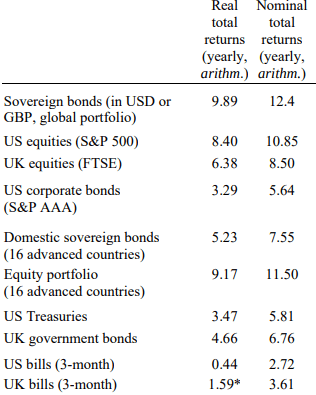
Older people will remember the time when there was – for a while – a discussion about how the US stock market had significantly higher returns overnight when the market was closed vs. the actual trading day. Those were the innocent days of an era long gone, aka 2018, when we were all naïve and enthralled by a bull market that couldn’t be derailed by anything. The graph below shows the “overnight effect” through January 2018:

This effect was so promising that it even led to the launch of an ETF in June 2022 that focused on this trade. A product that was so successful that it was liquidated in August 2023. 

A new study shows that the effect disappeared after the pandemic. What makes the study interesting, though, is that they seem to find why the effect existed in the US (and not other countries) in the first place: Hype.

They noticed that stocks with large trading volume just after markets opened were the main driver of the overnight effect. For the uninitiated, trading volumes are heavily concentrated during the last hour of the day. Institutional investors typically want to trade when liquidity is highest which means they tend to wait until the end of a trading day to execute their orders. This becomes a self-fulfilling prophecy. Because big institutions focus their trading on the last hour of the day, this is where volume is highest and this is when other institutions want to trade in the future as well.

________________________

The number of paying Tinder users has dwindled to just 9.1 million in its most recent quarter — down 18% from a peak of 11.1 million in late 2022. While Tinder remains Match Group’s biggest brand, Hinge, another dating app under the Match umbrella, saw paying users grow 19% year over year in Q1 2025.

Double Date, a feature that allows pairs of users to match with other pairs, is now available on Tinder in the US, with a global rollout planned for July. So far, the results seem hopeful: after first trialing the feature in a handful of European countries, Tinder reported that women were 3x more likely to “like” a pair than an individual profile, and that nearly 90% of Double Date profiles came from users under 29.

Ferguson’s Law & The Peak-End Rule

Daniel Kahneman spent his life studying behavioral economics, cognitive biases and learning why people make irrational decisions. He won the Nobel prize for his research and wrote the most influential book ever on the topic titled “Thinking, Fast & Slow.” At age 90, his closest friends and family were shocked and upset when they received an email from him saying that he would be ending his life through assisted suicide, even though he was still in relatively good health. From his email:

I am still active, enjoying many things in life (except the daily news) and will die a happy man. But my kidneys are on their last legs, the frequency of mental lapses is increasing, and I am ninety years old. It is time to go. 

Not surprisingly, some of those who love me would have preferred for me to wait until it is obvious that my life is not worth extending. But I made my decision precisely because I wanted to avoid that state, so it had to appear premature. I am grateful to the few with whom I shared early, who all reluctantly came round to support me.

I discovered after making the decision that I am not afraid of not existing, and that I think of death as going to sleep and not waking up. The last period has truly not been hard, except for witnessing the pain I caused others. So if you were inclined to be sorry for me, don’t be.

Kahneman knew the psychological importance of happy endings. In repeated experiments, he had demonstrated what he called the peak-end rule: Whether we remember an experience as pleasurable or painful doesn’t depend on how long it felt good or bad, but rather on the peak and ending intensity of those emotions. It is the case that in following this carefully thought-out plan, Danny was able to create a happy ending to a 90-year life, in keeping with his peak-end rule. He could not have achieved this if he had let nature take its course.

_____________________________

One reason why the younger generation doesn’t like to drink is because every moment of their lives is either being filmed or only seconds away from the next picture that will be shared online. “I think that a lot of times we’re so consumed with how other people are looking at us that we don’t even want to risk being considered messy,” said Sofie Ruiz, a sophomore at Texas Christian University. This fear of being perceived as “messy” is fueled by the popularity of the “clean girl” aesthetic. A “clean girl” is often associated with healthy habits like yoga, pilates, green smoothies, and journaling—definitely not heavy drinking. The epitome of the popular girl is now one who projects an image of a balanced, healthy, and often sober lifestyle. This ideal is heavily promoted on social media, influencing what is seen as desirable and aspirational. College campuses also have school-specific social media apps, such as Yik Yak, where a drunken night out can get posted by peers with lasting and embarrassing consequencessaid Ruiz. With social media comes permanent and wide-reaching evidence, and students are choosing not to be seen in a certain way in perpetuity.

The reputation repercussions can run deep. Ruiz has a friend who attends a university with its own dedicated Instagram account. Students can send in anything, and it will likely be posted. A female student was kicked out of her sorority for being drunkenly featured on the page. “We grew up a lot hearing the concerns of a digital footprint. People don’t want to risk their future on stuff like that,” said Ruiz. “Guys don’t have as much to be scared about, I think. Because even if they do something embarrassing and it gets posted, they, by history, most likely will not get the same repercussions as a girl might. As a girl, you don’t want to be hungover, you don’t want to feel sick, which also goes into the clean girl aesthetic thing.” “I think that if social media wasn’t a component, it would definitely be a lot different,” she said. The opposite is true with marijuana. Ruiz said that cannabis’s popularity may stem from its perceived social acceptability: “You’re kind of at less of a risk to embarrass yourself because if you’re high, you’re normally just going to chill out. Whereas when you’re drunk, you don’t really have control over your actions.”

_________________________________

Are there financial determinants of great-power decline and fall? “Ferguson’s Law,” which states that any great power that spends more on debt servicing than on defense risks ceasing to be a great power. The paper identifies the “Ferguson limit,” or the point at which interest payments exceed defense spending, as the tipping point after
which the centripetal forces of the aggregate debt burden tend to pull apart the geopolitical grip of a great power.

This is because the debt burden draws scarce resources towards itself, reducing the amount available for national security, and leaving the power increasingly vulnerable to military challenge. Looking at historical case studies that are analogous to the situation of the modern United States as the dominant global power, it is very rare but not unprecedented for a great power to return to the right side of the Ferguson limit. The United States began violating Ferguson’s Law for the first time in nearly a century in 2024.

________________________________

Don’t let your kids get on motorcycles, if possible.

_____________________________________

Atlanta-based Chick-fil-A is on the vanguard of fast-food drive-through science, regularly dispatching specialist teams to its more than 3,000 restaurants to study the minutiae of parking-lot traffic patterns and how employees hand off orders. In years past, some Chick-fil-A operators would climb onto restaurant roofs to study traffic flows. These days, the chain sends out traffic-analysis teams that use drones to capture aerial footage, which team members splice with video from kitchens and drive-through windows to create roughly hourlong videos for store owners. The insights are reshaping Chick-fil-A’s restaurants. One opened outside Atlanta last August with no dining room but four drive-throughs that can serve some 700 cars an hour. A second-floor kitchen prepares food that is delivered to the cars below via a system akin to a dumbwaiter. 

_____________________________

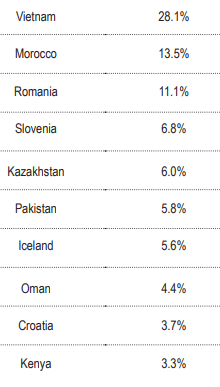
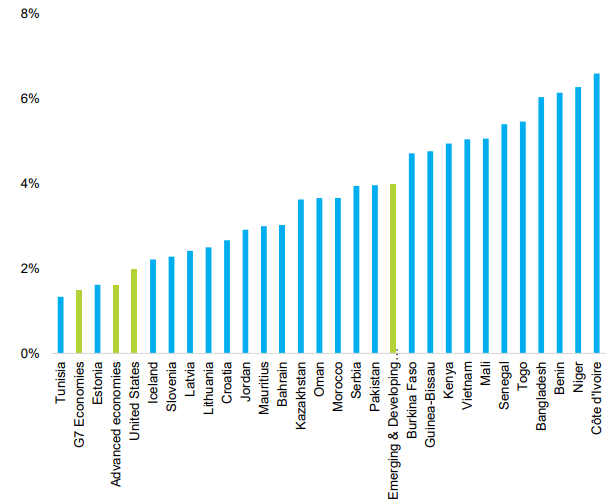
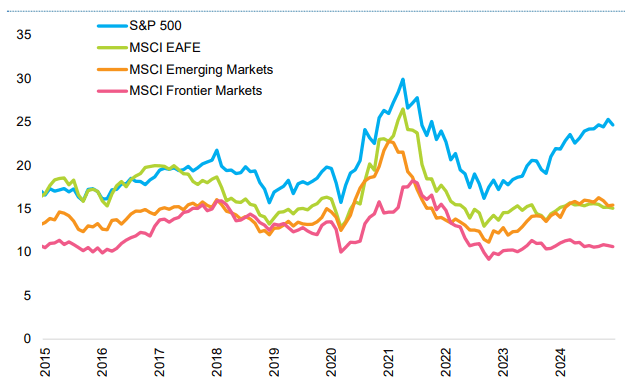
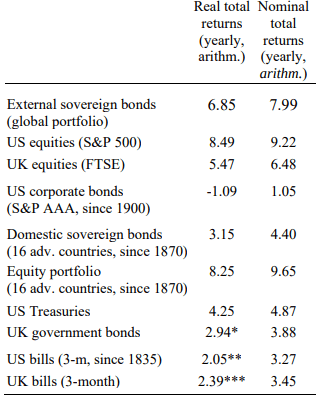
Turning-Tides in Emerging Markets. A quick history of emerging market cycles, and the case for investing in India, Indonesia and Brazil.

Independence, Memory & Religion

When you’re independent you feel less desire to impress strangers, which can be an enormous financial and psychological cost. Speaking of hidden forms of debts: How much of what takes place in our modern economy is done purely for signaling reasons? It’s impossible to quantify, but you know it when you see it. And taking an action to impress other people is a direct form of dependence. 

___________________________

After shuffling the cards in a standard 52-card deck, Alex Mullen, a three-time world memory champion, can memorize their order in under 20 seconds. As he flips though the cards, he takes a mental walk through a house. At each point in his journey — the mailbox, front door, staircase and so on — he attaches a card. To recall the cards, he relives the trip. This technique, called “method of loci” or “memory palace,” is effective because it mirrors the way the brain naturally constructs narrative memories: Mullen’s memory for the card order is built on the scaffold of a familiar journey. 

Analyses have generated a new understanding of how the human brain constructs narrative memories. Nearly the entire brain is involved, contradicting earlier ideas that placed memory in specific brain regions. And memories are built in temporal pieces, each of which ranges from a second to a minute in length. The brain places those pieces onto the scaffolds of event scripts. It’s all a construction. It’s not like you have this video camera of exactly what happened, exactly as it happened. You have to reconstruct, based on pieces of the experience, what you think happened.

The brain doesn’t simply record what it perceives. Instead, much if not most of the brain’s reaction to an event or story originates in memories of how that type of event usually plays out. In other words, we process the present through the past.

There are two critical steps to constructing memories. As we go about our day, we record the new experiences in pieces of varying size and complexity, from simple perceptions to stunning plot twists. Meanwhile, our brains access templates for these new events based on knowledge of similar ones, and place the pieces of the evolving memory in that context. Memories, it turns out, are more like paint-by-number than rendered from scratch on a blank canvas. The way we experience and remember events arises largely from our mental state, as opposed to properties of the events themselves.

_____________________________

We report eleven studies that show declines in life satisfaction and happiness among young adults in the last decade or so, with less uniform trends among older adults. In the U. S. life satisfaction rises with age. This is broadly confirmed in several other datasets including four from the European Commission across five other English-speaking countries: Australia, Canada, Ireland New Zealand and the UK. There is broad evidence across all of these English-speaking countries that happiness and life satisfaction since 2020 rise with age. In several of these surveys we also find that ill-being declines in age. The U-shape in well-being by age that used to exist in these countries is now gone, replaced by a crisis in well-being among the young.

_____________________________

Which Sports Provide the Best Return on Your Time Investment? Football has the greatest amount of “false advertising” in terms of how much time the game actually takes versus how long it lasts on the clock. Hockey, by contrast, is the most honest American sport — with a ratio of 2.5 “real” minutes per minute on the scoreboard — with NBA games checking in right behind at 2.8 “real” minutes per clock minute.

_________________________________

The U.S. has become much less Christian, driven in large part by Gen Z and younger Millennials, according to a new Pew study. “We’ve had rising shares of people who don’t identify with any religion — so-called ‘nones’ — and declining shares who identify as Christian, in all parts of the country, in all parts of the population, by ethnicity and race, among both men and women, and among people at all levels of the educational spectrum,” he says about the survey findings. A significant portion of U.S. adults (35%) have switched from the religion of their childhood.

________________________________

Lessons From This Year’s Berkshire Hathaway Letter. Sixty years ago, Warren Buffett bought control of Berkshire Hathaway. He’s highlighted that mistake on and off ever since. He did so once again in this year’s annual letter, which came out over the weekend.

_______________________________

India is best thought of as a country of 1.4 billion people of whom about 300 million are leading a relatively comfortable life in major cities like Bombay and New Delhi while 1.1 billion are in rural or urban poverty.  India is poor but 300 million middle-class citizens is a population almost the size of the United States. Again, that’s the point. A U.S.-sized middle-class population already exists in India with 1.1 billion more people waiting to join the ranks. The growth potential is almost beyond comprehension.

___________________________

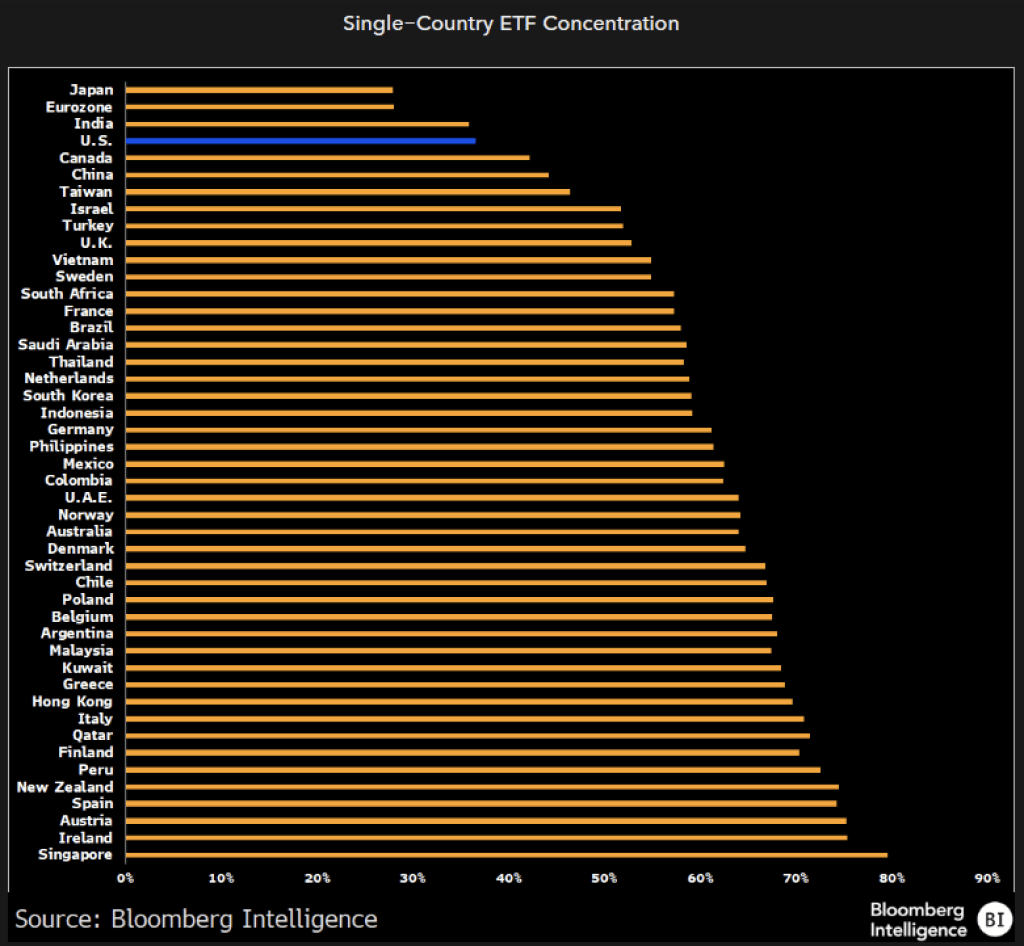
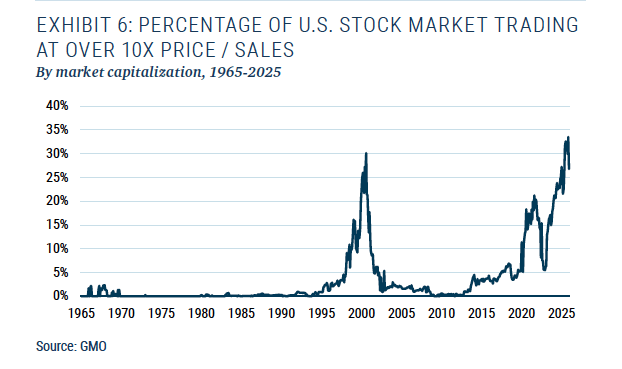
My quest for cheap stocks has led me to South America. Specifically, Brazil. The largest Brazil ETF, EWZ, currently trades at around 8x earnings with an 8% dividend yield. An entire country ETF offering an 8% yield. Meanwhile, the dividend yield on the S&P 500 is 1.27%. EWZ trades at 1.5x book value, while the S&P 500 currently sits at 5.01x (a higher multiple means stocks are more expensive). The chart combines seven metrics to show just how expensive the U.S. stock market has become.

image 1

___________________________

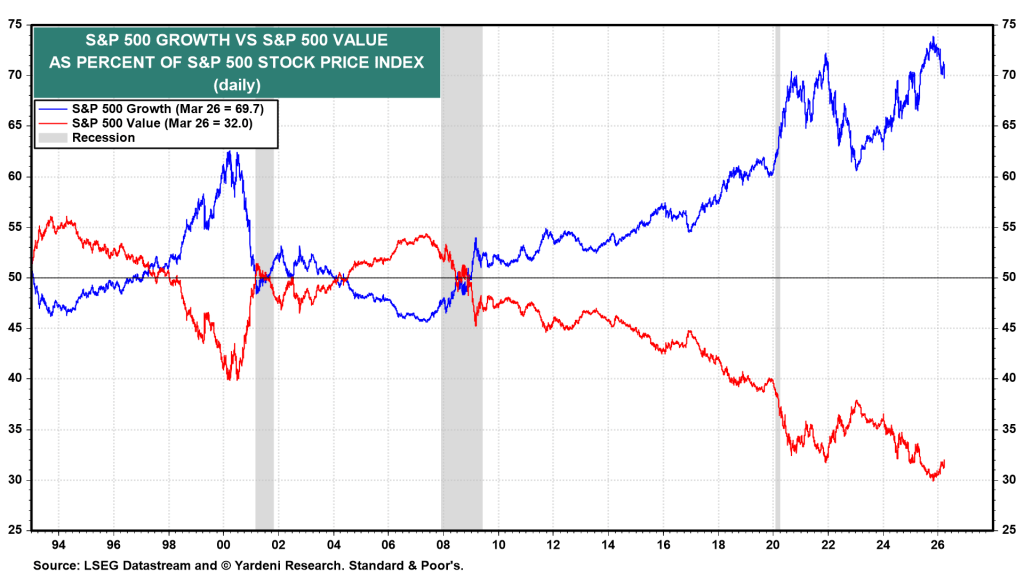
The U.S. stock market as a whole is the most expensive in the world, but when you pull out just the technology stocks, they are on another planet in terms of how they’re priced relative to their earnings.

___________________________

Jim Chanos spoke with Paul Krugman this week on market sentiment, A.I. and data centers:

How about the capital being employed? There better be something new. I mean, we’re talking now for the just a top handful of companies doing $300 to $500 billion in capex [capital expenditures] annually. I mean, AI isn’t like the internet, which made things more capital efficient and raised returns on capital. So far, AI is doing the opposite. It is a massively capital-intensive business. Someone joked that the top tech companies are now looking like the oil frackers did in 2014, 2015, where more and more capital is chasing arguably a variable return.

Fracking technology has revived the U.S. oil and gas industries, and along with renewables, has made America energy-independent for the first time in generations. But the fracking companies themselves turned out to be far less profitable than they led investors to believe.

Time, Mastery & Threes

Some thoughts on time. Times we grew up envisioning as the far future aren’t so far away anymore. Even if lifespans stayed as they are now, many of today’s college students will live to see the 22nd century. Many of today’s babies will still be in the peak of their careers in the year 2100. And 2040, 2060, and 2100 are now closer to us than 2010, 1990, and 1950.

Likewise, much of what still feels like recent history is beginning to look a lot like ancient history. NSYNC’s “Tearing Up My Heart” came out closer to the moon landing than to today. E.T. hit theaters closer to the 1930s than to today. And Billy Joel’s “She’s Got a Way” was released nearer to World War I than the present moment.

If Back to the Future were released today, Marty would be heading back to the ridiculously retro year 1995. His teenage parents would be doing hilariously old things like talking on big cell phones and hanging out in AOL chat rooms. And of course, no existential time crisis would be complete without The Wonder Years. The show aired from 1988-1993 and took place in the years 1968-1973. If the show debuted today, it would be set in 2005-2010 and cover nostalgic old things like Obama’s election, Instagram like counts, and Taylor Swift concerts.

___________________________________

How to change our perception of time. Say the average lifespan is 80 years old. Then consider that time feels like it moves faster as we age. At age 40, the average person may be 50% through their biological life but they may have experienced 75% of what the brain will ever experience.

When you are looking back at the end of a childhood summer, it seems to have lasted for such a long time because everything was new. But when you’re looking back at the end of an adult summer, it seems to have disappeared rapidly because you haven’t written much down in your memory. So here is the take-home lesson. We have to seek novelty because this is what lays down new memories in the brain.

____________________________________

Jerry Seinfeld gave a great interview talking about what still drives him now that he has so much money. He talked about the importance of having a good skill, and he referenced an Esquire article from the late 1980’s that became the foundation for how he thinks about achieving mastery. It focused on things like plateaus combined with brief spurts of progress, the importance of having a child’s mindset and muscle memory.

____________________________________

The argument for more NBA threes has always been the same: it’s math. The simple fact is that teams need only shoot 33 percent on 3-pointers to break even (in terms of points per shot attempt) against 50 percent on 2-pointers. But nothing stays static for long in professional sports. As the league’s brain trusts encouraged more and more threes, the efficiency of each shot type changed — and while 3-pointers have averaged a relatively steady level of points per field goal attempt for nearly two decades now, the 2-pointer has rapidly become more efficient, to the point that it has caught up to (if not surpassed) the efficiency of a 3-pointer:

This is even more the case when we consider that it’s much easier to get fouled attempting a 2-pointer than a 3-pointer.

____________________________________

52 Things Learned In 2024, including:

  • Indian Americans own about half of all motels in the United States. Of them, 70% have the last name Patel.
  • People know whether or not they want to buy a house in just 27 minutes, but it takes 88 minutes to decide on a couch.
  • About 25% of the decline of casual sex among young men since 2007 can be explained by video games.
  • It takes twice as long to cook a chicken today compared to 100 years ago because twenty-first century chickens get less exercise.
  • American baby names trends shifted from family names a century ago to popular names a generation ago to popular endings today. A generation of people named Jason has given way to babies with -son endings: Mason, Jackson, Grayson, and Carson. Today, 48% of the top 500 baby names share only ten endings.

________________________________________

  • The U.S. stock market is now worth $64 trillion and rising by the hour.
  • The market cap has doubled in less than 5 years, and it added $10 trillion alone in 2024.
  • China, Hong and all of Europe’s stocks combined are now worth less than 50% of U.S stocks.
  • The U.S. Magnificent 7 alone are worth more than every single company in all of Europe.

Zooming out to look at how we got here:

Dividends and share buybacks (total shareholder yield) in Europe and Japan are far more attractive than the U.S. A major reason for this is because you are paying an extraordinarily high price in U.S. stocks (vs. the rest of the world) for the yield you receive in return:

The largest contributors to the S&P 500’s (profit) margin expansion have come from taxes and interest rates declining. Let’s hope the U.S. government continues to have unlimited borrowing power at low interest rates to continue that trend forward:

___________________________________

Cliff Asness, the billionaire founder of AQR Capital, wrote this week what he thinks a “normal” money manager’s letter to clients will look like 10 years from now. He reviews, bonds, private credit, private debt, liquid alts, crypto and other sectors, but I thought his sections on U.S. and international stocks was interesting:

U.S. Equities (letter to clients on January 2, 2035):

First, it turns out that investing in U.S. equities at a CAPE in the high 30s yet again turned out to be a disappointing exercise, Today the CAPE is down to around 20 (still above long-term average). The valuation adjustment from the high 30s to 20 means that despite continued strong earnings growth, U.S. equities only beat cash by a couple of percent per annum over the whole decade, well less than we expected.

International Equities (letter to clients on January 2, 2035):

Of course, after being left for dead by so many U.S. investors, the global stock market did better with non-U.S. stocks actually turning in historically healthy real returns (like 5-6% per annum over cash). It turned out that, just as we thought, the U.S. really did have the best companies (most profitable, most innovative, fastest growing) and this indeed continued in this last decade. But it also turned out that paying an epic multiple for the U.S. compared to the rest of the world mattered somewhat more than we thought, and international diversification, as we knew it would one day, did eventually work.   It turns out there was indeed a price at which European stocks made sense. That was news to us.  Luckily, we removed non-U.S. stocks from our benchmark back at the beginning of ’25 so this differential did not affect our benchmark-relative performance this last already painful decade, only our, well, you know, actual performance.