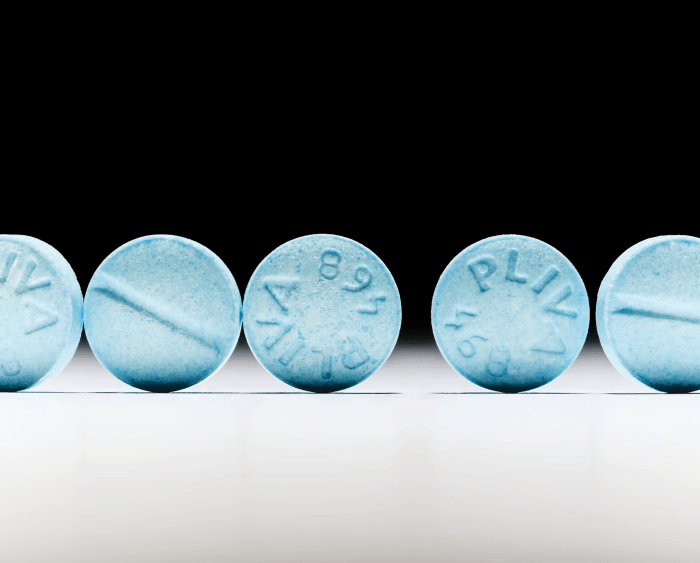
The Pill That Women Are Taking for Everything From Speeches to First Dates: Propranolol has become the go-to pill for dealing with all sorts of stressful situations. Prescriptions are on the rise, up 28 percent from 2020. By slowing down heart rate and lowering blood pressure, the drug can reduce the physical symptoms of anxiety.
Where other beta blockers focus on specific parts of the body, propranolol affects beta receptors in the heart and everywhere else in the body, including the brain. The effects on the brain are the effects that cause the decrease of anxiety.
Compared to Xanax or Valium, propranolol is considered nonaddictive and is among the mildest variety of anti-anxiety medication, but it is not without risk. Because propranolol works to reduce blood pressure and heart rate, if you reduce it too much, the person could faint.
Szeder, founder of the AI gambling startup MonsterBet, says his tools give customers an edge. “We have some people who are probably hitting around 56 to 60 percent of the time, myself included,” he claims. He created an assistant called MonsterGPT to select bets on professional sports in the US. It uses projection models he designed combined with information scraped from across the internet.
MonsterGPT accesses web scrapers through retrieval-augmented generation (RAG), a process that allows AI tools to incorporate new data from external sources on top of their training materials. He charges $77 a month for access to MonsterGPT and other tools.
More than 16 million people aged 65 and older in the U.S. live alone. That represents 28% of that age group, almost triple the share in 1950. Among the reasons: increased longevity, higher divorce rates among older adults and children more scattered than previous generations. Many are women who outlived their spouses, and at least one-fourth of older adults with dementia live alone.
_________________________
A stock or a bond is a tangible claim on some future revenue stream; real estate and commodities are physical things that you can use even if their price drops. Crypto coins, or tokens, or however it pleases you to visualize these bits of ephemeral code, are pure speculative baubles, endowed with value only to the extent that you can convince another person to pay you more for them than you paid. They are a claim on nothing. They are the grandest embodiment of Greater Fool Theory ever invented by mankind.
Major banks have now decided to allow crypto to be used as collateral for loans. This sets the stage for a rapid collapse in crypto prices to spread its harm much more broadly throughout the financial system.
There is an ongoing phenomenon of companies that are not doing well simply buying a bunch of Bitcoin and rebranding themselves as crypto holding companies and then seeing their stock price shoot up. Because we are still in the frothy phase of the bubble, it turns out that investors will actually pay more for crypto held by a company like this than they could just buy the crypto for themselves on the open market. So a, you know, declining ball bearings manufacturer can go out and buy $1 billion of Bitcoin and announce that in a press release and then see their stock value increase by $2 billion.
Self-Defeating Prophecy: A prediction causes behavior that prevents it from coming true.
The Taco (Trump Always Chickens Out) trade logically follows: whenever President Trump announces something that causes markets to swoon, buy during the fainting spell and wait for the clucking sound to emerge from the White House.
It all makes sense until you start to pull on the loose end of the logical thread. Why did Trump chicken out? Because the markets panicked when he announced a dramatic act of self-harm. But the fact that the markets were so alarmed in early April suggests that they weren’t really swallowing the Taco hypothesis.
Then came May; US equity markets had a great month despite the prospect of Trump’s 90-day “pause” expiring soon, the random imposition of further tariffs and the unsettling new prospect that Congress planned to give the administration powers to levy taxes on selected foreign investors at will. Perhaps the markets had finally digested the truth about Taco?
Which raises the possibility that the Taco trade will eat itself. The markets could become overconfident, taking Trump neither literally nor seriously. The market ignores him.
Then the next step: the horrifying realization that since the market has not blinked, Trump is not actually planning to chicken out. The step after that? The market will belatedly plunge, Trump will belatedly chicken out and the markets will be saved — until the next time.
If that isn’t enough to send you into a spin, consider this: perhaps Trump’s pride will be so wounded by all the Taco talk that he will stop chickening out altogether.
This spiraling chain reaction may all seem like an Escher fever-dream, but the underlying point is simple and could come from a Greek tragedy: when you try to predict the future, you risk changing it.
This effect is at work in any financial market. Everyone who successfully spots a bargain contributes to that bargain vanishing. The same dynamic is at play any time you try to decide which line to join at a supermarket or at passport control: once everyone has rushed to join the shortest line, it is no longer the shortest.
One notorious example from the history of computing is the “Osborne Effect”, named, perhaps unfairly, after the shortlived Osborne Computer Corporation. In the early 1980s, Osborne made an early and enormously covetable portable computer, but went bankrupt after prematurely announcing that new and better models were on the horizon. Demand for Osborne’s inventory is said to have collapsed because customers were waiting for the improved product to arrive.
This interacts with the preparedness paradox: the better you prepare for a problem, the more it seems that you were being silly because there was never a serious problem in the first place. From pandemic surveillance to nuclear deterrence, it can be hard to distinguish a far-sighted policy from a foolish waste.
Consider vaccination. Successful vaccination campaigns make common illnesses seem rare — giving credence to those who suggest vaccination is a needless risk. Global agreements to restrict CFC gases have helped the ozone hole to heal — and now, of course, there are people on social media asking why everyone lost their minds about an environmental problem that was so fleeting. While we’re on the subject, why do they waste all that money having guards at Fort Knox anyway? Everyone knows that place has never been robbed.
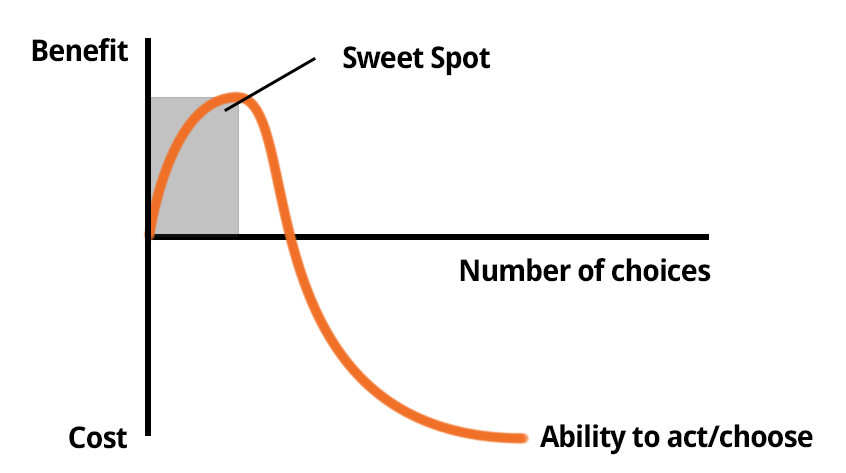
The “paradox of choice” refers to the phenomenon where having many options to choose from can lead to decreased satisfaction and make it harder to make a decision.
A study of online daters in Canada tested the idea that using the apps would make dating more efficient. Instead, researchers discovered people spent far more time on the apps looking for potential mates. With hundreds of different options to filter through — age, height, interests, etc. — there was a paralysis by analysis that overwhelmed users and caused them to second guess the choices they did make.
And the people who did find lots of matches were less likely to make a lot of selections because they were less satisfied from outsized expectations. With so many profiles to choose from, people tend to focus on the most superficial traits, meaning they were less committed to the people they were matched up with. That’s why so many of the relationships formed on the dating apps are short-term in nature.
_____________________________
Walking won’t solve everything. But it won’t make anything worse. That’s more than you can say for most things we do when we’re stressed, tired, or lost. You walk to get out of your head. To breathe. To let your mind drift without crashing. You don’t walk to fix the problem—you walk because you need space from it. The world doesn’t look so cruel when you’re moving through it one step at a time. You notice things. You remember you’re alive. So when in doubt—go for a walk.
______________________________
In recent years, some researchers completed a 70-year long study on happiness. They took a graduating class from Harvard, and measured every aspect of their lives. What types of jobs they got, what their politics were, how many kids they had, where they lived—even the length of their scrotums!
They were trying to find what behaviors or characteristics had the highest correlation with self-reported happiness. You know what they found out? Nothing! After 70 years, they never got to the bottom of it.
But they did find out one interesting thing—the people in the study who reported the lowest levels of happiness reported the highest levels of alcohol consumption. We don’t know what makes people happy, but we know what makes them unhappy—alcohol! I’m not talking about the occasional drink at a party—I’m talking about alcohol abuse. Did you know that 10% of people consume 60% of all alcohol? Found that out recently.
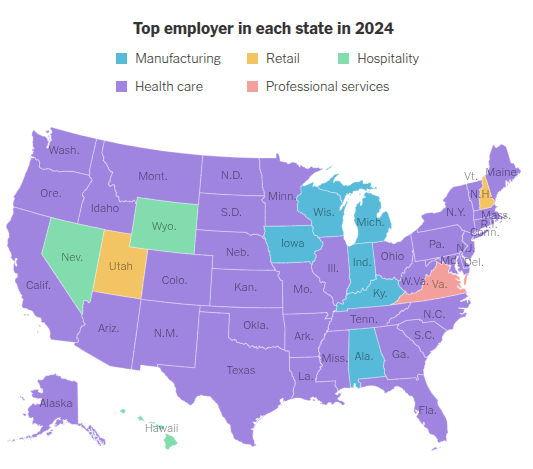
How Health Care Remade the U.S. Economy. For years, the United States labor market has been undergoing a structural transformation. As jobs in manufacturing have receded, slowly but steadily, the health care industry has more than replaced them.
___________________________
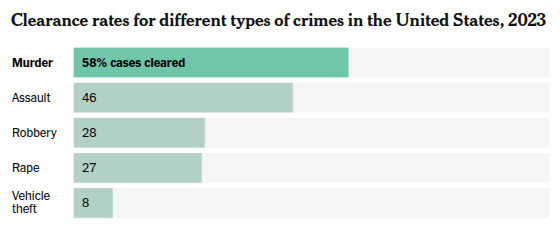
In the United States, people often get away with murder. The clearance rate — the share of cases that result in an arrest or are otherwise solved — was 58 percent in 2023, the latest year for which F.B.I. data is available. And that figure is inflated because it includes murders from previous years that police solved in 2023.
In a recent interview, Dwarkesh asked legendary bio-researcher George Church for the most under-hyped bio-technologies. His answer was both surprising and compelling:
What I would say is genetic counseling is underhyped.
What Church means is that gene editing is sexy but for rare diseases carrier screening is cheaper and more effective. In other words, collect data on the genes of two people and let them know if their progeny would have a high chance of having a genetic disease. Depending on when the information is made known, the prospective parents can either date someone else or take extra precautions. Genetic testing now costs on the order of a hundred dollars or less so the technology is cheap. Moreover, it’s proven.
The winner? Hot water immersion. Among young, healthy adults, soaking in hot water triggered the strongest responses across the board, helping the body regulate temperature, boost circulation, and even enhance the immune system more effectively than either sauna style.
____________________________
Recent good news on the cancer front is everywhere, if you know where to look. In June 2025, a French study compared data from all patients diagnosed with lung cancer in public hospitals in France in 2020 with data from similar studies performed in 2000 and 2010. Researchers found that the three-year survival rate for lung adenocarcinoma rose from about 16 percent in 2000 to about 39 percent in 2020, thanks to both earlier diagnosis and better targeted treatment. That means lung cancer survival rates have more than doubled in this century alone.
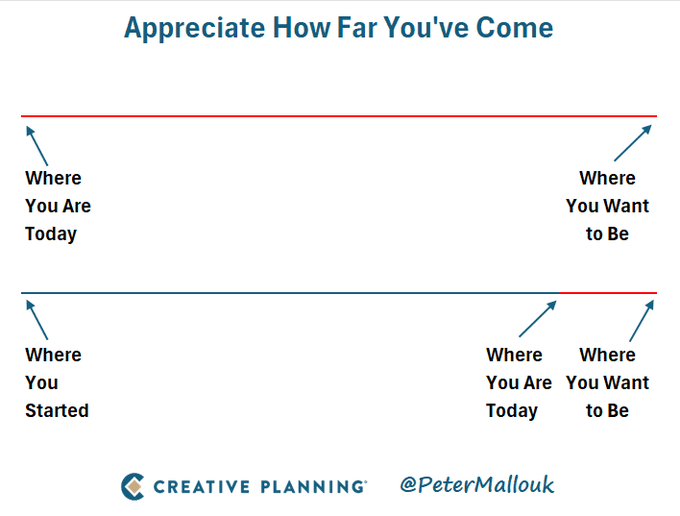
_____________________________ All of us are really good at measuring the gap between where we are and where we want to be, but make sure to pause occasionally and appreciate how far you’ve come.
The “disease of more” was a phrase coined by National Basketball Association (NBA) coach Pat Riley to describe how, following a successful season, players can become entitled and want more of everything, including money, playing time, and media attention, which starts the onset of the team’s demise.
Needless to say, it’s not just NBA players that are affected by wanting more. Everyone wants more of everything, more so than ever before. Never in human history has there been such an overwhelming abundance of food, clothing, and material goods. Beyond necessities, consumer goods of all kinds—electronics, furniture, and household items are more accessible and affordable than ever, filling stores and warehouses to the brim.
In addition to the explosion of physical goods, the world now overflows with the non-physical. The digital age has brought an endless supply of information, entertainment and convenience.
Suppose you invented an incredible new passenger plane that reduced aviation fuel consumption by 50%, and every airliner worldwide adopted your aircraft. In that scenario, it’s a natural assumption to think that aviation fuel across the globe would reduce dramatically and be good for the environment. However, the opposite is true, and fuel consumption would increase because flying has become more efficient, which means more flights, lower prices and more demand for flying. This is known as the Jevons paradox.
Instead of digital communication making our lives easier with how we communicate with friends and family in a similar way to the workplace, the reduction of friction has made us do more of it than ever before to the point where it has become all-consuming. As things become easier — we just do more of it, and in spades. It’s been an evolution of deliberate and reflective communication to text speak, forwarding cat videos and memes.
News has become like a drug. We hear what is going on instantly all of the time. It becomes impossible to avoid. Every hour on the hour, the radio stations give us our fix. Social media was originally meant for discovering what your friends and family were doing, and now it’s just another news outlet keeping us transfixed.
In a roundabout way, we all fall into the chronic busyness category. Even if we’re not running around with packed diaries and overflowing work schedules, we’re all swamped with communication, news, things to buy, pings, breaking news alerts, and vibrations. We’re overloading our nervous system, which means we don’t have time to think, reflect, and consider. Being bored is invaluable thinking time to ponder what to do or change about your life.
I love the title of a book by a financial market analyst named Walter Deemer: “When the Time Comes to Buy, You Won’t Want To.” The negative developments that make for the greatest price declines are terrifying, and they discourage buying. But, when unfavorable developments are raining down, that’s often the best time to step up.
I think the thing that doesn’t get talked about is that no one wants to admit they’re a short-term thinker. We fool ourselves into believing we’re committed to something for the long haul, but we’ve been trained since childhood to be tactical, to chase the short-term win, to have a short attention span.
We emphasize who just scored a goal in soccer instead of asking, Does this kid have perseverance? Do they have good sportsmanship? Those qualities are much more useful for who they will become. But instead, we reward the kid who cheated or played dirty to score a goal. And that sticks with us.
I don’t judge people based on job interviews. That’s a false proxy — unless I’m hiring a talk show host, being good at a job interview doesn’t matter. Shielding ourselves from false proxies is really hard. Some people just can’t do it. They need immediate feedback, they need to know what’s happening right now.
__________________________
Despite the existence of an arsenal of medications that target the neurotransmitters in the brain thought to be responsible for mood disorders, about 30% of individuals with major depressive disorder remain treatment-resistant. This points to other possible factors that may contribute to the condition.
Research to date has implicated impaired energy metabolism as a potential culprit, as the brain requires enormous amounts of energy to function normally. This, in turn, would suggest that interventions known to boost cellular energy production might offer some relief for those suffering from depression, and attention has turned to one such supplement in particular: creatine. Well known for its role in muscular energetics, might creatine have additional benefits in the treatment of depression?
America Has Never Been Wealthier. Why Doesn’t Feel That Way? A 10 percent boost to the middle and especially higher incomes is money that feels real, like you can do something with it. For someone making $100,000, that means a $10,000 raise. But a 10 percent increase at the bottom, perhaps to an hourly wage of $16.50 from $15, means you’re still living hand-to-mouth. If we define someone as living paycheck to paycheck if they either say they do not have three months of emergency savings or say they cannot afford a $2,000 emergency expense, then 59 percent of American adults are “living paycheck to paycheck.
















 Tuna Thoughts