Loneliness as we think about it today is a new phenomenon. In the past, people often talked about being alone, but there were lots of benefits to it : spiritual connection, getting to know yourself, emotion regulation. For most of human history, there was a sense that you were never truly alone; God was around, or you were one with nature. Our modern notion of loneliness is a 19th century concept that emerged as culture became more secular and more individualist.
In Robinson Crusoe, from the early 1800s, being stranded was a moment of spiritual enlightenment, a chance to find yourself. In Cast Away with Tom Hanks, the whole point is that Hanks went crazy because he had no one to talk to. There’s a real difference in what we think alone time does.
Psychologists have started asking whether our construal of loneliness is actually creating the feelings associated with it, and people talking about the loneliness crisis could be making them more lonely. Studies have been run where some people read a typical news article about the loneliness crisis and others read about the benefits of solitude. That simple intervention changes how people experience being alone. Your perception of how bad it is to be alone is making loneliness worse when you actually find yourself alone.
Some people’s deepest moments of loneliness can be at a party where they felt disconnected, physically surrounded by people but experiencing real loneliness. So being physically alone or with other people doesn’t map cleanly onto whether you feel connected. But how we think about it matters enormously. If you’re excited to be alone, if you frame it as solitude rather than aloneness, research shows even those linguistic choices make a difference.

_____________________________
Two years ago, it was clear that in a direct confrontation, the U.S. military would walk all over Russia’s clumsy, outdated post-Soviet army. Now, the reverse is probably true; the Ukraine War has forced the Russian army to learn how to fight with drones, while America is still mostly inexperienced with the new kind of warfare. Russia may not be quite as good at drone war as the Ukrainians, but the U.S. has so far made only incremental changes to how it fights. If the U.S. were to fight Russia today, it would be in for a rude surprise.
Of course, the same is true of China. Its military, like America’s, is still focused mainly on expensive high-performance platforms — aircraft carriers, hypersonic missiles, submarines, and so on. But there’s one big difference between China and the U.S. here — China’s peerless industrial base would give it the ability to construct an overwhelming drone-based force very quickly, while America’s withered industrial base would make it impossible to adapt in time.
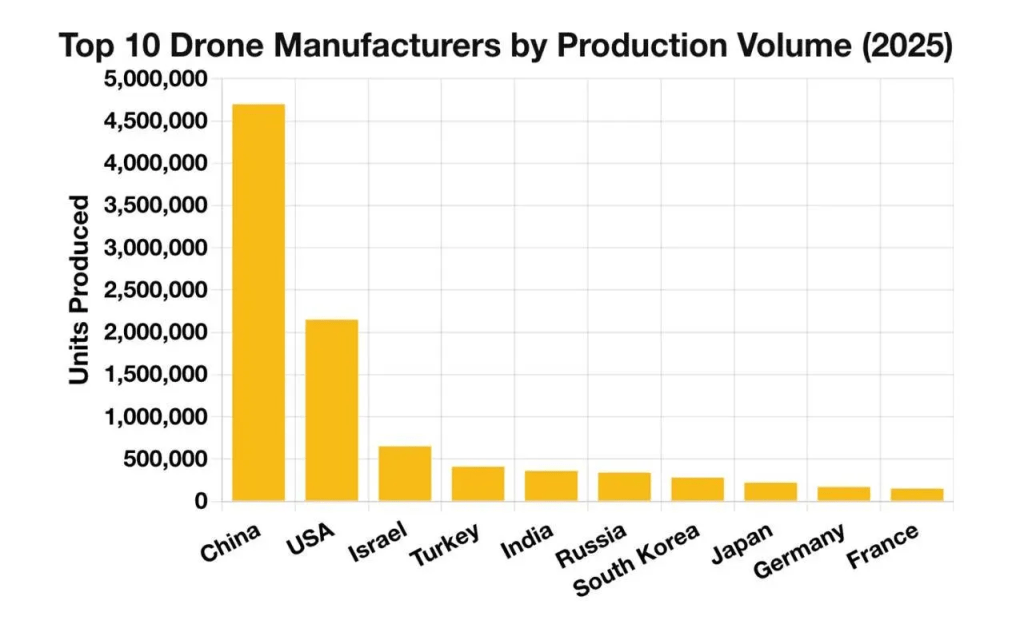
Interestingly, the U.S. is still #2 here — albeit a distant second. But worryingly, the U.S.’ traditional allies — Germany, Japan, France, Korea, etc. — make very few drones at all.
Even if they want to, the U.S. and its allies will have an incredibly hard time scaling up indigenous drone production. The reason is that drones are built using a set of technologies that the U.S. and its allies have mostly decided to forfeit to China. Drones use lithium-ion batteries and rare earth electric motors, both of which are almost entirely manufactured in China.
China is now capable of manufacturing a drone armada that can easily outmatch that of every other country on the planet combined, if it wants to. And except for Ukraine, Russia is now the only country on Earth that has first-hand experience of how to fight a modern drone war.
_____________________________
If you want to find the smartest person in the room, find the nicest person in the room.
The smartest person in the room is probably fighting back against the natural tribal urge so many of us have to compete, suppress, and insert ourselves above other people. It takes a lot of mental horsepower to suppress those emotions and realize that if you’re actually nice to people, you can get ahead.
The smartest people in the world know what they don’t know, or they know how little they know. They’re much more likely to say, “Hey, that idea you just talked about, maybe it’s right. I don’t know. I know how uncertain and difficult and complicated the world is.”
The smartest people know the world is not zero-sum. They know that I can get ahead and you can get ahead and we can both win. It takes much less intelligence to think every debate and every interaction is zero-sum, where there is one winner and one loser.
The luckier you are, the nicer you should be. Whether it’s finance, career, relationships, where you’re born, whatever it might be. There are elements of your life that make you lucky. One of the ways to deal with that—the sign of higher intelligence—is that the luckier you are, the nicer you should be to other people, particularly people you know were not as lucky as you were.
________________________
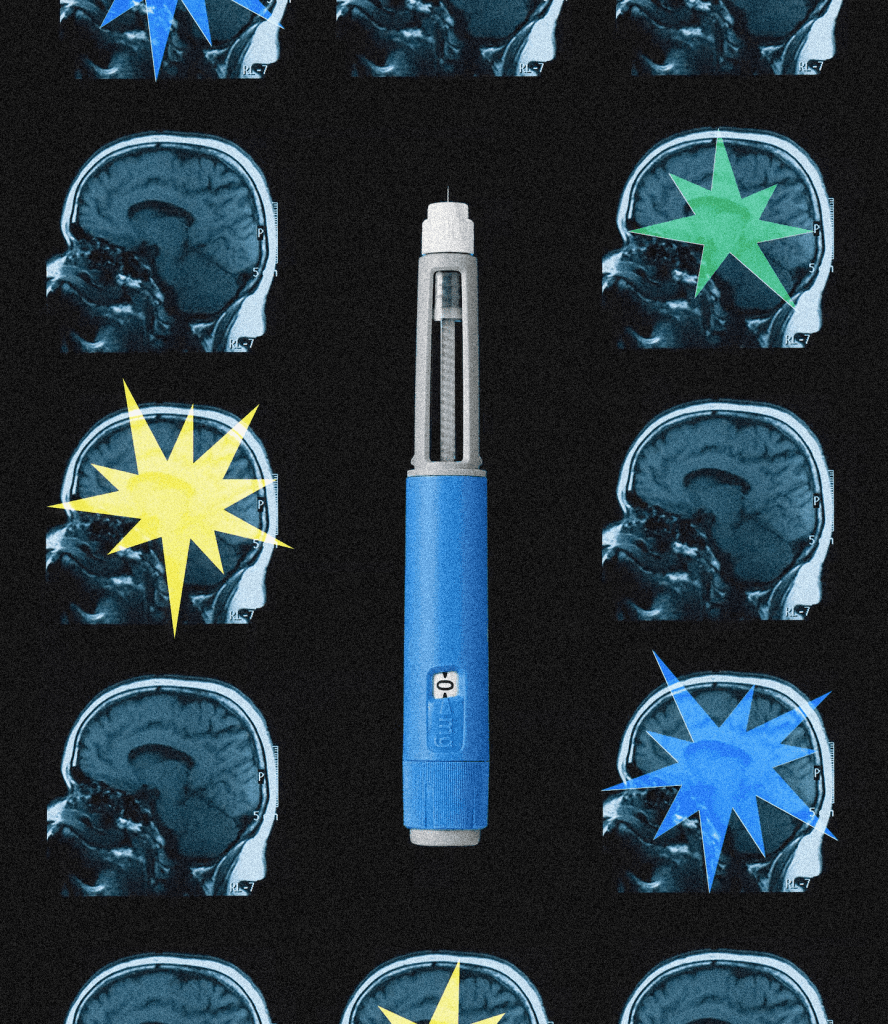
Ozempic and other GLP-1 drugs were initially understood as a metabolism breakthrough: medicines that act like hormones to control hunger, blood sugar and weight. But as researchers probe deeper into how the drugs work, early evidence suggests that GLP-1s may also be reshaping parts of the brain.
Tens of millions of people are now taking the medications worldwide, turning what began as an obesity and diabetes treatment into what could bemodern medicine’s largest unplanned neuroscience experiments.
Some users have reported a type of brain fog and others something broader and harder to define:a strange emotional flattening. People describe less pleasure, less motivation, diminished interest in hobbies and even reduced sexual desire.
Those accounts are beginning to raise deeper questions about what, exactly, these drugs are changing. If GLP-1s alter the brain systems involved in reward, craving and motivation, researchers wonder, where is the line between quieting a person’s destructive impulses and reshaping personality itself?
______________________________
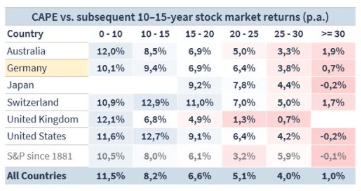
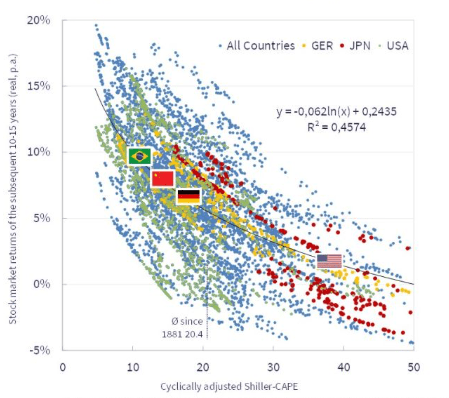
At a Shiller CAPE of 39 or above, there is no historical period since 1881 that was followed by attractive long-term real returns.
The CAPE ratio in the United States moved above 42 this week, inching closer to the all-time peak of the tech bubble high in March 2000 when it hit 44.