On every measure of life success ever studied (income, education, longevity, marital stability, mental health), four inputs from parents swamp almost everything else:
- Do you give your kid deep love and warmth?
- Do you have a loving relationship with your partner?
- Did you read to your kid when they were young?
- Do you try to be healthy?
If you can answer yes to those four, your kid is in the top 1%.
Is it possible that the right school takes your kid from the 99th percentile to the 99.8th? Maybe. But many parents treat education like it’s 30%, instead of the 0.8% it actually is.
It’s all the rage among the wealthy to get their children into elite kindergarten programs. In reality, these schools spend an inordinate amount of time screening out the kids whose parents replied “No” to the four items listed above (love, marriage, reading, health).
These kids then go on to an elite K-12 school and college, and the schools are given all the credit. It’s like hand-picking a roster of All-Star baseball players, then attributing every victory entirely to the coaches.

___________________________
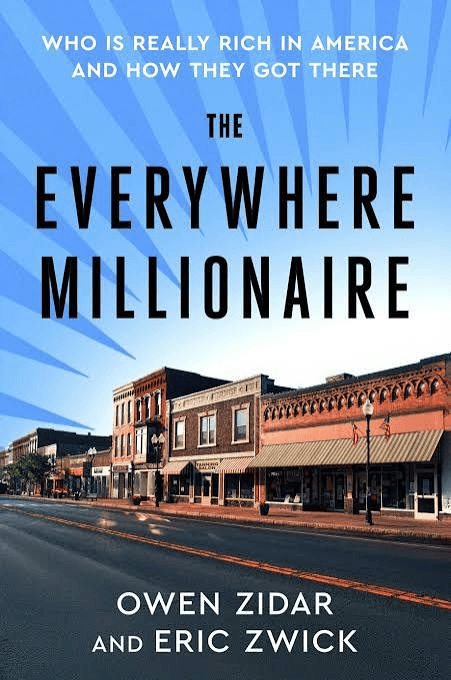
The authors of the new book, The Everywhere Millionaire, finished an enormous project for the government where they did specialized research on how much tax American business owners pay. Because of this, they were able to provide insight into the wealth of the upper class and the super-rich.
They focused on households with a net worth above $5 million (the top 4%), but the average net worth in their data is $25 million. This provided an incredible glimpse into what they call America’s “Main Street Millionaires.”
This group almost always owns their own business and uses pass-through entities (like LLCs and S-corps). The top industries are:
- Law Firm Partnerships
- Venture Capital, Private Equity, and Hedge Funds
- Independently Owned Auto Dealerships
- Professional and Technical Services and Management Consulting
- Oil and Gas Extraction
- Offices of Physicians
- Residential and Nonresidential Builders
- Real Estate Activities
- Restaurants
- Accounting and Bookkeeping
There are a few things to note about these industries. First, these businesses exist across the nation. You might need a lawyer, a car, or a consultant whether you’re in Nebraska or New York. Second, these industries aren’t dominated by a few mega-firms. There’s no Amazon or Walmart of law firms or auto dealers. Instead, each has thousands of independently owned businesses that tend to make their owners wealthy.
Who Are They?
The typical main street millionaire is older, male, married, and White. Men are twice as likely to start a business as women, and Asian and White individuals are 7x and 5x more likely than Black individuals. 90% of business owners with over $10 million are married, and their median age is 62.
80% of business owners with over $10 million (decamillionaires) have a college degree, and 40% have a postgraduate degree. They’re twice as likely to attend college and postgraduate school as the general population.
How Did They Start?
Even when gifts and other family transfers are counted, the overall inheritance rate for their businesses is only about 25%. In other words, the vast majority of these businesses (75%) were not inherited.
But not inheriting a business isn’t the same as starting from zero. Statistically, founders are more likely to come from wealthy families. People from families in the top 1% of income are 2.4 times more likely to found a firm than those from families at the 90th percentile, and 4.1 times more likely than those at the median. Yet most founders don’t come from wealthy families. 70% come from families outside the top 10% of income, and a third come from families in the bottom half. How so? There are far more people in the bottom 90% than the top 10%. So while coming from a wealthy family increases the odds of starting a business, most founders are not from the wealthiest families.
If your first job is in an industry that produces more entrepreneurs, then you’re more likely to become an entrepreneur. And if your first job is more entrepreneurial in nature (e.g., computer systems design, accounting, building equipment contracting), then you’re more likely to succeed as an entrepreneur. That’s because your first job teaches you how an industry works and can help you develop a professional network that is valuable when starting a business.
__________________________
Found naturally in more than 200 species of mushrooms, psilocybin has been used for centuries by Indigenous peoples in Mexico, and Central and South America for healing, spiritual and ceremonial purposes.
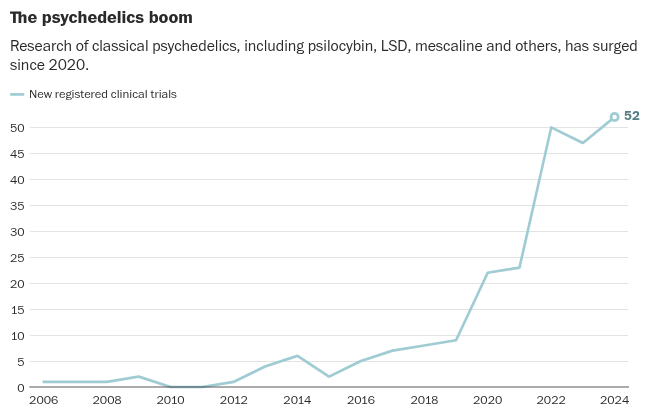
More than 300 human studies of psilocybin are in the works, according to the government database where clinical trials must be registered. Researchers are testing it for a striking range of conditions: anxiety, depression, anorexia, alcohol, cannabis, opioid and cocaine addiction, borderline personality disorder, OCD, PTSD, ALS and Parkinson’s disease.
Other psychedelics (including MDMA, LSD and ibogaine) are undergoing their own transformation into potential treatments. But many scientists have identified psilocybin, which is considered safer than many of the alternatives when used under controlled conditions, as the leading candidate for mainstream medicine.
That prospect is especially alluring because psychedelics promise something conventional psychiatric drugs often cannot: speed. Their effects can emerge within hours rather than weeks, and some studies suggest the benefits can persist long after the drug has worn off. For conditions affecting millions of Americans, that raises the possibility of a radical departure from taking a pill every day.
Scientists know that psilocybin acts on serotonin receptors involved in perception, mood and cognition. What happens next has been harder to explain.
The first wave of brain-imaging studies between 2012 and 2014 seemed to show something resembling disorder. The brain is organized into roughly 10 to 14 major networks (visual, auditory and others) that ordinarily maintain relatively stable patterns of activity.
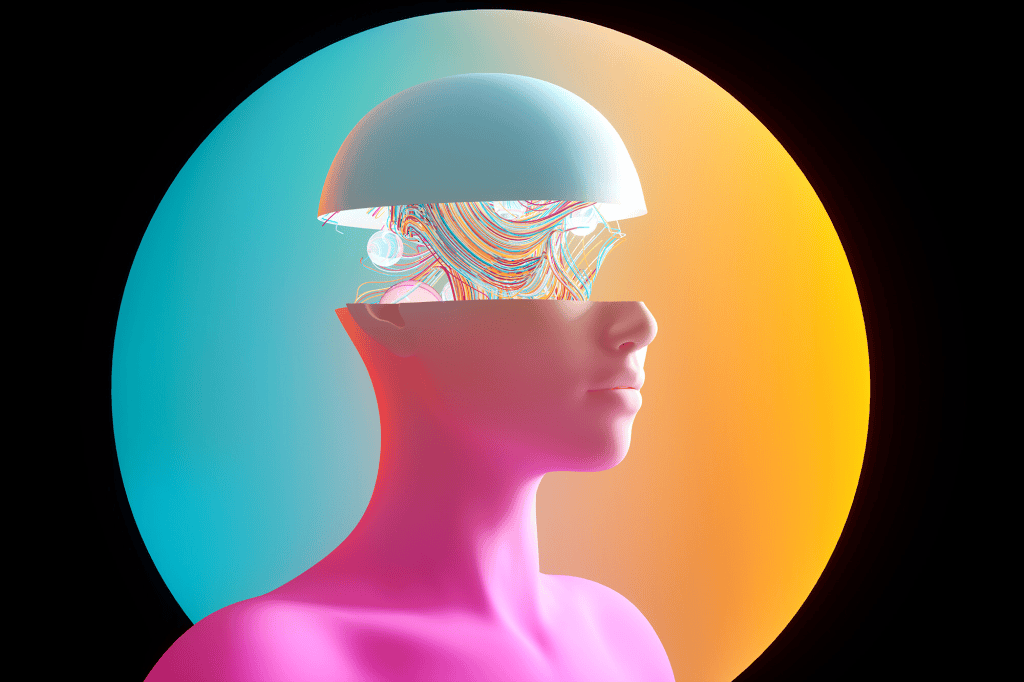
Under the influence of psilocybin, some of that organization appears to loosen. A collection of regions associated with our sense of self and internally directed thought becomes less synchronized, while parts of the brain that do not ordinarily communicate as much begin talking to one another.
Then, this summer, researchers at Monash University in Melbourne, Australia, complicated that picture. Using machine learning to analyze brain scans in greater detail, they found a previously hidden structure within the apparent disorder. As established networks loosened, other patterns of brain activity emerged.
This is important because in people suffering from mental struggles, a pattern of thinking can become so deeply worn that the mind keeps traveling down the same path, like getting stuck in a trench. Researchers say that can happen in the case of depression, for example.
Now imagine that trench inside a snow globe. Shaking the globe unsettles the entire landscape. When the snow settles, it does not necessarily fall back into exactly the same grooves.
_________________________
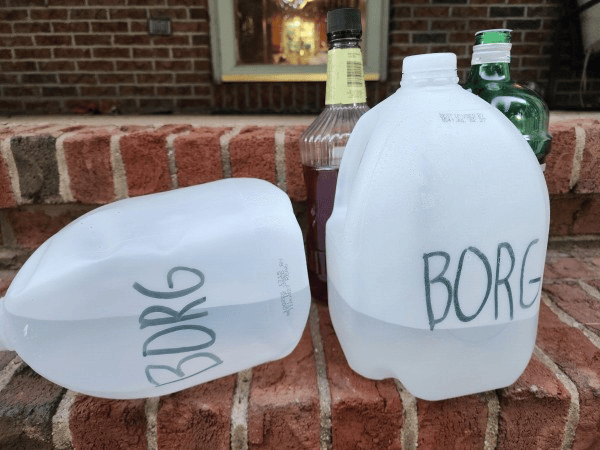
There’s newly popular college drinking trend; BORGs. Prevalent in the drinking culture at many U.S. colleges and universities since around 2020, BORGs are one-gallon plastic jugs filled with alcohol and a choice of mixings and flavorings.
Preparation for a BORG event, which is often a daytime gathering such as a tailgate or festival, typically involves decorating one’s personal BORG with a clever phrase or social-media-ready pun–for example, “It’s BORG o’clock somewhere” or “BORG to be wild.”
The gallon-sized drink can contain up to a fifth of liquor, or about 17 standard drinks. Nearly one third of respondents said they experienced a blackout from a BORG event.
BORG use was fueled on social media during the pandemic as a way to reduce virus transmission and drink contamination, but BORG use has remained popular at special events, day drinking parties, or tailgating before sporting games.
_________________________
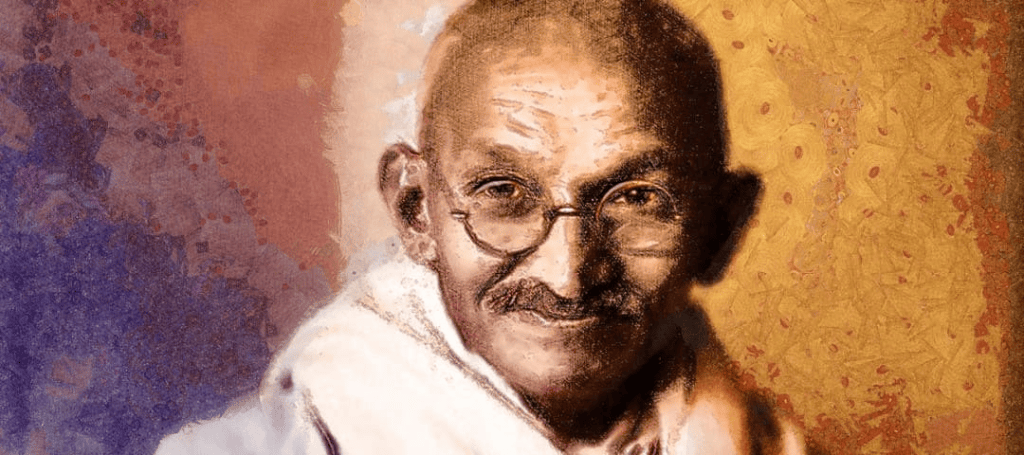
Mahatma Gandhi’s seven deadly sins:
- Wealth Without Work
- Pleasure Without Conscience
- Knowledge Without Character
- Commerce (Business) Without Morality (Ethics)
- Science Without Humanity
- Religion Without Sacrifice
- Politics Without Principle
_________________________
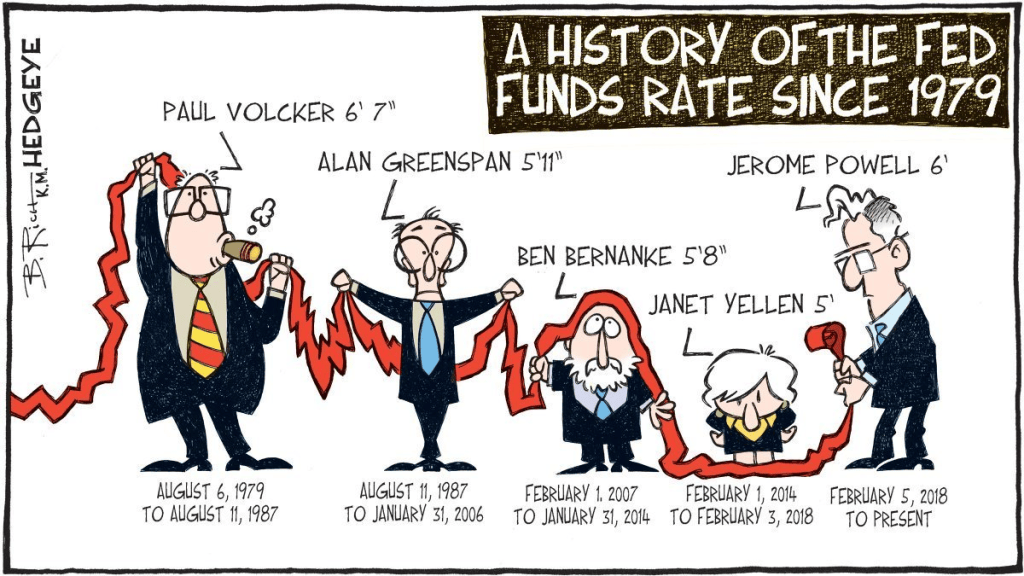
The scientific way to predict which way interest rates will move. Kevin Warsh is 6’1” which is not a good sign.