My father didn’t meditate, didn’t track his steps or explicitly “exercise,” and never once uttered the word “mindfulness.” Yet he lived to 92, dying at home after a very short bout with brain cancer, having been visited by his children and 11 grandchildren in the 10 days between diagnosis and death. And my mom is still going strong at 92. She still has her sense of humor and her political engagement but no “diseases that will kill her,” as she puts it.
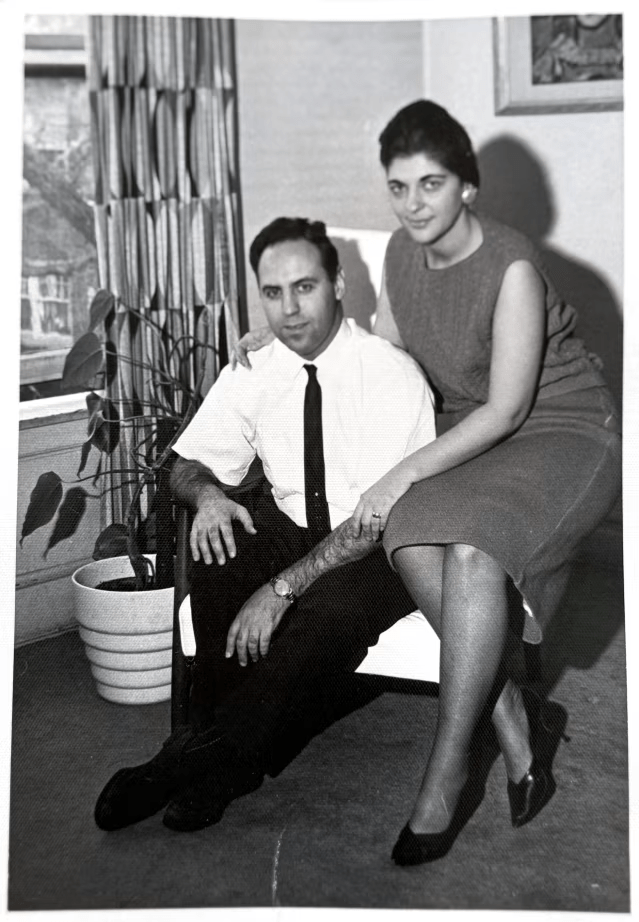
I have spent my professional life studying what makes people live healthier and longer. I have analyzed data sets on longevity the world over and reviewed hundreds of clinical studies. I have heard numerous new claims about supplements, diets and tech devices that are supposed to extend life. But nothing I have read in the scientific literature explains longevity better than the lives of my incorrigibly social parents, Benjamin and Marsha Emanuel.
My father was a pediatrician who spoke five languages and was comfortable talking to anyone and everyone. He routinely talked to strangers, offering suggestions based on his well-honed diagnostic skills.
Whenever we stopped in a restaurant he would start chatting with the people at the next table within five minutes—asking about their jobs, their families, where they were from and what they liked about the place they lived. If no one was at a nearby table, he would strike up a conversation with the waitress.
To a modern eye, this might seem overzealous. But people responded to him. They felt seen, not interrogated. There was no agenda—just my father’s insatiable curiosity about people. One time, a casual chat with another father in a park ended with an invitation for our whole family to dinner at their home.
My mom was also incurably social. Our house was constantly filled with the people she collected. She was great at making our teenage friends feel understood, with warmth and empathy. When her kids went off to college, she finished her training as a therapist and went into practice.
For years, I did not fully appreciate what I was witnessing. To me as a kid, my father’s endless chatter was an embarrassing quirk of his personality. And my mother’s welcoming of strangers into our home just seemed, well, normal. Only after decades as a physician and policymaker did I understand that my father and mother had unintentionally but eagerly adopted one of the most powerful health interventions ever discovered: human connection.
Study after study now confirms what my father and mother intuited long before science caught up. Social relationships, both the deep ones and the fleeting exchanges, reduce stress hormones, lower blood pressure, reduce inflammation, strengthen immune function and make you happier. They may even slow cellular aging.
An analysis by the Health and Retirement Study, which enrolled over 20,000 Americans older than 50, found that over the next eight years, people with the most close friends (an average of 7.8) had a 17% lower risk of depression and a 24% lower risk of dying compared with people who had fewer close friends (an average of 1.6).
Similarly, Harvard University’s Study of Adult Development, which followed people for over 80 years, found that “the people who were happiest, stayed healthiest as they grew old, and who lived the longest were the people who had the warmest connections with other people.” By contrast, social isolation is as dangerous to longevity and cognitive decline as being obese. My father didn’t need PubMed to know that being interested in people kept him not just alive but vibrant and energetic.
Years later, I came to see that impulse—to notice, to care, to connect and help—as the very definition of wellness. My father’s memorial service overflowed with friends, former patients and neighbors, each one with a story about how he’d helped them, laughed with them or simply made them feel less alone. Every Thursday, meanwhile, my mom still has lunch at the deli with “the boys”—friends she has collected over the years.
It has taken me many years to grasp that wellness is inherent in the community we inhabit. My father’s conversations with strangers weren’t just good for him but for the people he engaged with. My mother’s weekly lunch is both good for her and for all her friends. Sharing time with others is beneficial for all involved.
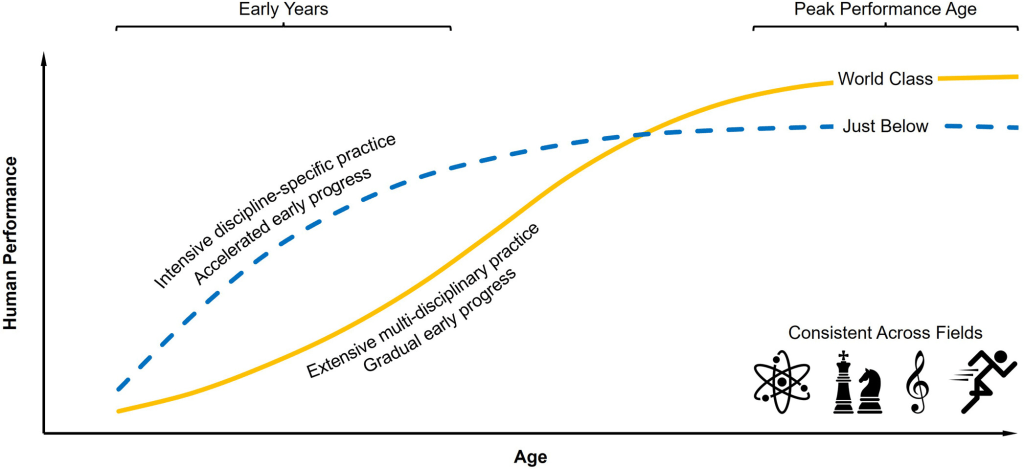
From athletes like Simone Biles and Michael Phelps to scientists like Marie Curie and Albert Einstein, identifying exceptional talent is essential in the science of innovation. But how does talent originate? Did the most talented athletes, scientists, and musicians reach peak performance relatively early or late in their career? Did they forgo mastering multiple sports, academic subjects, and musical instruments to reach world-class performance in only one?
Nearly two decades of studies from multiple independent labs suggest that a father’s gametes shuttle more than DNA: Within a sperm’s minuscule head are stowaway molecules, which enter the egg and convey information about the father’s fitness, such as diet, exercise habits and stress levels, to his offspring. These non-DNA transfers may influence genomic activity that boots up during and after fertilization, exerting some control over the embryo’s development and influencing the adult they will become.
The night before my brain surgery, my wife and I sat across from each other in wordless stillness. Hours before surgery, with death still in the room, I didn’t feel fear. I felt something quieter. Stranger. I felt connected. To my wife’s eyes. To my breath. To the weight of my feet against the floor. To the wind brushing the window. Even to our cat, oblivious, licking her paws in perfect peace.
Upstairs, in a crib painted white, our 18-month-old daughter lay sleeping. I imagined her face at 5, at 15, at 40. I hoped she would know how deeply I loved her. And in that moment — that unbearable, radiant moment — I was, for perhaps the first time ever, conscious.
Not in the neurological sense. Not in the academic or philosophical sense. But in the raw, elemental sense of being awake to the miracle and the absurdity of existence. Alive to the texture of being.
Leading up to surgery the world had never looked so alive. Every detail sharpened, sacred. Time no longer moved. It hovered. Held. The future dissolved. The past let go. All that remained was one long, luminous moment. And in that moment, I was tethered — to my wife’s hand, to the stars, to everything. I was, finally, conscious.
I considered the paradox of being most awake at the edge of unconsciousness. The strange intimacy of being stripped down to nothing: no ego, no schedule, no ambition. Just breath. Presence. And the knowledge that everything is about to change—or end.
At that moment, I was not thinking about business plans or unread emails. I was not anxious about the past. I was not hungry for the future. I was only there, suspended, waiting. And in that waiting, I was more myself than I’d ever been.
I laughed to myself in the hours before the anesthesia took hold: This is what it means to be fully human. This is what it means to be conscious.
I lived, and in the weeks following surgery, I experienced what doctors call “survivor’s euphoria.” A clinical term, woefully inadequate. It wasn’t just euphoria. It was revelation. It was a reawakening. It was a second birth.
The world opened itself to me like a wound and a gift. I smelled color. I tasted air. I watched dust motes floating in the light and felt tears rise. My daughter’s laugh shattered something inside me, and I let it. I held my wife in the dark, listening to her breath, feeling the hum of her life, and I cried because I could.
I no longer chase productivity the way I once did. I no longer confuse urgency with meaning. I try, imperfectly, to pay attention. To listen more than I speak. To feel what I feel, even when it hurts.
Denmark’s social rule of janteloven – the idea that “you’re no better than anyone else” – keeps everyone grounded. Its education system is rooted in equality, with children calling teachers by their first names and collaboration prioritised over competition. There’s a flat hierarchical structure and high taxes help redistribute wealth – not a terrible plan since more equal societies are happier and healthier.
Danes trust their neighbours, institutions and even strangers, with 74% believing “most people can be trusted”. So, babies are left to nap outside in their prams, children roam freely and people sell secondhand clothes from “trust stands” outside their homes.
The Danes are masters of the work-life balance, with a 37-hour work week as standard and OECD figures showing that the average Dane puts in only 33 hours a week. The result? Lower stress and higher productivity.
Friluftsliv, or “open-air life”, is deeply ingrained in Nordic culture and spending time in nature has been shown to reduce stress.
One of the greatest gifts from our Danish years is the habit of eating together. This is non-negotiable – TV off, phones away and everyone at the table for a home-cooked meal, proven to improve mental and physical health as well as our relationships. Thanks to a short working week, a daily family dinner is entirely possible in Denmark and tends to be eaten early, something our metabolism and gut health apparently thank us for.
Nearly half of Danes volunteer, contributing to their communities through clubs, events and schools. If Denmark taught me anything, it’s that small acts of service build stronger communities.
The Danish art of cosines meant slowing down, switching off and sharing quality time in relaxed surroundings (accepting that the best evenings don’t involve wifi). Danes priorities daily moments of joy.
Vikings are allowed to take risks, learn from mistakes and develop independence early on. From two-year-olds dressing themselves to eight-year-olds cycling to school alone, there’s a collective confidence in giving children freedom in Denmark, which helps them flourish. A phrase beloved by my children’s teachers was that adults should “sit on their hands” – ie do nothing and let children work things out for themselves.
Danish minimalism goes beyond design; it’s a way of life. From clothes to home decor, the approach taught me the beauty of having fewer things, of higher quality.
The country ranking itself stems from the the “life evaluation” metric: “Please imagine a ladder with steps numbered from 0 at the bottom to 10 at the top. The top of the ladder represents the best possible life for you and the bottom of the ladder represents the worst possible life for you. On which step of the ladder would you say you personally feel you stand at this time?”
Considering this, the most prominent factor that determines whether citizens are “happy” might have more to do with how satisfied they are with their immediate surroundings, rather than how they’re feeling.
While the World Happiness Report takes into account life satisfaction, it lacks one crucial joy-determining factor: emotions. The 2024 Gallup Global Emotions Report focused on respondents’ positive and negative emotion; including how often people laugh, smile, or learn something new, as well as how often they feel pain, stress, or anger (the “Positive Emotions Ranking” column below):
Finland ranked in 25th place overall for feeling positive emotions specifically, and until recently, had one of the highest suicide rates in the world. What the happiness ranking could speak to, then, is the Finnish custom of “sisu,” or inner strength, which means people rarely complain about their problems… or, for that matter, place themselves low on the life ladder.
Another factor contributing to life satisfaction that the report highlighted was meal sharing. The growing number of people eating alone in the United States — in 2023, about 1 in 4 Americans reported eating all their meals alone the day before, up 53% from two decades prior — was said to have contributed to a decline in national well-being, as the US ranked 24th overall in the report, the lowest position it’s ever held.
_____________________________
American women have never been this resigned to staying single and they’re giving up on marriage. They are responding to major demographic shifts, including huge and growing gender gaps in economic and educational attainment, political affiliation and beliefs about what a family should look like. More women than men are attending college, buying houses and focusing on their friendships and careers over dating and marriage.
Women throughout history rarely questioned whether finding and securing a romantic partner should be a primary goal of adulthood. This seems to be changing. Over half of single women say they believe they are happier than their married counterparts. A rise in earning power and a decline in the social stigma for being single has allowed more women to be choosy. They would rather be alone than with a man who holds them back. The focus has shifted toward self-improvement, friendship and the ability to find happiness on their own.
48% of women say that being married is not too or not at all important for a fulfilling life, up from 31% in 2019. Marriage rates for both men and women are in decline, in part owing to less pressure to pair off and higher expectations for a would-be match. Dating apps make people feel like there might always be a better option. They view looking for a marriage partner the same way that you view looking for a job candidate.
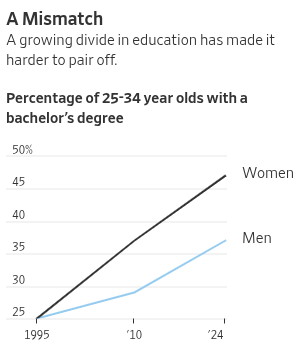
The challenges of finding a romantic partner have been made more complicated by a growing divide in education and career prospects between men and women. 47% of American women ages 25-34 have a bachelor’s degree, compared with 37% of men. A bachelor’s degree increases net lifetime earnings by an estimated $1 million. Women are doing comparatively well when it comes to education and their early years in the labor force, and men are doing comparatively badly. That creates a mismatch, because people prefer to date in terms of comparable education or income.
Men’s economic struggles seem to be having the biggest effect on women without a college degree, whose marriage rates by age 45 have plummeted from 79% to 52% for those born between 1930 and 1980. Young men without a degree are struggling so much as a group that there simply aren’t enough with steady jobs and earnings for non-college women to date.
What were some of your most popular articles at the Journal? “Anything with a list, anything that mentioned my kids, and anything on the topic of money and happiness. “
What’s changed since those days? “Go back to the late 1980s and through the 1990s, all the focus was on investing, how to build a portfolio, what’s the expected return, yada yada yada. Since then, people have realized that there’s a limit to how much we can optimize a portfolio. Instead, there’s a lot of focus on other issues, like helping people buy the right-size home, making sure they have all their estate-planning documents, making sure they have the right insurance policies, making sure they claim Social Security at the right age, and so on. There has been more focus on the psychological aspects of managing money. And finally, there’s now a focus on helping people figure out what money means to them.”
Do you remember your final article at the Journal? “When I left in 2008, I wrote a piece about three ways that money can help happiness. One, money can give you a sense of financial security. Two, it can allow you to spend your days doing what you love. And three, it can allow you to have special times with friends and family. I believe that those are the three ingredients for not only a happy financial life, but also a happy life—period. It’s certainly the three things that I’m focused on.”
Has your thinking changed about anything since your diagnosis? “In the last couple of years, I’ve become better about giving money to my kids and funding my grandchildren’s 529 plans. In retrospect, I think I should have started earlier and could have been more generous, because it’s clear to me that I’d never have been able to spend all this money I’ve accumulated, even if I did live to a ripe old age. If you’re pretty sure that your kids have good financial habits, and you’re not going to undermine their ambitions or send them on some wayward path, by all means give them money now. Why have them live with unnecessary financial anxiety? Why not make them feel a little more financially secure? I really believe that’s one of the greatest gifts that we can give to family members, this sense of financial security.”
In your writing, you’ve shared that you aren’t feeling negative emotions about your diagnosis. In fact, you wrote that your first reaction was, “I’m okay with this.” Can you say more about that? “I feel like I’ve been very fortunate. It’s not that bad things haven’t happened in my life. They have. But I’ve been able to spend my life doing what I love. I have a close-knit family, and I’ve largely been free of financial worry. All in all, I feel like I’ve managed to get a whole lot out of my life.”
________________________________
Michael Easter (author of The Comfort Crisis and Scarcity Brain) interviewed Brett McKay who has an extremely popular podcast called the “Art Of Manliness” that I’ve been listening to for many years. Brett is one of the best at interviewing authors about their new books, helping me decide if I want to read them. It was strange to hear someone asking Brett the questions.Some random thoughts from their conversation.
What’s the dumbest health trend you’ve noticed recently? Blue-light-blocking glasses. They’re useless—the research doesn’t support significant circadian disruption from blue light.
You’ve experimented extensively with health trends. What’s something you’ve changed your mind about? Low-carb diets. I got into low-carb in early days. And then I learned, wait, there’s nothing magic about low carb. You just eat fewer calories typically when you’re on low carb. But you can do that with any diet.
You’ve talked to a ton of parenting experts on podcasts. What’s your best parenting advice? Parent like a video game. In video games, if you mess up you just start from the beginning—it’s not a big deal. So if your kid makes a mistake, treat it like restarting a game—tell them not to do that again and move on. No big deal. Also, something I appreciate more and more is that kids are their own people. You can guide them, create a supportive environment, but you can’t control their personalities or outcomes. You see families where all the kids are parented the same way, but they all end up different. Why’s that? Because people are different. So do your best, love them, and let them be themselves.
The U.S. is making progress against one of its most devastating public-health threats: drug overdoses.The decline is at least in part due to a drop in opioid use. A 2022 report found that opioid-use disorder increased from 2010 to 2014, then stabilized and slightly declined each year thereafter. Another reason is because the most vulnerable people have died and others have adapted. Many fentanyl users are now smoking the drug instead of injecting it, and some research shows that smoking fentanyl could come with lower risk of overdose, infections and other complications.
_________________________________
Market timing is hard because, even if you get out at an opportune time, you have to nail the landing and get back in. Few people can do both. In fact, getting the first leg of the parlay right often makes it even harder to get back in because you become so attached to the loving arms of cash. The psychology of market timing becomes even more challenging when you add politics to the mix.
______________________________
A popular investment strategy being sold to investors today is the idea of getting limited upside annually on your stocks in exchange for limiting the downside. AQR discussed these in their recent article: Rebuffed: A Closer Look At Options-Based Strategies.
At the heart of the strategies examined are put options. The way puts work is straightforward: the investor pays some amount (the option premium) to protect themselves from a specific decline in a specific asset’s price over a specific period. There’s one wrinkle though: when it comes to buying puts, the price of admission is generally higher than the benefit.
let’s say an investor is less concerned with long-term returns, and more concerned with shorter-term drawdowns. Surely options-based strategies should at least help there, since a put option is literally tailor-made for this task.
Nope.
Puts are designed for very specific outcomes – they protect against a specific price level for a specific length of time. If the duration of the draw-down doesn’t align with the maturity of the option, the hoped-for protection won’t be there. This is why a strategy that buys 5% out-of-the-money puts every month can have a drawdown that’s worse than 5% – markets might fall by 4% in one month, and by another 4% the next so the options you paid for never pay you. And this is a reason 81% of the funds in Exhibit 3 weren’t able to deliver on the seemingly easy goal of downside protection (again, compared to an applicable mix of equities plus T-bills).



 Tuna Thoughts