Temporal Chauvinism, Attractiveness & Germs

It’s difficult to escape “temporal chauvinism,” which is the feeling that the time we’re living in now is the most significant or terrifying one ever, simply because it’s the one we happen to be around to experience.

Everything about our situation as humans pushes us to overrate the importance of our own era. Apart from anything else, present-day unknowns feel the scariest, because all previous unknowns eventually resolved themselves into knowns (every prior prediction of the end of the world turned out to be wrong) while future ones haven’t occurred to us yet. 

It is very, very, very, very unlikely that the literal apocalypse is coming anytime soon. We’re almost certainly not living at the end of human civilization. Frankly, it’s pretty unlikely we’re even on the cusp of unprecedented levels of disruptive change. The truth is that we’re probably living through times that future historians will think of as broadly normal.

The point is not that life is safer and more secure than the heralds of the apocalypse would have us believe. It’s the opposite: that human existence is intrinsically unsafe and insecure, all the time. Anything could happen at any moment, the future is unknowable, one day you’ll die, and some people end up having vastly more traumatic encounters with these realities than others.

Yet there’s a stunning bit of good news hiding in all this, because if radical insecurity about the future is just how life is, then by definition, we’re already coping with it. Look back at your life to date, and you might even conclude that, so far, you’re handling it all rather brilliantly.

________________________

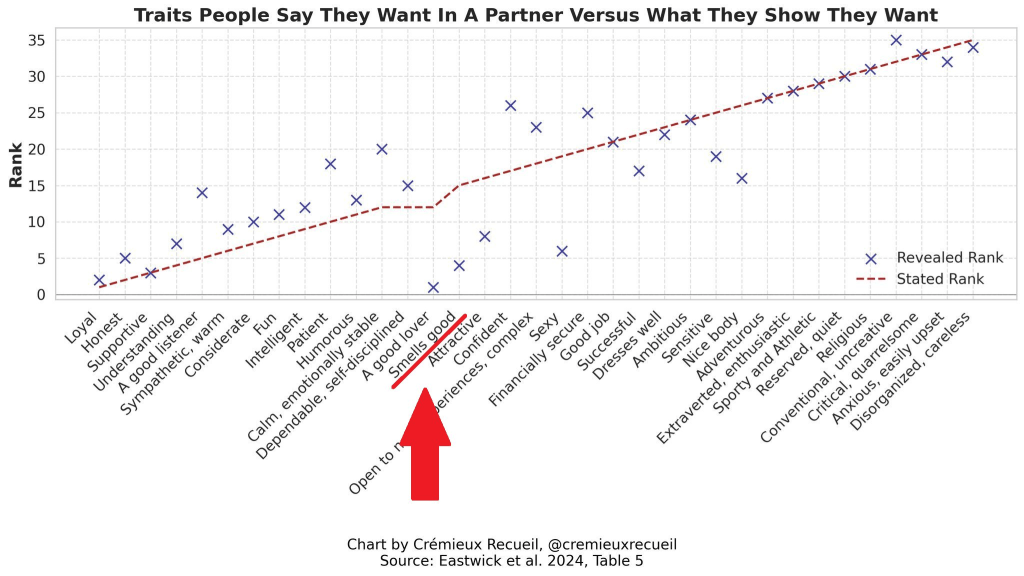
The graph below shows what people say they want or what is important to them in a partner (red line). The “X” marks show how much each trait correlated with people’s actual romantic evaluations or how important it was in real life.

The biggest discrepancies were in (1) being attractive, (2) being a good lover, (3) being sexy, (4) having a nice body, and (5) smelling good. Perhaps people are simpler than we realized once we look beyond surveys.

The discrepancies run the other way too. Being (1) a good listener, (2) patient, and (3) calm and emotionally stable were all overrated in stated preferences.

It’s a little confusing that the red line rises from left to right, suggesting increasing importance, but since these are rankings, a higher number actually means less important (1 = most important).
_________________________

Research has consistently shown that younger siblings fare worse than firstborns on lifetime earnings, educational achievement, mental health and, for women, teen pregnancy. The later the birth order, the worse the stats get. Why?

(1) Less Quality Time with Parents

First-born children average 20 to 30 more quality minutes each day with parents compared with a second-born child of the same age. The deficit amounts to about 3,000 fewer hours spent on reading, playing, talking or other activities with at least one parent for younger siblings. That’s roughly comparable to more than a year of schooling between the ages of 4 and 13.

The gap only widens as more kids enter the picture. That means the youngest siblings get far less quality time overall because whatever is available gets split among more children.

(2) Germs

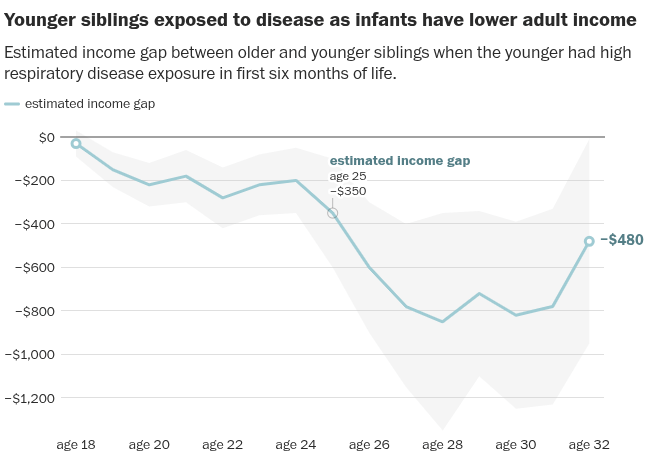
Studies find that the tiniest organisms have a profound impact on a child’s future. Exposure to respiratory viruses before a baby’s first birthday, when immune systems are immature and before most childhood vaccinations, consistently predict reduced earnings, education and health decades later.

Researchers estimate that half or more of the gap in life outcomes between older and younger siblings can be attributed to pathogens inadvertently brought home by older siblings.

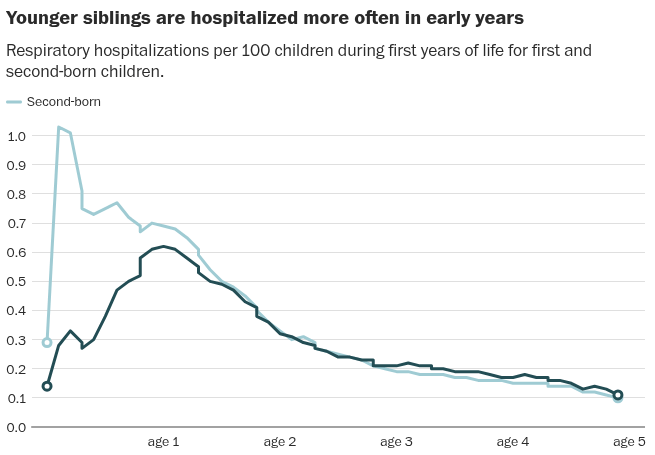
The disparity is stark: Younger siblings are two to three times more likely to be hospitalized for acute respiratory conditions than their older siblings during their first year of life. After that, when younger children generally begin attending group child care, the hospitalization gap disappears. Older siblings, the data suggested, bring home viruses to vulnerable infants with no other significant sources of exposure.

To show that higher disease exposure causes harm later in life required more work for researchers. They had to control for parental income, education and employment across municipalities with higher and lower infection rates. Yet the pattern was clear: earnings, education and mental health outcomes all declined as community disease exposure rose.
In the first months of life, roughly 85 percent of an infant’s calorie intake goes toward neural development. A serious infection can reduce how much a baby eats and divert calories away building a brain. If a child is very ill during that time, it might impact brain development by diverting biological resources to fighting an illness.
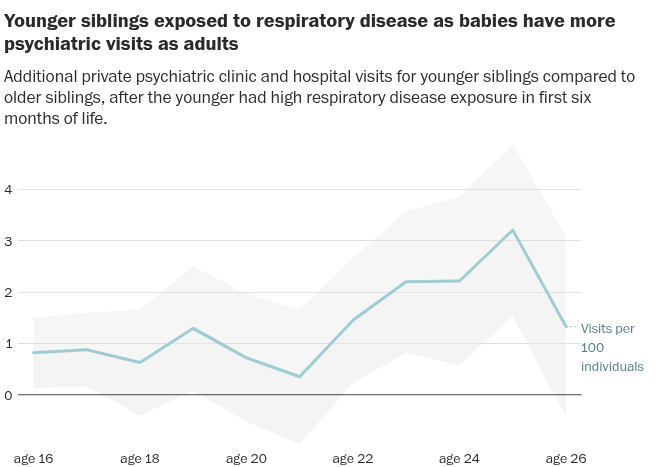
RSV was singled out as a key pathogen. It caused roughly one-third of all respiratory hospitalizations among second-born children with no protective immunity from first-year exposure against RSV hospitalization during later childhood.

____________________________
The Longevity Hack, Exceptional Adults & DNA

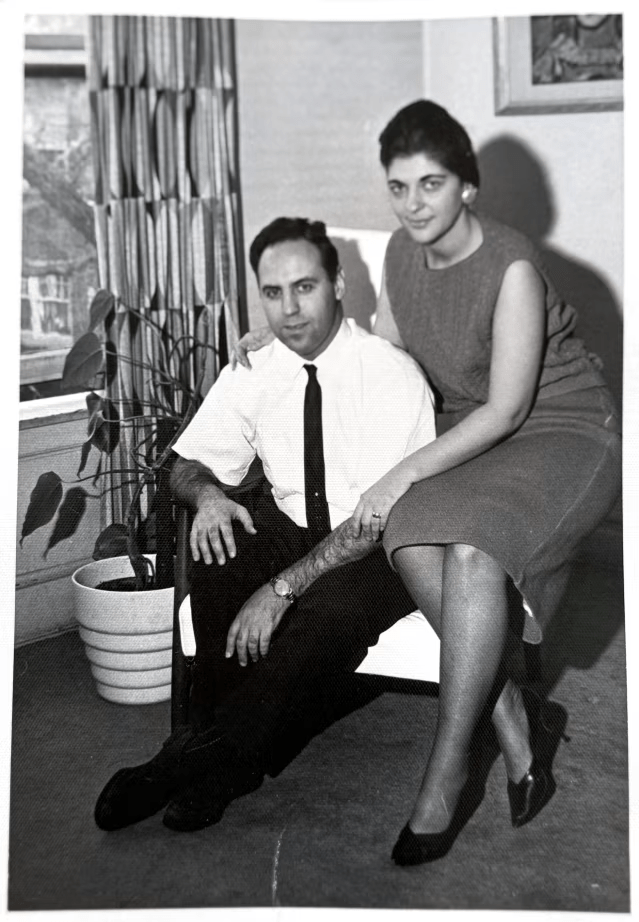
My father didn’t meditate, didn’t track his steps or explicitly “exercise,” and never once uttered the word “mindfulness.” Yet he lived to 92, dying at home after a very short bout with brain cancer, having been visited by his children and 11 grandchildren in the 10 days between diagnosis and death. And my mom is still going strong at 92. She still has her sense of humor and her political engagement but no “diseases that will kill her,” as she puts it.

I have spent my professional life studying what makes people live healthier and longer. I have analyzed data sets on longevity the world over and reviewed hundreds of clinical studies. I have heard numerous new claims about supplements, diets and tech devices that are supposed to extend life. But nothing I have read in the scientific literature explains longevity better than the lives of my incorrigibly social parents, Benjamin and Marsha Emanuel.

My father was a pediatrician who spoke five languages and was comfortable talking to anyone and everyone. He routinely talked to strangers, offering suggestions based on his well-honed diagnostic skills.

Whenever we stopped in a restaurant he would start chatting with the people at the next table within five minutes—asking about their jobs, their families, where they were from and what they liked about the place they lived. If no one was at a nearby table, he would strike up a conversation with the waitress.

To a modern eye, this might seem overzealous. But people responded to him. They felt seen, not interrogated. There was no agenda—just my father’s insatiable curiosity about people. One time, a casual chat with another father in a park ended with an invitation for our whole family to dinner at their home.

My mom was also incurably social. Our house was constantly filled with the people she collected. She was great at making our teenage friends feel understood, with warmth and empathy. When her kids went off to college, she finished her training as a therapist and went into practice.

For years, I did not fully appreciate what I was witnessing. To me as a kid, my father’s endless chatter was an embarrassing quirk of his personality. And my mother’s welcoming of strangers into our home just seemed, well, normal. Only after decades as a physician and policymaker did I understand that my father and mother had unintentionally but eagerly adopted one of the most powerful health interventions ever discovered: human connection.

Study after study now confirms what my father and mother intuited long before science caught up. Social relationships, both the deep ones and the fleeting exchanges, reduce stress hormones, lower blood pressure, reduce inflammation, strengthen immune function and make you happier. They may even slow cellular aging.

An analysis by the Health and Retirement Study, which enrolled over 20,000 Americans older than 50, found that over the next eight years, people with the most close friends (an average of 7.8) had a 17% lower risk of depression and a 24% lower risk of dying compared with people who had fewer close friends (an average of 1.6).

Similarly, Harvard University’s Study of Adult Development, which followed people for over 80 years, found that “the people who were happiest, stayed healthiest as they grew old, and who lived the longest were the people who had the warmest connections with other people.” By contrast, social isolation is as dangerous to longevity and cognitive decline as being obese. My father didn’t need PubMed to know that being interested in people kept him not just alive but vibrant and energetic.

Years later, I came to see that impulse—to notice, to care, to connect and help—as the very definition of wellness. My father’s memorial service overflowed with friends, former patients and neighbors, each one with a story about how he’d helped them, laughed with them or simply made them feel less alone. Every Thursday, meanwhile, my mom still has lunch at the deli with “the boys”—friends she has collected over the years.

It has taken me many years to grasp that wellness is inherent in the community we inhabit. My father’s conversations with strangers weren’t just good for him but for the people he engaged with. My mother’s weekly lunch is both good for her and for all her friends. Sharing time with others is beneficial for all involved.

If there is a “longevity hack,” that is it. Forget the cold plunges, red lights and fad-driven supplements. Call a friend. Chat with your neighbor. Ask the Uber driver or grocery checkout clerk how their day is going or how their holidays were. When I think of my father and mother now, I realize that health isn’t something you achieve in isolation. It is something we all create together.

_____________________________

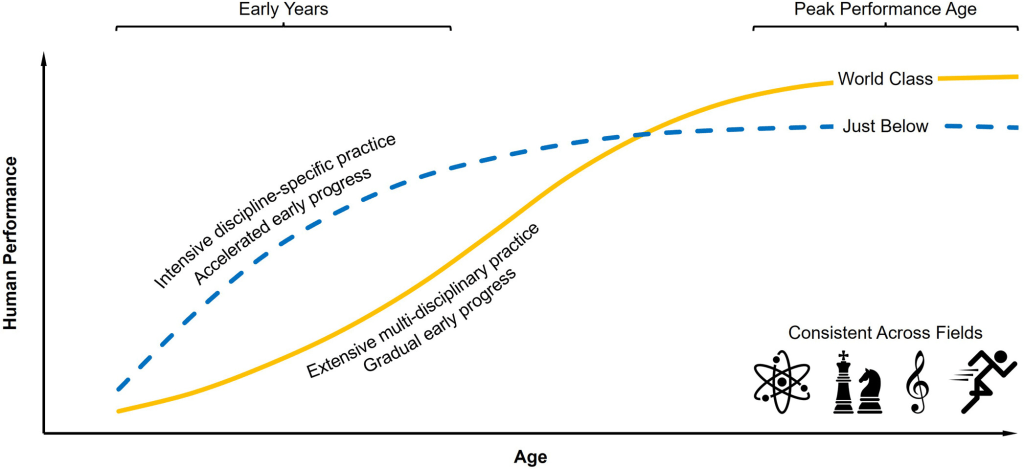
From athletes like Simone Biles and Michael Phelps to scientists like Marie Curie and Albert Einstein, identifying exceptional talent is essential in the science of innovation. But how does talent originate? Did the most talented athletes, scientists, and musicians reach peak performance relatively early or late in their career? Did they forgo mastering multiple sports, academic subjects, and musical instruments to reach world-class performance in only one?

An analytical review looked at published research in science, music, chess, and sports and found two patterns: Exceptional young performers reached their peak quickly but narrowly mastered only one interest (e.g., one sport). By contrast, exceptional adults reached peak performance gradually with broader, multidisciplinary practice.

______________________________

Nearly two decades of studies from multiple independent labs suggest that a father’s gametes shuttle more than DNA: Within a sperm’s minuscule head are stowaway molecules, which enter the egg and convey information about the father’s fitness, such as diet, exercise habits and stress levels, to his offspring. These non-DNA transfers may influence genomic activity that boots up during and after fertilization, exerting some control over the embryo’s development and influencing the adult they will become.

The findings could end up changing the way we think about heredity. They suggest that what we do in this life affects the next generation. What a father eats, drinks, inhales, is stressed by or otherwise experiences in the weeks and months before he conceives a child might be encoded in molecules, packaged into his sperm cells and transmitted to his future kid.

___________________________

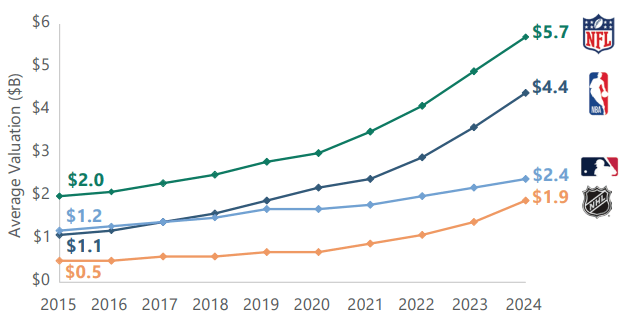
The average team valuation by league (in billions):

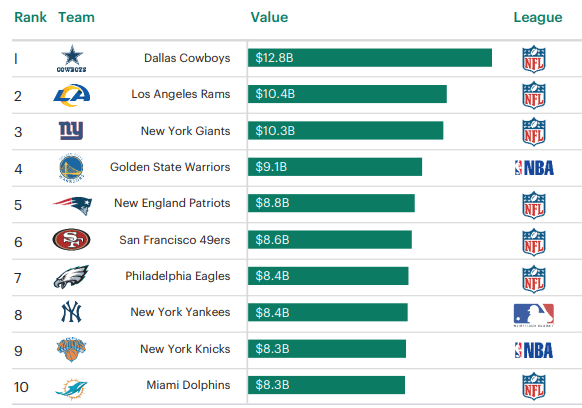
The top 10 most valuable pro sports teams in the U.S.:

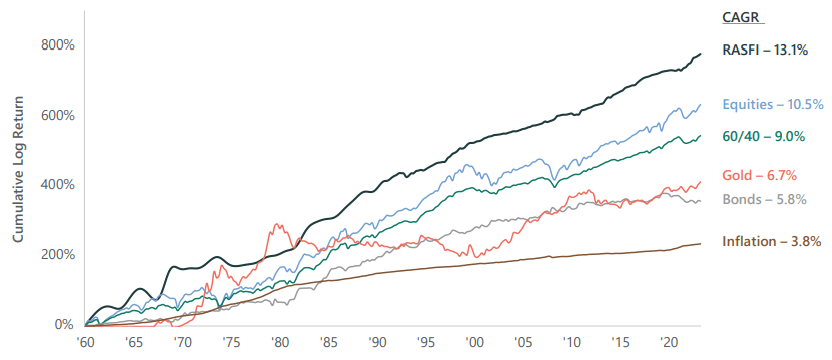
North American sports assets (RASFI) returns vs. other asset classes, and why private credit wants to get more involved in the industry.

Consciousness, Being Present & The Fragile Gift Of Life

The night before my brain surgery, my wife and I sat across from each other in wordless stillness. Hours before surgery, with death still in the room, I didn’t feel fear. I felt something quieter. Stranger. I felt connected. To my wife’s eyes. To my breath. To the weight of my feet against the floor. To the wind brushing the window. Even to our cat, oblivious, licking her paws in perfect peace.

Upstairs, in a crib painted white, our 18-month-old daughter lay sleeping. I imagined her face at 5, at 15, at 40. I hoped she would know how deeply I loved her. And in that moment — that unbearable, radiant moment — I was, for perhaps the first time ever, conscious.

Not in the neurological sense. Not in the academic or philosophical sense. But in the raw, elemental sense of being awake to the miracle and the absurdity of existence. Alive to the texture of being. 

Leading up to surgery the world had never looked so alive. Every detail sharpened, sacred. Time no longer moved. It hovered. Held. The future dissolved. The past let go. All that remained was one long, luminous moment. And in that moment, I was tethered — to my wife’s hand, to the stars, to everything. I was, finally, conscious.

I considered the paradox of being most awake at the edge of unconsciousness. The strange intimacy of being stripped down to nothing: no ego, no schedule, no ambition.  Just breath. Presence. And the knowledge that everything is about to change—or end. 

At that moment, I was not thinking about business plans or unread emails. I was not anxious about the past. I was not hungry for the future. I was only there, suspended, waiting. And in that waiting, I was more myself than I’d ever been.

I laughed to myself in the hours before the anesthesia took hold: This is what it means to be fully human. This is what it means to be conscious.

I lived, and in the weeks following surgery, I experienced what doctors call “survivor’s euphoria.” A clinical term, woefully inadequate. It wasn’t just euphoria. It was revelation. It was a reawakening. It was a second birth.

The world opened itself to me like a wound and a gift. I smelled color. I tasted air. I watched dust motes floating in the light and felt tears rise. My daughter’s laugh shattered something inside me, and I let it. I held my wife in the dark, listening to her breath, feeling the hum of her life, and I cried because I could.

I no longer chase productivity the way I once did. I no longer confuse urgency with meaning. I try, imperfectly, to pay attention. To listen more than I speak. To feel what I feel, even when it hurts.

There is a kind of consciousness that lives not in thought but in presence. It asks nothing of us but awareness. It demands no degree, no ideology, no spiritual badge. Only that we pay attention. Only that we look — at our children, our lovers, our trees, our coffee, our clocks — and see them as if for the first time.