Aliveness, Discretionary Time & Strike Zones

There is an anxious, stomach-clenching feeling that the world is changing very fast, and that you’ll need to struggle very hard to keep up. The furious scramble to a place of psychological safety, to avoid being condemned to disaster and cast into the void………….

You don’t, actually, have to live like that. It won’t make you happier. It probably won’t even aid your career.

It’s worth briefly noting that of course there’s a mundane sense in which keeping up with changing times is a good idea. If you work in a job you’d like to retain, it’s wise to keep your skills fresh. If you see ways that a software tool might genuinely enhance what you do, you’d be foolish to refuse on principle to experiment with it. But that’s not the existential desperation I’m talking about here – that feeling of needing to claw your way to safety, so as not to tumble backwards into the abyss. Instead, you’re just making the sober judgment that, because a certain outcome matters to you, it makes sense to do certain things to try to obtain it.

The stomach-clench of anxiety isn’t anything like that. Rather, it emerges from the feeling that reality poses a fundamental threat to your security, so that hypervigilance and constant effort will be required to forestall annihilation. It implies that it’ll be very difficult indeed to make it to safety (with the corollary that if you fail, it’ll be because you didn’t try hard enough).

But this is one of those cases where the agony arises, in a sense, not from getting things out of proportion, but from not taking them far enough. Because for finite humans, it’s not “very difficult” to reach a place of safety from the onrush of events. It’s impossible. The moment of invulnerability never arrives. Even if you were to find a way to feel like a winner, technology-wise, by 2027, there’d be 2028 to worry about. Even if you felt completely secure in your career, there’d be your health, and the health of those you love, to worry about. And even if you and your family were the healthiest people alive, you might get hit by a bus tomorrow. Uncertainty is our basic state of existence, not something to be got through to the certainty beyond.

The reason “you’re not ready for what’s coming next”, in other words, is that we’re never ready for what’s coming next. 

I’m not suggesting that when you grasp this insight you’ll immediately cease worrying about the future and be free of anxiety forever. (That hasn’t been my experience.) But it can free you up sufficiently to notice a different way of approaching life: not by anxiously bracing against impending doom, but by taking a deep breath and settling down a bit into the basic uncertainty of it all. And then, in that tremulous and vulnerable state, to navigate from one day to the next by choosing, from the paths available to you, whatever seems to lead in the direction of more aliveness.

There’s no reason this can’t involve immersing yourself in all manner of digital tools. But you’ll be relegating them to their proper role as tools, useful in some contexts and too limited to be useful in others, as opposed to gods you must appease, regardless of the cost to your experience of life.

___________________________

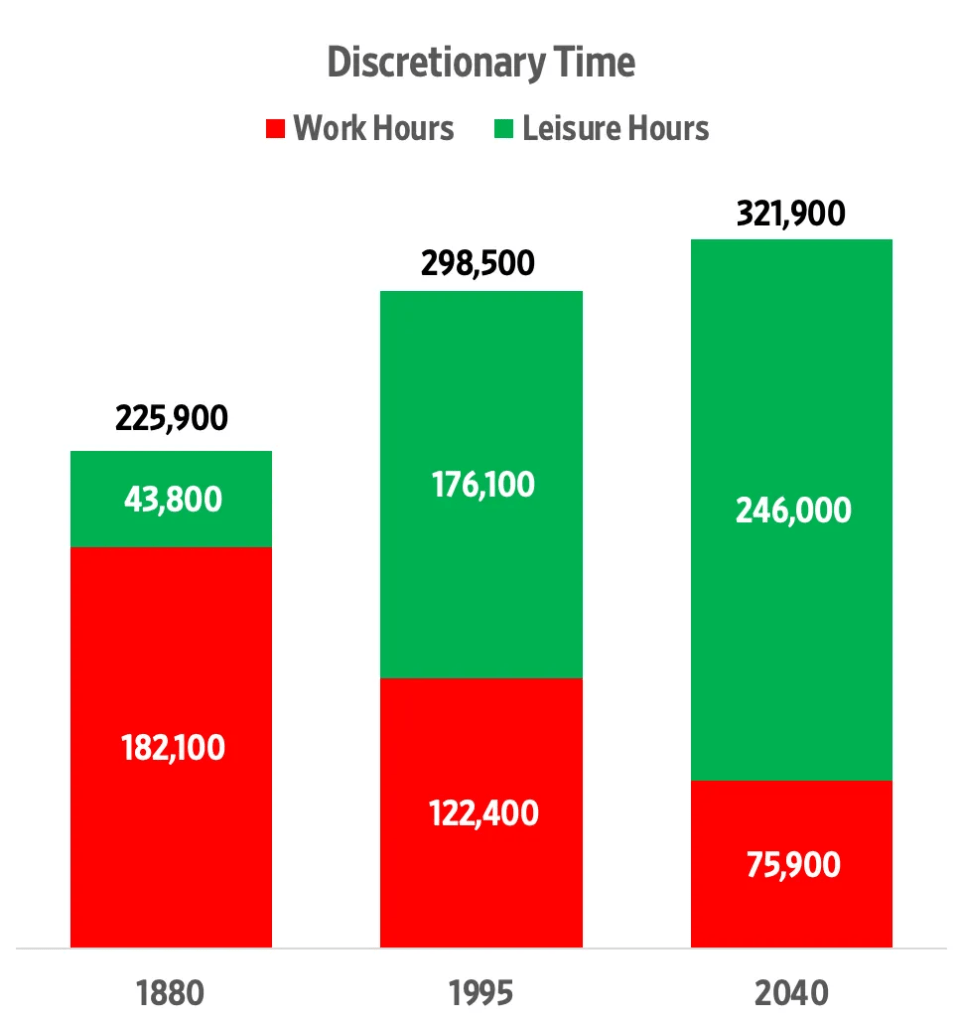
“Discretionary Hours” refers to time beyond sleep, meals, and hygiene. They are available for work, leisure, and other activities. “Work Hours” includes paid work, travel time to and from work, and household chores. The balance between work and leisure has shifted over time, particularly in the 20th century, due to factors like technological advancements and increased productivity
____________________________

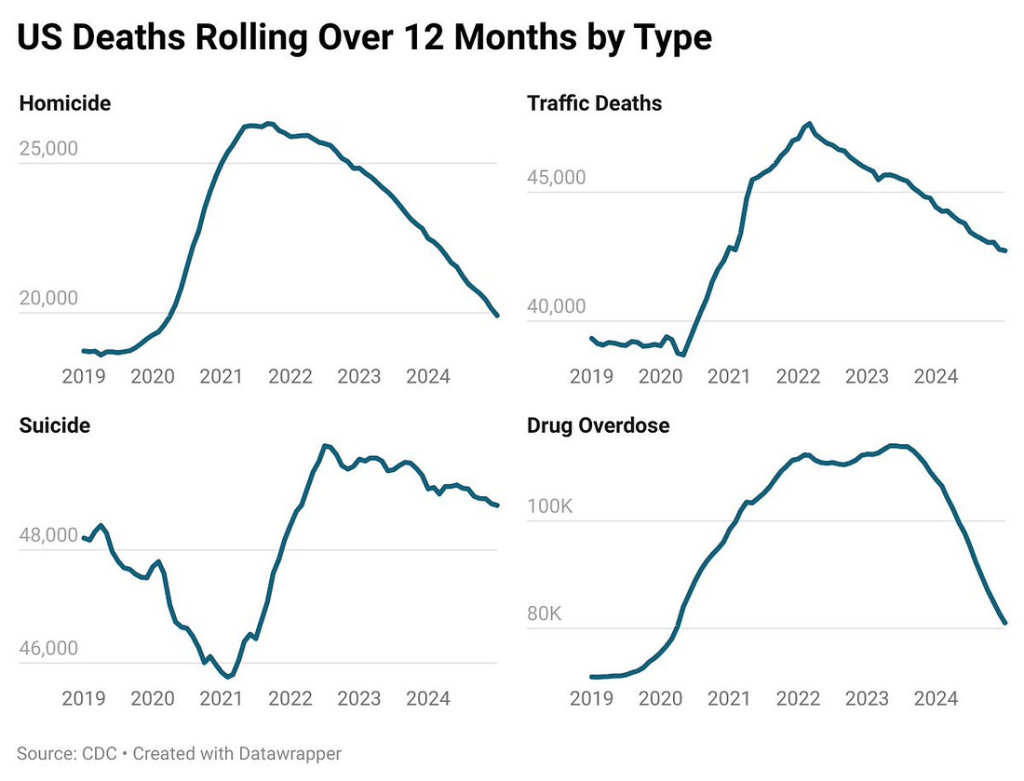
A bit of positive news. In the past 12 months, we’ve seen:

  • the largest decline in US murder rate ever recorded
  • huge declines in traffic fatalities and drug overdoses
  • a surprising (and largely unreported) decline in teen anxiety and despair, coinciding with ongoing declines in suicide
  • continued advances in GLP-1 medicines that seem to reduce obesity, inflammation, cardiovascular disease, and other illnesses that are currently under study
__________________________

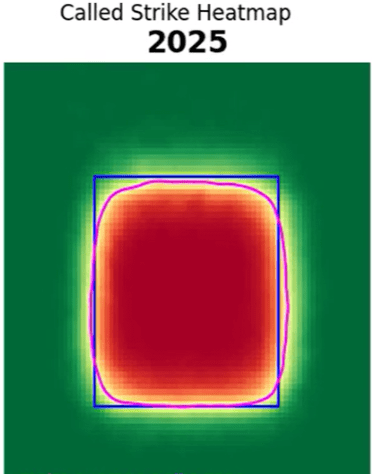
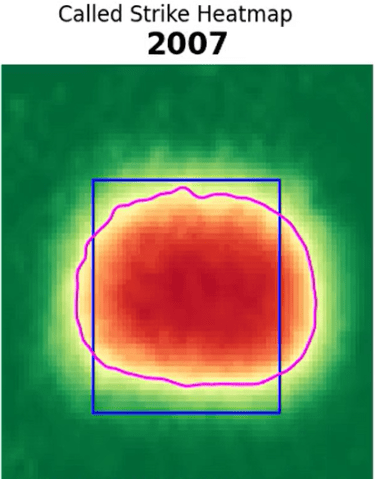
Baseball umpires have improved dramatically. The heat maps below show the evolution of the MLB strike zone from 2007 to 2025. The zone has changed dramatically, going from vibes to nearly matching the rule book definition perfectly.

________________________________

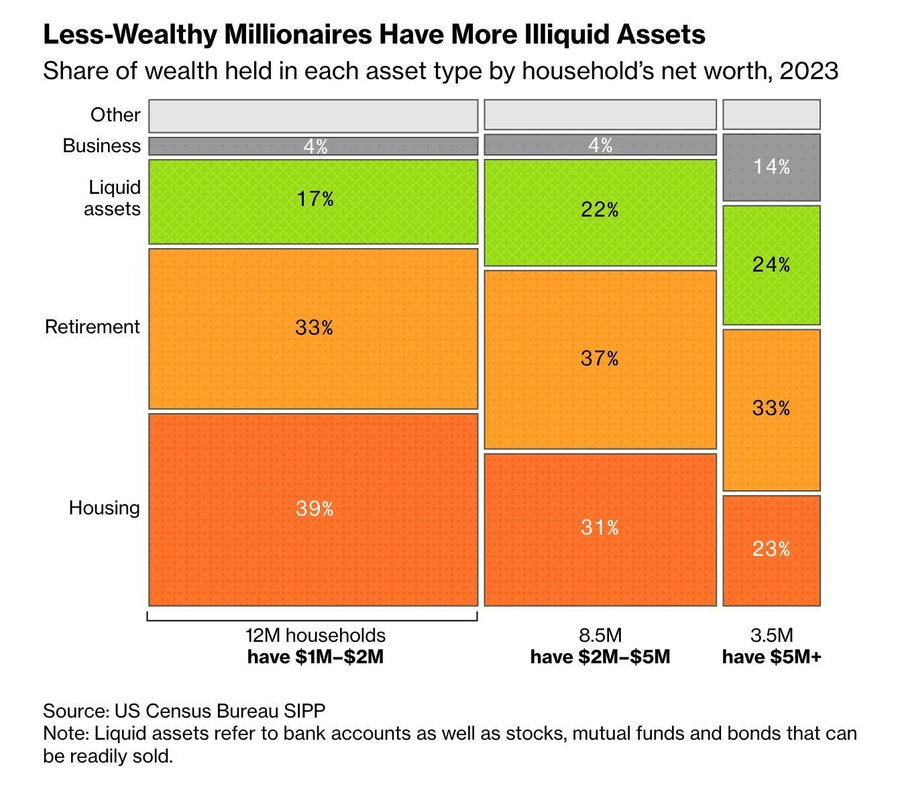
The truth about millionaires in America:

-Half have less than $2 million in net worth (and less than $340,000 in liquid assets)
-Most are NOT business owners
-Almost all are house/401k rich but cash poor
________________________________

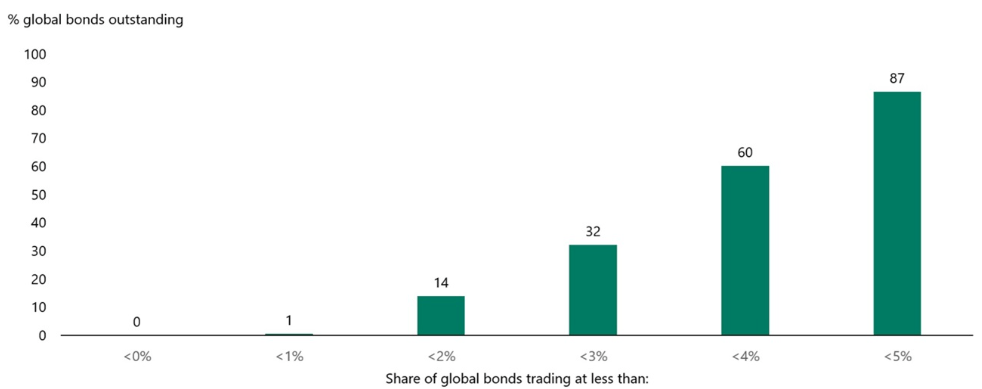
About 90% of all outstanding bonds in the world yield lower than 5%:
________________________________

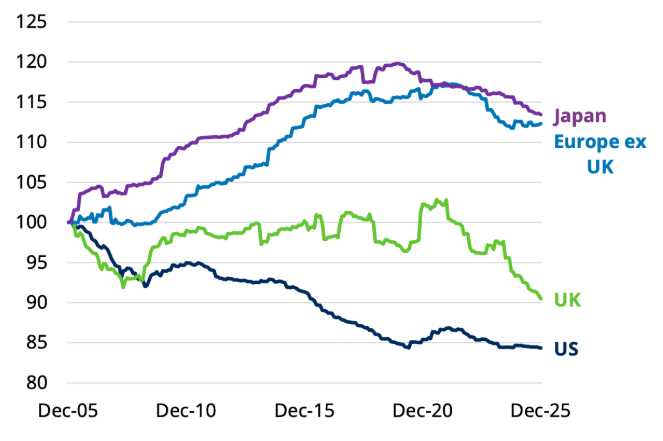
The falling number of public companies/stocks available to buy is a global phenomenon:
________________________________

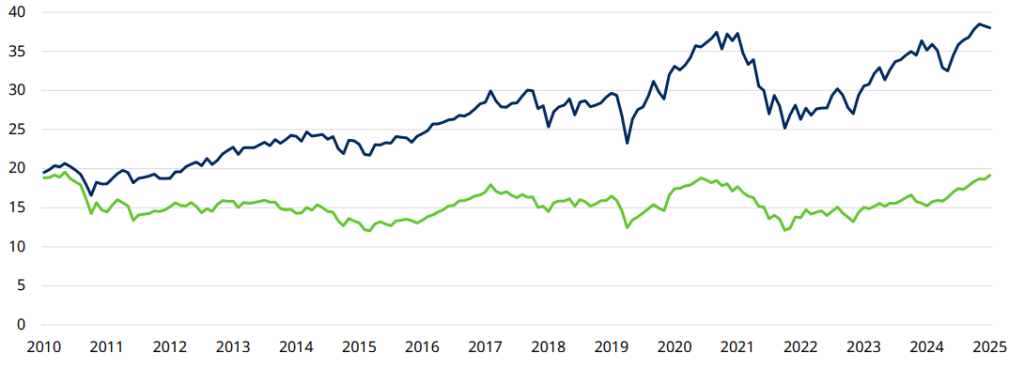
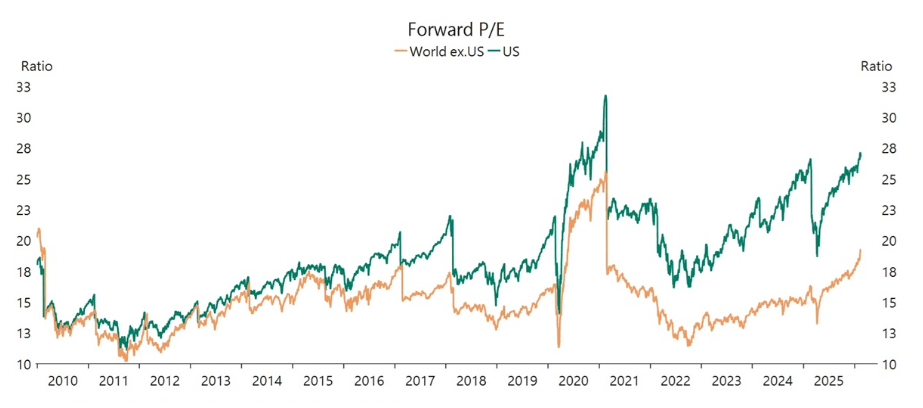
After the Global Financial Crisis (GFC), the P/E ratio for US stocks was similar to that of the rest of the world, but the surge in tech valuations has now pushed the US P/E ratio 40% higher:
_______________________________

What software companies are in more danger vs. more safe from the relentless A.I. disruption:

🔴 High danger — “Search layer” companies: Companies whose main value is making publicly available data easier to search through a fancy interface. This includes financial data terminals built on licensed exchange data, legal research platforms built on public court records, and patent search tools. Many have already lost 40–60% of their value.

🟡 Medium danger — “Mixed portfolio” companies: Companies that have some proprietary assets but also rely on repackaging public information. The key question is: what percentage of their revenue comes from things AI can’t replace? (Think S&P Global — their credit ratings are safe, but their data analytics tools are exposed.)

🟢 Safer companies have one or more of these shields:

  • They own data nobody else can get — Bloomberg’s real-time trading desk data, S&P’s credit ratings, Dun & Bradstreet’s business credit files. AI actually makes this more valuable since every AI agent needs it.
  • They’re protected by regulations — Epic (hospital software) is shielded by HIPAA rules and FDA certifications. AI doesn’t change those requirements.
  • They’re embedded in money flows — If your software processes payments or settles trades (like Stripe), AI sits on top of you, not instead of you.
  • They have network effects — Bloomberg’s chat system works because everyone on Wall Street is on it. AI doesn’t change that.
China, Value, & Something Big That’s Happening

For years, AI had been improving steadily. Big jumps here and there, but each big jump was spaced out enough that you could absorb them as they came. Then, on February 5th, two major AI labs released new models on the same day: GPT-5.3 Codex from OpenAI, and Opus 4.6 from Anthropic (the makers of Claude, one of the main competitors to ChatGPT).

These new AI models aren’t incremental improvements. This is a different thing entirely. And here’s why this matters to you, even if you don’t work in tech.

The AI labs made a deliberate choice. They focused on making AI great at writing code first… because building AI requires a lot of code. If AI can write that code, it can help build the next version of itself. A smarter version, which writes better code, which builds an even smarter version. Making AI great at coding was the strategy that unlocks everything else. That’s why they did it first.

And now they’re moving on to everything else.

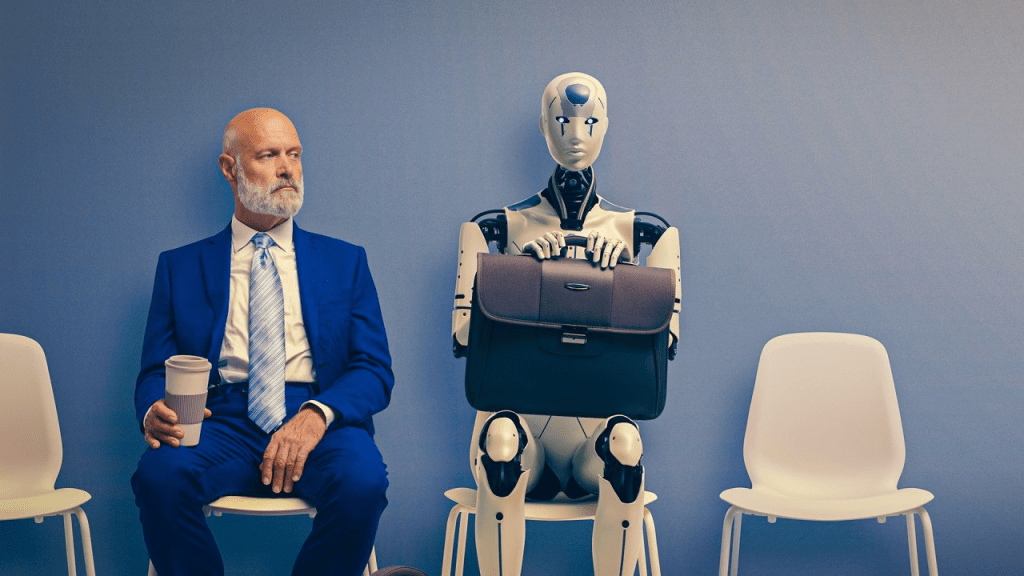
The experience that tech workers have had over the past year, of watching AI go from “helpful tool” to “does my job better than I do”, is the experience everyone else is about to have. Law, finance, medicine, accounting, consulting, writing, design, analysis, customer service. 

AI is now intelligent enough to meaningfully contribute to its own improvement. It’s now building itself. Dario Amodei, the CEO of Anthropic, says AI is now writing “much of the code” at his company, and that the feedback loop between current AI and next-generation AI is “gathering steam month by month.” He says we may be “only 1–2 years away from a point where the current generation of AI autonomously builds the next.”

Each generation helps build the next, which is smarter, which builds the next faster, which is smarter still. 

This is different from every previous wave of automation. AI isn’t replacing one specific skill. It’s a general substitute for cognitive work. It gets better at everything simultaneously. When factories automated, a displaced worker could retrain as an office worker. When the internet disrupted retail, workers moved into logistics or services. But AI doesn’t leave a convenient gap to move into. Whatever you retrain for, it’s improving at that too.

Nothing that can be done on a computer is safe in the medium term. If your job happens on a screen (if the core of what you do is reading, writing, analyzing, deciding, communicating through a keyboard) then AI is coming for significant parts of it. The timeline isn’t “someday.” It’s already started.

Eventually, robots will handle physical work too.

___________________________

In 2007, John Arnold became the youngest American billionaire, and he now focuses on philanthropy. He recently visited China and posted some of his thoughts:

  • The speed to add manufacturing capacity is stunning. Permitting takes weeks. A factory making sophisticated equipment is built in 12 months. An auto plant took 16 months from groundbreaking to first production. Slack in labor market makes it easy to staff and flex employment.
  • The US and China have significantly decoupled since early 2020. The # of flights between the two countries is down roughly 70%. Two long-term residents I spoke with said the # of American expats is down 50-75% from the peak. The # of Americans studying in China is down ≈90%.
  • Universities and government research labs are at least as tightly woven into the startup ecosystem as in the US, and in many cases more so. Their mission and incentive structures explicitly include commercialization, not just research.
  • China awards 1.3 million engineering undergraduate degrees each year vs 130,000 in the US.
  • Intense competition leads to widespread overcapacity and low profitability across many industries. Once an industry is deemed strategic, provincial governments deploy subsidies and other supports as they compete to turn local firms into hubs and capture the associated jobs.
  • I don’t know if Chinese manufacturers will ever make money but I came away not wanting to invest in any manufacturing business in the rest of the world.
  • You see American fast food everywhere. There are 12k KFCs (vs 4k in the US), 6k McDonalds, 7k Starbucks, 4k Pizza Huts.
  • Tier 2-4 cities are very quiet. Few cars on the road. Don’t see many people. Factory workers live in dorms on campus. Other workers are in gated compounds that are self-contained neighborhoods. Food delivery and e-commerce have replaced dining out and shopping.
  • China is one of only handful of countries with highly educated workforce, robust access to capital, and strong entrepreneurial culture. Only the US and China meet those conditions and have scale.
  • As industries become more complex, scale matters more than ever. Large countries can fund frontier R&D, support dense talent markets, amortize infrastructure, and create robust supply chains. Few countries can be cost competitive in high value-add manufacturing.
  • While the supply chain on transmission and grid infrastructure is backed up in the US, there is spare capacity in China.
  • A security check including bag x-ray is required to enter subway stations, at least in major cities. It’s interesting that most Western countries that are more dangerous do not do this, presumably for speed and cost.
  • There were fewer cranes than I expected, presumably reflecting the collapse of China’s real estate market.
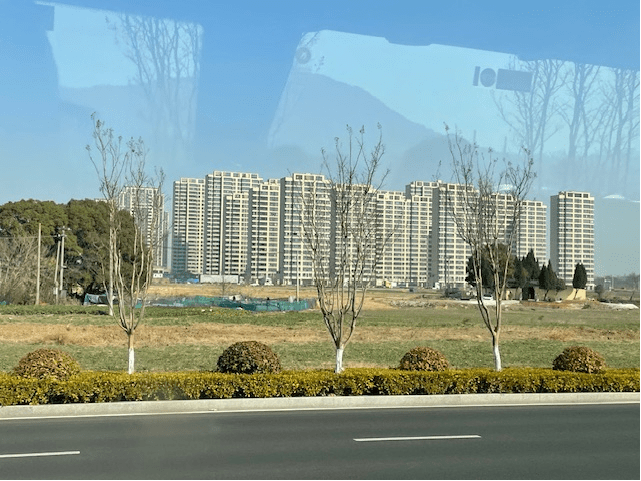
  • Lower density cities still had most housing in high-rise residential buildings, usually built in complexes of 10-50 identical buildings. I guess it’s the most practical way to house people in a city growing quickly but the aesthetic damage is real.
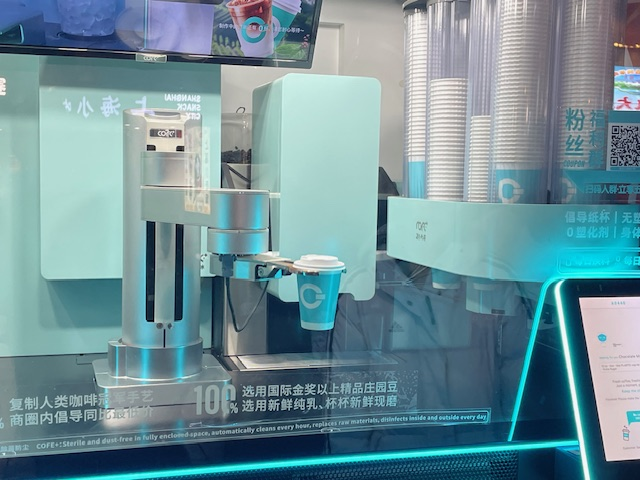
  • Robotic coffee shops are taking off in China first even though wages are much higher in the US.

_____________________________

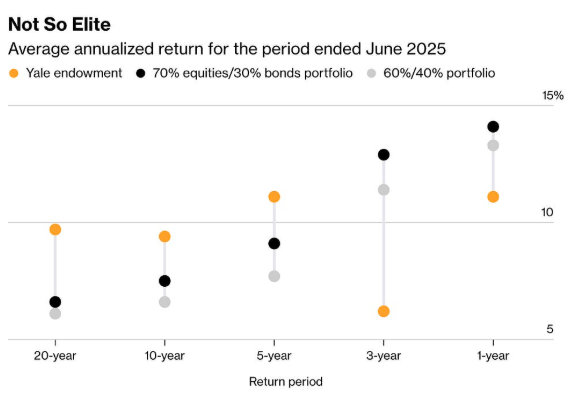
The Yale model, investing in private companies, worked in the ’80s and ’90s for one simple reason — there wasn’t a tidal wave of capital chasing deals. Buyouts were done at reasonable entry prices.

Today, small and mid-size businesses are being acquired at sky-high valuations, often with little margin for error. High entry prices make outsized returns harder to achieve (even with leverage, even with financial engineering).

____________________________

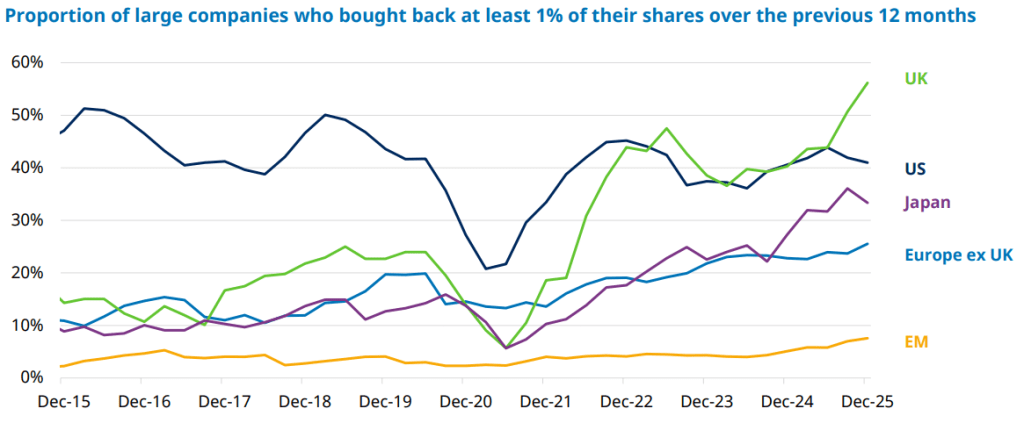
Europe and Emerging Market countries have not embraced stock buybacks, yet.

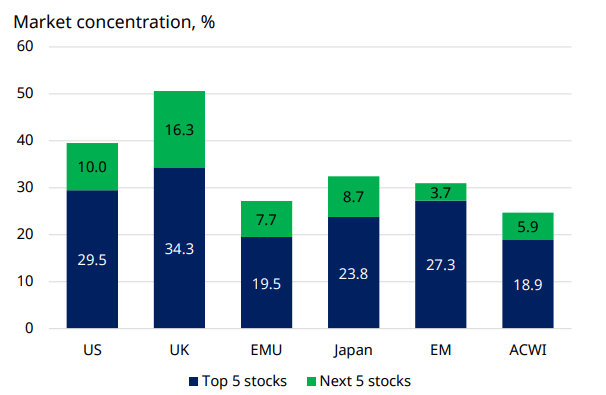
Market concentration for the largest stocks is everywhere in the world, not just the United States:

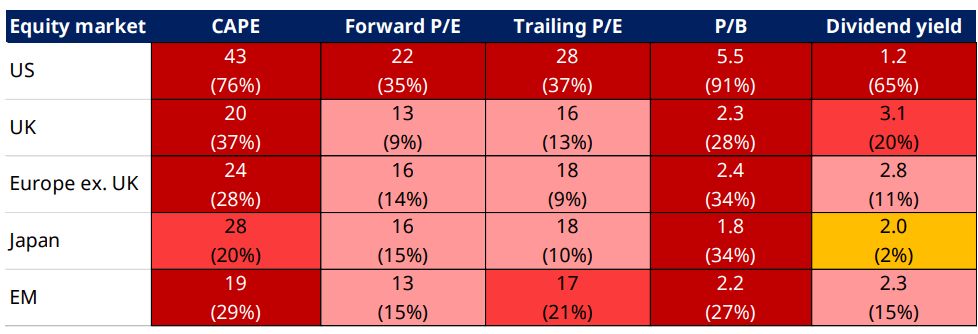
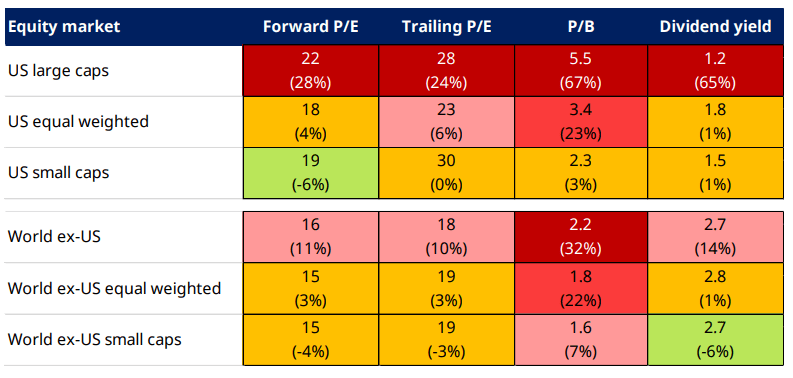
U.S. valuations are still well above the rest of the world, even as the rest of the world outperformed the U.S. in 2025:

The CAPE ratio of the U.S. vs. the rest of the world:

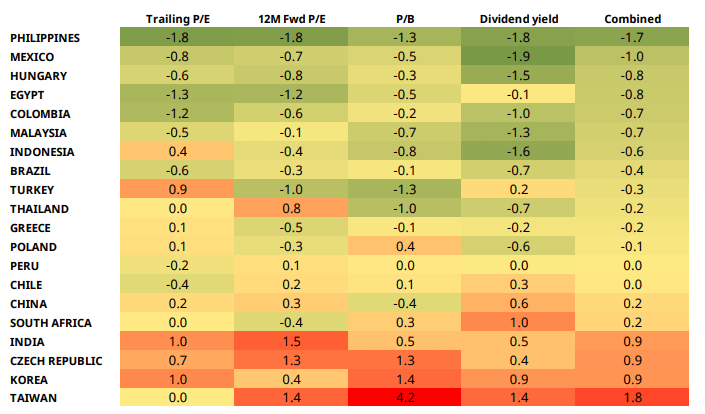
Most emerging market countries are still extremely cheap, but some have moved into the more expensive red zone:

Within the United States, it’s the large cap stocks that are extremely expensive:

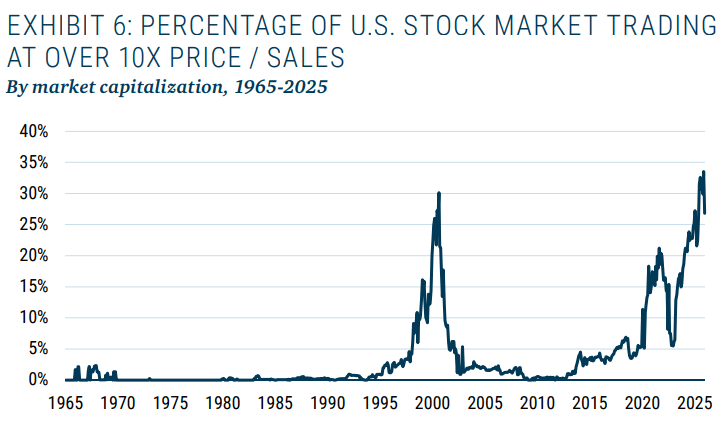
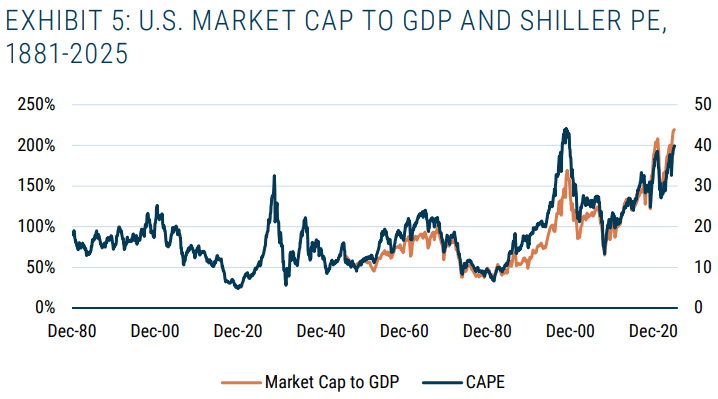
Another valuation metric in historical comparison:

Contentment, Luck, Knowledge & Experience

When we dream about being happier in the future, we’re imagining being content with what we have. Maybe we picture a new house or a luxurious lifestyle. But what we’re really imagining is being satisfied with those things. We’re not just picturing wealth, you’re picturing contentment. But often, when reality doesn’t live up to expectations, it’s because the moment we get something new, we immediately start wanting whatever comes next.

The more you desire something you don’t have, the more you’re just focusing on the fact that you’re not happy right now. The person who has everything but wants even more feels poorer than the person who has little but wants nothing else.

______________________

In economics, there is something called the law of diminishing marginal utility. Simply put, it states that for any commodity, you will derive lower levels of utility (or pleasure) with each additional unit you consume. For example, if you’re hungry and you buy a burger, that first one will be amazing. But if you buy another burger, then that one will be less pleasurable than the first. And by the 5th burger, you’ll hate yourself and won’t buy that burger again for the next month (at least).

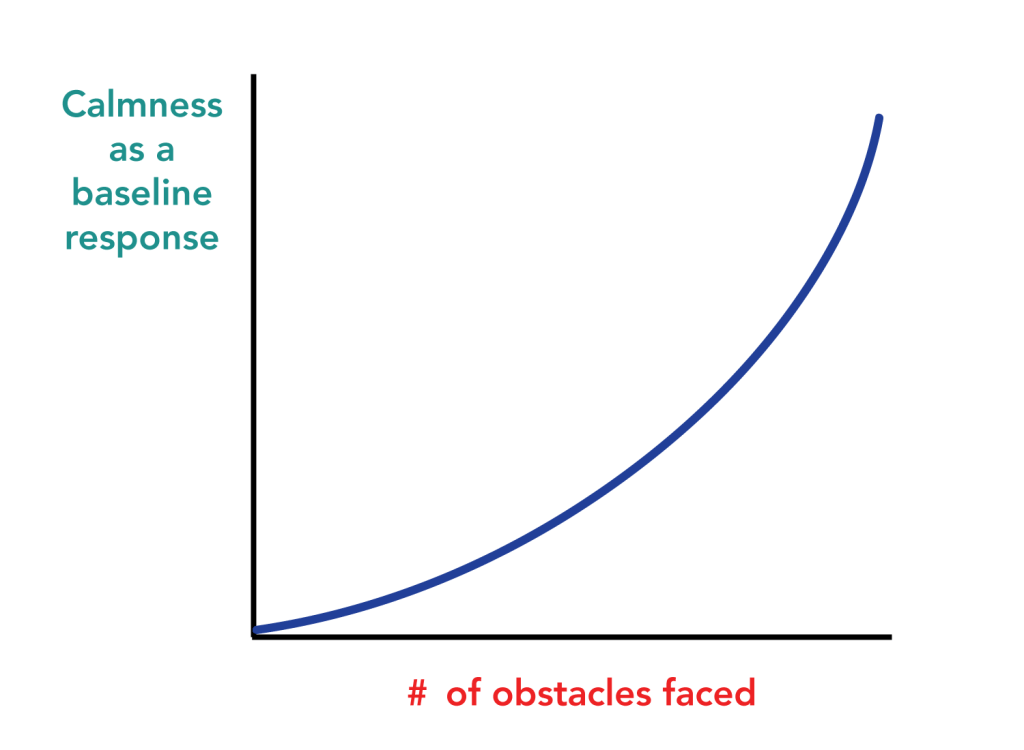
When it comes to overcoming obstacles, however, I feel that there’s an inverse of this: a law of increasing marginal utility. With each obstacle you overcome, the utility comes in the form of a lesson you can import into the next obstacle you face. And once you overcome that one, the utility gained has a compounding effect that takes all the prior lessons into account as well.

This has the interesting effect of allowing calmness to be more of a baseline state as you’re introduced to various obstacles over time, one of the benefits of getting older.

___________________________

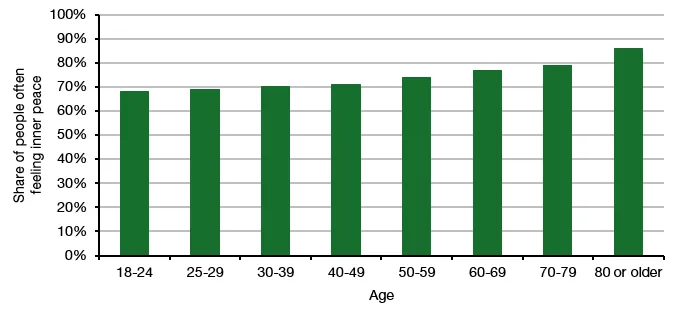
A group of researchers piggybacked on the Global Flourishing Survey, which asked more than 200,000 people in 22 countries over five years to rate how they feel about several aspects of life. One item was the question: “In general. How often do you feel you are at peace with your thoughts and feelings?”

The older people get, the more they feel inner peace. The pattern that emerges is the one that people who no longer compete with other people (whether it is for a job, a salary increase, a spouse, etc.) simply are happier.

_____________________________

Knowledge of the world (through screens and images) vs. experiencing the world in-person:

“It feels as if the whole world has been transformed into images of the world, and has thus been drawn into the human realm, which now encompasses everything. There is no place, no thing, no person or phenomenon that I cannot obtain as image or information. One might think this adds substance to the world, since one knows more about it, not less, but the opposite is true: it empties the world, it becomes thinner. That’s because knowledge of the world and experience of the world are two fundamentally different things. While knowledge has no particular time or place and can be transmitted, experience is tied to a specific time and place and can never be repeated. For the same reason, it also can’t be predicted. Exactly those two dimensions – the unrepeatable and the unpredictable – are what technology abolishes. The feeling is one of loss of the world.”

Apart from anything else, another good reason to get outside, and soon.

________________________

________________________________

We are told to view winning, in sport and in life as: “success must be earned by an effort of willpower, preferably in a triumph over adversity.”

Natural talent conflicts with the consoling fantasy that we live in a meritocracy where hard work always pays off in the end. But it doesn’t. We simply never hear about the thousands of would-be athletes (or business people, or musicians, or inventors) who put in their 10,000 hours but lack the talent to make significant progress.

If people believe, as more and more of them are encouraged to, that their advancement comes 100% from their own merits . . . they can be insufferably smug. Recognizing luck as a factor in success is inherently civilizing.

It can be difficult to accept that we are all, to some degree, victims and beneficiaries of circumstance, but we are. We are misled by histories of great men and women in which it’s implied that each planned his or her ascent meticulously, homing in on success like a soldier finding a flag in an army training exercise.

The origins of success are usually much more subtle and complex. Successful people, by being open to opportunity and exposing themselves to chance, take new directions that prove more fruitful than anyone could have predicted. We change in many ways as we grow. A missed opportunity represents the failure to evolve into a different, better person.

Believing in luck does not imply fatalism, as many people mistakenly believe. But it does demand openness—and humility. What about effort, skill and planning? All necessary, of course—but never sufficient.

________________________

AI may produce faster and more extensive searches and may find correlations that human efforts could not identify in a lifetime, but that’s all still existing information. In short, AI has no creative capacity. It cannot “think” of anything new, unlike humans who create new formulas and works of art routinely. AI is not “intelligent” or creative. It’s just fast.

In a recent experiment, a supercomputer and a group of first grade children were given a ruler, a teapot and a stove and asked to draw a circle. The computer “knew” that the ruler was a draftsman’s tool not unlike a compass and promptly tried to draw a circle with a ruler. It failed. The children glanced at the teapot, saw that the bottom was round and used it to trace perfect circles.

AI will never be superintelligent, expenditures have hit the wall of diminishing returns, AI offers no creativity at all (just fast searches), and children can outperform the fastest machines when the task calls for intuition. Is the frenzy about to hit the wall?

There are some encouraging solutions that may allow AI to add value beyond robotics and fast processing. One of these is the use of small language models (SLMs) instead of LLMs.

Unlike LLMs, which troll the entire internet or large subsets, SLMs contain far less data and are curated by subject matter experts to be tailored to specific tasks. One difference between SLMs and LLMs is the number of parameters that the model is trained on. SLMs can run faster on far less energy. They can also be scaled more easily for smart phones and other applications like self-driving cars and household appliances.

SLMs also have fewer “hallucinations” than LLMs and run on less expensive chips, which may have negative implications for monster chip makers like NVIDIA. SLMs running on smaller cloud systems may make the massive server farms now being constructed, either redundant or obsolete.