A.I. In College, Sea Floors & Batting Stances

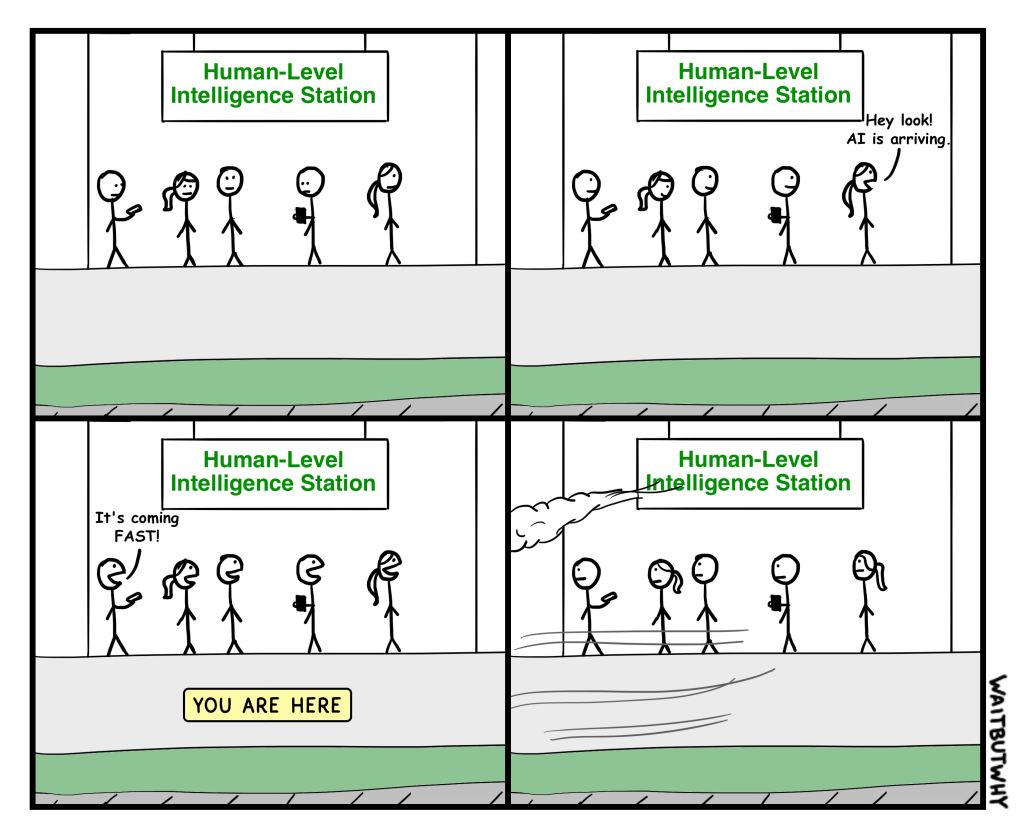
  • “College is just how well I can use ChatGPT at this point.”
  • “I think we are years — or months, probably — away from a world where nobody thinks using AI for homework is considered cheating.”
  • “It isn’t as if cheating is new. But now, as one student put it, ‘the ceiling has been blown off.’ Who could resist a tool that makes every assignment easier with seemingly no consequences?”
  • “Massive numbers of students are going to emerge from university with degrees, and into the workforce, who are essentially illiterate.”
  • “The humanities, and writing in particular, are quickly becoming an anachronistic art elective like basket-weaving.”
  • “Many teachers now seem to be in a state of despair.”
  • “Every time I talk to a colleague about this, the same thing comes up: retirement. When can I retire? When can I get out of this? That’s what we’re all thinking now.”

______________________________
______________________________

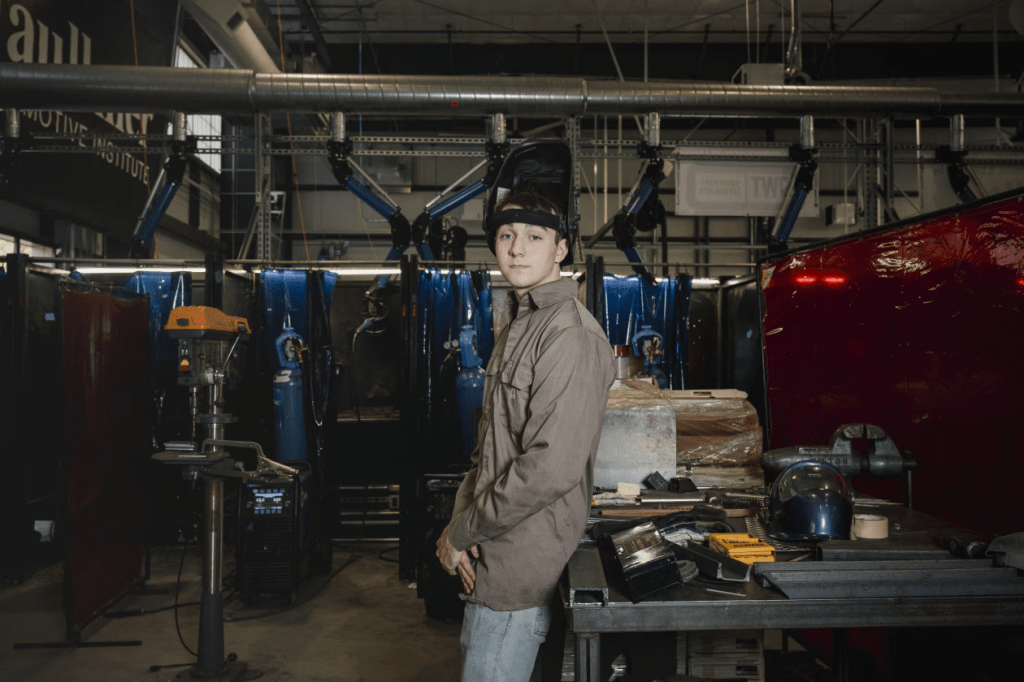
The High-School Juniors With $70,000-a-Year Job Offers. Companies with shortages of skilled workers are looking to high school shop classes to recruit future hires.

  • Employers are increasingly recruiting high-schoolers in skilled trades due to worker shortages as baby boomers retire.
  • High schools are revitalizing shop classes and teaming up with businesses that offer students opportunities for part-time work and academic credit.
  • Welding students are getting job offers paying $50,000 and above, with no college debt.
  • More businesses are teaming up with high schools to enable students to work part-time, earning money as well as academic credit.
  • Employers say that as the skilled trades become more tech-infused, they anticipate doing even more recruitment at an early age, because they need workers who are comfortable programming and running computer diagnostics. 
_____________________________

“The hardest thing to teach a student—and the hardest thing to believe consistently—is that there is nothing ‘out there’ to go and get. There is no part, no career, no opportunity for which you should be searching and scrounging and coveting. All of the preparation is within, and you keep yourself mentally and physically fit; you remain generous with yourself and others; you stay deeply in study about your craft. Whatever is yours will then arrive.” — ​Marian Seldes

_____________________________

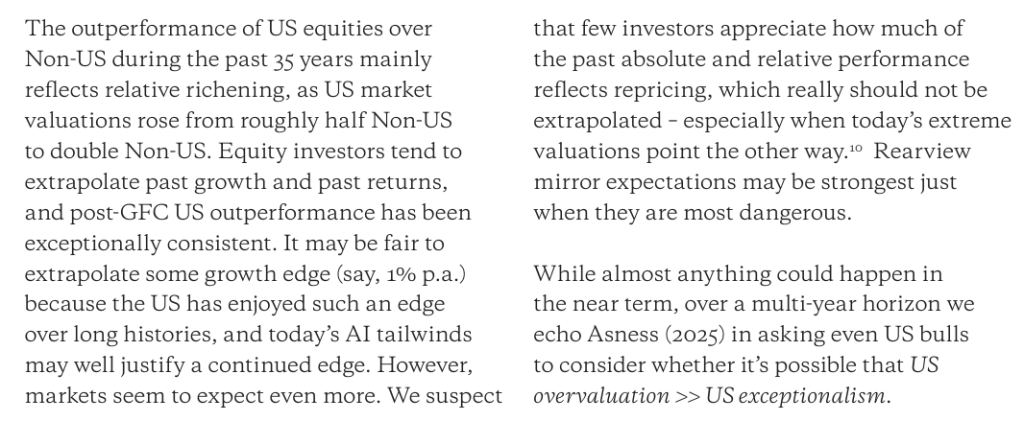
AQR released an excellent paper this week discussing U.S. vs. foreign stock markets.
_____________________________

Finland, the happiest country on earth, has things going for it that have been widely discussed in the past:

  • Universal healthcare and education
  • 320 days of paid parental leave, split equally between mothers and fathers
  • Freedom of the press, trust in institutions, and a culture of low corruption
  • Prioritization of community engagement, including frequently dining in groups, participating in civic life, and trusting the government to mostly take care of its people.
  • And a national character trait they call sisu—roughly translating to grit, resilience, or quiet inner strength

But it also has two others that are less widely discussed:

  1. There are 3.3 million saunas in Finland—roughly one for every 1.67 people. Finns drop by the sauna after work to relax, catch up with friends, or just sit in silence and sweat out the stress of modern life. There are even rules to encourage peaceful conversations – like no discussions about politics.
  2. Finland also scores high on the “lost wallet test.” This is a study from 2019 in which Stanford researchers dropped almost 19000 wallets in 355 cities/40 countries, to get a measure for whether people are generally honest. Scandinavia scored at the top of the lost wallet test: the Finns, for example, returned 90% of the wallets. And that’s not even the number that’s important. The report suggests that a strong predictor of the happiness of a country is whether the majority of people believe others would return their wallet. Finns trust their fellow Finns to do the right thing.

What can we learn from them to be happier?

  • Find people to break bread with
  • Go outside. 
  • Aim for “satisfied,” not euphoric. 
  • Cultivate a belief that most people are basically kind and trustworthy.

________________________________

Humans still haven’t seen 99.999% of the deep sea floor. Bizarre creatures like vampire squid and blobfish make their home in the dark, cold, depths of the deep sea, but most of this watery realm remains a complete mystery. Maps created with tools like sonar can show the shape of the seafloor, but it’s much harder to send cameras down beyond 200 meters, or more than 656 feet, where sunlight begins to fade rapidly and the waters turn cold and dark. This is the region of the ocean that’s considered “deep.”

______________________________

The 18 Degrees That Turned Aaron Judge Into the Next Babe Ruth. On May 5 of last season, Judge was mired in one of the worst slumps of his career. So when he stepped to the plate for the first time, he decided to try something different. Up to that point, Judge had always used an open batting stance, which angled his left foot toward the third baseman. Against Detroit Tigers ace Tarik Skubal that afternoon, Judge moved the placement of his front leg ever so slightly back toward the pitcher. He promptly blasted a home run into the right-center field bleachers, followed by a booming double a few innings later. The change to Judge’s setup was almost imperceptible at first, but it had an unimaginable impact: In the year since, he has put together one of the greatest stretches of hitting that baseball has ever seen.

Independence, Memory & Religion

When you’re independent you feel less desire to impress strangers, which can be an enormous financial and psychological cost. Speaking of hidden forms of debts: How much of what takes place in our modern economy is done purely for signaling reasons? It’s impossible to quantify, but you know it when you see it. And taking an action to impress other people is a direct form of dependence. 

___________________________

After shuffling the cards in a standard 52-card deck, Alex Mullen, a three-time world memory champion, can memorize their order in under 20 seconds. As he flips though the cards, he takes a mental walk through a house. At each point in his journey — the mailbox, front door, staircase and so on — he attaches a card. To recall the cards, he relives the trip. This technique, called “method of loci” or “memory palace,” is effective because it mirrors the way the brain naturally constructs narrative memories: Mullen’s memory for the card order is built on the scaffold of a familiar journey. 

Analyses have generated a new understanding of how the human brain constructs narrative memories. Nearly the entire brain is involved, contradicting earlier ideas that placed memory in specific brain regions. And memories are built in temporal pieces, each of which ranges from a second to a minute in length. The brain places those pieces onto the scaffolds of event scripts. It’s all a construction. It’s not like you have this video camera of exactly what happened, exactly as it happened. You have to reconstruct, based on pieces of the experience, what you think happened.

The brain doesn’t simply record what it perceives. Instead, much if not most of the brain’s reaction to an event or story originates in memories of how that type of event usually plays out. In other words, we process the present through the past.

There are two critical steps to constructing memories. As we go about our day, we record the new experiences in pieces of varying size and complexity, from simple perceptions to stunning plot twists. Meanwhile, our brains access templates for these new events based on knowledge of similar ones, and place the pieces of the evolving memory in that context. Memories, it turns out, are more like paint-by-number than rendered from scratch on a blank canvas. The way we experience and remember events arises largely from our mental state, as opposed to properties of the events themselves.

_____________________________

We report eleven studies that show declines in life satisfaction and happiness among young adults in the last decade or so, with less uniform trends among older adults. In the U. S. life satisfaction rises with age. This is broadly confirmed in several other datasets including four from the European Commission across five other English-speaking countries: Australia, Canada, Ireland New Zealand and the UK. There is broad evidence across all of these English-speaking countries that happiness and life satisfaction since 2020 rise with age. In several of these surveys we also find that ill-being declines in age. The U-shape in well-being by age that used to exist in these countries is now gone, replaced by a crisis in well-being among the young.

_____________________________

Which Sports Provide the Best Return on Your Time Investment? Football has the greatest amount of “false advertising” in terms of how much time the game actually takes versus how long it lasts on the clock. Hockey, by contrast, is the most honest American sport — with a ratio of 2.5 “real” minutes per minute on the scoreboard — with NBA games checking in right behind at 2.8 “real” minutes per clock minute.

_________________________________

The U.S. has become much less Christian, driven in large part by Gen Z and younger Millennials, according to a new Pew study. “We’ve had rising shares of people who don’t identify with any religion — so-called ‘nones’ — and declining shares who identify as Christian, in all parts of the country, in all parts of the population, by ethnicity and race, among both men and women, and among people at all levels of the educational spectrum,” he says about the survey findings. A significant portion of U.S. adults (35%) have switched from the religion of their childhood.

________________________________

Lessons From This Year’s Berkshire Hathaway Letter. Sixty years ago, Warren Buffett bought control of Berkshire Hathaway. He’s highlighted that mistake on and off ever since. He did so once again in this year’s annual letter, which came out over the weekend.

_______________________________

India is best thought of as a country of 1.4 billion people of whom about 300 million are leading a relatively comfortable life in major cities like Bombay and New Delhi while 1.1 billion are in rural or urban poverty.  India is poor but 300 million middle-class citizens is a population almost the size of the United States. Again, that’s the point. A U.S.-sized middle-class population already exists in India with 1.1 billion more people waiting to join the ranks. The growth potential is almost beyond comprehension.

___________________________

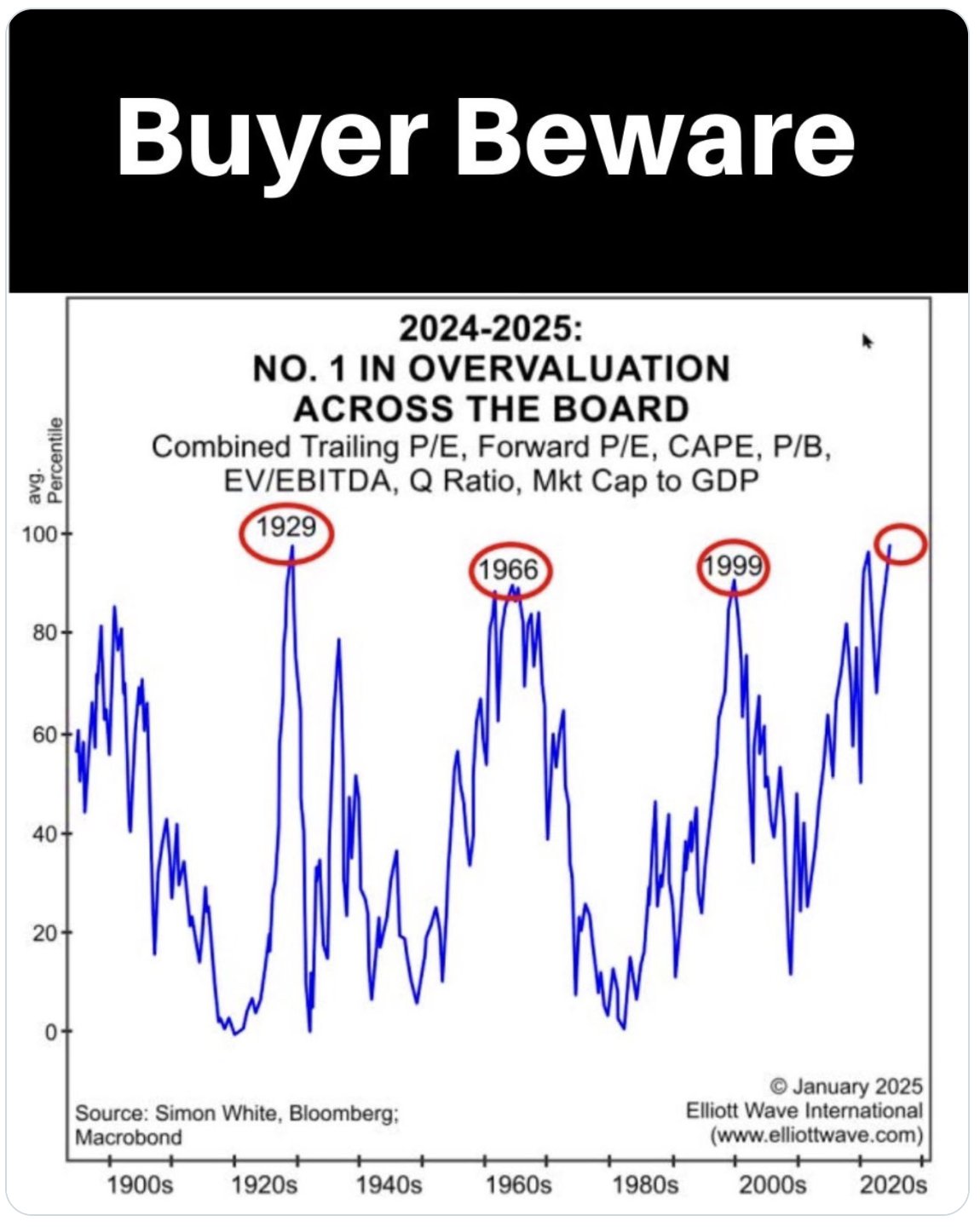
My quest for cheap stocks has led me to South America. Specifically, Brazil. The largest Brazil ETF, EWZ, currently trades at around 8x earnings with an 8% dividend yield. An entire country ETF offering an 8% yield. Meanwhile, the dividend yield on the S&P 500 is 1.27%. EWZ trades at 1.5x book value, while the S&P 500 currently sits at 5.01x (a higher multiple means stocks are more expensive). The chart combines seven metrics to show just how expensive the U.S. stock market has become.

image 1

___________________________

The U.S. stock market as a whole is the most expensive in the world, but when you pull out just the technology stocks, they are on another planet in terms of how they’re priced relative to their earnings.

___________________________

Jim Chanos spoke with Paul Krugman this week on market sentiment, A.I. and data centers:

How about the capital being employed? There better be something new. I mean, we’re talking now for the just a top handful of companies doing $300 to $500 billion in capex [capital expenditures] annually. I mean, AI isn’t like the internet, which made things more capital efficient and raised returns on capital. So far, AI is doing the opposite. It is a massively capital-intensive business. Someone joked that the top tech companies are now looking like the oil frackers did in 2014, 2015, where more and more capital is chasing arguably a variable return.

Fracking technology has revived the U.S. oil and gas industries, and along with renewables, has made America energy-independent for the first time in generations. But the fracking companies themselves turned out to be far less profitable than they led investors to believe.