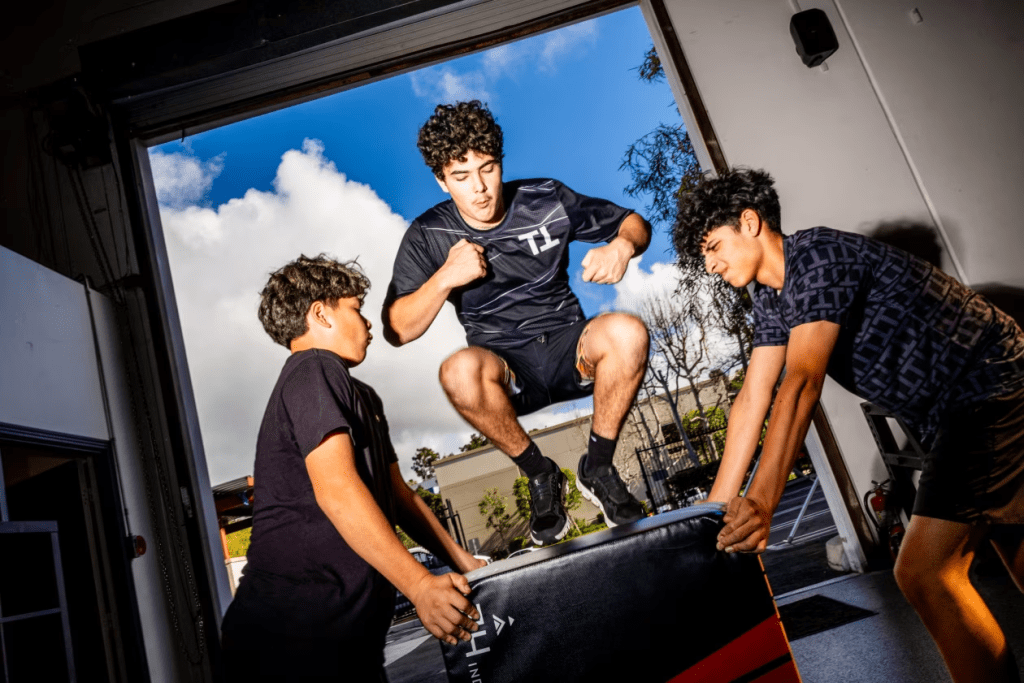
Michael Cancelleri, an entrepreneur in San Clemente, Calif., has poured tens of thousands of dollars into his son’s baseball career—club team fees, tournament travel and top-of-the-line equipment. As high school approached, Cancelleri decided that wasn’t enough. He paid about $20,000 for his son, a straight-A student, to repeat a grade at a private middle school sports academy.
Sixty other boys are repeating a grade at the same academy, The Togethership, where coursework includes throwing mechanics, game film review and nutrition along with traditional subjects such as Algebra and English. Holding kids back in school for an athletic edge has existed for decades on the elite fringe of prep sports. In recent years, it has exploded in popularity for middle school boys.
Fueled by the lure of Name, Image and Likeness money in college, families are delaying high school so their sons can get bigger, stronger and more recruitable. The practice, known as “reclassifying,” “reclassing,” “bridge year” or “gap year,” is spreading fast in football, basketball, baseball, lacrosse and other sports where height and strength are key.
The demand has spawned a multimillion-dollar industry. For-profit sports academies, some focusing on a single sport, are popping up from Virginia to San Diego, while private schools, home-school programs and even a public school district are adding—and aggressively marketing—holdback years. For many athletes, eighth grade is the last chance to repeat a year and still compete for a full high school career. Interscholastic rules generally limit high-school students to four years of athletic eligibility and cap participation at age 19.
______________________________
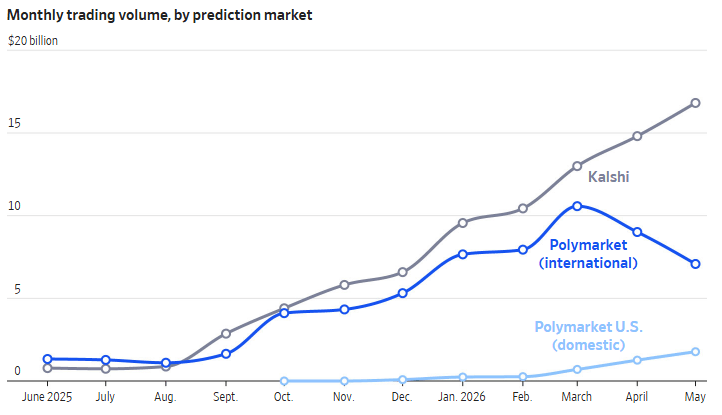
In his videos, George Makihara appears to have a lucrative side hustle making bets on Polymarket. In January, the college student posted a video that showed him winning $100,000 on a wager that President Trump would publicly say the word “McDonald’s” that month.
The bet was one of 145 that Makihara appeared to place on Polymarket’s website between January and mid-May, based on his videos—bets adding up to almost $410,000. But none of those bets were real, according to a Wall Street Journal investigation.
Makihara is one of dozens of mostly college-age creators Polymarket paid to film themselves making fake trades and sometimes scoring fake wins, according to an analysis of more than 1,100 videos by the Journal, along with instructional materials and interviews with creators who have worked with the company. On Polymarket’s actual site, more than 50 accounts made the McDonald’s bet in January, public data shows. All of them lost.
In its push to draw users to its unregulated platform, Polymarket has flooded social media with videos like Makihara’s, which appear genuine at first glance. In reality, Polymarket built near-perfect copies of its website, then instructed creators to make simulated trades on those dummy sites and hide that they were being paid by Polymarket. To get the videos to go viral, Polymarket has recruited a social-media army to copy and re-post creators’ footage.
______________________________
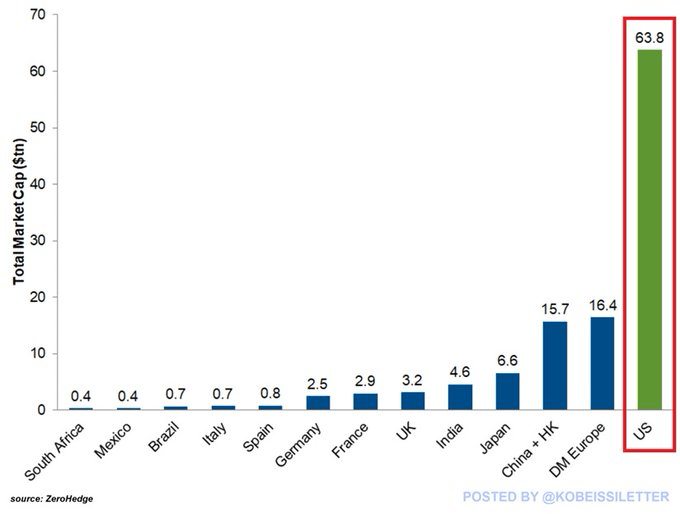
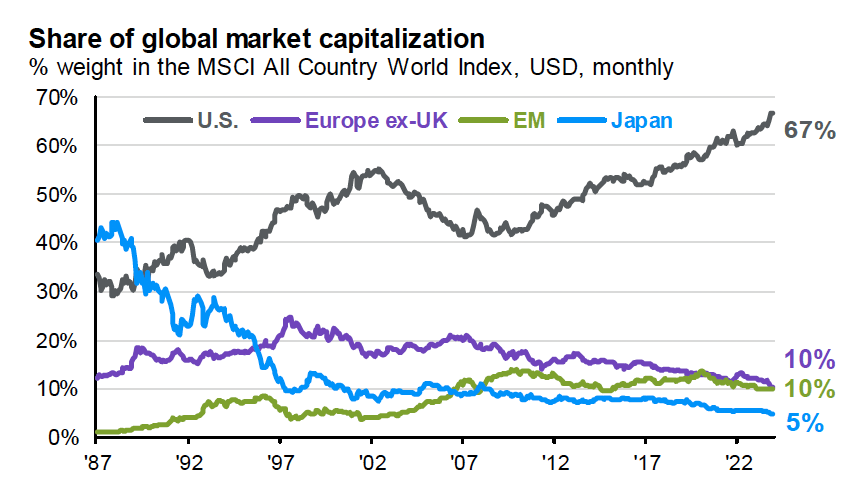
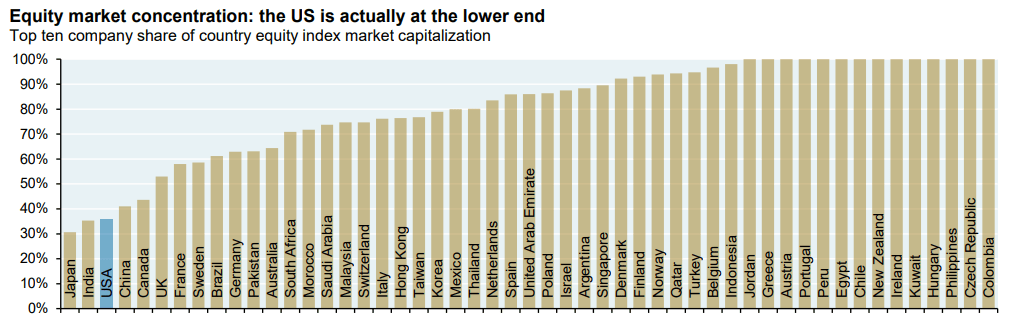
As recently as 2015 the 10 largest US stocks represented just 17% of the S&P 500 market cap. That was also the level that prevailed during the mid-1990’s. Now this figure has risen to about 40%.
However, relative to the rest of the world, the US has one of the lowest concentrations for its top 10 largest stocks:
__________________________
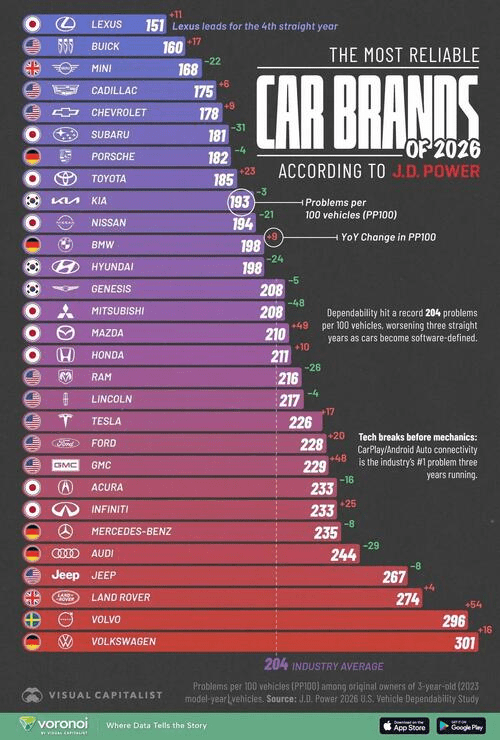
This graphic ranks the car brands with the fewest reported problems in 2026 based on J.D. Power’s Problems Per 100 Vehicles metric. Lower scores indicate fewer owner-reported issues and better long-term dependability.
______________________________
________________________________
________________________________