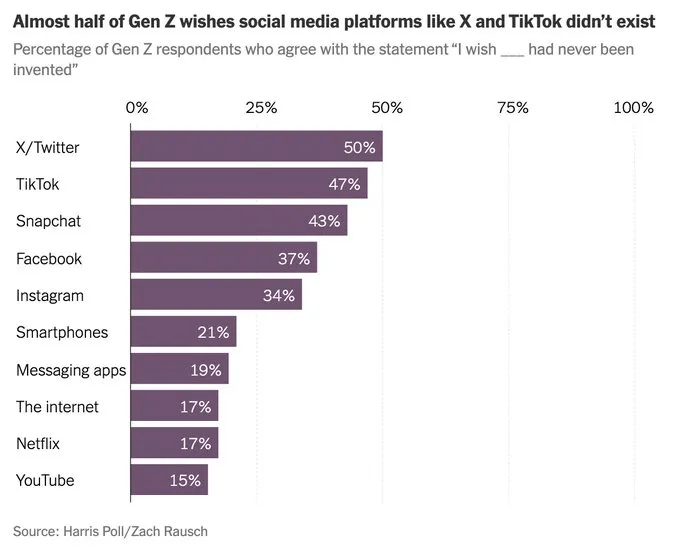
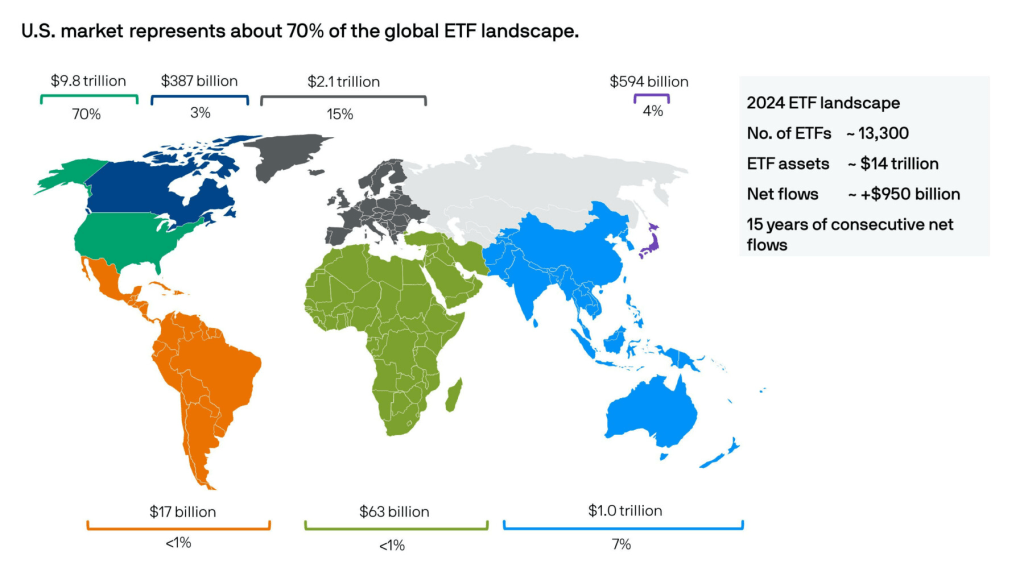
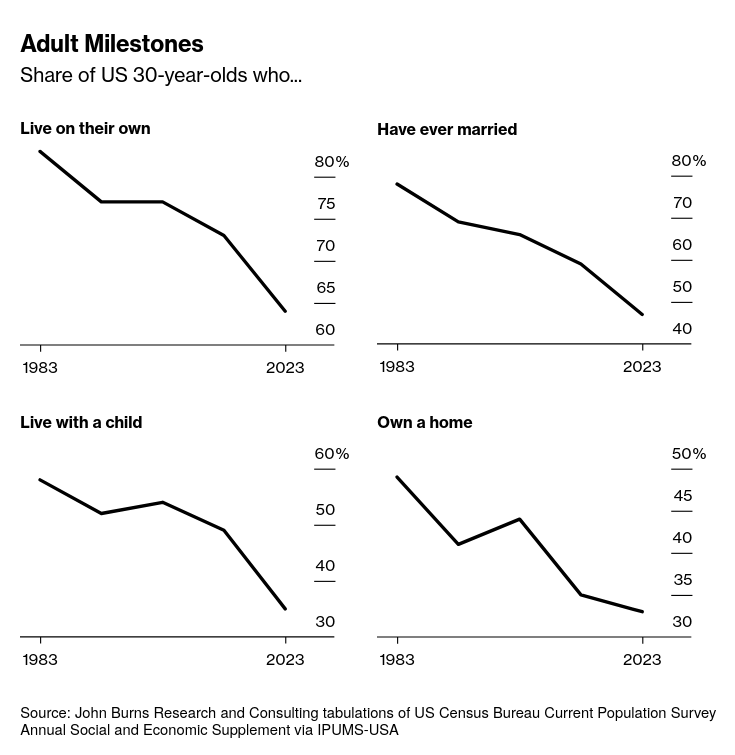
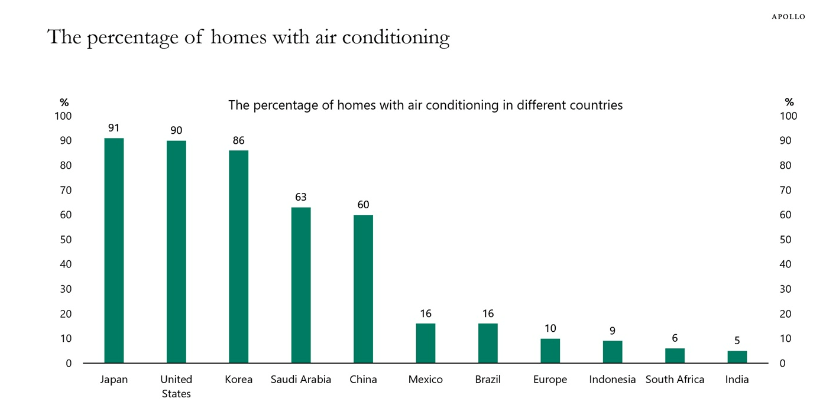
Flow State, Mini-Retirements & Vaping

The flow state: the science of the elusive creative mindset that can improve your life. Scientists have long known the mental and creative benefits of the flow state, in which total absorption in an activity banishes anxiety. But what causes it, and how can we achieve it?

_____________________

Workers in their 20s and 30s are borrowing years of freedom from their future selves to enjoy some of their retirement while they are still young. Pausing your career during prime working years can slow the growth of a nest egg. But the chance to backpack the globe or take a series of mini-retirements is worth it, say those who have done it, even if it means delaying buying a home or having to work longer later to fund retirement.

_________________________

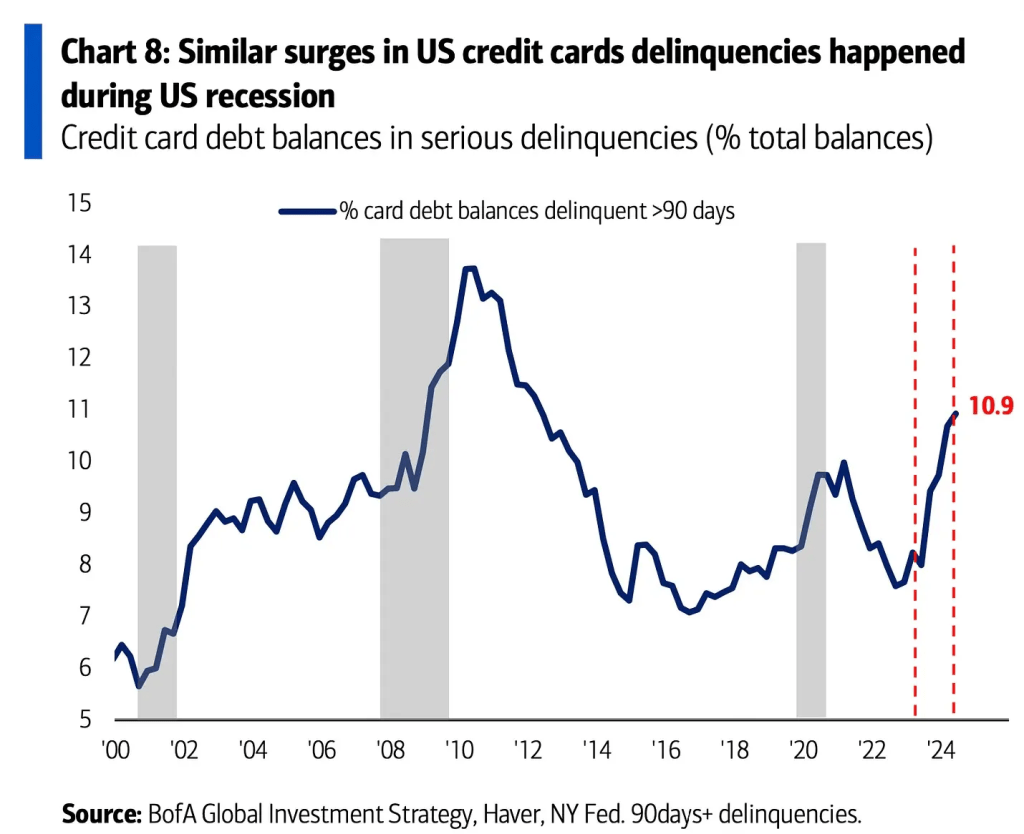
The total amount of credit card debt, one of the scary graphs that floats around the internet, is less important than the amount of credit card debt that is 90 days delinquent (when using data to make a prediction on what will happen in the economy or markets).

_________________________

Teen vaping has hit a 10-year low. In an annual survey conducted from January through May in schools across the nation, fewer than 8 percent of high school students reported using e-cigarettes in the past month, the lowest level in a decade. That’s far lower than the apex, in 2019, when more than 27 percent of high school students who took the survey reported that they vaped.

___________________________

The dating apps are under a lot of pressure. Falling revenues, people not wanting to pay, and Gen Z seemingly uninterested have led to collapsing stocks and circling activist investors. Their only path forward is monetization – but what does that mean for the demographic crisis?

_________________________

Rolling Stone’s list of the 100 best TV episodes of all time: “inside every great show is a 22-to-60-minute story that stays with you forever.”

__________________________

American homes have been going up in price since early 2012. That’s part of the reason why it’s been American’s favorite investment for 12 year running. The other reason is leverage. If you put down 20% (or less) and the home price goes up 20%, you’ve made 100% on your investment. Of course, most American’s have done much better than that since 2020.

Memories, Lessons & Mental Health

Based on the way we are wired as humans; our memories are constantly changing over time. Remembering is dominated by the perspective we have in the current moment. We have an ‘experiencing self’ and a ‘remembering self.’ Your experiences of things are continuous in real time and associated with all sorts of feelings and thoughts and sensations. And then in the cold light of reason you have this remembering self in a completely different context, trying to make sense of yourself, a person with a very narrow window of experience. 

_________________________

Reflecting on life lessons learned from someone turning 60 including distractions, ego, legacies, thoughts and hanging out with people you like.

_________________________

A look at why young adults are the ones most in crisis with mental health. A recent study found that 36 percent of participants ages 18 to 25 reported experiencing anxiety and 29 percent reported experiencing depression—about double the proportion of 14-to-17-year-olds on each measure. Older adults, often depicted in popular culture and news commentary as isolated and unhappy report the lowest levels of anxiety and depression.

__________________________

Every generation will complain that the youth are getting soft, while the young people will complain that the previous generation had it easy. Same as it ever was.

__________________________

How to negotiate with real estate agents today.

__________________________

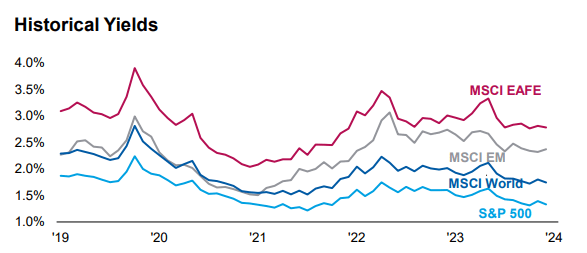
The following graphs show the dividend yields for the S&P 500, MSCI World (all developed stock markets including the U.S.), MSCI EM (emerging markets) and MSCI EAFE (developed markets excluding the U.S.).

Here is the MSCI EAFE forward P/E ratio (stock prices relative to their projected earnings over the next 12 months). The higher the number, the more expensive the market. The S&P 500 is currently at 23. It would be close to being off the chart it is so expensive relative to the rest of the developed world.

Tennis, Loneliness & Older Husbands

They identified 8,577 who were in the study from the early 1990s until 2017 and who met a variety of other criteria for inclusion. This gave them 25 years of follow up, long enough to ask the question: how does participation in sports affect life expectancy? The results? Playing tennis was the clear winner: extending one’s life expectancy by 9.7 years. The other sports all provided benefits too:

  • Tennis: 9.7 years gain in life expectancy
  • Badminton: 6.2 years
  • Soccer: 4.7 years
  • Cycling: 3.7 years
  • Swimming: 3.4 years
  • Jogging: 3.2 years
  • Calisthenics: 3.1 years
  • Health club activities: 1.5 years

One possible reason for tennis, badminton, and soccer doing so well is that out of the 8 sports studied, these are the ones that require 2 or more people and involve social interaction. As the authors explain, “Belonging to a group that meets regularly promotes a sense of support, trust, and commonality, which has been shown to contribute to a sense of well-being and improved long-term health.”

Or it might be that the type of exercise you get in tennis – short bursts of activity rather than slow, steady plodding exercise – might be better for you. The authors noted that “short repeated intervals of higher intensity exercise appear to be superior to continuous moderate intensity physical activity for improving health outcomes.”

______________________

Here’s the interesting thing about loneliness: it’s a subjective feeling. One person can be alone and feel entirely content. Another can be surrounded by friends and feel very lonely. How lonely we feel depends not only on the objective state of our social life but on how we think our social life should be. Unmet expectations that arise between the two can lead to feelings of loneliness.

Constantly being presented with the idea that their friendships should mirror the deep, intimate, dyadic friendships of women alters men’s expectations in a potentially unhelpful way. Guys see memes about how it’s dysfunctional to spend hours with their buddies without discussing personal issues, or read a reddit post about how sad it is that men don’t have friends they can completely open up to, or listen to a podcast about how they need to be vulnerable with other men if they want to be happy and healthy, and start wondering if their social life is subpar and they’re missing out. “Man, maybe I don’t have good friends after all.”

__________________________

Results show that from 2003 to 2022, average time spent at home among American adults has risen by one hour and 39 minutes in a typical day. Time at home has risen for every subset of the population and for virtually all activities. Preliminary analysis indicates that time at home is associated with lower levels of happiness and less meaning, suggesting the need for enhanced empirical attention to this major shift in the setting of American life.

_______________________________

The typical age gap between husbands and wives in the United States has narrowed over the past 20 years, continuing a 20th-century trend. On average, husbands and wives were 2.2 years apart in age in 2022, according to a new Pew Research Center analysis of U.S. Census Bureau data. This is down from 2.4 years in 2000 and 4.9 years in 1880.

_______________________________

Every forecast takes a number from today and multiplies it by a story about tomorrow. Investment valuations, economic outlooks, political forecasts – they all follow that formula. Something we know multiplied by a story we like.

_______________________

Irving Fisher has one of the most famous quotes in financial history (for being very wrong at the worst possible time), but his full story is even more tragic. Another great lesson on the danger of leverage and overconfidence.

__________________________

Why you don’t need to separate your clothes anymore. There’s no actual threat to your clothes or machines by washing everything together—the life of your clothes may be shortened slightly, but that’s all. Since most of the clothes we wear are now a byproduct of fast fashion, there’s less investment into each piece, and they’re not really built for the long haul the way clothes once were, anyways. Also, the natural fibers and dyes that used to be mainstream have been long replaced by synthetic fibers and better dye processes, which result in much more colorfast garments. These garments also generally stand up to wash processes better. Advancements in detergents also focused on using less of it, stopping colors from fading, keeping whites bright, and washing everything in cold water to save on energy. As a result, laundry in general is a much gentler on clothes.

________________________

Prices going up feel safe because price increases 1) confirm that we’re right and 2) signal that we’re making money. Prices going down feel dangerous because when you hold a stock that’s declining, you lose money. But cheaper stocks are (at least from a valuation perspective) safer than expensive stocks. Much of the risk is priced in. It’s already happened.

________________________

Great podcast this week with Louis-Vincent Gave on financial markets and the global economy from the perspective of someone outside the United States.

________________________

Aging, Health & Happiness

Scientists have found that humans age dramatically in two bursts – at age 44, then 60. The study, which tracked thousands of different molecules in people aged 25 to 75, detected two major waves of age-related changes.

_______________________

For the younger millennials and zoomers who grew up in a world where fully digital was the norm, the question is no longer what can we put behind a screen, but what should we? Which screens were mistakes? What should be reverted? Which “progress” actually set us back? We’re beginning to see that reversion to analog in real time when it comes to things dating, cars, books, etc.

_______________________

If you go to the most expensive doctors in the country, they’re pretty much all going to tell you to do the same four things to stay healthy or get healthier: (1) Eat clean food, drink clean drinks (2) exercise (3) get a good night sleep (4) practice mindfulness/mediation/appreciation. *Or replace number 4 with the obvious one: avoid alcohol, tobacco and drugs.

_______________________

The mental health of high school students is still a crisis, but it’s shown very small improvement over the last 2 years. When we look at the persistent sadness and hopelessness, it went from 42% down to 40%. While girls and LGBTQ+ students are still more likely to report feelings of sadness and hopelessness, the share of girls reporting this went down from 57% in 2021 to 53% in 2023.

_______________________

Derek Thompson discusses happiness and the science of cognitive time travel with Laurie Santos. They talk about modern happiness research, lessons on striving and anxiety from existential philosophy, our relationship to time, temporal mind tricks to reduce anxiety like “psychological distancing,” and more.

______________________

These past few years have been a great time to bet on sports. As most states have legalized sports wagers since 2018, sportsbook operators have climbed over each other to offer generous promotional terms. But sportsbooks have lost money in the gold rush to recruit new bettors, and only a few of them are on solid financial footing. Now the sportsbooks have decided they’d like to actually make some money, and they have pared back their promotional offerings to spend less on “customer acquisition.” In four states that have levied the highest taxes on sportsbooks’ receipts, DraftKings will levy a surcharge on winning bets. That passes part of the company’s tax burden to bettors, who are already subject to normal taxes on their winnings. It worsens the odds on every bet, lowering the payout for winners.

_______________________

In more than 200 U.S. cities, buyers will find a price tag of $1 million or more on the typical starter home. The typical “starter home” — defined for this analysis as being among those in the lowest third of home values in a given region — is worth at least $1 million in 237 cities, the most ever. Five years ago, there were only 84 such cities.

_____________________

Who Americans spend their time with at different ages of their life:

________________________________

Binge drinking among young men is rapidly on the decline:

The pandemic shift away from movie theaters continues:

Divorce, Stocks & Mortgages

The nocebo effect is the opposite of the placebo effect; where people are suffering more than they otherwise would because of their negative expectations. With the placebo effect, someone might gradually feel better after swallowing a pill, getting a therapeutic injection or receiving another medical treatment, even if what they were given is an inert treatment. With the nocebo effect, negative beliefs or expectations about a treatment or experience may elicit symptoms of feeling sick, even when the intervention is a sham.

___________________________

The table below shows the largest multi-decade stock market drawdowns for countries outside the United States. Imagine investing money in Italy and having to wait 50 years to get back to even.

While the U.S. has never experienced a 20-year period of negative real returns, it has gotten close a few times. From February 1966 through December 1982, U.S. stocks lost 0.16% on an annualized basis, when including dividends and adjusting for inflation. That’s a 16-year period of negative real returns. Additionally, from September 1929 through December 1944, U.S. stocks experienced a 15-year period of negative real returns. This coincided with the beginning of the Great Depression through WWII.

_____________________

This article goes through just about any statistic you can think regarding divorce. What about the famous statistic that half of all marriages end in divorce? That’s a bit of an exaggeration when it comes to first marriages, only 43% of which are dissolved. Second and third marriages actually fail at a far higher rate, though, with 60% of second marriages and 73% of third marriages ending in divorce.

_____________________

People around the world are spending billions of dollars talking to who they think are OnlyFans models online. Many times, they are actually talking to a fake “chatter” which can even be another guy (if they think they’re talking to a girl). The word is out and now lawsuits are starting.

_____________________

This paper discusses how less people are moving south due the rising heat: Snow Belt to Sun Belt Migration: End Of An Era?  Internal migration has been cited as a key channel by which societies will adapt to climate change. We show in this paper that this process has already been happening in the United States. Over the course of the past 50 years, the tendency of Americans to move from the coldest places (“Snow Belt”), which have become warmer, to the hottest places (“Sun Belt”), which have become hotter, has steadily declined.  Given climate change projections for coming decades of increasing extreme heat in the hottest U.S. counties and decreasing extreme cold in the coldest counties, our findings suggest the “pivoting” in the U.S. climate-migration correlation over the past 50 years is likely to continue, leading to a reversal of the 20th century Snow Belt to Sun Belt migration pattern.  

_____________________________

More and more home buyers are discovering cheap financing through a once-obscure workaround — assumable mortgages. The first question to ask is whether the seller has an FHA or VA loan. These actually make up a significant share of the market: About 13 percent of all mortgages are FHA loans, while about 11 percent are VA loans. The property must be the seller’s primary residence and the buyer must meet the qualifications set by the FHA and the lender. For VA loans, a regional VA loan office has to approve the transaction, but the borrower doesn’t have to be a veteran, she added. In addition, the seller has to sign off on the buyer assuming the loan and provide authorization to the lender. Once the loan is approved and the sale goes through closing, the loan servicer replaces the original borrower with the new owner on the loan documents.

_____________________

Research by David Autor from MIT shows that 60% of today’s workers are employed in occupations that didn’t exist in 1940, see chart below. This is important when discussing what impact AI may have on the labor market.

____________________________

Japan’s three-day stock market crash this week was their greatest in history. It topped the Fukushima disaster in 2011, the 1987 global crash (when U.S. stocks fell 22% in a single day), the Covid declines, and the massive 2008 drawdowns:

____________________________

While the price-to-earnings ratios are currently very high for the largest companies in the world, they were at another level of insanity at the peak of the dot com bubble in February 2000:

Global Stock Market Valuations: August 2024

The graphs below show the price-to-book ratio on the y-axis and the Shiller Price to Earnings CAPE ratio on the x-axis. The higher the numbers (moving the plot point up and to the right), the more expensive/overvalued the country’s stock market.

Today most of the world stock markets are relatively inexpensive or fairly valued, especially compared to the United States and India which have moved off the chart toward outer space overvaluation levels.

The US market is currently trading 31% higher than in the period 1995-2024. In contrast, Emerging America, Developed Asia and Emerging Asia are attractive, trading 29%, 21% and 7% below their historical valuation averages.

China and India have been oppositive stories since 2020 in terms of their stock prices (dark lines) and their net income (dotted lines):

Sources: Norbert Keimling and Meb Faber

The Finality Of Everything & Happiness vs. Money

Understanding the finality of everything brings a clarity that only a wiser version of ourselves sees. If we know that one day we’ll long for the very things we routinely gloss over, how can we consciously neglect those moments again? Perhaps the best way to give every moment a fresh start is not to redo it, but to be aware of the finish line that awaits each one.

___________________________

While technology has materially decreased the time it takes do many things (i.e., book reservations, send messages, check the weather, get directions, etc.), it has also increased peoples’ desire for immediate results. As a result, this has significantly altered the incentives that drive the economy, and society at large. Look no further than people on social media clamoring for “likes”, politicians catering to their bases instead of “crossing the aisle” to appeal to voters in the middle, the media thriving on soundbites and scandals as opposed to simply reporting the news, and investors making extremely confident forecasts instead of acknowledging an uncertain future.

___________________________

New studies are showing that more money provides higher levels of happiness, even for the ultra-wealthy. A famous 2010 paper by Kahneman and economist Angus Deaton that said happiness tends to go up with incomes until about $60,000 to $90,000 a year, at which point it flattens. Kahneman and Killingworth reanalyzed that work and found the correlation between money and happiness extended to people with salaries up to at least $500,000 a year. The new research, which is being self-published by Killingsworth, found people with a net worth in the millions or billions reported an average life satisfaction rating between 5.5 and 6 out of 7, compared to a rating of about 4.6 for those earning around $100,000 a year and just above 4 for those earning about $15,000 to $30,000 a year. That makes the difference in happiness between the richest and middle-income groups almost three times larger than the difference between middle- and low-income groups.

__________________________

They are called zombies, companies so laden with debt that they are just stumbling by on the brink of survival, barely able to pay even the interest on their loans and often just a bad business hit away from dying off for good. An Associated Press analysis found their numbers have soared to nearly 7,000 publicly traded companies around the world — 2,000 in the United States alone — whiplashed by years of piling up cheap debt followed by stubborn inflation that has pushed borrowing costs to decade highs. And now many of these mostly small and mid-sized walking wounded could soon be facing their day of reckoning, with due dates looming on hundreds of billions of dollars of loans they may not be able to pay back.

__________________________

Great podcasts this week:

Mastery, Habits & Nothingness

For most people, the Nothingness of Money strikes when the finish line is a few yards away. A terminal diagnosis is delivered. An appointment is made at a hospice center. A deathbed is prepared. In this moment, a pursuit that once seemed all-consuming fades into the background. All that matters are the memories you have, the people you love, and the memories you can still make with them. The use of your finite time to squeeze out an extra dollar is laughable, as no one with a sound mind would expect that of you. And finally, in this brief section of life, something profound happens. The Nothingness of Money is truly understood.

___________________________

The life secret Jerry Seinfeld learned decades ago: “The only thing in life that’s really worth having is good skill. Pursue mastery that will fulfill your life.” This thought stemmed from an edition of Esquire magazine in the late 1980’s that was so popular it inspired books to be written about it. These are the key takeaways from that article.

___________________________

Habits determine a future more than goals. If a child comes to class every day properly prepared, asks questions or attends extra help, does their homework, and refrains from most distractions regarding discovering the opposite sex, the grades will take care of themselves.

___________________________

Lyn Alden discusses how Fed interest rate cuts may impact the economy and financial markets moving forward: The fact that the U.S. was 1) running larger fiscal deficits than its peer countries and 2) had a private sector with more locked-in fixed rates than its peer countries, made it more de-sensitized to this global cycle of rising interest rates than its peer countries. In the downcycle, we could see exactly the reverse. As multiple countries cut interest rates, the countries that have private sectors with more variable-rate debt can get a consumer and corporate stimulus more readily from those lower rates, while the U.S. economy already has most of its private debt fixed at lower rates and wouldn’t get much of a stimulus from a moderate cut in interest rates. Emerging markets could benefit the most, from the starting position of significant weakness.

___________________________

A new research paper on the history of U.S. stock returns, and what we can learn from them, has been making the rounds. This article summarizes some of the key ideas from the study.

___________________________

The combination of the Great Financial Crisis period and the Covid era created some of the most interesting economic experiments in history. They also resulted in some of the worst narratives in finance and economics. Here are three bad narratives that are dead but won’t yet be laid to rest because economic narratives are hard to bury.

Commoditized Content & Peak A.I.

We are being A/B tested into a world of commoditized content. Things look the same and sound the same because they basically are the same. It’s digital déjà vu on a massive scale and it’s only going to get worse. I promise you that all those stories about young millionaires and overnight crypto fortunes are not meant to make you feel good. They are meant to create anxiety. It’s no wonder why we’ve seen a rise in financial nihilism among young people. When the mainstream media convinces you that you are doing badly financially, you may come to believe it. Of course, there are some people that are truly struggling, but there are far more who are influenced to think they are.

___________________________

Over the past two years, reality has looked nothing like the theories found in economics textbooks. The uncomfortable truth is that no one really knows how interest rates work or even whether they work at all—not the experts who study them, the investors who track them, or the officials who set them.

____________________________

Generative AI is peaking, if it hasn’t already peaked. It cannot do much more than it is currently doing, other than doing more of it faster with some new inputs. It isn’t getting much more efficient. Generative AI is not going to become AGI, nor will it become the kind of artificial intelligence you’ve seen in science fiction.

____________________________

Greed, in all of its forms — greed for life, for money, for love, for knowledge — has marked the upward surge of mankind. There is never enough life, enough love, enough knowledge, enough money, and don’t let anyone tell you otherwise. That’s the leper’s bell of a second-rate intellect approaching. Don’t ever let anyone tell you should be satisfied with what you have, at any age or stage of your life. If you’re not going forward, if you’re not constantly challenging yourself, you’re going backwards. Never get comfortable. Never get complacent. And the most important decision you will ever make in your life is what to do with the next 24 hours.

_____________________________

A visual walk-through of how GPS satellites work and why U.S. satellites could be in trouble.

_____________________________

Americans have a lot of home equity:

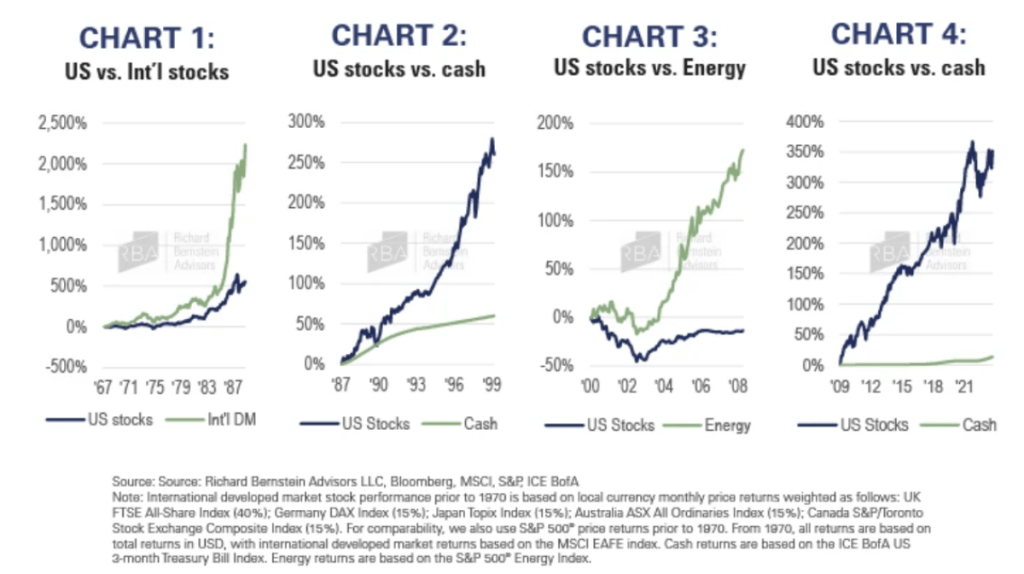
U.S. stocks have destroyed foreign market over the last 16 years and that trend has continued in 2024. If you look at 1900 through 2010, the U.S. and the rest of the world were essentially equal in percentage returns (with rotating cycles where one would outperform the other). Is it time for the rest of the world to catch up?

The Shiller price to earnings ratio has crossed back above 36 for U.S. stocks. Stocks are considered more expensive when this number moves higher (you are paying a higher price for company’s earnings). The market is closing in on the 2021 bubble peak of 38 and the all-time bubble peak of 44 back in March of 2000.