The Finality Of Everything & Happiness vs. Money

Understanding the finality of everything brings a clarity that only a wiser version of ourselves sees. If we know that one day we’ll long for the very things we routinely gloss over, how can we consciously neglect those moments again? Perhaps the best way to give every moment a fresh start is not to redo it, but to be aware of the finish line that awaits each one.

___________________________

While technology has materially decreased the time it takes do many things (i.e., book reservations, send messages, check the weather, get directions, etc.), it has also increased peoples’ desire for immediate results. As a result, this has significantly altered the incentives that drive the economy, and society at large. Look no further than people on social media clamoring for “likes”, politicians catering to their bases instead of “crossing the aisle” to appeal to voters in the middle, the media thriving on soundbites and scandals as opposed to simply reporting the news, and investors making extremely confident forecasts instead of acknowledging an uncertain future.

___________________________

New studies are showing that more money provides higher levels of happiness, even for the ultra-wealthy. A famous 2010 paper by Kahneman and economist Angus Deaton that said happiness tends to go up with incomes until about $60,000 to $90,000 a year, at which point it flattens. Kahneman and Killingworth reanalyzed that work and found the correlation between money and happiness extended to people with salaries up to at least $500,000 a year. The new research, which is being self-published by Killingsworth, found people with a net worth in the millions or billions reported an average life satisfaction rating between 5.5 and 6 out of 7, compared to a rating of about 4.6 for those earning around $100,000 a year and just above 4 for those earning about $15,000 to $30,000 a year. That makes the difference in happiness between the richest and middle-income groups almost three times larger than the difference between middle- and low-income groups.

__________________________

They are called zombies, companies so laden with debt that they are just stumbling by on the brink of survival, barely able to pay even the interest on their loans and often just a bad business hit away from dying off for good. An Associated Press analysis found their numbers have soared to nearly 7,000 publicly traded companies around the world — 2,000 in the United States alone — whiplashed by years of piling up cheap debt followed by stubborn inflation that has pushed borrowing costs to decade highs. And now many of these mostly small and mid-sized walking wounded could soon be facing their day of reckoning, with due dates looming on hundreds of billions of dollars of loans they may not be able to pay back.

__________________________

Great podcasts this week:

Mastery, Habits & Nothingness

For most people, the Nothingness of Money strikes when the finish line is a few yards away. A terminal diagnosis is delivered. An appointment is made at a hospice center. A deathbed is prepared. In this moment, a pursuit that once seemed all-consuming fades into the background. All that matters are the memories you have, the people you love, and the memories you can still make with them. The use of your finite time to squeeze out an extra dollar is laughable, as no one with a sound mind would expect that of you. And finally, in this brief section of life, something profound happens. The Nothingness of Money is truly understood.

___________________________

The life secret Jerry Seinfeld learned decades ago: “The only thing in life that’s really worth having is good skill. Pursue mastery that will fulfill your life.” This thought stemmed from an edition of Esquire magazine in the late 1980’s that was so popular it inspired books to be written about it. These are the key takeaways from that article.

___________________________

Habits determine a future more than goals. If a child comes to class every day properly prepared, asks questions or attends extra help, does their homework, and refrains from most distractions regarding discovering the opposite sex, the grades will take care of themselves.

___________________________

Lyn Alden discusses how Fed interest rate cuts may impact the economy and financial markets moving forward: The fact that the U.S. was 1) running larger fiscal deficits than its peer countries and 2) had a private sector with more locked-in fixed rates than its peer countries, made it more de-sensitized to this global cycle of rising interest rates than its peer countries. In the downcycle, we could see exactly the reverse. As multiple countries cut interest rates, the countries that have private sectors with more variable-rate debt can get a consumer and corporate stimulus more readily from those lower rates, while the U.S. economy already has most of its private debt fixed at lower rates and wouldn’t get much of a stimulus from a moderate cut in interest rates. Emerging markets could benefit the most, from the starting position of significant weakness.

___________________________

A new research paper on the history of U.S. stock returns, and what we can learn from them, has been making the rounds. This article summarizes some of the key ideas from the study.

___________________________

The combination of the Great Financial Crisis period and the Covid era created some of the most interesting economic experiments in history. They also resulted in some of the worst narratives in finance and economics. Here are three bad narratives that are dead but won’t yet be laid to rest because economic narratives are hard to bury.

Commoditized Content & Peak A.I.

We are being A/B tested into a world of commoditized content. Things look the same and sound the same because they basically are the same. It’s digital déjà vu on a massive scale and it’s only going to get worse. I promise you that all those stories about young millionaires and overnight crypto fortunes are not meant to make you feel good. They are meant to create anxiety. It’s no wonder why we’ve seen a rise in financial nihilism among young people. When the mainstream media convinces you that you are doing badly financially, you may come to believe it. Of course, there are some people that are truly struggling, but there are far more who are influenced to think they are.

___________________________

Over the past two years, reality has looked nothing like the theories found in economics textbooks. The uncomfortable truth is that no one really knows how interest rates work or even whether they work at all—not the experts who study them, the investors who track them, or the officials who set them.

____________________________

Generative AI is peaking, if it hasn’t already peaked. It cannot do much more than it is currently doing, other than doing more of it faster with some new inputs. It isn’t getting much more efficient. Generative AI is not going to become AGI, nor will it become the kind of artificial intelligence you’ve seen in science fiction.

____________________________

Greed, in all of its forms — greed for life, for money, for love, for knowledge — has marked the upward surge of mankind. There is never enough life, enough love, enough knowledge, enough money, and don’t let anyone tell you otherwise. That’s the leper’s bell of a second-rate intellect approaching. Don’t ever let anyone tell you should be satisfied with what you have, at any age or stage of your life. If you’re not going forward, if you’re not constantly challenging yourself, you’re going backwards. Never get comfortable. Never get complacent. And the most important decision you will ever make in your life is what to do with the next 24 hours.

_____________________________

A visual walk-through of how GPS satellites work and why U.S. satellites could be in trouble.

_____________________________

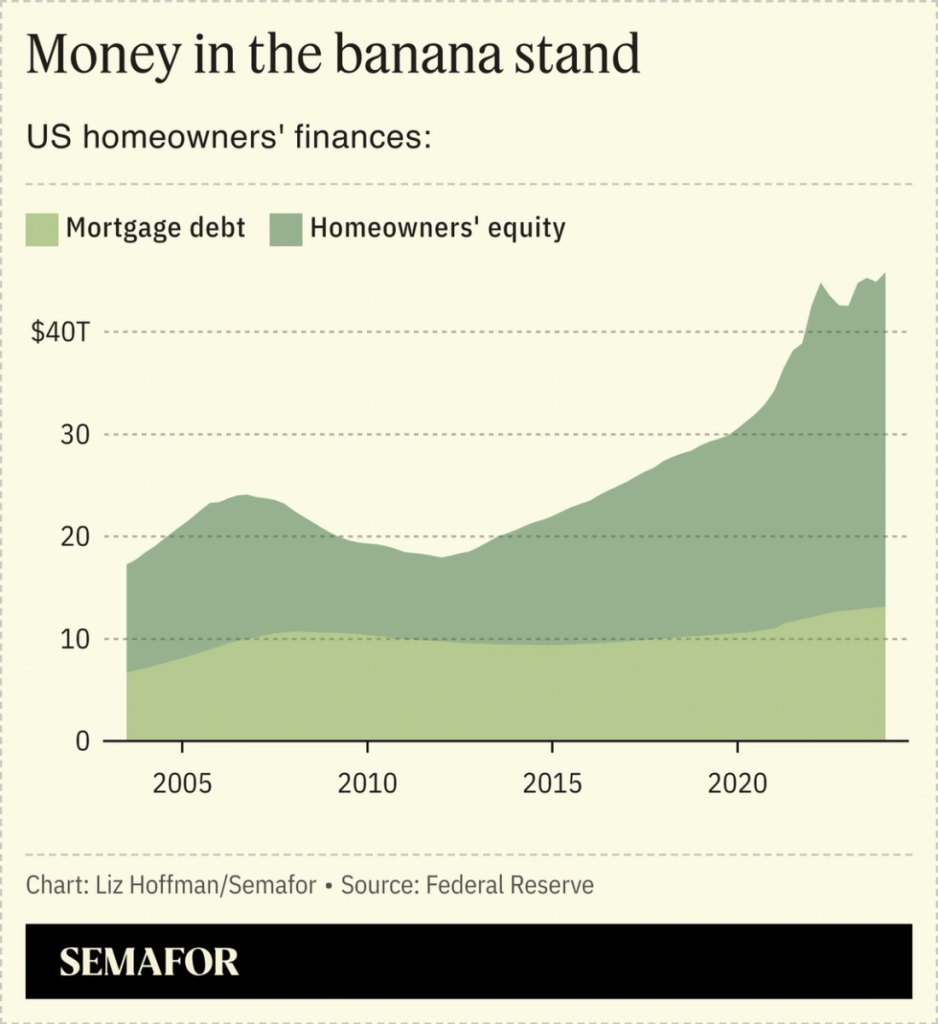
Americans have a lot of home equity:

U.S. stocks have destroyed foreign market over the last 16 years and that trend has continued in 2024. If you look at 1900 through 2010, the U.S. and the rest of the world were essentially equal in percentage returns (with rotating cycles where one would outperform the other). Is it time for the rest of the world to catch up?

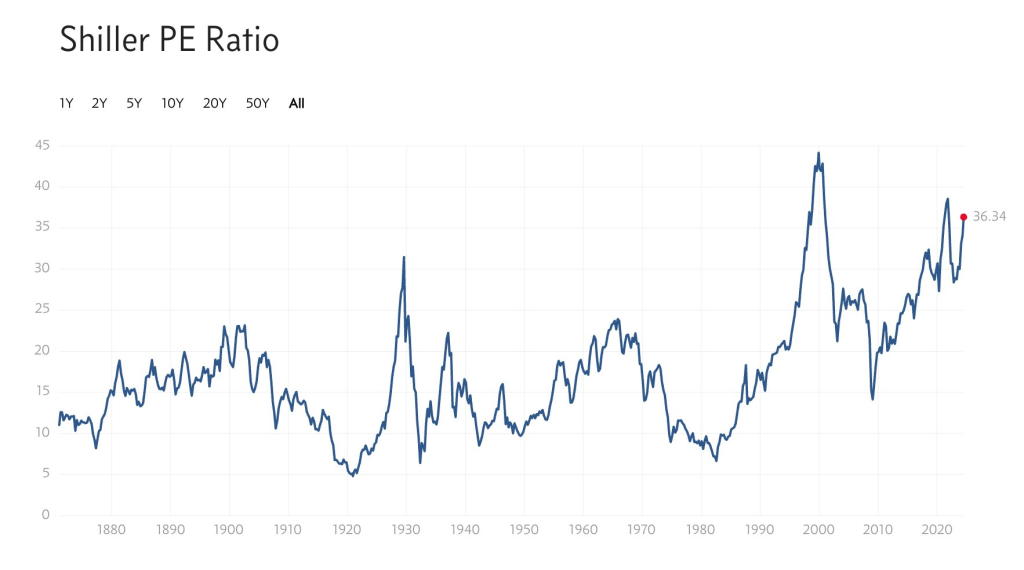
The Shiller price to earnings ratio has crossed back above 36 for U.S. stocks. Stocks are considered more expensive when this number moves higher (you are paying a higher price for company’s earnings). The market is closing in on the 2021 bubble peak of 38 and the all-time bubble peak of 44 back in March of 2000.

Ultra-Processed & Behaving Online

Social media the “ultra-processed food” equivalent of media content. This analogy between food and media is useful because it helps us better understand responses to the latter. In the context of nutrition, we’re comfortable deciding to largely avoid ultra-processed food for health reasons. This is how we should think about the ultra-processed content delivered so relentlessly through our screens. To bypass these media for less processed alternatives should be seen as a move toward a self-evidently healthier relationship with information.

_____________________________

How to behave online: 84 new rules. We spend more time online today than ever before. Our digital lives are inextricably intertwined with our offline ones, to the point that the mere idea of “spending time online” actually seems dated, a phrase that would get you slapped with an “OK Boomer” if that hadn’t already entered the meme dumpster. We don’t spend time online anymore. We simply are online, all the time. The problem is, we still don’t always know how to act.

______________________________

Is there a mean reversion coming? For the thirty years from 1980 to 2010, there was little difference between the performance of the stock market in the United States (11.51% annual return) vs. Europe (11.49% annual return). However, since the beginning of 2010, the total return of the MSCI Europe is 175%. During that period, the S&P 500 is up 550%. Can this outperformance last forever? Maybe. But as you might have guessed, we won’t be surprised if it doesn’t. This divergence has been driven by multiple expansion. US stocks now trade at roughly a 50% premium to Europe.

_______________________________

Is the European stock market a buy here (relative to the U.S. market)? Europe makes up 25% of world GDP but just a little more than 15% of global stock market capitalization. America has roughly the same weight in GDP at 25% but makes up more than 60% of the world market cap.

________________________________

While our stocks may be worth more in America, European citizens are much healthier than Americans; physically and mentally. Anyone who doesn’t see that Europe is so much culturally richer, and healthier, than the US is missing that culture is fundamentally about communities, and the social. It’s about the work/life balance. About third spaces that encourage being around people, in a way that’s deeper than a brutal transactionalism. U.S. is about the individual, to a hyper degree. Everyone is so focused on being emancipated from everything, freed from any “outdated” obligations, that they end up in an empty loneliness.

_______________________________

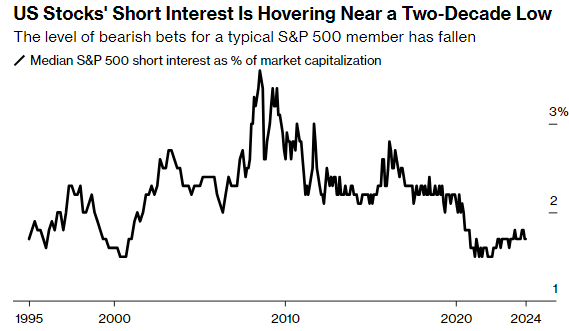
Wall Street seems calm. A closer look shows something more dangerous is lurking under the surface. The risk to investors is that stocks will again begin to move in the same direction, all at once — most likely because of a spark that ignites widespread selling. When that happens, some fear, the role of complex volatility trades could reverse and, rather than dampen the appearance of turbulence, exacerbate it.

Depression, Moving & Expensive Stocks

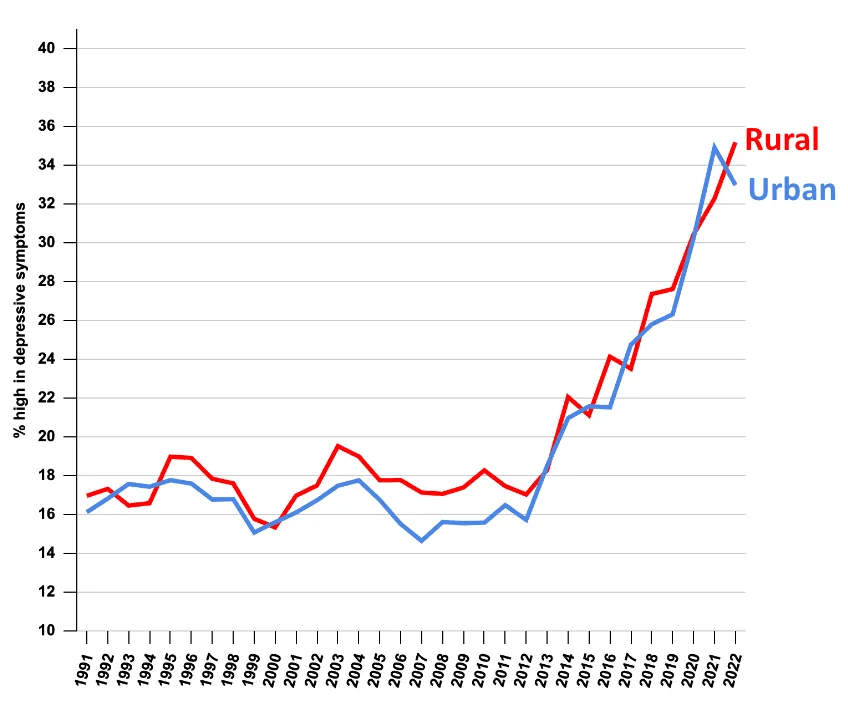
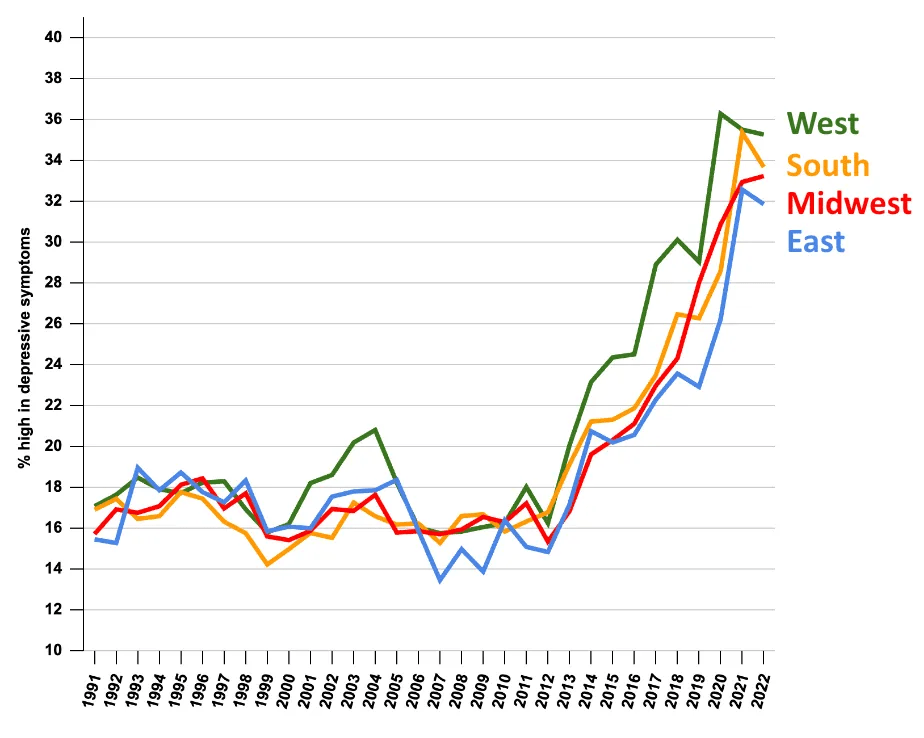
Teen depression started skyrocketing in the early 2010s (mass smart phone adoption) across all demographic groups:

The most prominent difference can be found between boys and girls (smart phones have had a far more disastrous impact on girls’ mental health):

And sexual orientation:

While stocks outside the U.S. are far less expensive than U.S. stocks, within the U.S. large cap stocks (the bigger companies) are much more expensive than the small ones.

Stock Market Concentration In The U.S. & Around The World

Morgan Stanley released an article this week discussing the concentration growth of the largest U.S. companies within the S&P 500:

If you zoom out and look at the rest of the world, the concentration is significantly higher in many other markets. This is of interest to me because the majority of my stock market portfolio is in stocks outside the United States. I own value funds that have little exposure to these larger (more expensive) companies that dominate their country’s market, but the concentration is worrisome because selloffs tend to drag everything down together. If the big boys fall, they can bring the smaller stocks down with them.

The U-Shaped Curve & Dishabituation

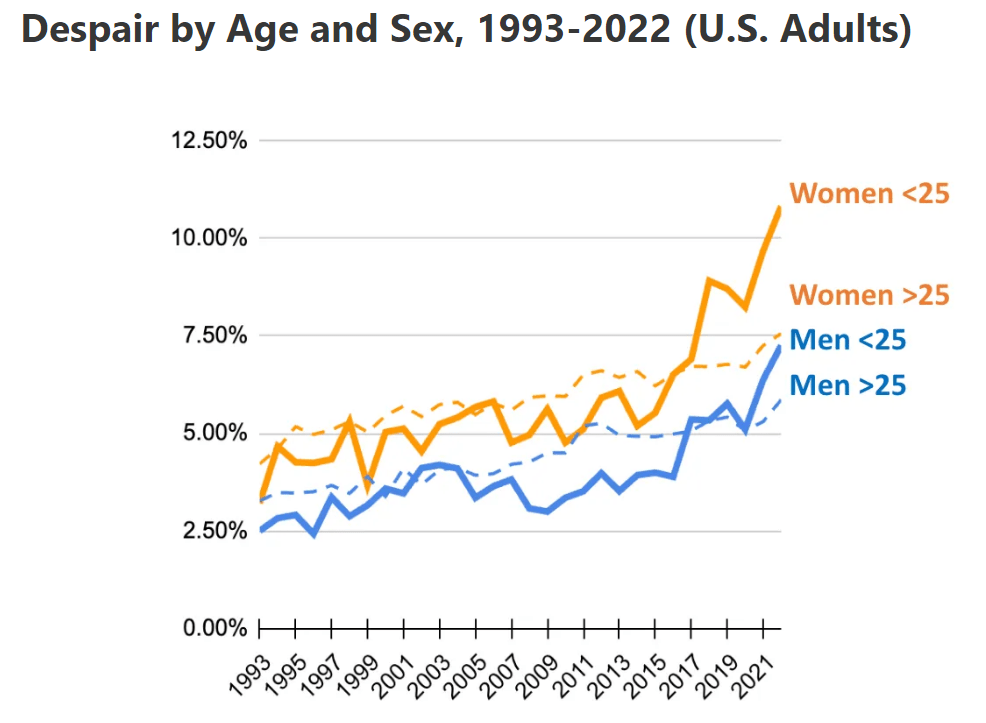
Throughout history happiness for most people followed a U-shaped curve. They were happy in their youth, became less happy during middle age, then became happy again in the later years of life.

Recent studies have shown this changed around 2014 – 2017 as young people have become unhappy, anxious, and depressed. The U-shaped curve has disappeared for this new generation, and people now seem to get happier as they age.

Between 1993 and 2016, despair was hump-shaped in age. The rapid rise in despair before the age of 45, and especially before the mid-20s, has fundamentally changed the lifecycle profile of despair such that the hump shape is no longer apparent.

__________________________________

How to Have a Great Vacation: What Science Tells Us. Limit our choices and spend less time doing specific activities.

__________________________________

Why We Get Bored of the Best Things in Life—and How to Fight It. Our minds are wired to habituate to any situation

__________________________________

Dr. Pepper passes Pepsi’s second place market share for soda:

__________________________________

Quality Time & Commodified Memories

A visual look at how much time we have left in life and what the quality of that time will be. Considering both your lifeline and healthline, along with others’ healthline and lifeline, can help you live more meaningfully by allowing you to invest your time, energy, and even money in experiences with the people most important to you.

______________________________

I remember this compulsion feeling especially strong when I was in college, a time when Instagram was at its relative peak (that is, pre-TikTok) and my self-esteem was at its relative low (that is, in a sorority at Alabama). Instagram was a platform where Cool Girl™ personal brands were meticulously confected. This meant the first half hour of any social event featured an unspoken agreement amongst attendees that we shared a mutual goal: Obtain flattering photographic evidence we were there. The following 15 minutes saw a shift into the second phase, in which our attentions were singularly absorbed into the blue glow of our screens as we swiped, scrutinized, cropped, and captioned, retouching and revising a memory that was still currently underway.

______________________________

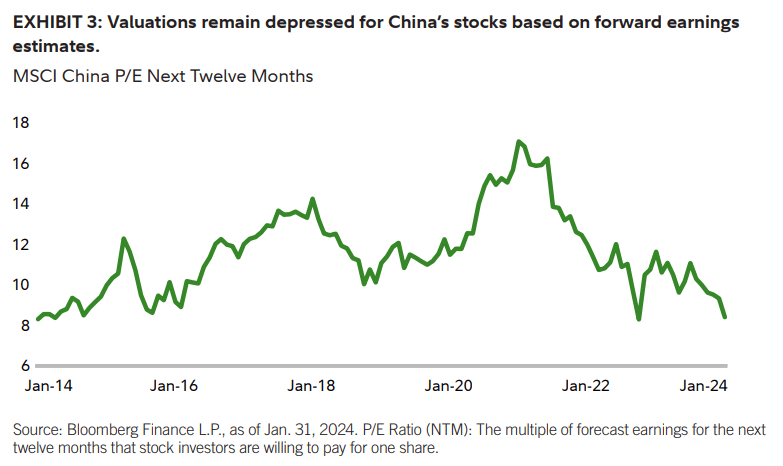
The case for investing in Chinese stocks; valuations and sentiment are extremely low.

________________________

U.S. stocks have crushed the rest of the world over the last 15 years. However, betting on the U.S. from where we are today is effectively a bet on a repeat performance from the Magnificent Seven because, when they’re excluded, there’s nothing extraordinary about US stocks these past 15 years. And an encore is unlikely.

_____________________________

Value investing is working outside the United States:

_____________________________

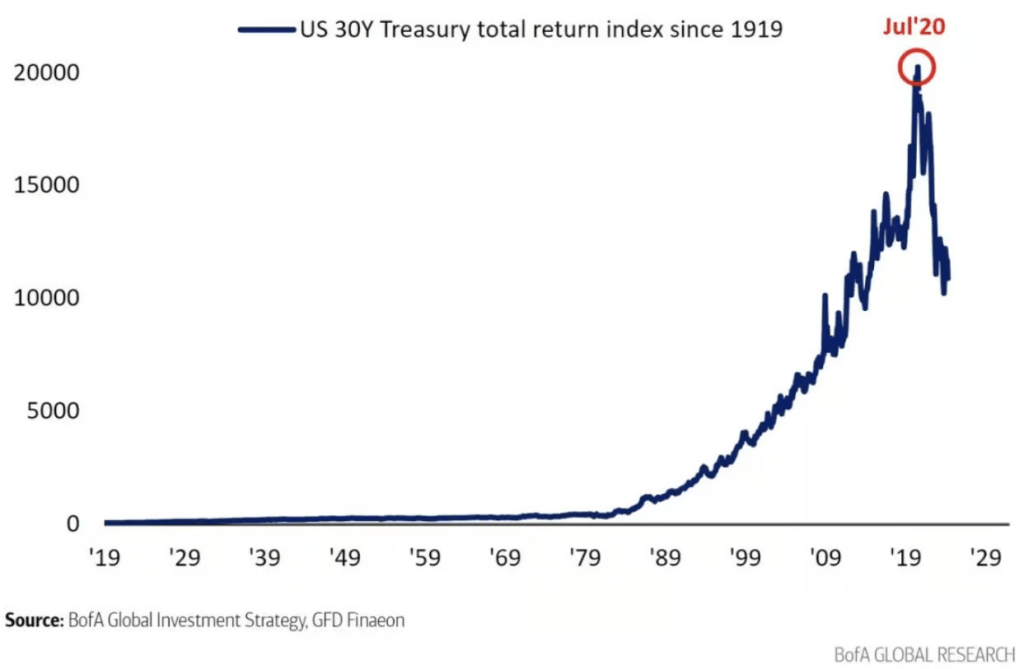
30-year U.S. treasury bonds are down 45% from their blow-off mania peak:

_____________________________

U.S. stock buybacks are back. Analysts at Goldman Sachs project that total S&P 500 repurchases will reach $925 billion this year and $1.075 trillion in 2025, which would mark annual growth rates of 13% and 16%, respectively.