Jonathan Haidt wrote one of the most important books of the year, The Anxious Generation, about how toxic and destructive social media is on children’s lives. His other major focus of the book is how much it helps young kids to have the ability to play freely without adult supervision.
He wrote an article this week about how terrible social media is for all of society, not just children: Why The Past 10 Years Of American Life Have Been Uniquely Stupid.
__________________________________
Some interesting facts from 2024:
- Almost 20% of S&P 500 CEOs spent part of their careers at either GE or Procter & Gamble.
- The Shanghai Stock Exchange composite rose 105% in one day in 1992.
- In 2023, millionaires accounted for 1.5% of the adult population analyzed, and the U.S. had 38% of all millionaires.
- 1 million people now owe more than $200,000 in federal student loans.
- Roughly 50% college graduates have jobs that don’t use their degrees.
- Around 45% of America’s politicians are over the age of 60. That is a higher proportion than any other country in the OECD, where the average is 19%.
- While only 4% of the world’s population, the U.S. often accounts for half or more of worldwide revenue for a new pharmaceutical drug.
- If you shuffle a deck of cards, most likely that combination has never been shuffled by anyone, in history, ever.
_________________________________
Cal Newport tried to summarize all the major ideas he focuses on in his books and newsletters in one location, with ideas like:
- Treat cognitive context shifts as “productivity poison.” The more you switch your attention from one target (say, a report you’re writing) to another (say, an inbox check), the more exhausted and dumber you become. Focus is like a superpower in most knowledge work jobs. Train this ability. Protect deep work on your calendar.
- Your phone should be used as a tool, not a constant companion. To accomplish this: (1) keep your phone plugged into the same spot when at home (instead of having it with you); and (2) remove all apps from your phone where someone makes more money the more you use it. Most people don’t need to use social media. If you really need to use it — e.g., for professional purposes — use it on a web browser on your laptop, and spend at most an hour a week logged in, as that’s enough for 99% of legitimate uses. There are better ways to be entertained, find news, and connect with people. Kids under the age of 16 shouldn’t have unrestricted access to the internet. Their brains aren’t ready for it.
- In building a meaningful and fulfilling life, it’s usually better to work backwards from a broad vision of your ideal lifestyle than it is to work forward toward a singular grand goal (e.g., a “dream job” or radical location change) that you hope will make everything better.
- Generative AI won’t really change our daily lives in a massive way until it leaves the chatbot format and becomes more integrated into specific tools. The biggest technology story everyone is ignoring is the end of screens. Within the next decade, AR glasses will replace essentially every screen currently in our lives — phones, laptops, tablets, computer monitors, and televisions.
_____________________________
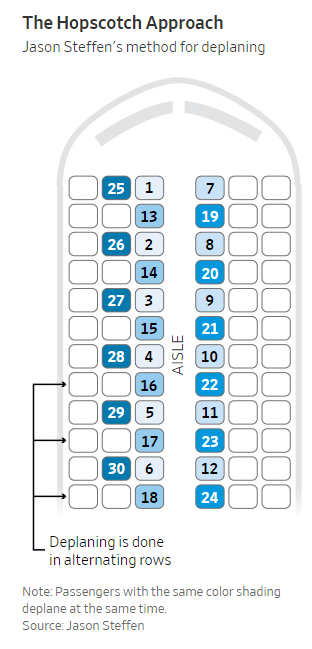
Jason Steffen, an astrophysicist and associate professor at the University of Nevada, Las Vegas, has studied the most efficient way to board a plane. That method involves boarding passengers in alternating rows. In one version, you begin with the traveler sitting in the window seat of the last row of the plane. The next person boards two rows away, and so on, switching between each side of the plane, and working from the window to the aisle seat.
The fastest way to deplane, Steffen says, is to employ this boarding method in reverse. Under the current row-by-row method, an entire plane full of people might end up waiting for one person who struggles to take down or manage luggage. The alternating row method would allow more travelers to step into the aisle and take their bags.
____________________________
Have we reached peak PreCheck? With more than 40 million people enrolled in the government’s Trusted Traveler program, passengers are wondering whether the expedited security program has become too popular – and too slow.
____________________________
For most drugs, expiration dates are about three years after the day they’re produced, however, many drugs retain much of their potency for a lot longer than three years. There’s an obvious disincentive for manufacturers. Proving that certain products have much longer shelf lives than we assume would mean less frequent re-upping, which would decrease sales.
________________________________
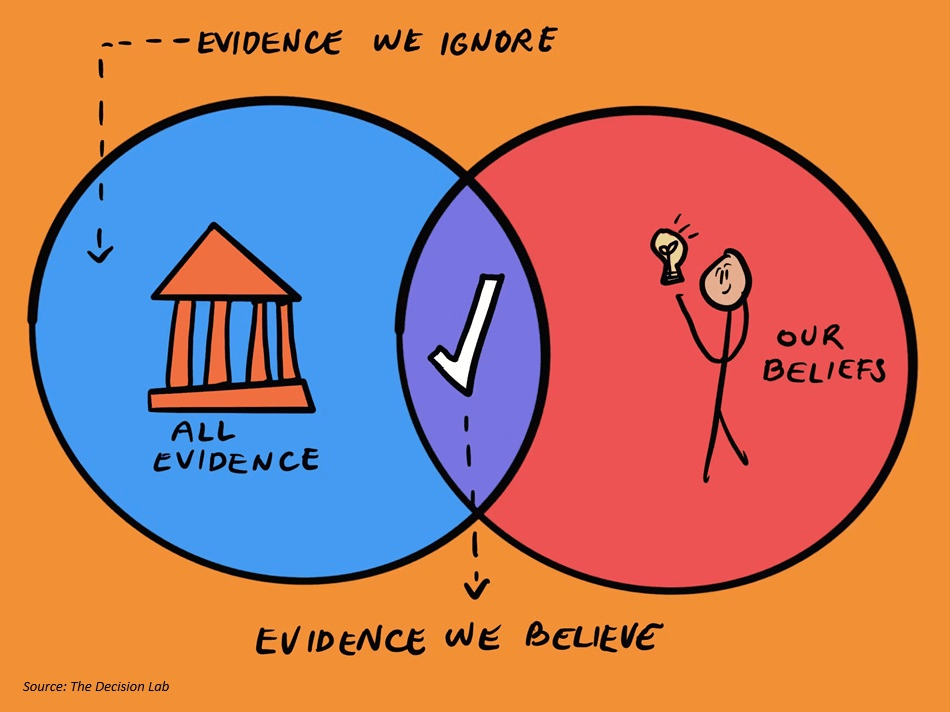
Confirmation bias is a deeply human tendency to favor evidence that supports what we already believe while ignoring or downplaying evidence that contradicts it, even when the consequences are expected to be terrible. In simple words, it’s like wearing special glasses that only let us see what we want to see. When we believe something, our brain naturally looks for information that proves we’re right and ignores anything that suggests we might be wrong. There are numerous ways this negatively impacts us with investing.
________________________________________

_____________________________________
The anti-foreign-stock drumbeat has grown louder with each additional year that international markets underperform U.S. shares. Indeed, even though foreign stocks beat U.S. shares in the 1970s, 1980s and 2000s, there are folks today who argue there’s no reason to own foreign shares. Before you throw in the towel, ask yourself six questions:
- 1. If U.S. stocks had lousy returns for 15 years, would you abandon them?
- 2. If U.S. multinationals are a good substitute for investing abroad, why don’t they perform like large-cap foreign stocks?
- 3. Yes, foreign companies offer fewer legal protections and greater business risk. But isn’t this already reflected in share prices?
- 4. If foreign stocks are riskier, shouldn’t they offer higher returns?
- 5. If you’re an indexer happy to hold U.S. stocks according to their market value, shouldn’t you also be willing to allocate among countries on the same basis?
- 6. What if you’re wrong?
_______________________________________
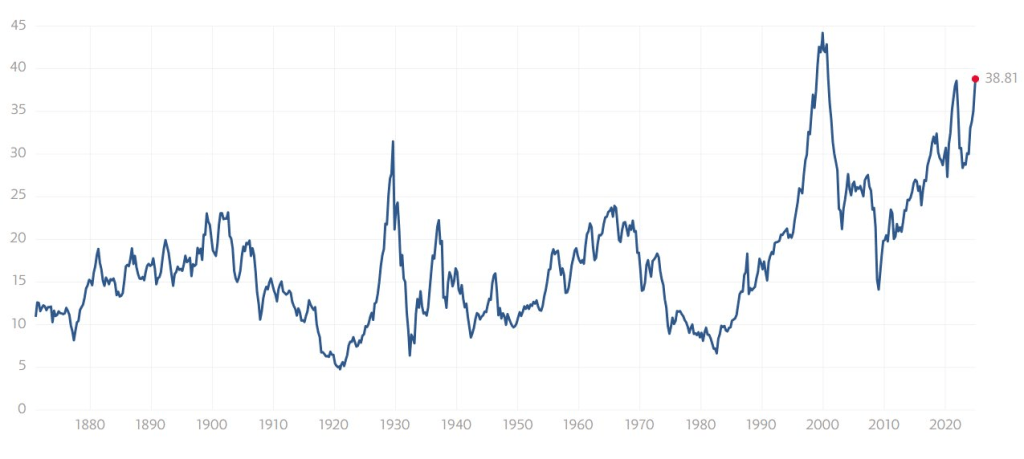
U.S. stocks (the S&P 500) have taken out the 2021 bubble high in the CAPE price to earnings ratio. U.S. stocks are now more expensive than any moment in history, outside a brief period around the 2000 tech bubble peak:
______________________________________
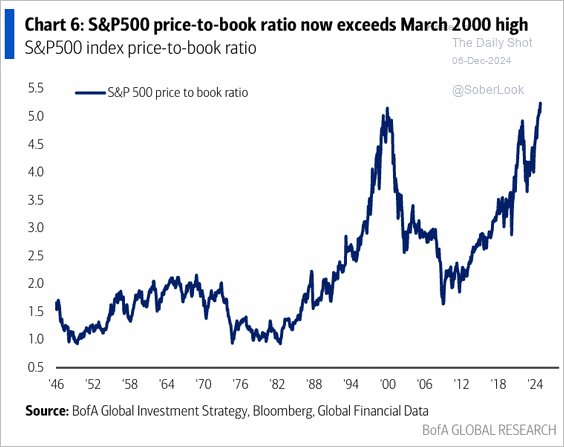
The S&P 500 has now crossed above the 2021 AND 2000 tech bubble peak for the price to book ratio:
______________________________________
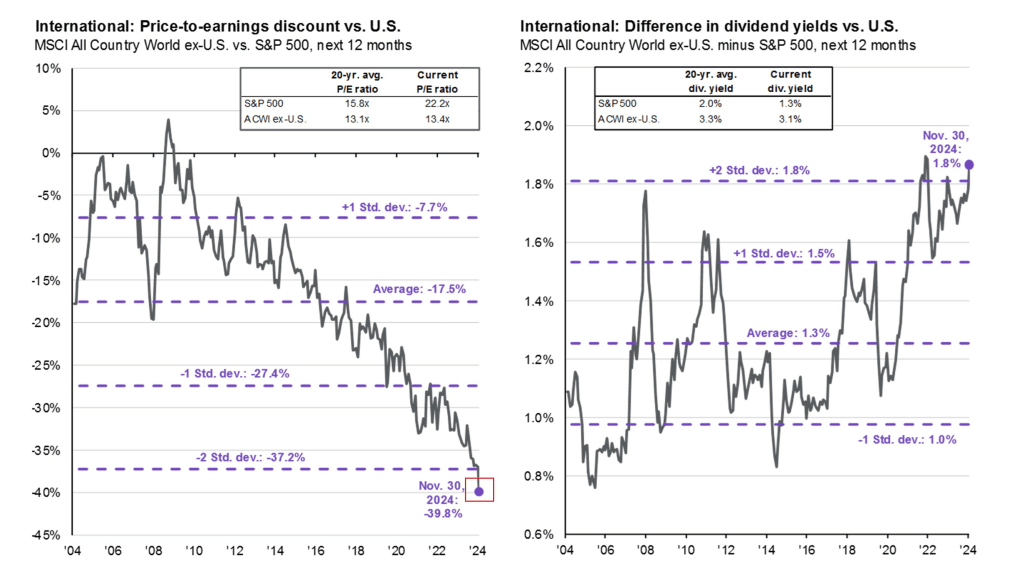
The price to earnings ratio for companies outside the U.S. relative to the S&P 500 (U.S. companies) continues to diverge dramatically (chart on the left below showing how undervalued foreign stocks are relative to U.S. stocks). In addition, the income you receive (dividends) for holding foreign stocks continues to increase relative to U.S. companies (the chart on the right):
_______________________________________

_______________________________________
 Tuna Thoughts