It’s so common for people’s memories about a time to become disconnected from how they actually felt at the time. When thinking about our own lives, we don’t remember how we actually felt in the past; We remember how we think we should have felt, given what we know today. “You should have been happy and calm, given where things ended up,” you say to your past self. But your past self had no idea where things would end up. Uncertainty dictates nearly everything in the current moment, but looking back we pretend it never existed. Understanding why economic nostalgia is so powerful – why it’s almost impossible to remember how uncertain things were in the past when you know how the story ends – helps explain what I think is the most important lesson in economic history, that’s true for most people most of the time: “The past wasn’t as good as you remember. The present isn’t as bad as you think. The future will be better than you anticipate.”
_____________________________
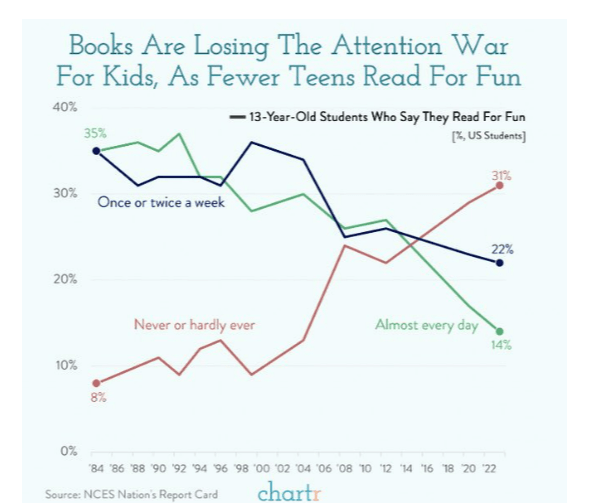
Success has become overplaybooked. math competitions take naturally very smart kids and focus them entirely on training for specific math tests. The game selects for people who are smart enough and can train the most and learn the best. In the process, it kills polymaths. The problem isn’t that kids are competing or studying hard, but that they’re narrowing. One of the reasons kids can’t (or won’t) read full books any more might be that books contain a lot of superfluous information that won’t be on the test. There’s no testing skill that can be related to … Can you sit down and read Tolstoy?, so teachers don’t make kids sit down and read Tolstoy. Or anything long and challenging. The problem isn’t that they don’t know Tolstoy, specifically, but that they might be missing out on the one book that ignites something in them that makes them want to learn.
___________________________________
College students now seem bewildered by the thought of finishing multiple books a semester. Teachers have noticed this problem everywhere. Many students no longer arrive at college—even at highly selective, elite colleges—prepared to read books. Lit Hum often requires students to read a book, sometimes a very long and dense one, in just a week or two. Students tell their college professors that, at their public high school, they have never been required to read an entire book. They have been assigned excerpts, poetry, and news articles, but not a single book cover to cover. The anecdote helped explain the change teachers were seeing in their students: It’s not that they don’t want to do the reading. It’s that they don’t know how.
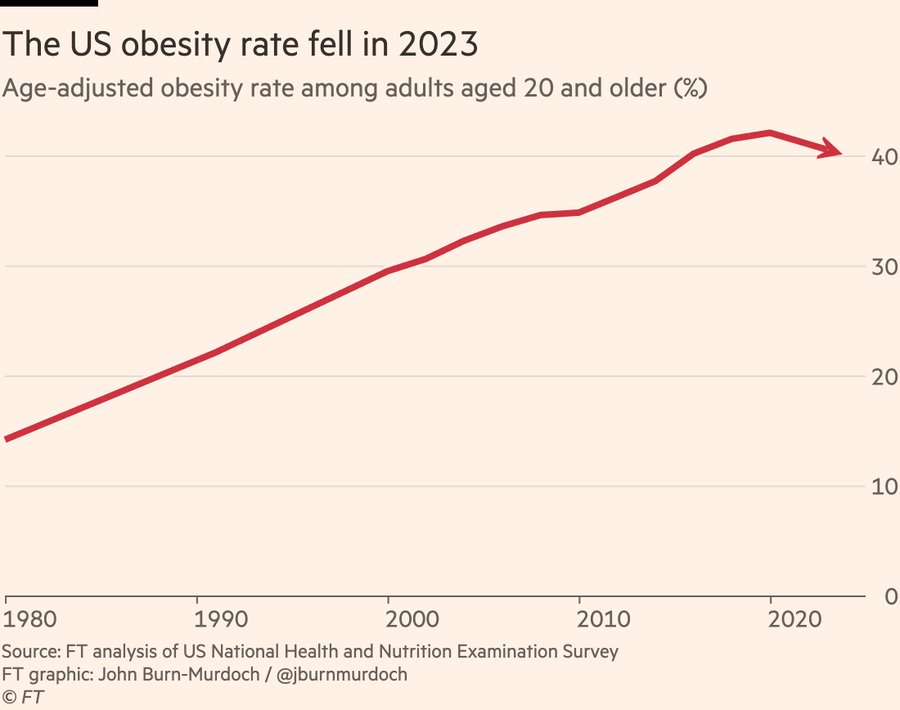
The percentage of Americans with obesity fell for the first time in 45 years. The Ozempic effect is here:
Overdoses have hopefully peaked as well:

 Tuna Thoughts